Artwork
Mrs. William Waters
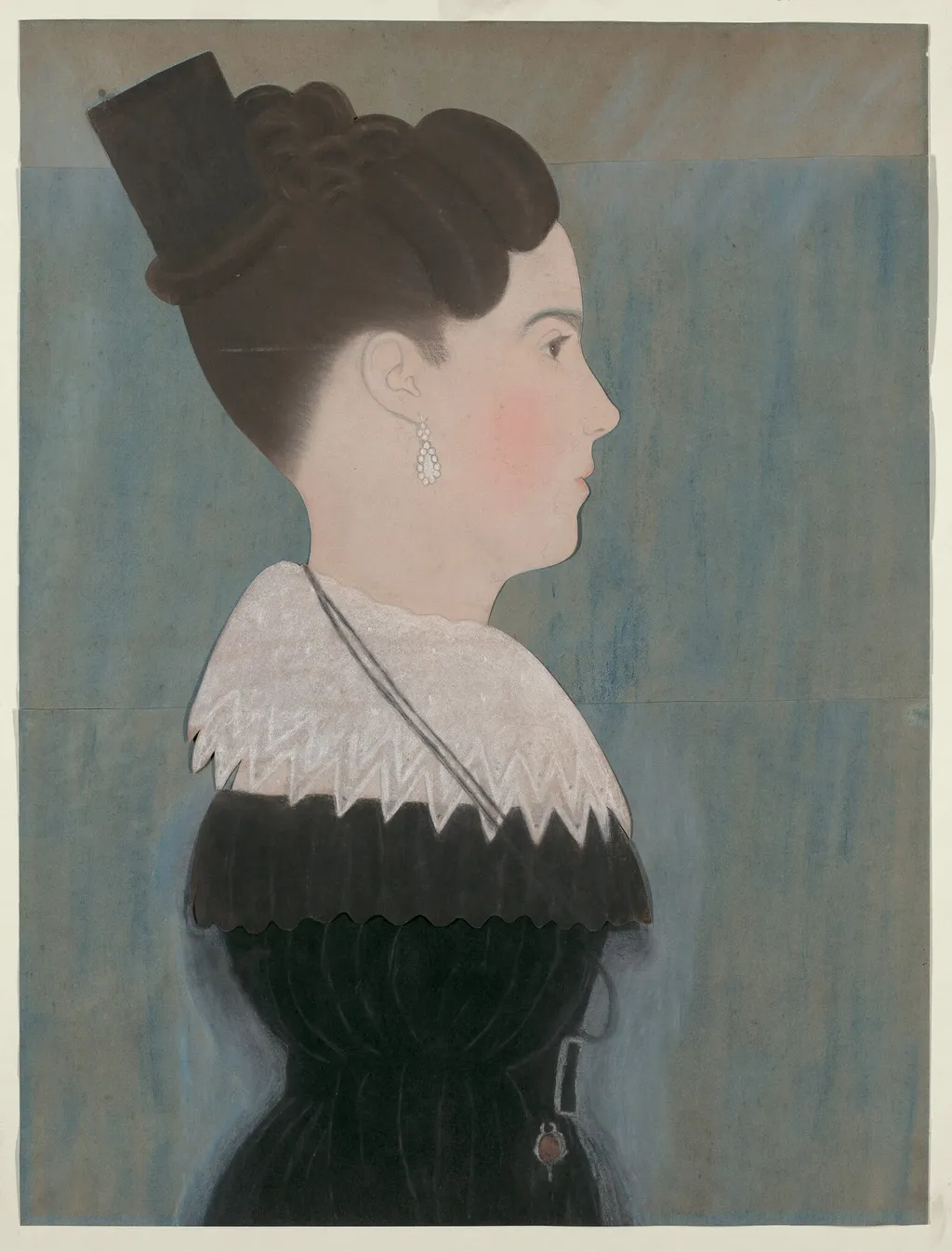
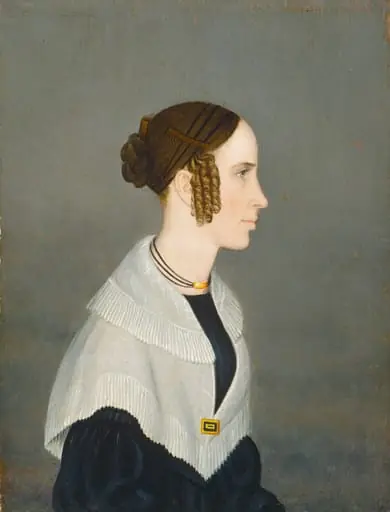
Mrs. William Waters is a graphite drawing by the Romanticist artist Ruth Henshaw Bascom. It dates from 1828 and is held in the collection of the National Gallery of Art. Created around 1828, this portrait—titled Mrs.
About this work
Overview
Created around 1828, this portrait—titled Mrs. William Waters—is a drawing by American artist Ruth Henshaw Bascom. Executed on four sheets of paper that have been adhered together, the work combines pastel, graphite, and watercolor. The composition presents a seated woman in a three‑quarter view, rendered with a restrained palette and a plain backdrop that directs attention to the sitter.
Subject & Meaning
She wears a dark, elevated hairstyle typical of early‑19th‑century fashion, a white collar, and a black dress with a scalloped neckline.
The figure is depicted slightly turned, her profile visible while her torso faces the viewer. She wears a dark, elevated hairstyle typical of early‑19th‑century fashion, a white collar, and a black dress with a scalloped neckline. A string of pearls drapes near her ear, suggesting modest refinement. The portrait functions as a personal likeness, likely intended to commemorate the woman’s social standing and domestic identity.
Technique & Style
Bascom employs a layered approach: soft pastel washes establish skin tones, while graphite provides fine detailing of facial features and hair. Watercolor accents the clothing and accessories, and bold black outlines delineate the dress’s edges, creating a contrast between delicate coloration and defined form. The use of cut‑paper silhouettes for the support adds a subtle textural element, enhancing the overall compositional clarity.
History & Provenance
The drawing is attributed to Bascom’s early career, a period when she produced numerous portrait miniatures for New England patrons. Although specific ownership records are limited, the work bears the sitter’s married name, indicating it may have remained within the Waters family or been passed down through descendants. Its survival on adhered paper suggests careful preservation by later custodians.
Artist & collection


 Hannah Fisher Stedman
 Curls and Ruffles
 Queen Mary I
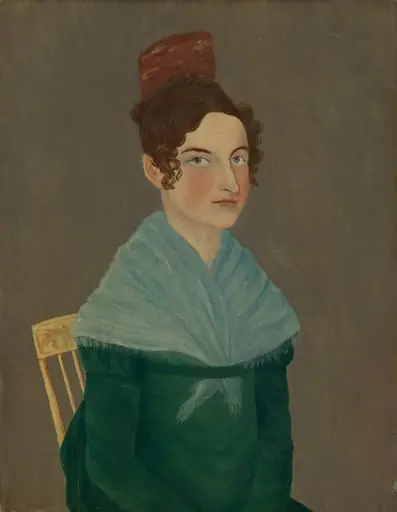 The Blue Shawl
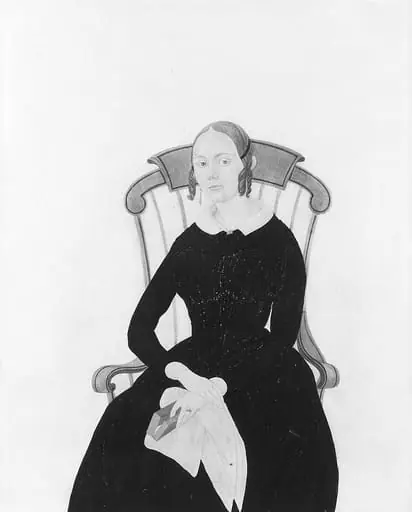 Lady Seated in a Boston Rocker
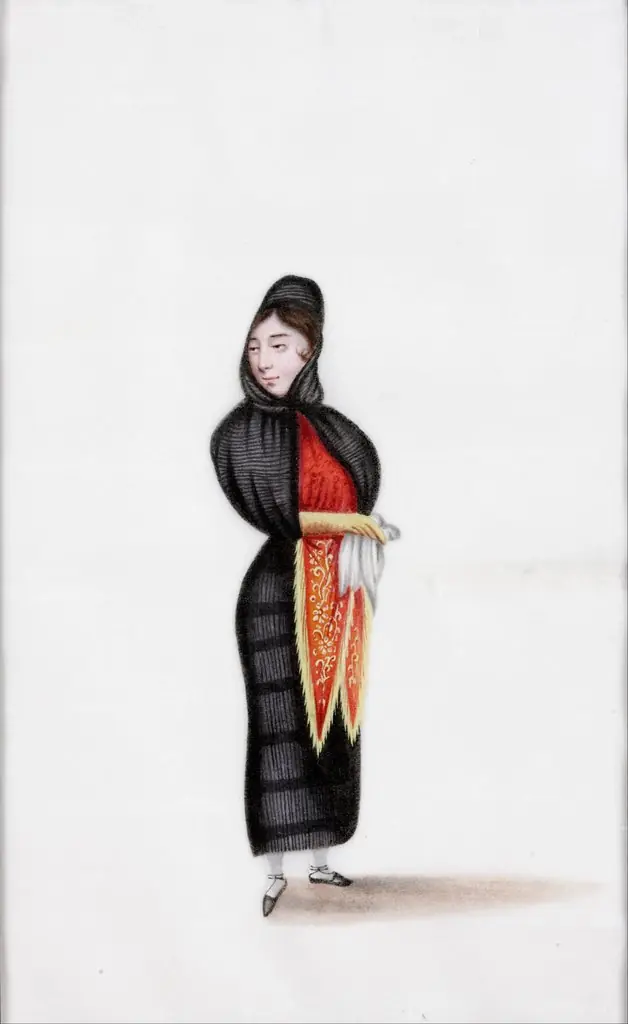 Collection of twelve paintings of Peruvian subjects made in China
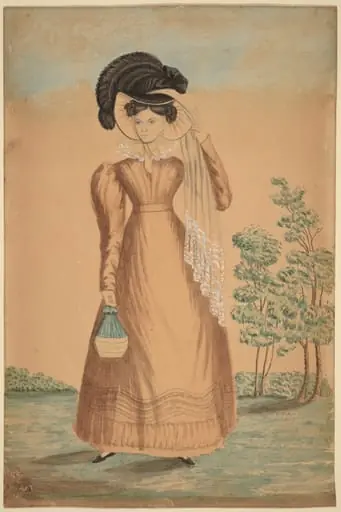 Woman with Plumed Hat
 Anonymous Woman
 Afternoon Promenade
 Kammerherreinde Caroline Amalie Meldahl, f. Ræder
 Lady with the lilac scarf (Dame mit lila Schal)
 Profile Portrait of a Lady