Artwork
Karl Ramler
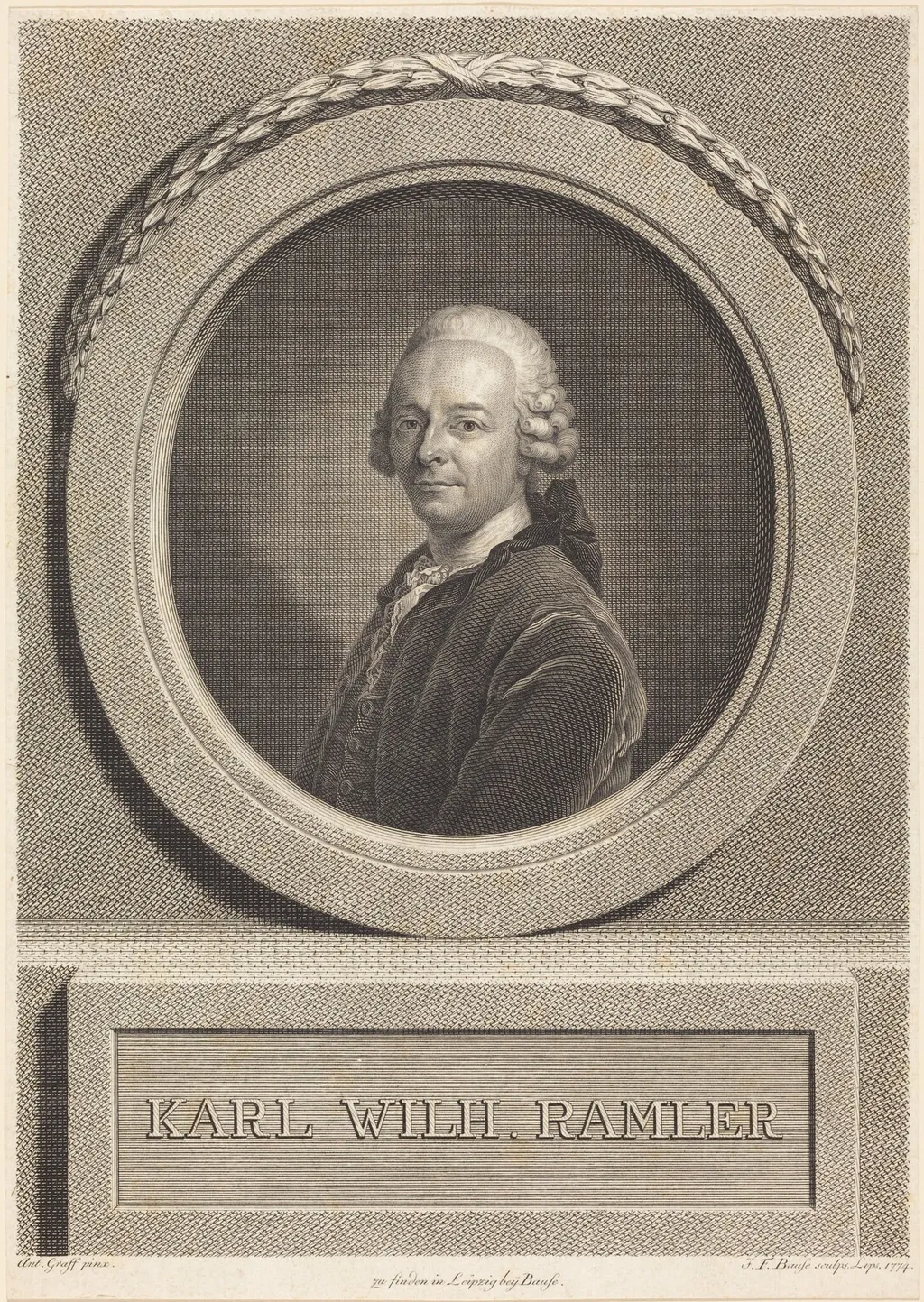
Karl Ramler is an ink print by the Romanticist artist Johann Friedrich Bause. It dates from 1774 and is held in the collection of the National Gallery of Art.
About this work
Overview
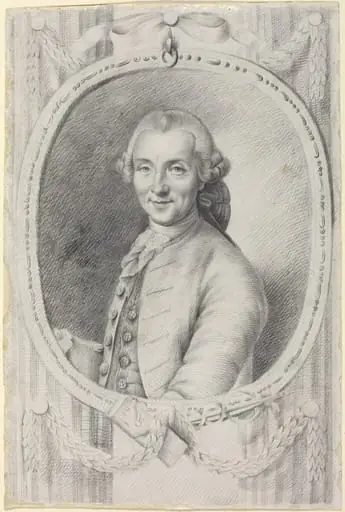
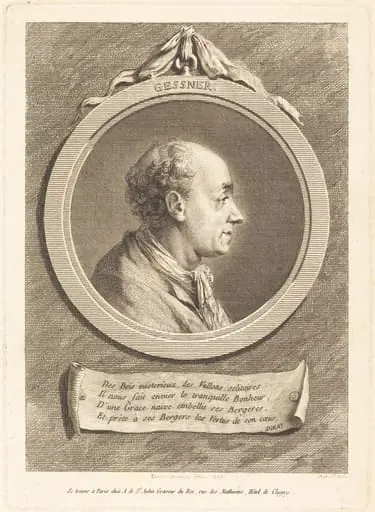
Johann Friedrich Bause’s 1774 etching presents a portrait of Karl Wilhelm Ramler, rendered in monochrome. The sitter is depicted with a solemn gaze, dressed in a dark, high‑collared coat and a white cravat, his powdered hair pulled back. The image is framed by a decorative wreath and accompanied by a caption identifying the subject.
Subject & Meaning
The portrait captures Ramler, a noted German poet and literary figure of the Enlightenment, in a formal pose that emphasizes his intellectual stature. The direct stare and restrained attire convey a sense of seriousness and scholarly authority, reflecting the cultural esteem accorded to literary men in late‑18th‑century Germany.
Technique & Style
Bause employed the etching process, incising fine lines into a copper plate to achieve delicate textures, especially in the hair and fabric. The crisp linear work and subtle tonal gradations are characteristic of late Baroque printmaking, allowing a nuanced rendering of light and shadow within the monochrome medium.
History & Provenance
Created in 1774, the print originates from Bause’s workshop in Leipzig, where he was active as a leading portrait etcher. The work likely circulated among Ramler’s acquaintances and patrons, serving both as a personal likeness and a testament to the artist’s reputation for precise, expressive portraiture.
Context
During the 1770s, portrait etchings served as an affordable means of disseminating the images of intellectuals and aristocrats. Bause’s depiction of Ramler aligns with contemporary trends that favored restrained elegance and clarity, mirroring the Enlightenment’s emphasis on rationality and individual merit.
Legacy
While not as widely reproduced as later photographic portraits, Bause’s etching remains a valuable visual record of Ramler’s appearance and the aesthetic conventions of German portraiture in the pre‑Romantic era. It continues to inform scholars of both the poet’s personal iconography and the technical skill of 18th‑century printmakers.
Artist & collection