Artwork
Ellen's Isle, Loch Katrine, Scotland
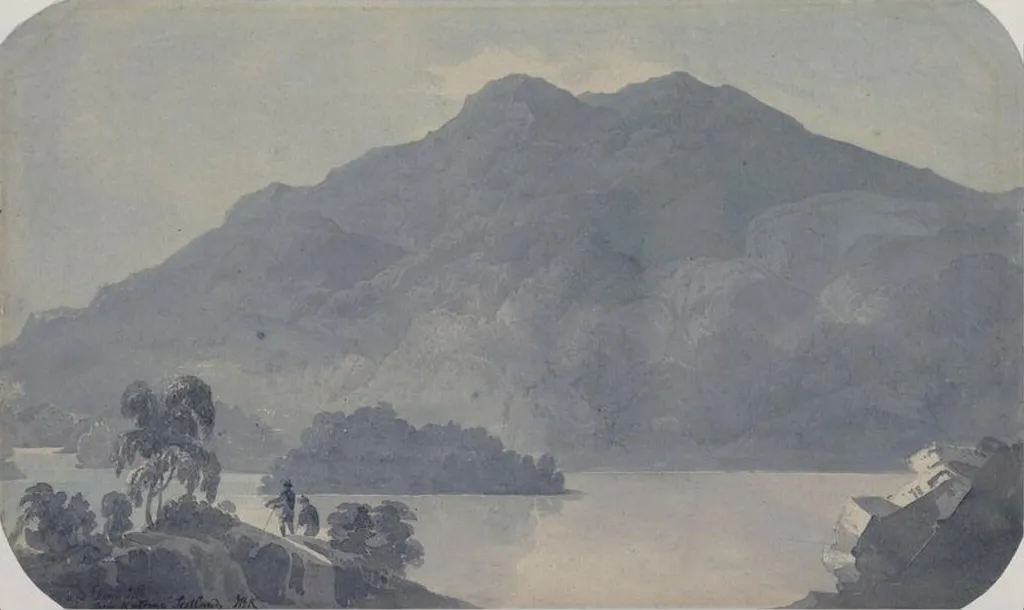
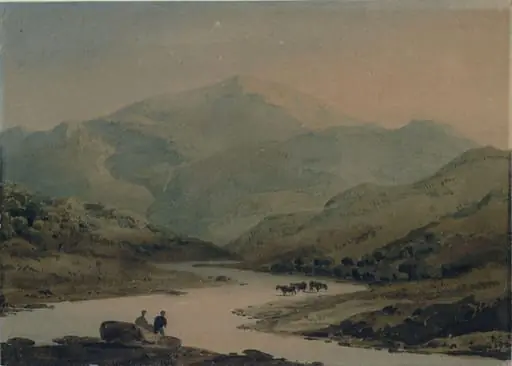
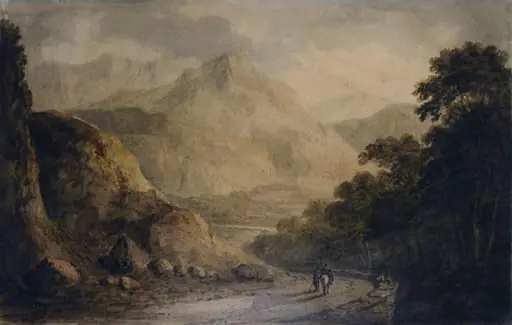
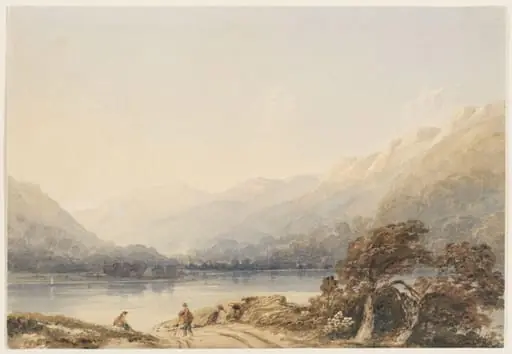
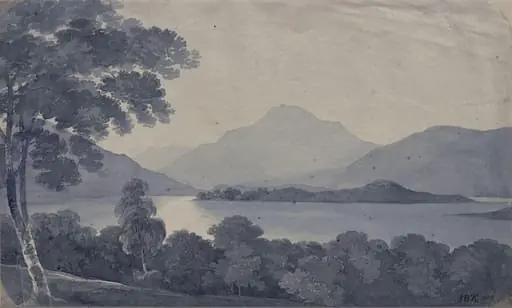
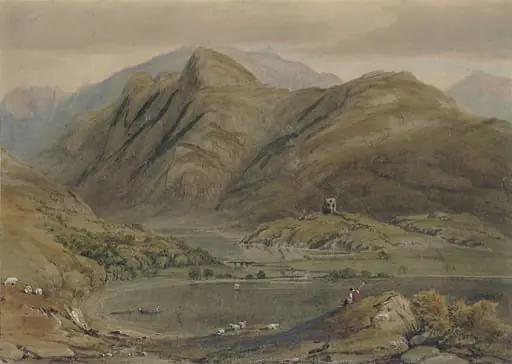
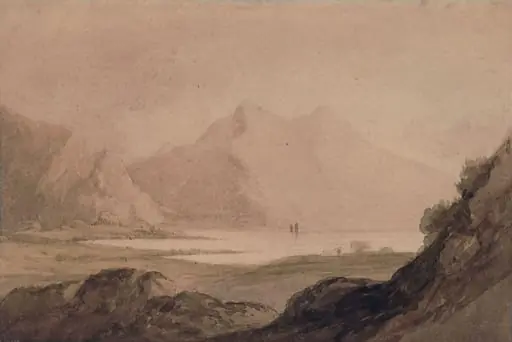
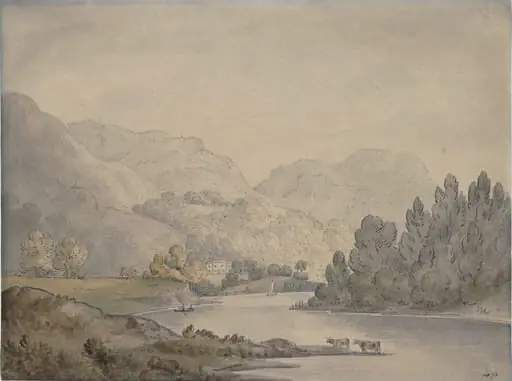
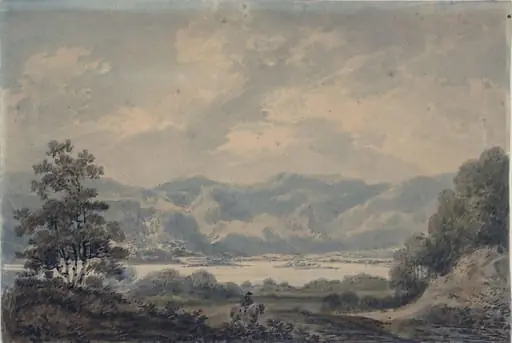
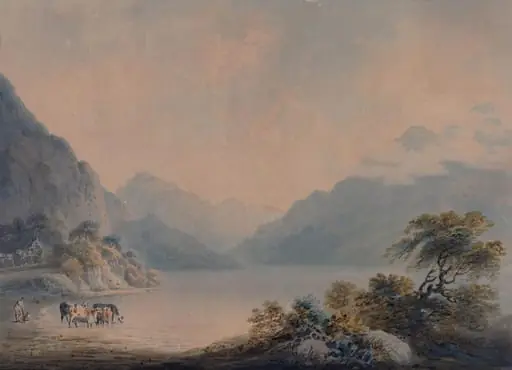
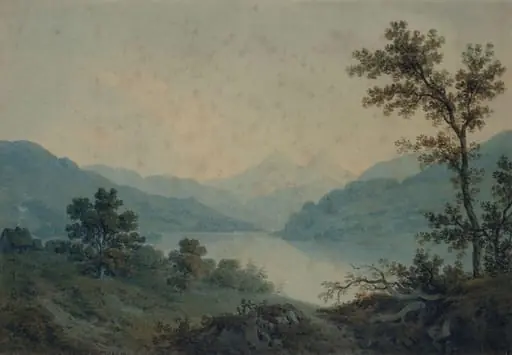
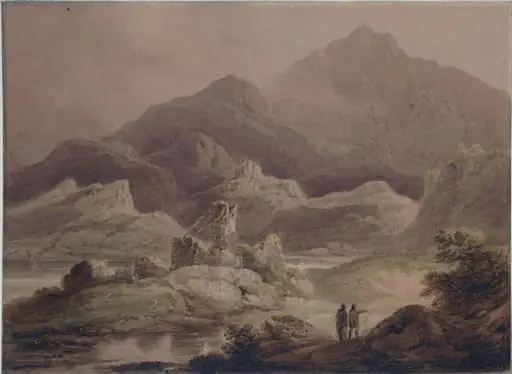
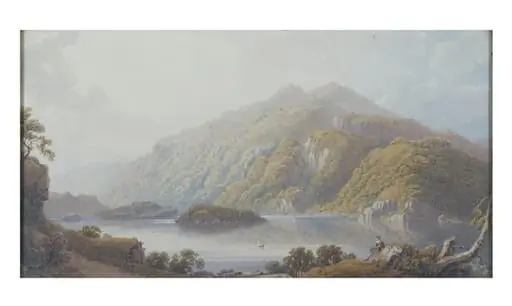
Ellen's Isle, Loch Katrine, Scotland is a watercolor work on paper by the British Romanticist artist Baverstock. It dates from 1800 and is held in the collection of the Victoria and Albert Museum. This watercolour portrays Ellen's Isle, a small island in Loch Katrine, Scotland.
About this work
Overview
The technique emphasizes subtlety over precision, aligning with 19th-century Romantic sensibilities that valued mood over topographical accuracy.
This watercolour portrays Ellen's Isle, a small island in Loch Katrine, Scotland. The composition centers on still water reflecting muted skies and distant hills, with minimal detail to suggest solitude. Soft washes of blue, gray, and pale green dominate, creating a tranquil, atmospheric effect. The technique emphasizes subtlety over precision, aligning with 19th-century Romantic sensibilities that valued mood over topographical accuracy.
Subject & Meaning
Ellen's Isle is named after a character in Sir Walter Scott’s poem 'The Lady of the Lake,' linking the landscape to literary romance. The two small figures on the shore, barely discernible, invite contemplation rather than narrative. Their presence underscores human insignificance against the vastness of nature, reinforcing the Romantic ideal of nature as a quiet, spiritual force rather than a setting for action.
Technique & Style
The artist employed thin, layered watercolor washes to dissolve boundaries between land, water, and sky. Edges of the hills are blurred, and details are suggested rather than defined, enhancing the sense of distance and mist. This restrained approach avoids sharp lines or bold contrasts, favoring a hazy, ethereal quality that evokes stillness and introspection, typical of British watercolor traditions of the period.
History & Provenance
The painting originates from a period when Scottish landscapes became popular subjects among British artists and travelers. While the artist’s identity is not specified in the provided details, such works were often created for private collectors drawn to Romantic ideals. The piece likely entered institutional collections through donations or acquisitions in the late 19th or early 20th century.
Context
During the early 1800s, interest in Scotland’s wild scenery surged following the publication of Sir Walter Scott’s works and the rise of tourism in the Highlands. Artists responded with watercolors that emphasized atmosphere and emotional resonance over topographical fidelity. This painting reflects a broader cultural fascination with nature as a source of quiet awe, shaped by literary and aesthetic movements of the time.
Legacy
Works like this contributed to the enduring association between Scottish landscapes and Romantic ideals in British art. Though not widely exhibited today, such watercolors influenced later generations of landscape painters who prioritized mood and light. Their quiet presence in museum collections continues to offer a contemplative counterpoint to more dramatic or detailed depictions of nature.
Artist & collection
Artist
Baverstock painted delicate watercolours of Scottish landscapes in the early 1800s, when artists were first spreading out from cities to capture remote lakes and ruins.