Artwork
Barrow, Derwentwater
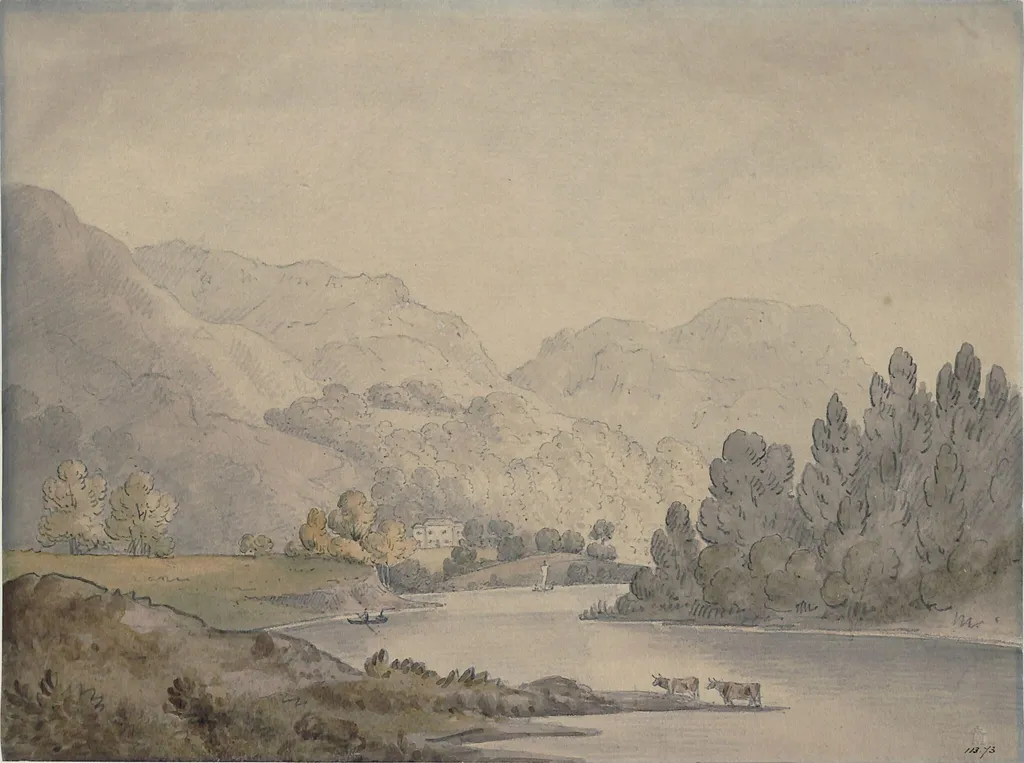
Barrow, Derwentwater is a watercolor work on paper by the British Romanticist artist Edward Hassell. It dates from 1841 and is held in the collection of the Victoria and Albert Museum.
About this work
Overview
Edward Hassell’s 1841 watercolour captures a tranquil stretch of Barrow on Derwentwater in the Lake District. Executed in delicate washes, the work conveys a quiet, atmospheric landscape with minimal detail. The composition emphasizes stillness and subtle transitions between land, water, and sky, reflecting a preference for mood over topographical precision.
Subject & Meaning
The scene presents an unpopulated, pastoral riverside: a lone boat drifts gently, while grazing animals and sparse vegetation suggest quiet rural life. There is no human activity beyond these quiet signs, inviting contemplation rather than narrative. The absence of dramatic elements aligns with a Romantic sensibility that finds significance in solitude and the subdued beauty of the natural world.
Technique & Style
The water is rendered with faint, meandering strokes; clouds and distant hills dissolve into pale greys and blues.
Hassell employs loose, fluid brushwork and transparent watercolour washes to suggest texture without definition. The water is rendered with faint, meandering strokes; clouds and distant hills dissolve into pale greys and blues. Bare trees and emerging leaves are indicated with minimal strokes, emphasizing atmosphere over detail. The muted palette reinforces a sense of quietude and temporal stillness.
History & Provenance
Created in 1841, the work belongs to a period when British artists increasingly turned to the Lake District for its unspoiled scenery. Hassell, though less known than contemporaries like Turner, participated in this trend. The painting’s survival suggests it was likely kept in private collections, possibly by patrons interested in regional landscapes rather than grand historical subjects.
Context
In the early 19th century, Romanticism encouraged artists to portray nature as emotionally resonant, not merely picturesque. Hassell’s work reflects this shift: the landscape is not idealized or heroic, but intimate and ephemeral. The emphasis on mist, soft light, and quiet movement aligns with broader cultural interests in introspection and the sublime found in ordinary natural settings.
Legacy
Though not widely exhibited or reproduced, Hassell’s watercolour contributes to a quiet tradition of British landscape watercolours that valued restraint and observation over spectacle. It stands as an example of how lesser-known artists helped shape the Romantic aesthetic through personal, meditative depictions of the English countryside.
Own this work as a print
Artist & collection
Artist
This British artist worked in watercolour during the early-to-mid 1800s, specialising in views of northern England’s lakes and fells.

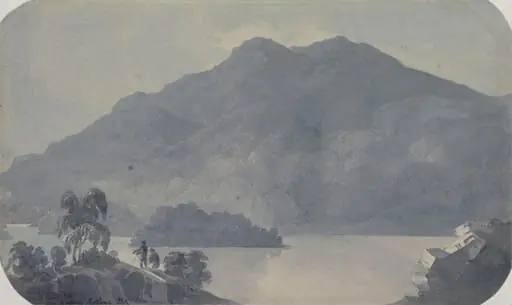 Ellen's Isle, Loch Katrine, Scotland
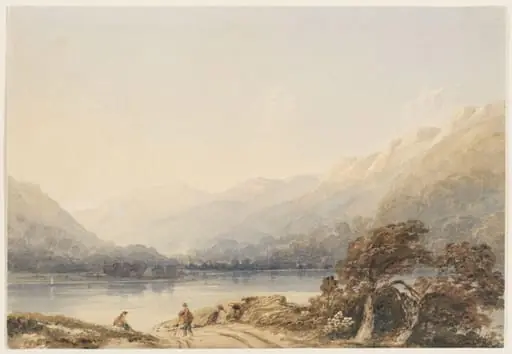 Lake scene with mountains
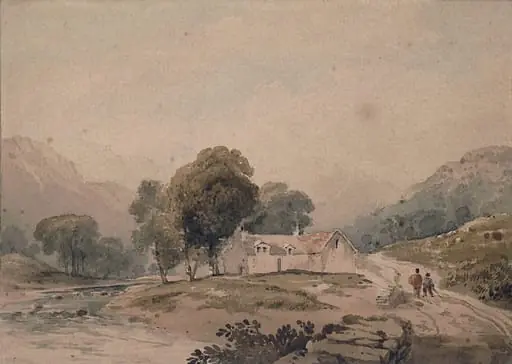 Landscape with cottage and two figures
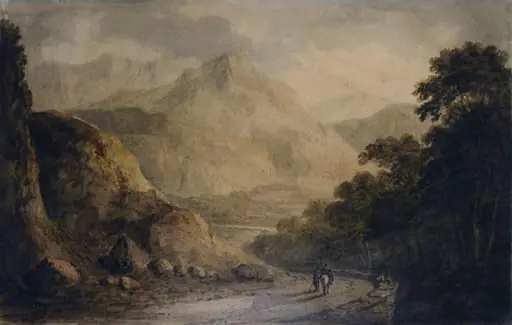 Road leading to Pont Aberglaslyn: View looking into the Vale of Festiniog, North Wales
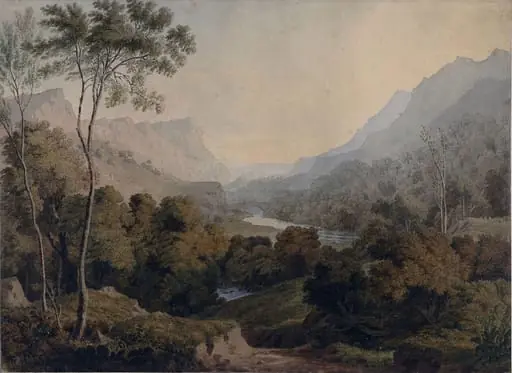 View on the Conwy, near Llanwrstm, Carnarvonshire
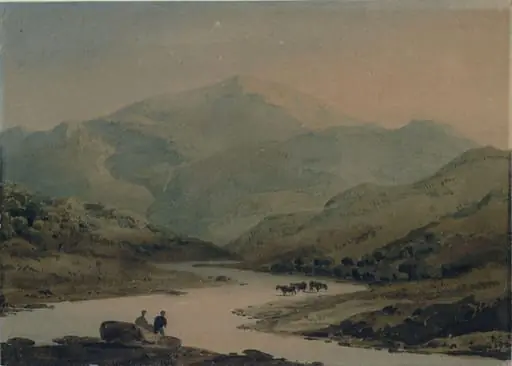 River scene: cattle in shallows
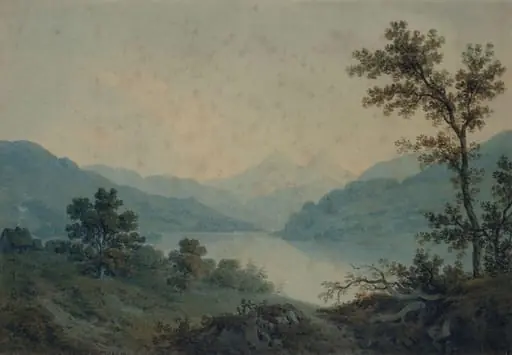 Lake or river scene in the Scottish Highlands
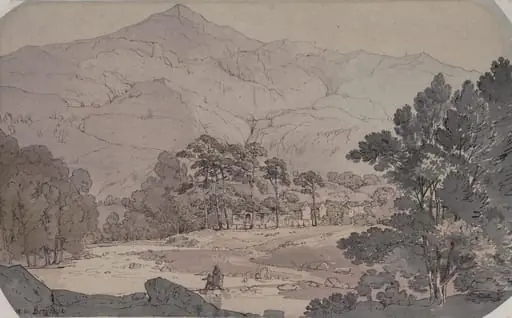 View in Borrowdale
![Landscape View [?in North Wales], by John Glover](https://artifactworldgallery.com/img/john-glover--landscape-view-in-north-wales--a6780e3d0b73ec67-w320.webp) Landscape View [?in North Wales]
Landscape View [?in North Wales]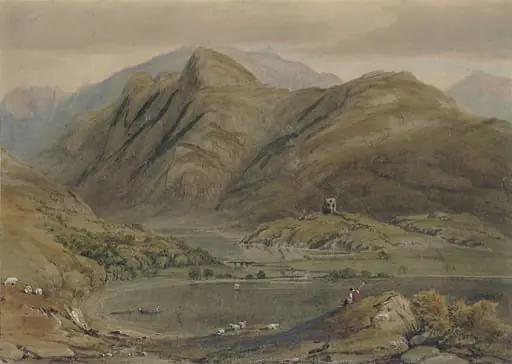 Llanberis, North Wales