Artwork
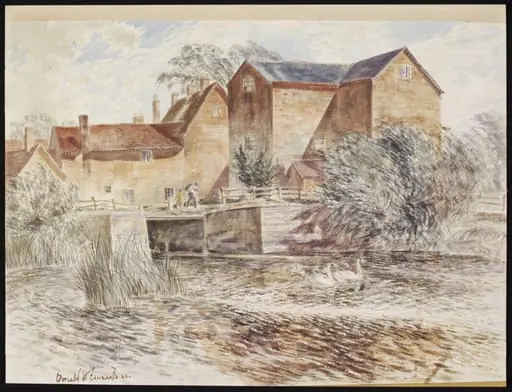
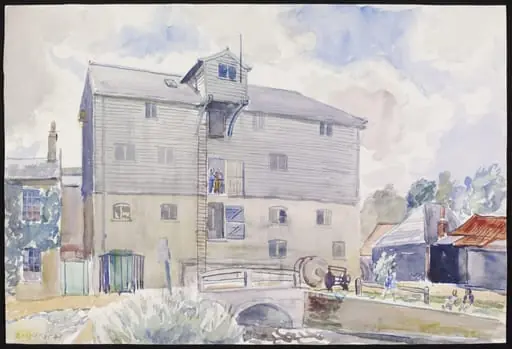
A Mill at Braintree
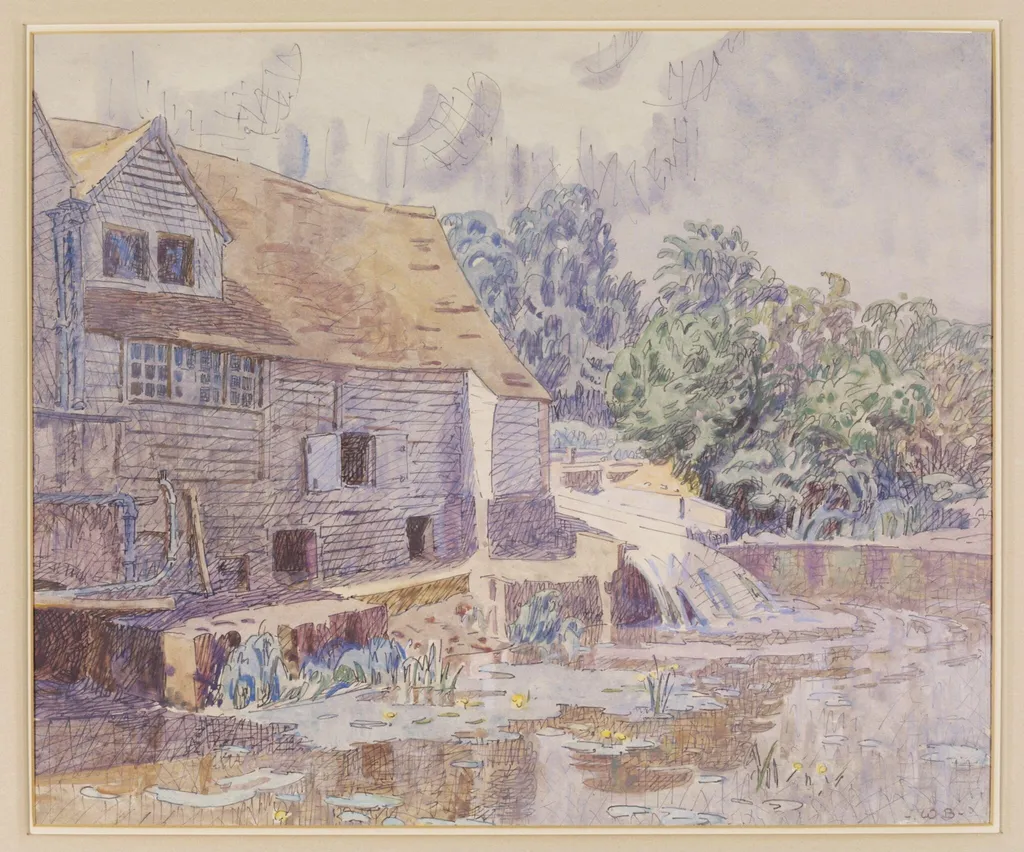
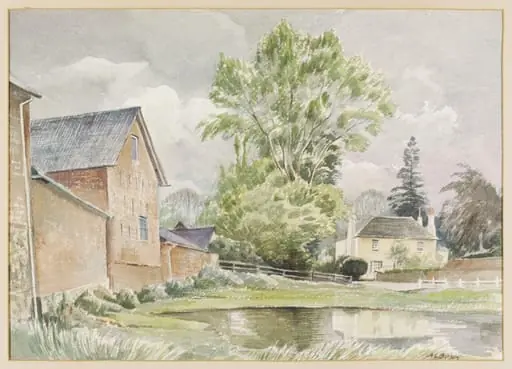
A Mill at Braintree is a watercolor work on paper by Walter Bayes. It dates from 1940 and is held in the collection of the Victoria and Albert Museum.
About this work
Overview
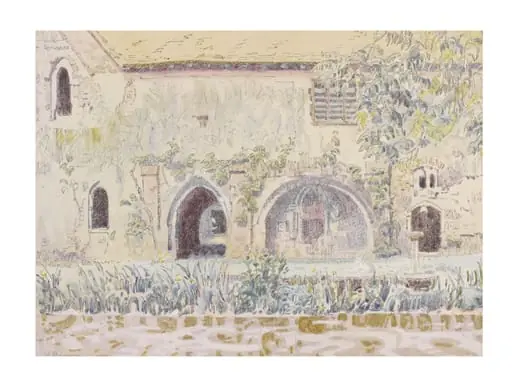
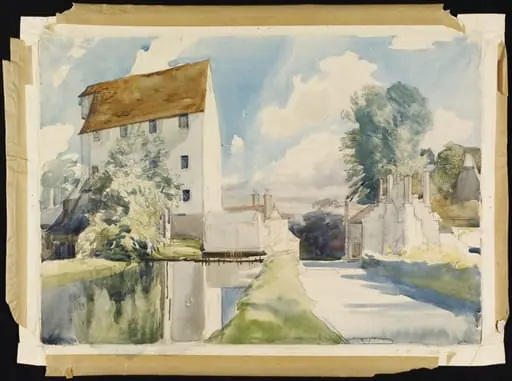
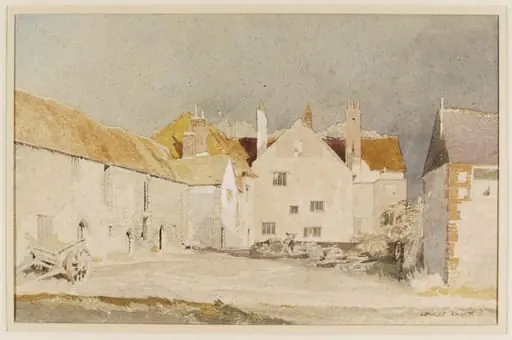
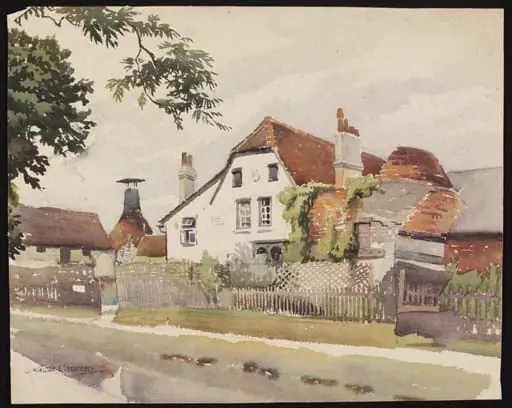
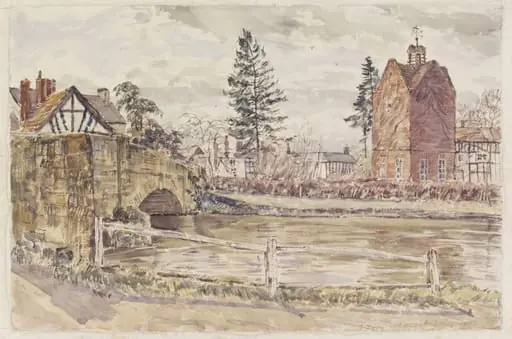
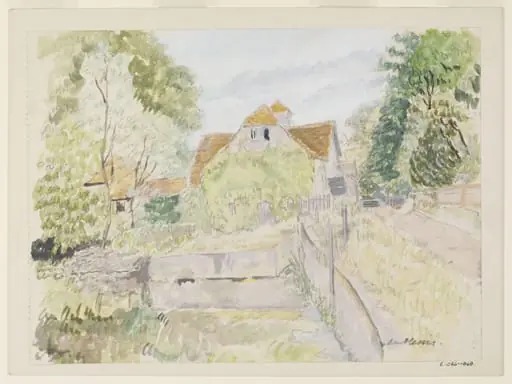
Walter Bayes’s watercolour titled *A Mill at Braintree* records a once‑busy water‑mill on an Essex river during the early 1940s. Executed for the Recording Britain project, the work captures the structure in a state of neglect, with its surrounding pool overgrown by water‑weed and the building itself showing clear signs of decay.
Subject & Meaning
The painting reflects the broader decline of rural water‑mills that had been central to local industry but were largely superseded by modern technology by the mid‑20th century. Bayes chooses to emphasize the mill’s abandonment, suggesting a quiet commentary on the passage of time and the loss of traditional livelihoods.
Technique & Style
Rendered in watercolor, Bayes employs muted earth tones and loose washes to convey the damp atmosphere of the site. The brushwork suggests a slightly gritty texture on the mill’s walls, while the water‑weed in the pool is depicted with fluid, overlapping strokes that enhance the sense of stagnation.
History & Provenance
Created as part of the wartime Recording Britain scheme, the work was intended to document at‑risk architectural and industrial sites. The water‑mill at Braintree, like many Essex mills, had fallen into disuse by the 1940s, and Bayes’s depiction serves as a visual record of its condition at that moment in history.
Artist & collection
Artist
Walter John Bayes was an English painter and illustrator who was a founder member of both the Camden Town Group and the London Group and also a renowned art teacher and critic.