Artwork
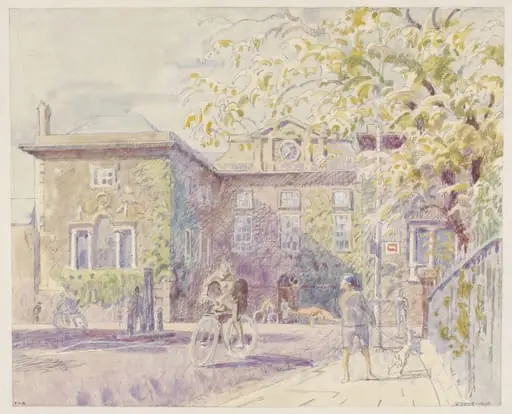
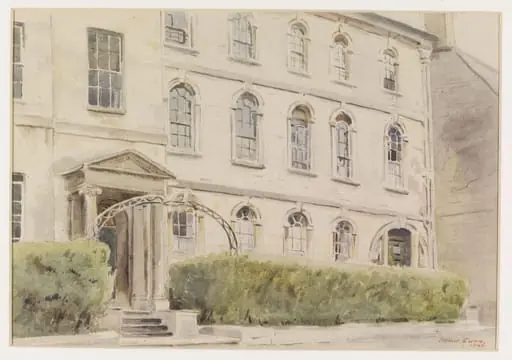
Corner of the Sheldonian, Oxford
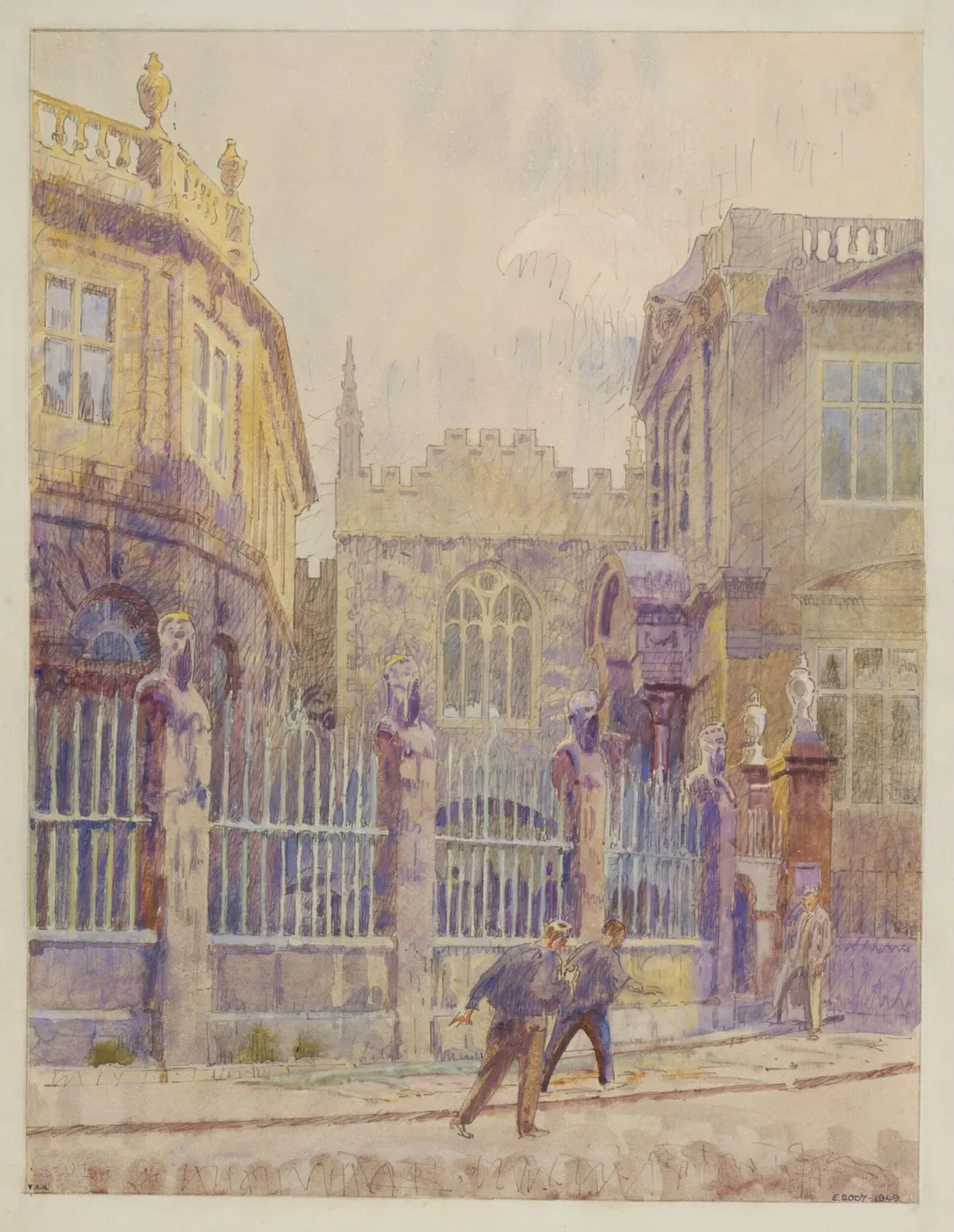
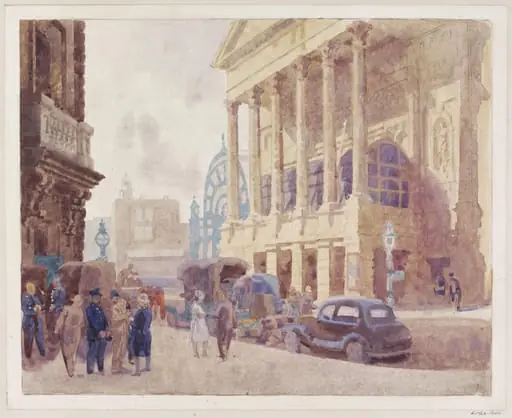
Corner of the Sheldonian, Oxford is a watercolor work on paper by Walter Bayes. It dates from 1940 and is held in the collection of the Victoria and Albert Museum.
About this work
Overview
Walter Bayes created this watercolour in 1940 as part of the Recording Britain project, a wartime effort to preserve visual records of the British landscape.
Walter Bayes created this watercolour in 1940 as part of the Recording Britain project, a wartime effort to preserve visual records of the British landscape. The work captures a quiet corner of the Sheldonian Theatre in Oxford, focusing on architectural detail and fleeting human movement. Rendered in soft washes, the scene reflects the project’s aim to document places deemed vulnerable to wartime change or urban transformation.
Subject & Meaning
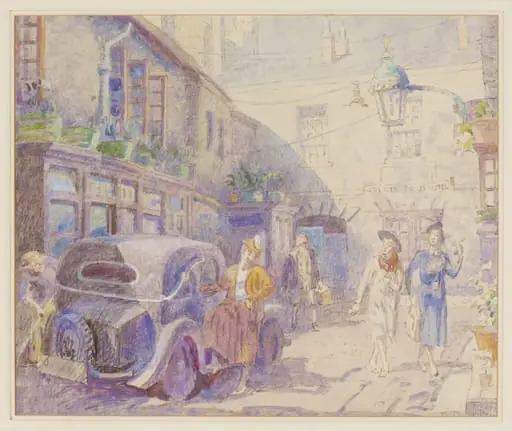
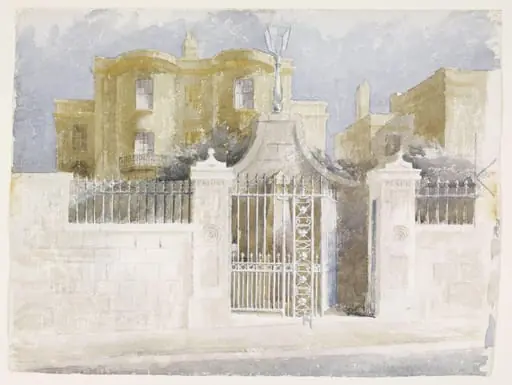
Two figures, likely students, pass swiftly along the street, their postures suggesting urgency—perhaps en route to academic duties. The scene emphasizes ordinary life amid institutional grandeur, with statues lining the fence as silent sentinels. The gate, leading to a courtyard crowned by a spire, frames the architecture as both functional and ceremonial, hinting at the enduring rhythm of university life during a time of national uncertainty.
Technique & Style
Bayes employed loose, fluid brushwork and translucent watercolour layers to convey immediacy and atmosphere. Cool blues and purples dominate the shadows, contrasting with the muted stone tones of the buildings. Delicate detailing in the carvings and windows suggests observation rather than idealization. The sketch-like quality conveys a sense of transient observation, aligning with the project’s documentary intent.
History & Provenance
Commissioned by the Pilgrim Trust under the Recording Britain initiative, the work was one of over 1,500 produced between 1940 and 1943. Artists were employed to record sites at risk from conflict or modernization. This piece entered the Victoria and Albert Museum’s collection as part of the project’s archive, preserving a visual record of Britain’s architectural heritage during wartime.
Context
Created during the early years of World War II, the painting reflects a national effort to safeguard cultural identity through art. While bombs fell on cities, artists turned to quieter corners—university quads, village lanes, coastal cliffs—to record a Britain perceived as fragile. The Sheldonian, a symbol of academic continuity, became a quiet emblem of resilience amid disruption.
Legacy
The Recording Britain collection remains a vital archive of mid-20th-century British topography and social texture. Bayes’s watercolour contributes to this legacy by capturing not just a building, but the everyday presence of its users. Its modest scale and unembellished tone offer a counterpoint to grand historical narratives, affirming the value of ordinary moments in times of upheaval.
Artist & collection
Artist
Walter John Bayes was an English painter and illustrator who was a founder member of both the Camden Town Group and the London Group and also a renowned art teacher and critic.

![North Gate [by Thomas Harrison], Chester, by Causer](https://artifactworldgallery.com/img/causer--north-gate-by-thomas-harrison-chester--aa1b0a0e4cef52c8-w320.webp)