Artwork
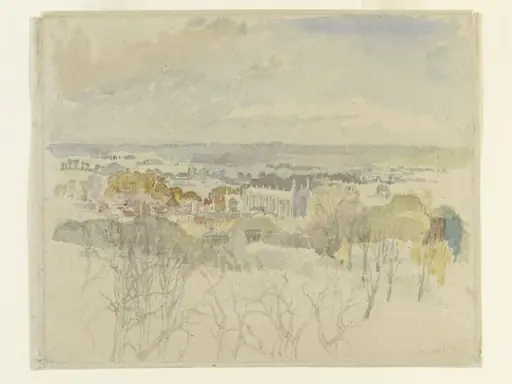
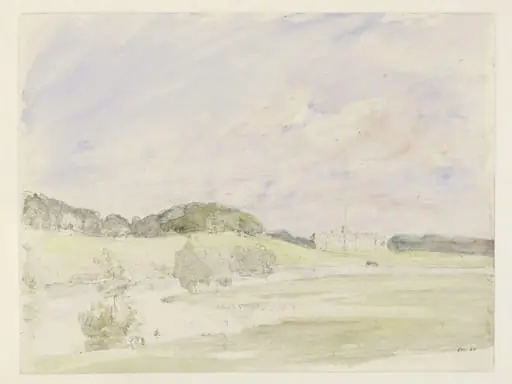
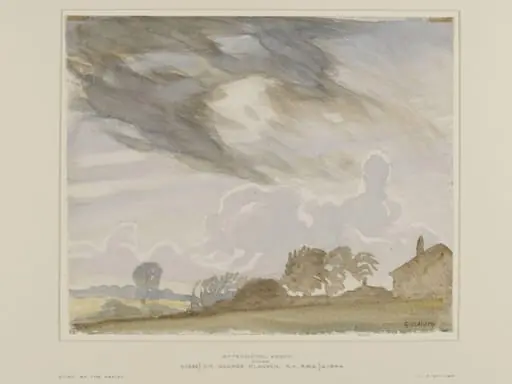
Colchester from the North Station
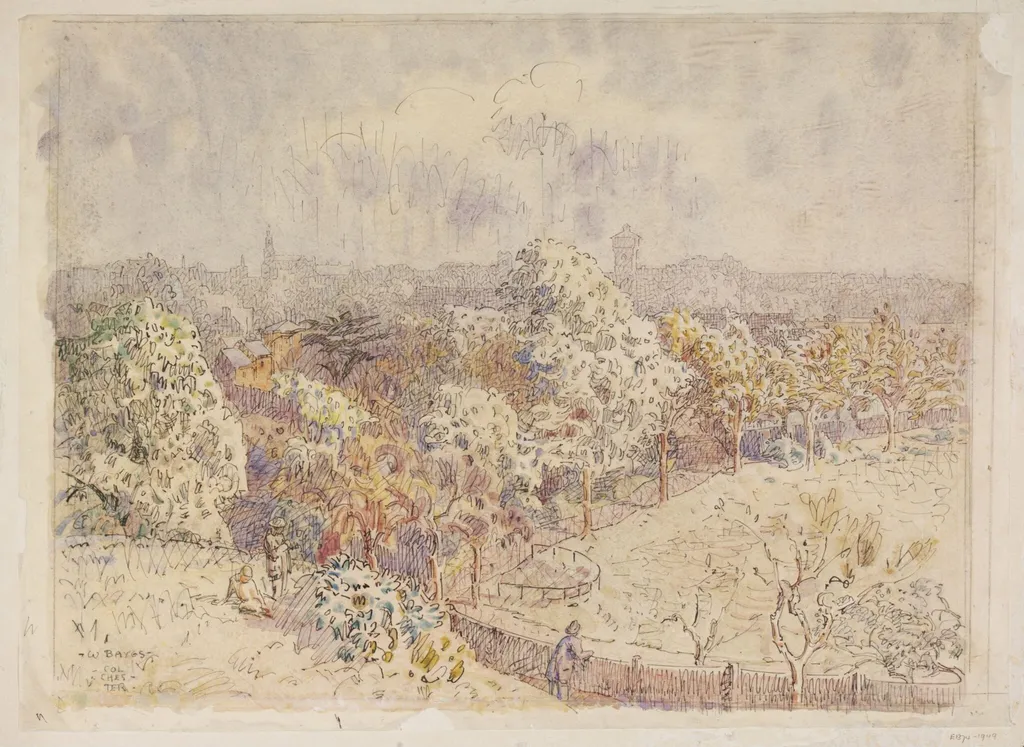
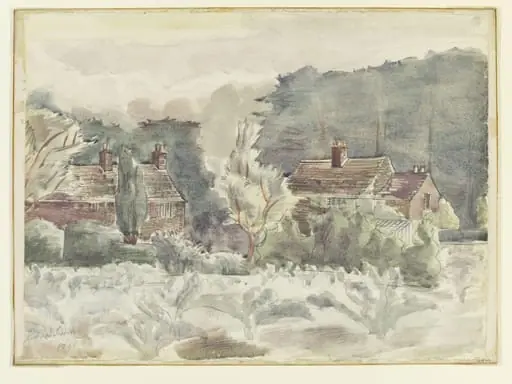
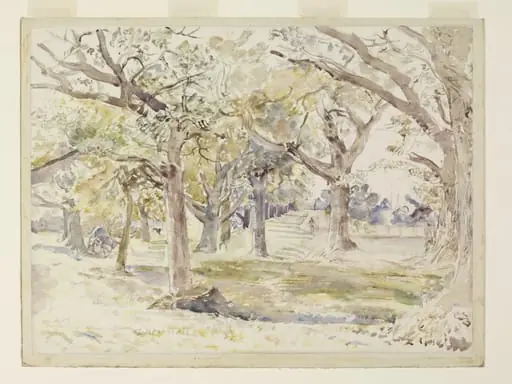
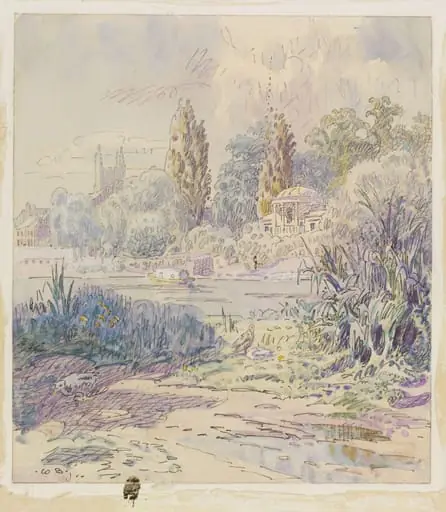
Colchester from the North Station is a watercolor work on paper by Walter Bayes. It dates from 1940 and is held in the collection of the Victoria and Albert Museum.
About this work
Overview
A modest park dominates the foreground, while the built environment recedes into a hazy horizon, suggesting a deliberate shift in focus from activity to repose.
Walter Bayes painted this watercolour of Colchester from the vantage of its North Station, capturing a tranquil green space rather than the urban bustle typical of his other works. The scene omits the city’s commercial energy, instead emphasizing stillness and distance. A modest park dominates the foreground, while the built environment recedes into a hazy horizon, suggesting a deliberate shift in focus from activity to repose.
Subject & Meaning
The painting presents a quiet, almost secluded park with scattered figures strolling beneath trees, contrasting with Bayes’s usual depictions of Colchester’s crowded streets. The city’s presence is minimal—only a church spire and distant rooftops hint at its proximity. This framing suggests an interest in solitude within an urban setting, offering a contemplative counterpoint to the town’s commercial identity.
Technique & Style
Executed in watercolour, the work employs soft washes and delicate brushwork to convey atmosphere rather than detail. The foliage is rendered with loose, fluid strokes, while the distant skyline is muted in pale tones, creating depth through subtlety. The composition avoids sharp lines or dramatic contrasts, reinforcing the scene’s calm, diffused light and quiet rhythm.
History & Provenance
The watercolour was created during Bayes’s period of frequent visits to Colchester, though it stands apart from his more commonly documented street scenes. It entered the Victoria and Albert Museum’s collection as part of a broader acquisition of British watercolours, reflecting the institution’s interest in lesser-known, intimate views of English towns by early 20th-century artists.
Context
In the early 1900s, British artists increasingly turned to everyday landscapes as subjects worthy of serious attention. Bayes’s choice to depict a quiet park near a railway station aligns with this trend, privileging quiet observation over spectacle. The scene reflects a broader cultural shift toward valuing moments of stillness amid industrialization and urban growth.
Legacy
Though not among Bayes’s most widely exhibited works, this watercolour illustrates his capacity to reinterpret familiar locales with quiet originality. It remains a notable example of how British watercolourists used restraint and atmosphere to convey emotional resonance, influencing later generations interested in the poetic potential of ordinary places.
Artist & collection
Artist
Walter John Bayes was an English painter and illustrator who was a founder member of both the Camden Town Group and the London Group and also a renowned art teacher and critic.