Artwork
A fox walking through a wood
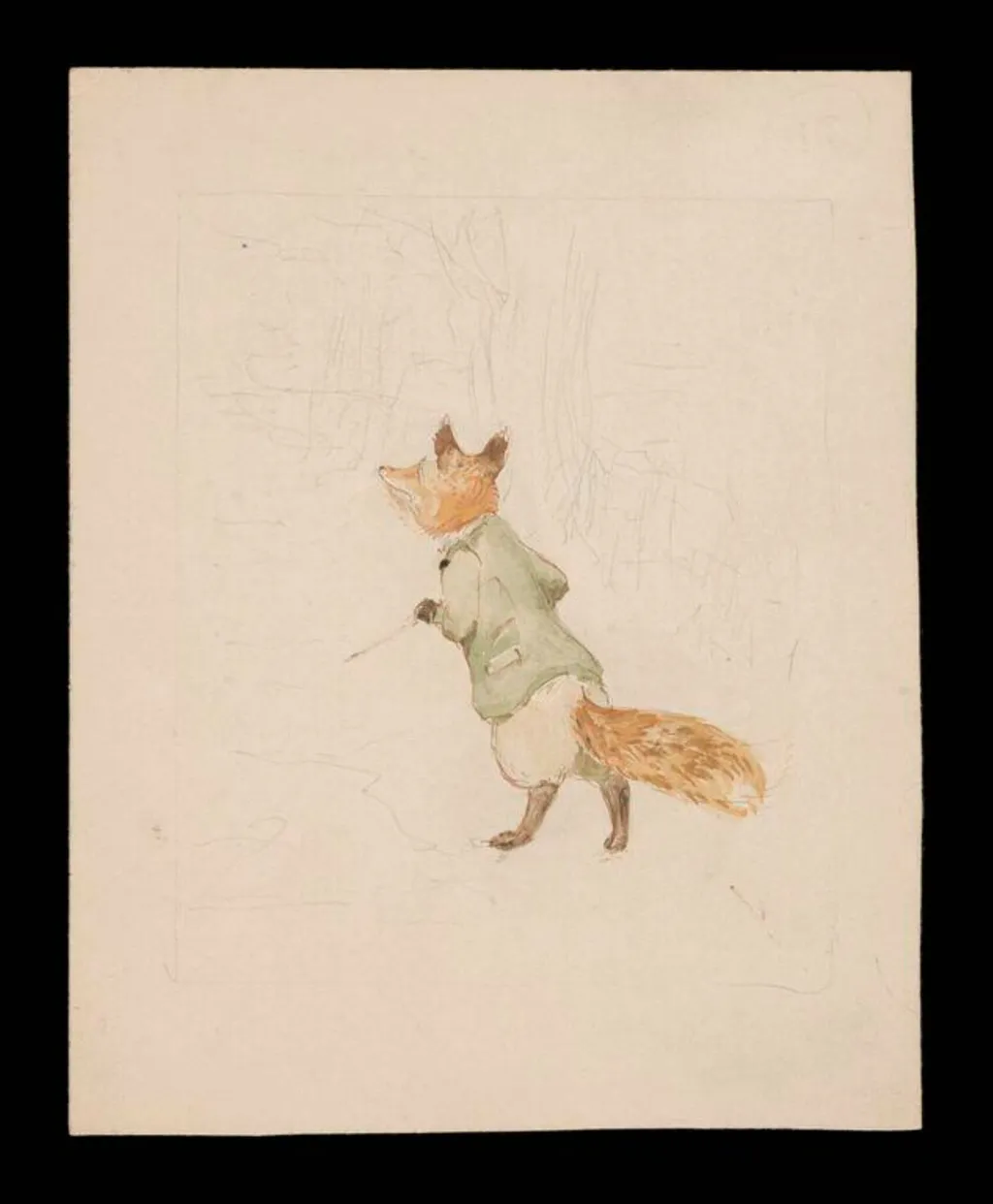
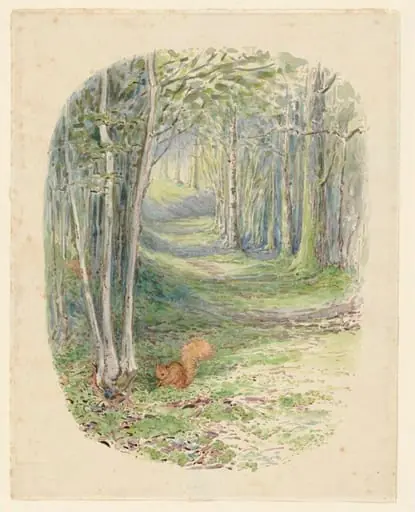
A fox walking through a wood is a watercolor work on paper by Beatrix Potter. It dates from 1919 and is held in the collection of the Victoria and Albert Museum. Created in 1919, this watercolour depicts a fox moving through a wooded landscape.
About this work
Beatrix Potter painted *A Fox Walking Through a Wood* in 1919 using watercolour. Known for *Peter Rabbit*, this piece shows her talent for animal art.
Before writing children’s books, she illustrated Aesop’s fables in the 1890s. Later, she revisited animal tales with books like *The Tale of Johnny Town-Mouse*.
If you like this, look up the Victoria and Albert Museum.
Overview
Though not part of a published book, it was likely a preparatory study for an unproduced project involving fable-inspired characters.
Created in 1919, this watercolour depicts a fox moving through a wooded landscape. Executed by Beatrix Potter during a period when she was exploring animal-themed narratives beyond her Peter Rabbit series, the work reflects her sustained interest in naturalistic animal observation. Though not part of a published book, it was likely a preparatory study for an unproduced project involving fable-inspired characters.
Subject & Meaning
The fox, rendered with quiet dignity, moves alone through a dense, softly rendered woodland. Potter avoids anthropomorphism, instead emphasizing the animal’s instinctive posture and movement. The scene evokes the quiet tension of wild life, aligning with her earlier engagement with Aesop’s fables, where animals embody natural truths rather than human morals. The setting suggests a liminal space—neither domesticated nor entirely wild—hinting at the boundary between story and reality.
Technique & Style
Potter employed delicate watercolour washes to suggest dappled light and foliage, using fine brushwork to define the fox’s fur and the texture of bark and undergrowth. Her palette is muted, dominated by earth tones and soft greens, enhancing the sense of quiet realism. The composition is intimate and uncluttered, focusing attention on the animal’s form and its interaction with the environment, a hallmark of her scientific approach to illustration.
History & Provenance
This study was made in 1919 as part of Potter’s attempt to develop a new book blending Aesopian themes with original characters, including a crow and a fox. Though her publisher rejected the concept, deeming it too derivative of Aesop, the watercolour survives as evidence of her creative persistence. It remained in her personal collection and later entered institutional holdings, where it is now recognized as a key example of her post-Peter Rabbit artistic development.
Context
By 1919, Potter had already established herself as a successful children’s author and illustrator, but she continued to pursue independent projects rooted in natural history. Her return to Aesop’s fables reflected a deeper engagement with traditional moral tales, filtered through her own meticulous observation of wildlife. This period also coincided with her growing commitment to land conservation in the Lake District, influencing her focus on authentic, unidealized natural settings.
Legacy
Though the planned book was never published, this watercolour remains a testament to Potter’s artistic discipline and her refusal to repeat herself. It demonstrates how her scientific training and love of nature informed even unpublished work. Today, it is studied alongside her published illustrations as evidence of a broader, more complex artistic vision that extended beyond commercial success.
Artist & collection
Artist
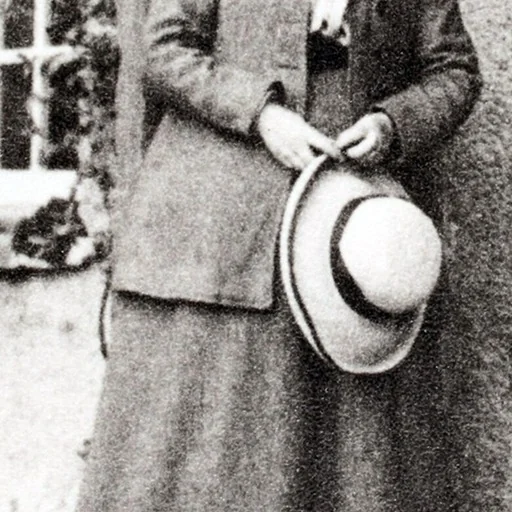
Helen Beatrix Heelis (née Potter; 28 July 1866 – 22 December 1943), usually known as Beatrix Potter ( BEE-ə-triks), was an English writer, illustrator, natural scientist, and conservationist.

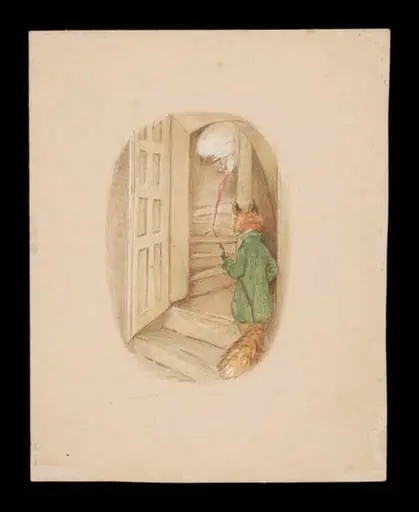 The fox following the stork up a staircase
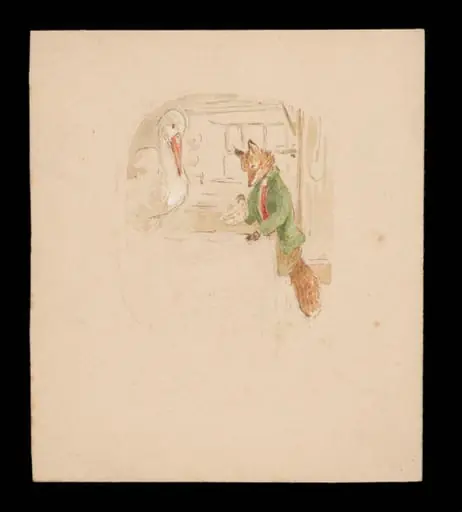 The fox pouring tea
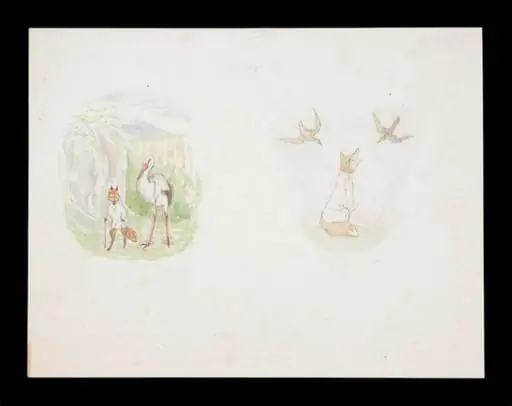 A fox in a glade with a stork; a fox looking up at two birds
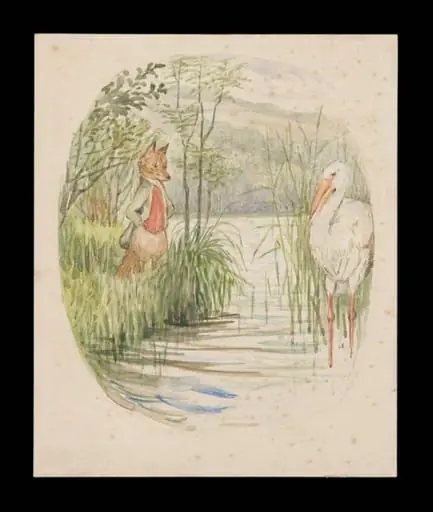 The fox looking over the stream at the stork
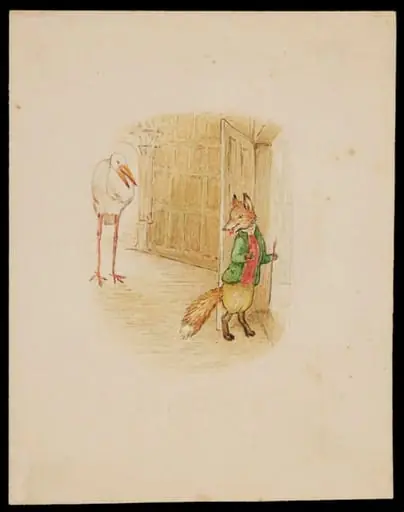 The fox taking leave of the stork
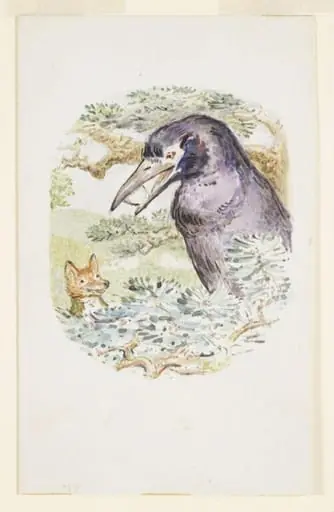 The Fox and the Crow
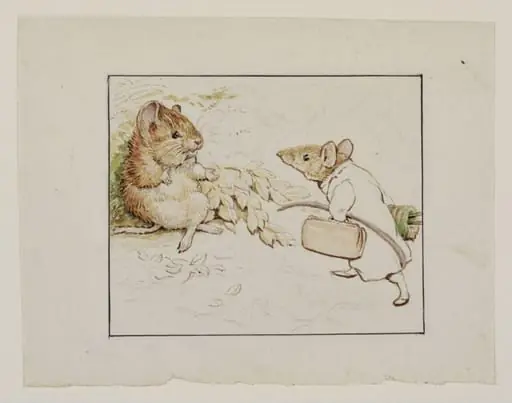 Untitled
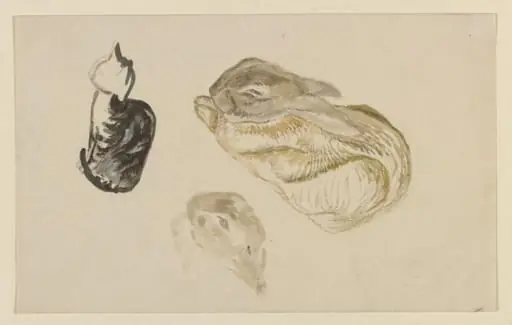 Studies of a rabbit and a cat
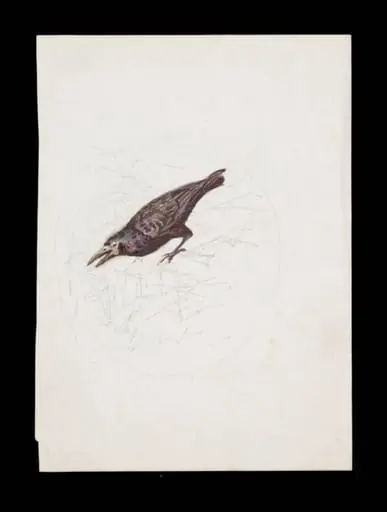 Study of a crow, with a faintly sketched background
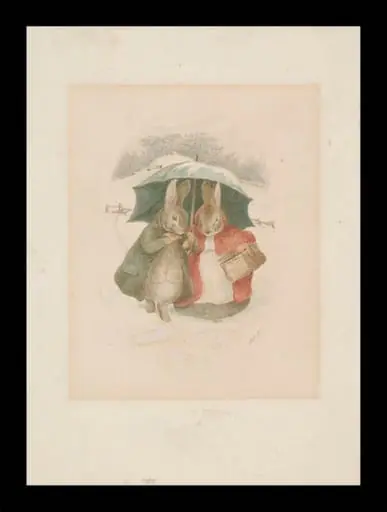
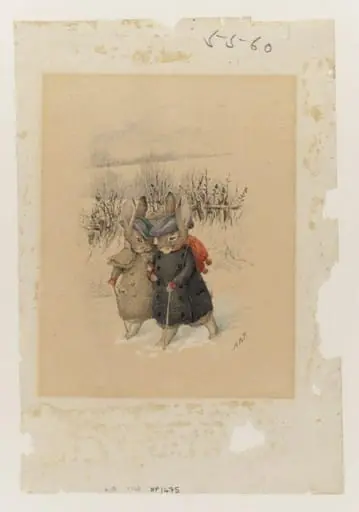 Two rabbits in hats and coats with walking sticks walking through snow
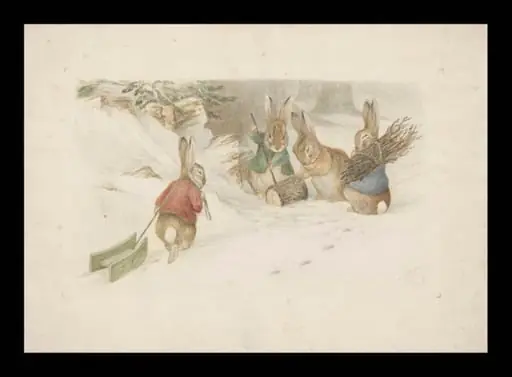 Four rabbits in the snow