Artwork
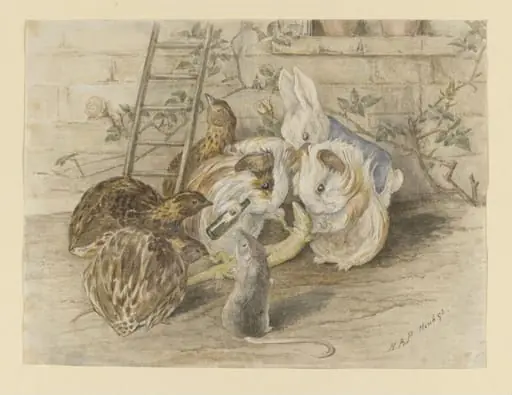
Come dance a jig to my Granny's pig
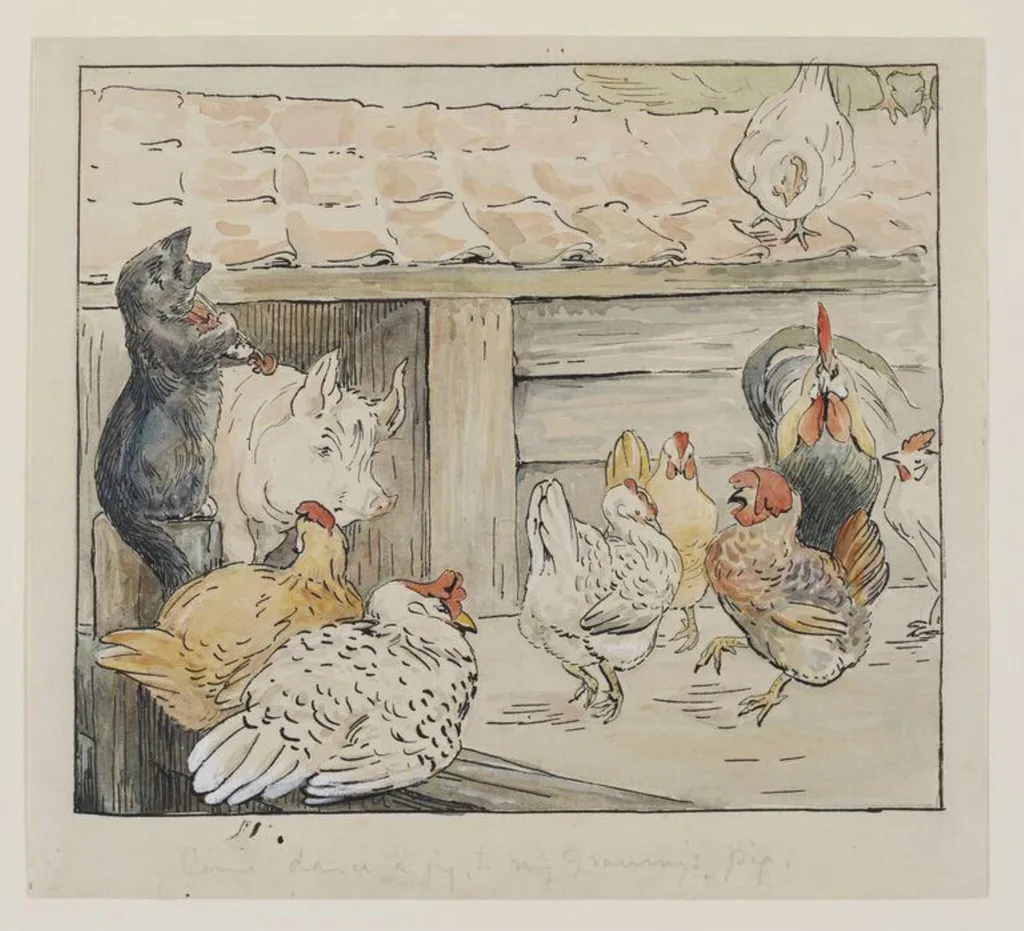
Come dance a jig to my Granny's pig is a watercolor work on paper by the Post-Impressionist artist Beatrix Potter. It dates from 1905 and is held in the collection of the Victoria and Albert Museum.
About this work
The painting is called "Come dance a jig to my Granny's pig" by Beatrix Potter.
It was created in 1905 as part of a series of drawings for a book of rhymes.
Beatrix Potter worked with her publisher to develop some of these rhymes into stories, which became very popular.
You can learn more about Beatrix Potter's work at the Victoria and Albert Museum.
Overview
Though never included in the final published volume, it reflects her interest in extending her artistic practice beyond the Peter Rabbit tales.
Created in 1905, this watercolour was one of several illustrations Beatrix Potter made for a proposed collection of nursery rhymes. Though never included in the final published volume, it reflects her interest in extending her artistic practice beyond the Peter Rabbit tales. The work was part of a private project developed in collaboration with her publisher, Norman Warne, who annotated potential candidates for publication in a bound notebook now held in the Linder Bequest.
Subject & Meaning
The image illustrates a whimsical, nonsensical rhyme about a pig and a dance, typical of traditional English nursery verses. Potter’s depiction likely shows a domestic scene with anthropomorphic animals, consistent with her broader approach of blending rural life with gentle fantasy. The subject matter was not intended for moral instruction but rather to evoke playful rhythm and visual charm, aligning with the oral traditions of children’s verse.
Technique & Style
Executed in watercolour, the piece demonstrates Potter’s precise draftsmanship and delicate use of washes. Her style remains grounded in naturalistic observation, even when depicting fantastical elements. The composition is intimate and detailed, with careful attention to texture and form, reflecting her background in scientific illustration and her deep familiarity with the English countryside and its creatures.
History & Provenance
The drawing originated in a 1905 notebook compiled by Potter and annotated by Norman Warne, her publisher. After his sudden death that August, the project was shelved. Years later, some of the rhymes were revised and published in Appley Dapply’s Nursery Rhymes (1917), though this particular image was omitted. The original notebook, marked with Warne’s initials, is preserved in the Linder Bequest at the Victoria and Albert Museum.
Context
During the early 1900s, Potter faced pressure from her publisher to produce more Peter Rabbit stories, which were commercially successful. The nursery rhyme project was an experimental departure, partly motivated by a desire to diversify her output. The outbreak of World War I later made the simpler, quicker format of rhymes more practical than full-length tales, influencing her eventual decision to revive select ones for publication.
Legacy
Though not published in her lifetime, this watercolour remains a testament to Potter’s broader creative ambitions beyond her famous tales. It reveals her engagement with folk traditions and her willingness to experiment with form. The survival of the original notebook and related works has allowed scholars to trace the evolution of her artistic process and the collaborative nature of her publishing relationship with Warne.
Artist & collection
Artist
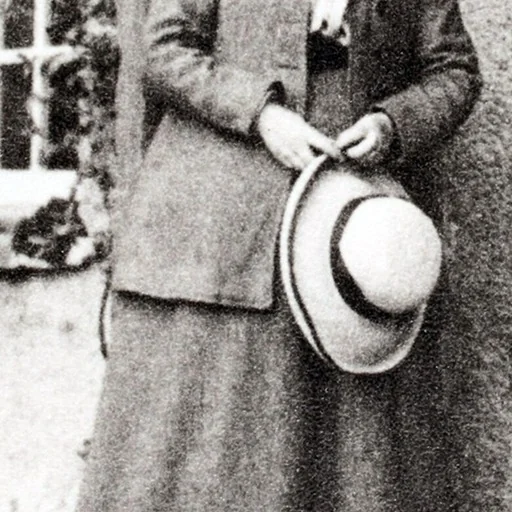
Helen Beatrix Heelis (née Potter; 28 July 1866 – 22 December 1943), usually known as Beatrix Potter ( BEE-ə-triks), was an English writer, illustrator, natural scientist, and conservationist.

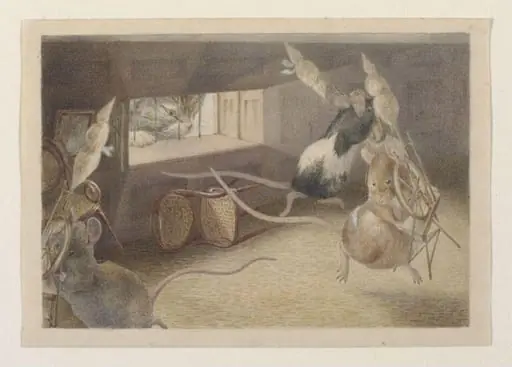 'What are you at, my fine little Men?'
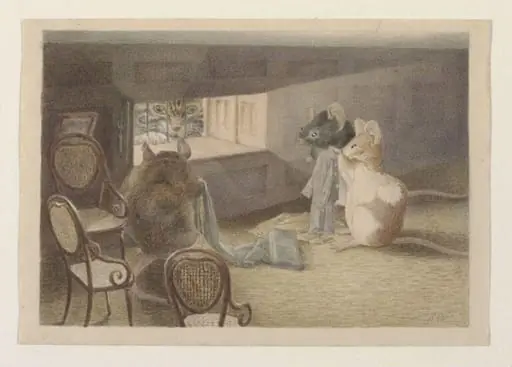 'Making coats for Gentlemen'
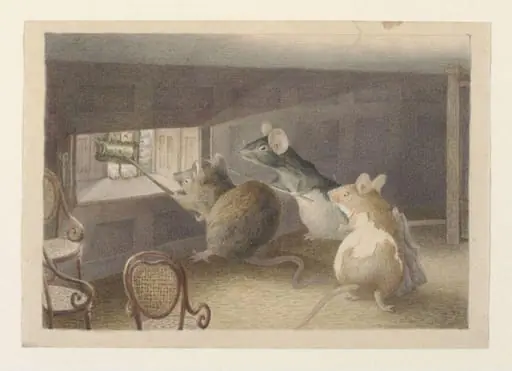 'Shall I come in, and cur off your threads?'
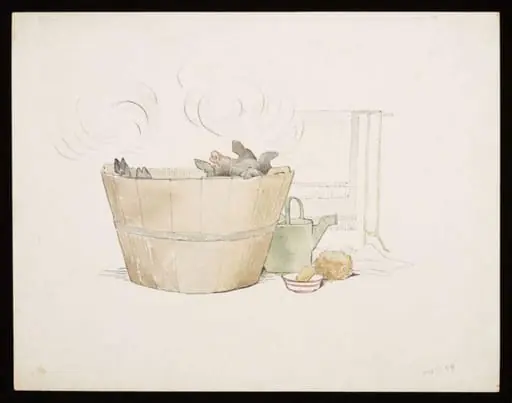 Pig in a tub
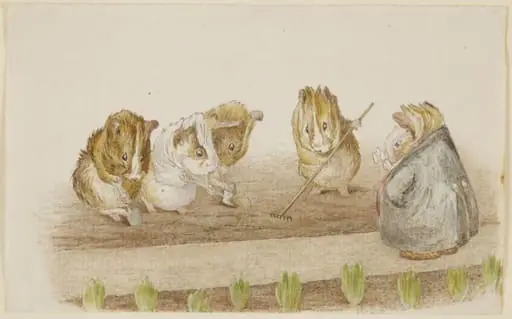 Guinea pigs gardening
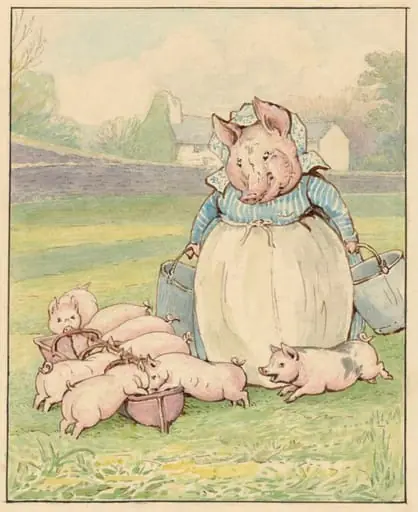 Aunt Pettitoes feeding her piglets
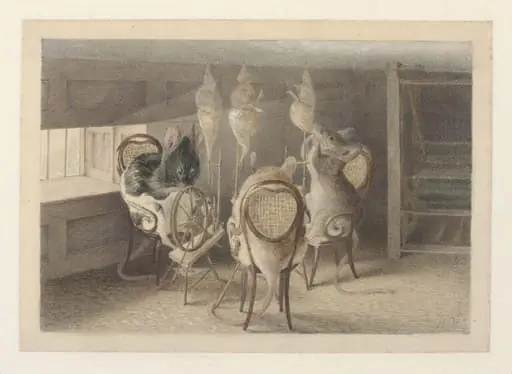 Three little Mice sat down to spin
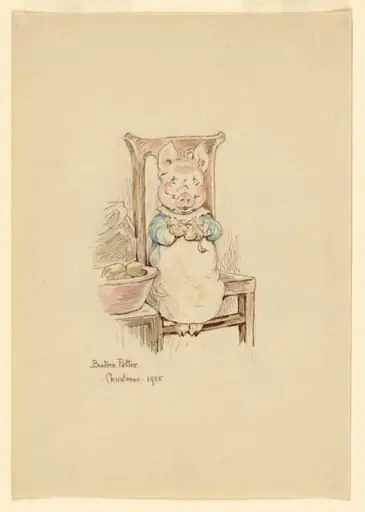 Design for a Christmas card: little pig sitting in a chair
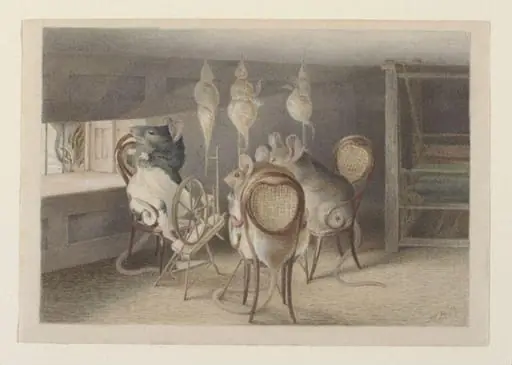 Pussy passed by, and she peeped in
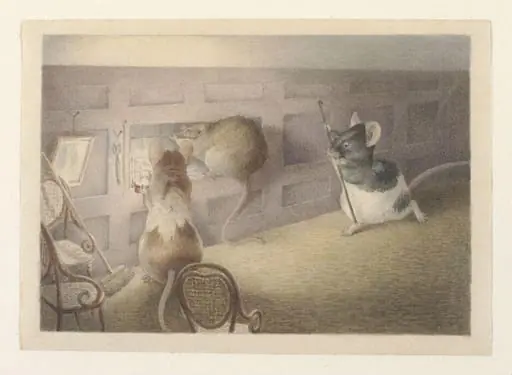 'Oh no! Miss Pussy, you'd bite off our heads'
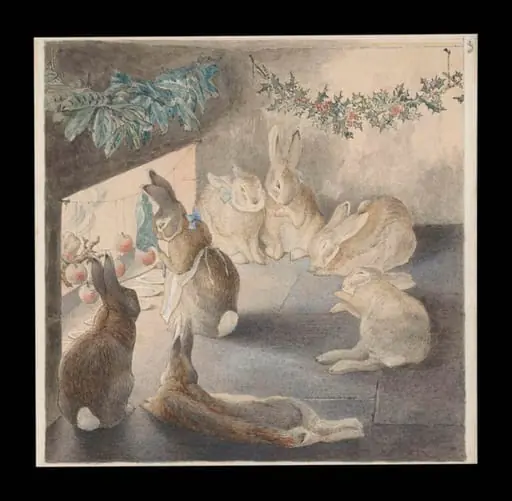 The Rabbits' Christmas Party: Roasting Apples