Artwork
Crow with cheese in its beak
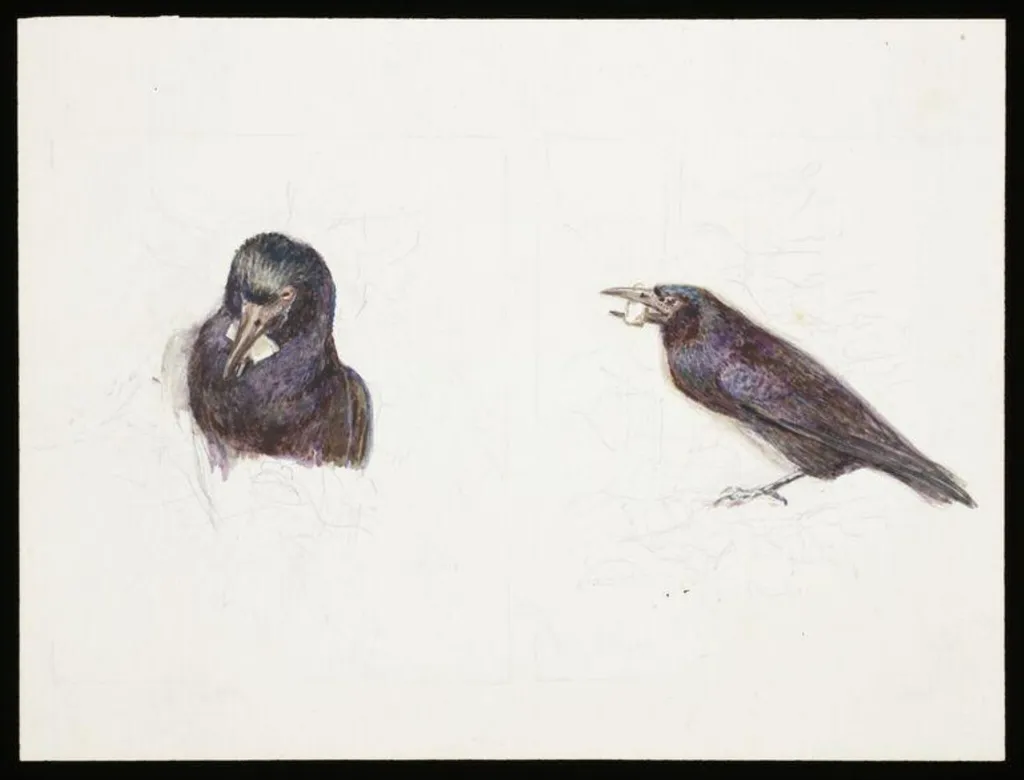
Crow with cheese in its beak is a watercolor work on paper by Beatrix Potter. It dates from 1919 and is held in the collection of the Victoria and Albert Museum.
About this work
The painting is called "Crow with cheese in its beak".
Beatrix Potter created it in 1919. She was an author and illustrator who liked to draw animals.
She also liked to show animals doing natural things, which is interesting because it shows her attention to detail.
You can learn more about her style by looking at the work of Beatrix Potter.
Overview
Crow with cheese in its beak is a 1919 watercolour by Beatrix Potter, created during her exploration of Aesop's fables. The piece likely served as a study for an unpublished adaptation of 'The Fox and the Crow'.
Subject & Meaning
The subject, a crow with cheese in its beak, reflects Potter's tendency to depict animals in naturalistic scenarios, hinting at the moral tale of cunning and deception from 'The Fox and the Crow' fable.
Technique & Style
Characteristically, Potter's watercolour showcases her attention to animal anatomy and behaviour, blending observational realism with a touch of illustrative charm, consistent with her approach to children's literature illustrations.
History & Provenance
Created in 1919, the work was part of an unsuccessful proposal to her publishers, Frederick Warne & Co., for a book combining Aesop's fables, featuring Miss Jenny Crow and a fox. The project was rejected as too closely aligned with Aesop's original work.
Artist & collection
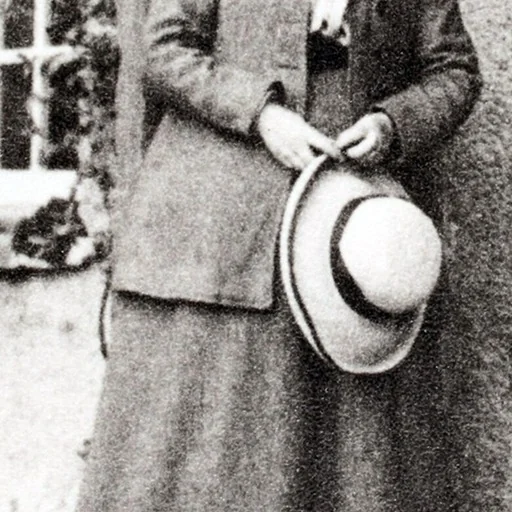
Artist
Helen Beatrix Heelis (née Potter; 28 July 1866 – 22 December 1943), usually known as Beatrix Potter ( BEE-ə-triks), was an English writer, illustrator, natural scientist, and conservationist.