Artwork
A Malacca Crossbeak
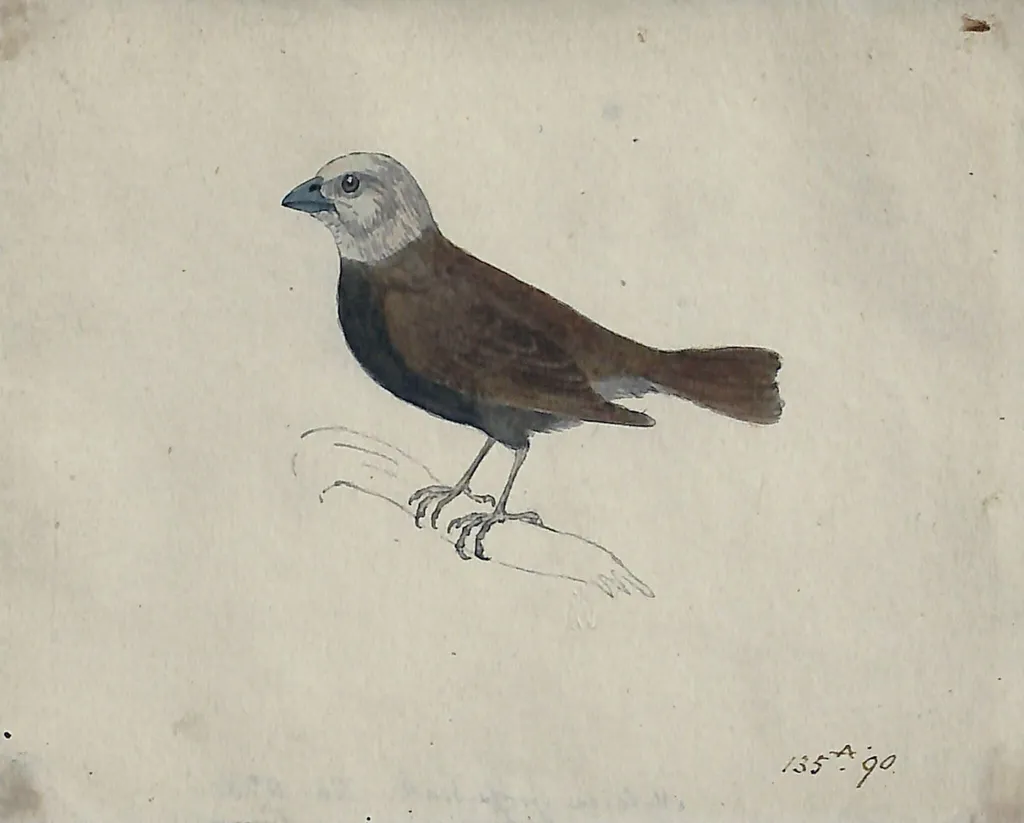
A Malacca Crossbeak is a watercolor work on paper by the Rococo painting artist Bewick. It dates from 1773 and is held in the collection of the Victoria and Albert Museum.
About this work
Overview
Created in 1773, this watercolour by Thomas Bewick depicts a Malacca Crossbeak, a bird species native to Southeast Asia. Rendered in delicate washes, the image captures the bird in a quiet, upright stance atop a minimal branch. The composition prioritizes form and color over ornamental detail, reflecting the observational aims of early natural history illustration.
Subject & Meaning
The Malacca Crossbeak, identified by its distinctive crossed mandibles, is portrayed without contextual elements such as habitat or behavior. The focus on anatomical accuracy suggests an intent to document rather than dramatize. This restrained approach aligns with scientific recording practices of the period, where visual clarity served classification over artistic expression.
Technique & Style
Bewick employed transparent watercolour washes to define the bird’s plumage: gray on the head, white on the throat, and brown across the body and wings.
Bewick employed transparent watercolour washes to define the bird’s plumage: gray on the head, white on the throat, and brown across the body and wings. The beak and legs are rendered with light, tentative lines. Background and branch are barely suggested, allowing the subject to dominate. The technique emphasizes structure and tone, avoiding intricate feather detail in favor of overall silhouette.
History & Provenance
This work originates from Bewick’s early period, before his renowned wood engravings for natural history texts. It likely formed part of a personal study collection, possibly used to inform later publications. No public record of its immediate provenance survives, but its style matches other known preparatory studies from his youth in Northumberland.
Context
In the late 18th century, naturalists increasingly relied on direct observation and visual documentation. Bewick’s watercolours, though less polished than his later engravings, contributed to a growing tradition of empirical illustration. This piece reflects the shift from decorative natural history to systematic recording, anticipating the scientific rigor of later ornithological works.
Legacy
Though not widely exhibited, this watercolour exemplifies Bewick’s foundational approach to natural illustration. His commitment to truthful representation, even in preliminary studies, influenced generations of wildlife artists. The piece stands as a quiet precursor to his more famous engraved works, demonstrating the discipline behind his enduring reputation.
Artist & collection

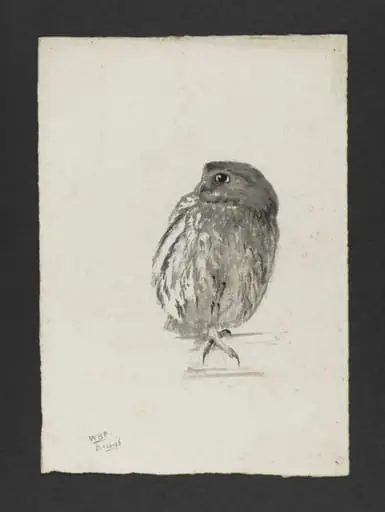 Portrait of a tame owl
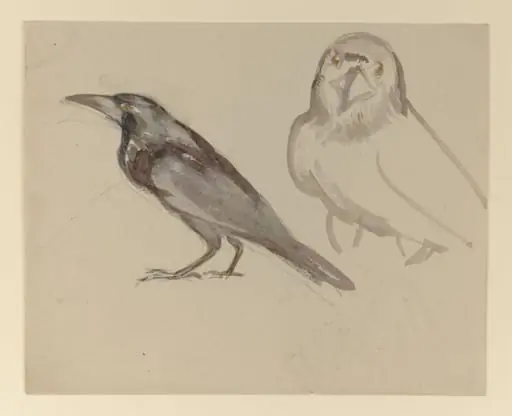 Untitled
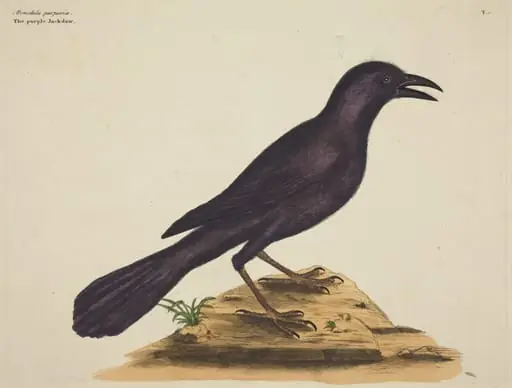 The Purple Jack Daw (Gracula Quiscula)
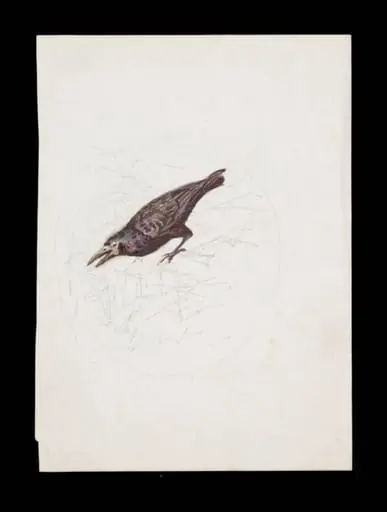 Study of a crow, with a faintly sketched background
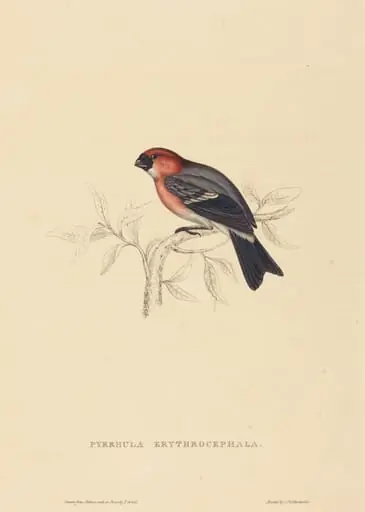 Pyrrhula Erythrocephala (Redheaded Bullfinch)
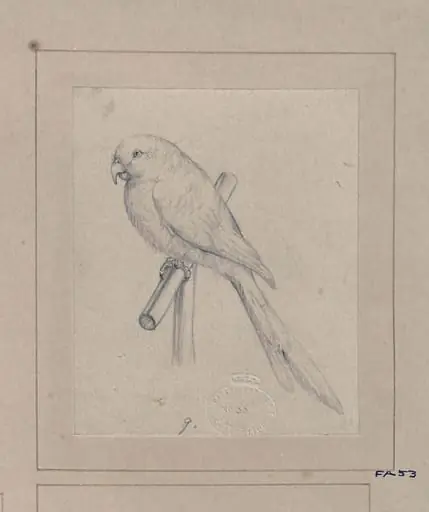 Drawing of a bird
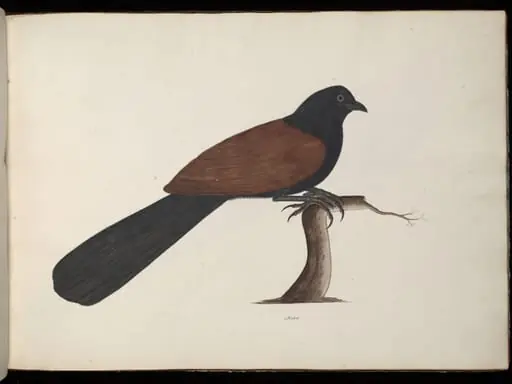 Conucal or crow pheasant
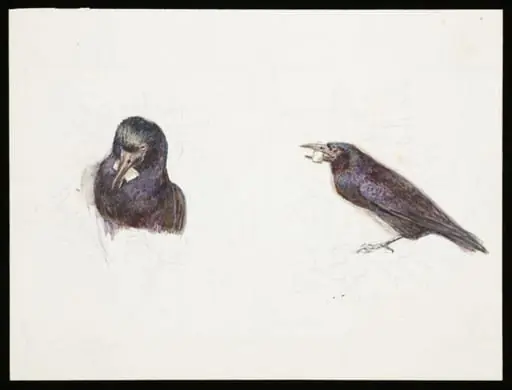 Crow with cheese in its beak
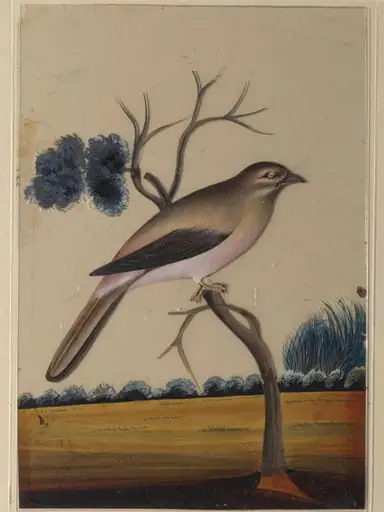 An unidentified bird
 Merle Violet, du Royaume de Juda
 Umbrella bird
 Depictions of a Domestic pigeon and Indian grackle of Northern India