Artwork
Untitled
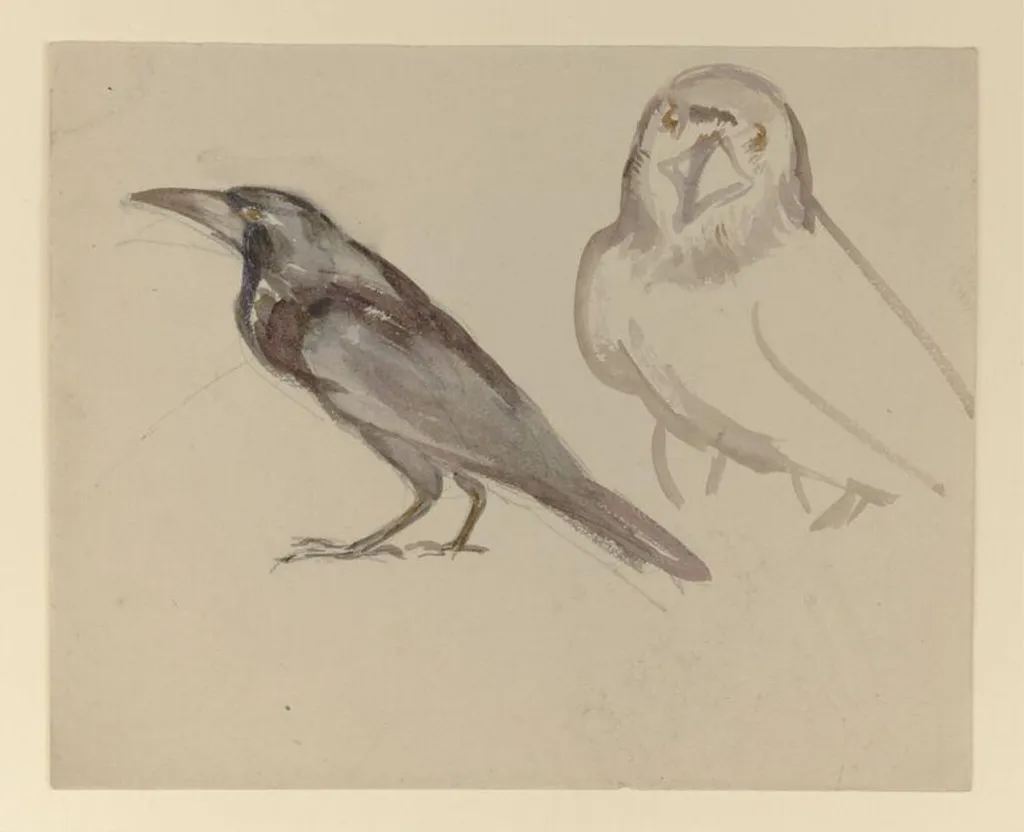
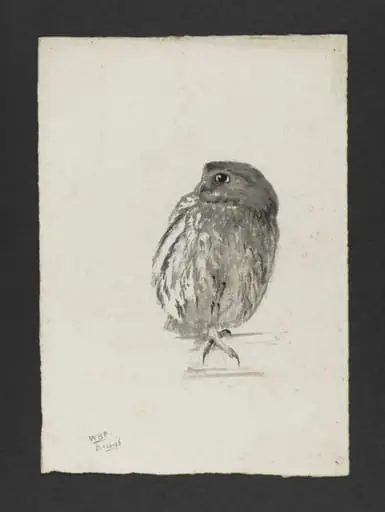
Untitled is a watercolor work on paper by Bertram Potter. It dates from 1850 and is held in the collection of the Victoria and Albert Museum. This watercolour work presents two avian forms, one fully rendered and the other barely suggested, both depicting rooks.
About this work
Overview
This watercolour work presents two avian forms, one fully rendered and the other barely suggested, both depicting rooks.
This watercolour work presents two avian forms, one fully rendered and the other barely suggested, both depicting rooks. Executed in transparent washes, the piece reflects a direct observational approach. The lighter, incomplete figure on the right suggests a working sketch, while the darker, more defined bird on the left demonstrates careful attention to anatomical detail. The composition is sparse, with no contextual elements beyond a pale, neutral background.
Subject & Meaning
The subject is a pair of rooks, a common corvid in the British countryside. The contrast between the detailed adult and the faint juvenile implies a study of development or species variation. The work does not convey narrative or symbolism but functions as a naturalist’s record, capturing physical traits with quiet precision. The focus on avian form suggests an interest in biological accuracy over artistic embellishment.
Technique & Style
Watercolour was applied in thin, layered washes to achieve subtle tonal gradations. The fully formed bird shows controlled brushwork, with defined edges and darker pigments for the beak and plumage. The second figure is rendered with loose, tentative strokes, revealing the artist’s process. The paper’s natural whiteness contributes to the lightness of the composition, emphasizing the birds’ forms without artificial contrast.
History & Provenance
The work entered the Victoria and Albert Museum’s collection in 1973 as part of the Linder Bequest, a group of materials connected to Beatrix Potter and her family. While not signed or dated, its style and medium align with Potter’s known practice of natural history studies. Its inclusion in the bequest suggests it was preserved as part of a broader collection of personal and scientific sketches.
Context
This piece reflects the late 19th- and early 20th-century tradition of amateur naturalists documenting local wildlife. Potter, known for her illustrated tales, also produced detailed scientific drawings of fungi and animals. This watercolour fits within that context — a quiet, private exercise in observation, separate from commercial illustration but aligned with the era’s broader interest in empirical study of nature.
Legacy
Though not widely exhibited, the work contributes to understanding Potter’s engagement with natural history beyond her children’s books. It remains a testament to the value placed on detailed, unembellished observation in her circle. Its preservation in a major museum underscores its significance as a document of personal scientific inquiry rather than artistic ambition.
Artist & collection

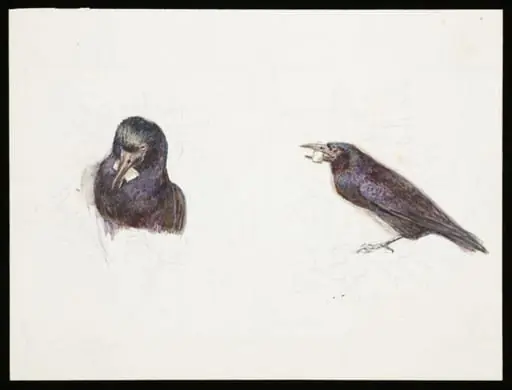 Crow with cheese in its beak
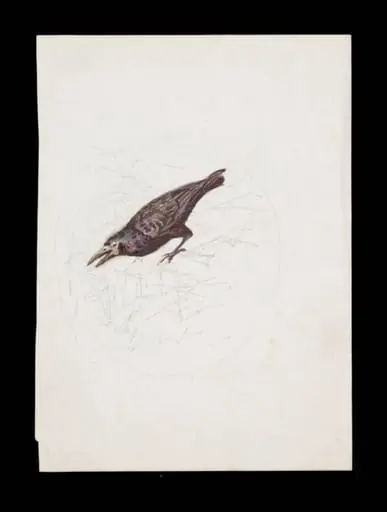 Study of a crow, with a faintly sketched background
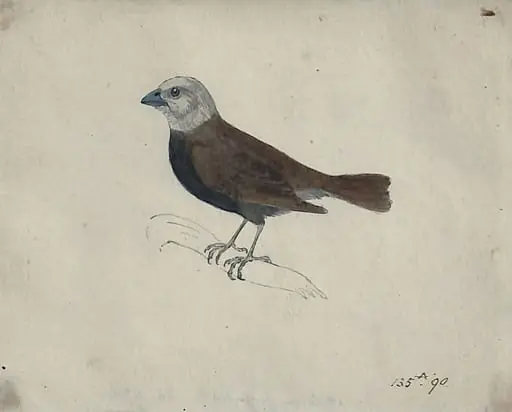 A Malacca Crossbeak
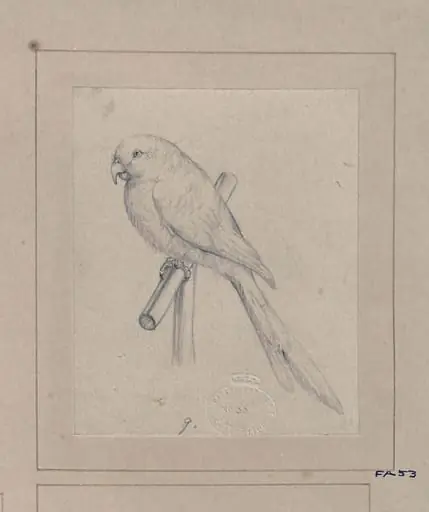 Drawing of a bird
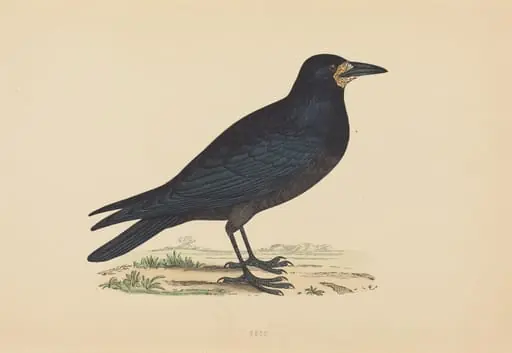 Rook
Rook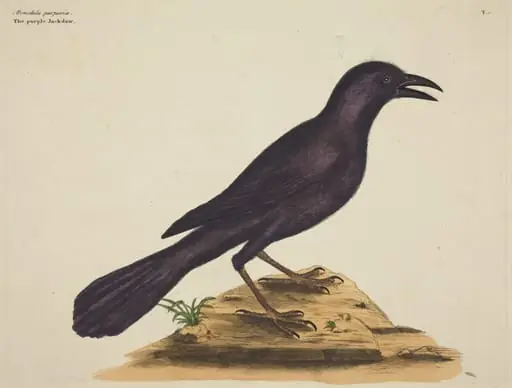 The Purple Jack Daw (Gracula Quiscula)
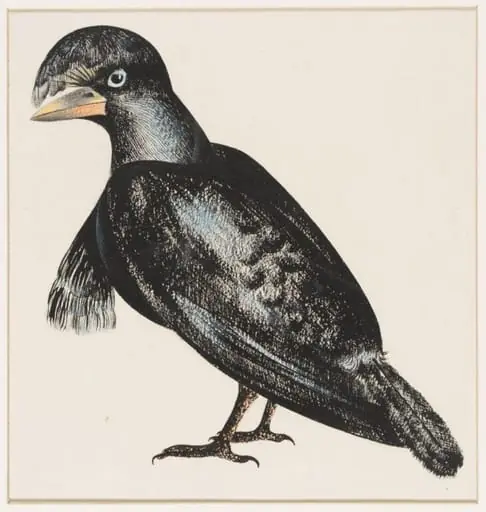 Umbrella bird
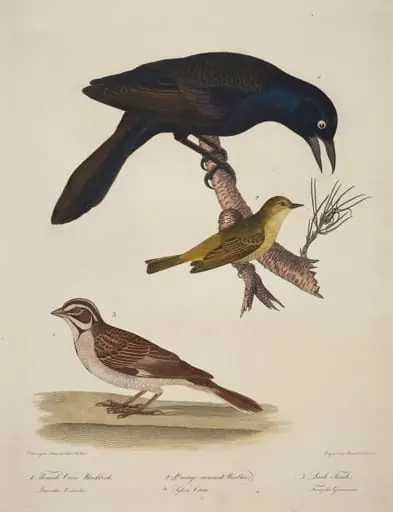 Female Crow Blackbird, Orange-Crowned Warbler, Lark Finch
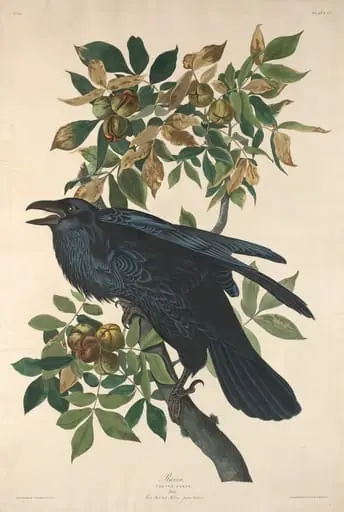 Raven
Raven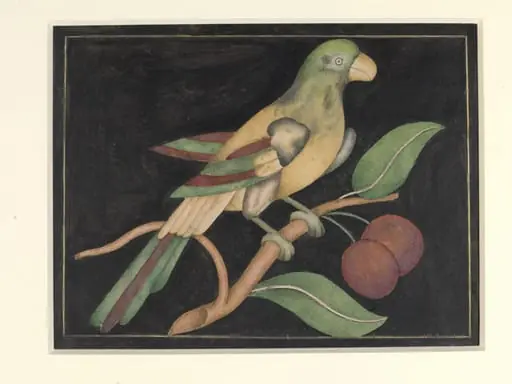 Detail of pietra dura work from the Diwan-i Am, Delhi Palace and Fort
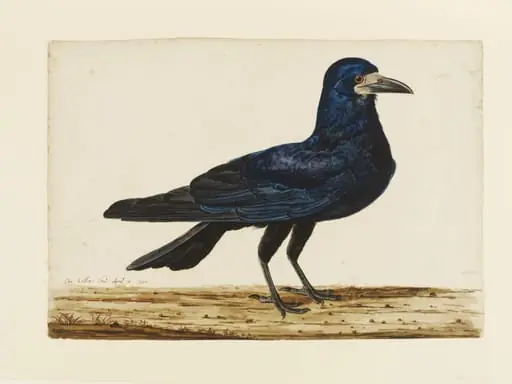 A Rook