Artwork
Snowy landscape; a lake and mountains
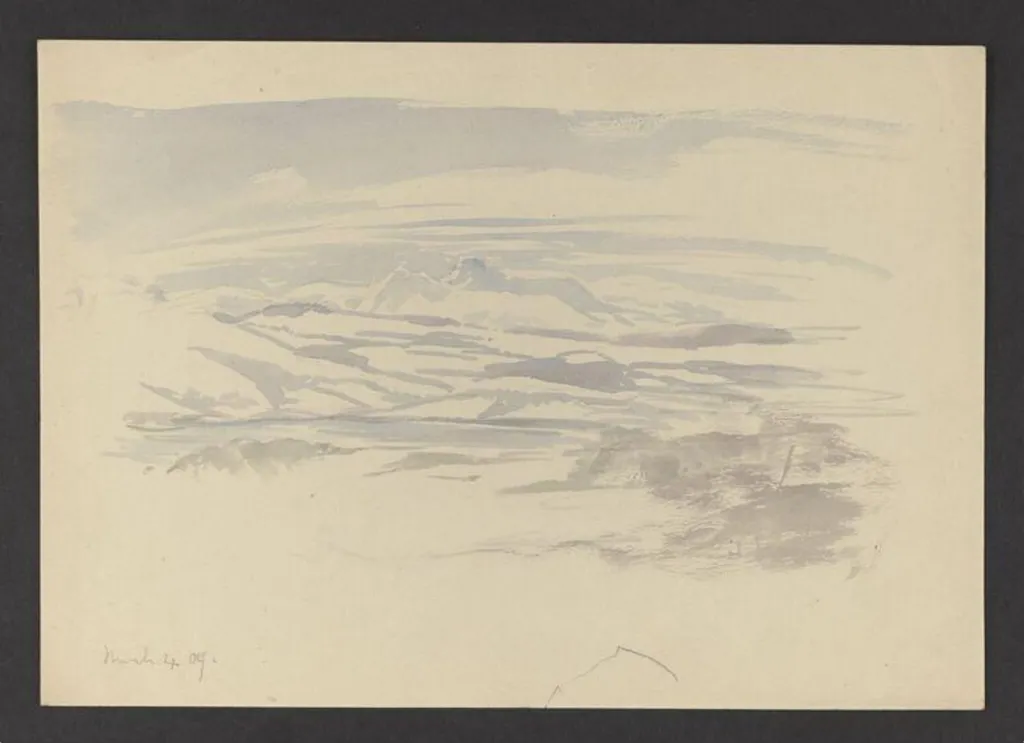
Snowy landscape; a lake and mountains is a watercolor work on paper by the Impressionist artist Beatrix Potter. It dates from 4 and is held in the collection of the Victoria and Albert Museum.
About this work
Beatrix Potter painted a snowy landscape with a lake and mountains. She used watercolour on 4 March 1909. It shows the Lakeland fells near Hill Top.
Potter loved sketching outdoors in all seasons. She called the fells “even more impressive in mist and snow.” She stayed at Hill Top in Near Sawrey when she made this study.
Look up Beatrix Potter next.
Overview
This watercolour, dated 4 March 1909, captures a winter scene in the Lake District, painted by Beatrix Potter during her stay at Hill Top in Near Sawrey.
This watercolour, dated 4 March 1909, captures a winter scene in the Lake District, painted by Beatrix Potter during her stay at Hill Top in Near Sawrey. Executed in loose, observational strokes, it depicts Esthwaite Water framed by the distant Langdale Pikes. The work belongs to a series of seasonal landscape studies Potter produced after acquiring the property in 1905, reflecting her deepening engagement with the natural environment around her home.
Subject & Meaning
The painting presents a quiet, snow-covered expanse of water and mountain, devoid of human figures or narrative elements. Rather than illustrating a story, it conveys Potter’s personal response to the landscape’s atmospheric conditions. Her noted appreciation for the fells 'in mist and snow' suggests the scene holds emotional resonance, rooted in quiet observation rather than commercial or literary intent.
Technique & Style
Potter employed watercolour with a restrained, direct approach, allowing the paper’s white to suggest snow and using diluted washes to indicate distant peaks and reflective water. The brushwork is swift and unpolished, prioritizing immediacy over finish. This method aligns with her habit of sketching outdoors, capturing transient light and weather with minimal intervention, reflecting a topographical sensibility shaped by scientific illustration.
History & Provenance
The watercolour was created during Potter’s extended stay at Hill Top, a property she purchased in 1905 and which became her primary residence. It is part of a group of similar studies preserved in the Linder Bequest, a collection assembled by her friend and publisher’s wife, Helen Linder. These works remained largely private, distinct from her published illustrations, and were never intended for public display.
Context
While best known for children’s books, Potter’s landscape watercolours reveal a parallel artistic practice grounded in regional topography and seasonal change. Her sketches from this period coincide with her growing involvement in land conservation in the Lake District. The works reflect both personal enjoyment and a quiet commitment to documenting the natural world she sought to preserve.
Legacy
Though overshadowed by her literary fame, Potter’s landscape studies have gained recognition for their sensitivity and technical restraint. They offer insight into her artistic discipline and deep connection to the Lake District, influencing later appreciation of her as more than a children’s author. These works remain part of institutional collections, valued for their quiet authenticity and historical record of rural England.
Artist & collection
Artist
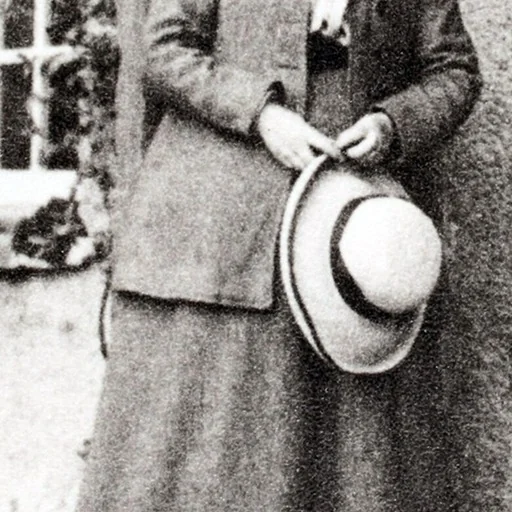
Helen Beatrix Heelis (née Potter; 28 July 1866 – 22 December 1943), usually known as Beatrix Potter ( BEE-ə-triks), was an English writer, illustrator, natural scientist, and conservationist.

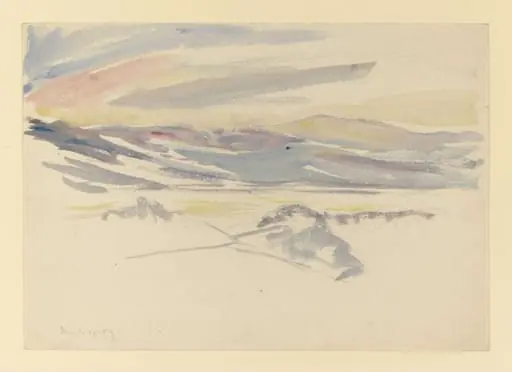 Snowy mountain landscape
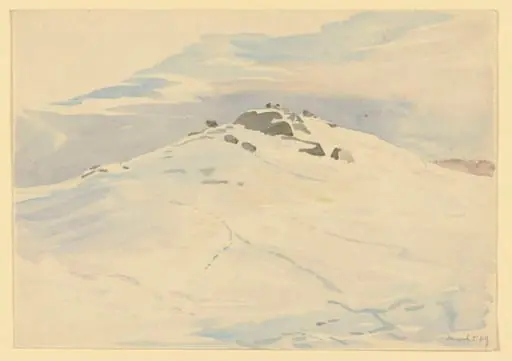 Hill-top under snow
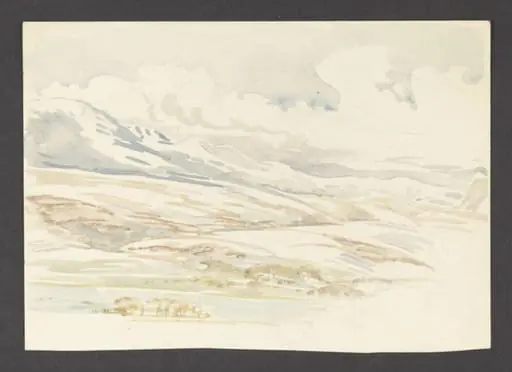 Landscape with hills under snow and a lake
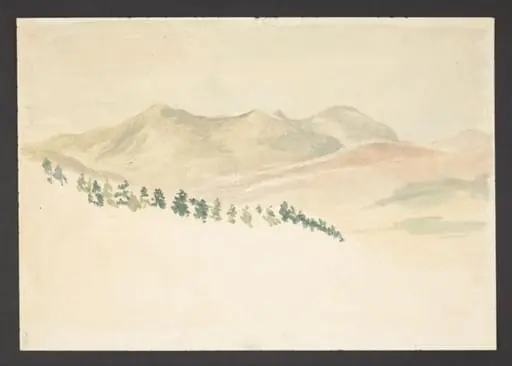 Sketch of mountains
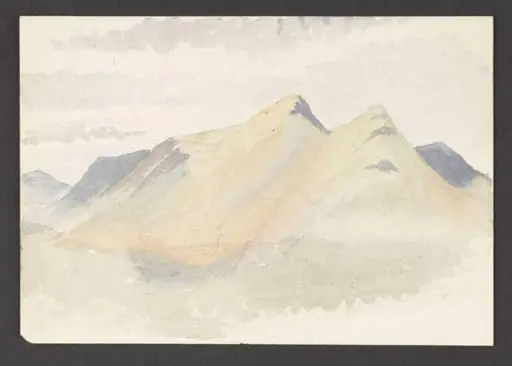 Study of mountains, possibly a view towards Catbells
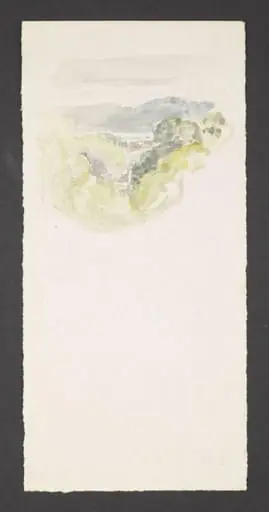 A view, through trees, of a lake and mountains
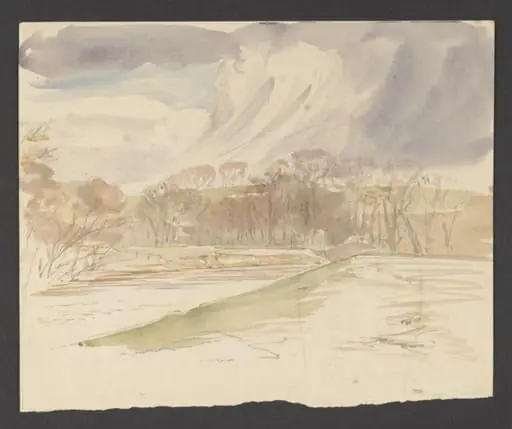 A lake and trees beneath a stormy sky
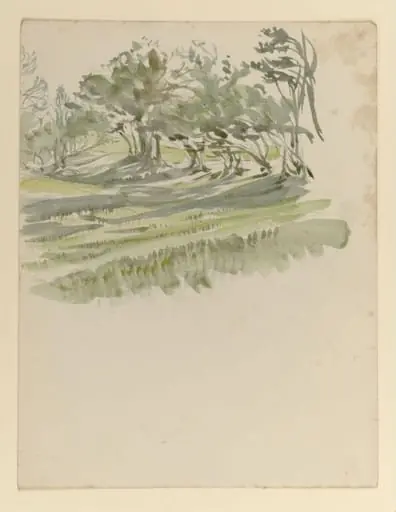 A meadow flanked by a line of trees
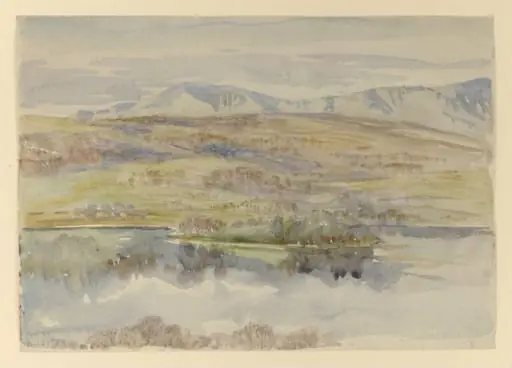 View across Esthwaite Water