Artwork
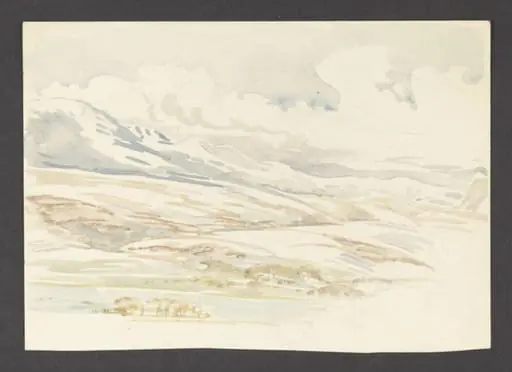
Snowy mountain landscape
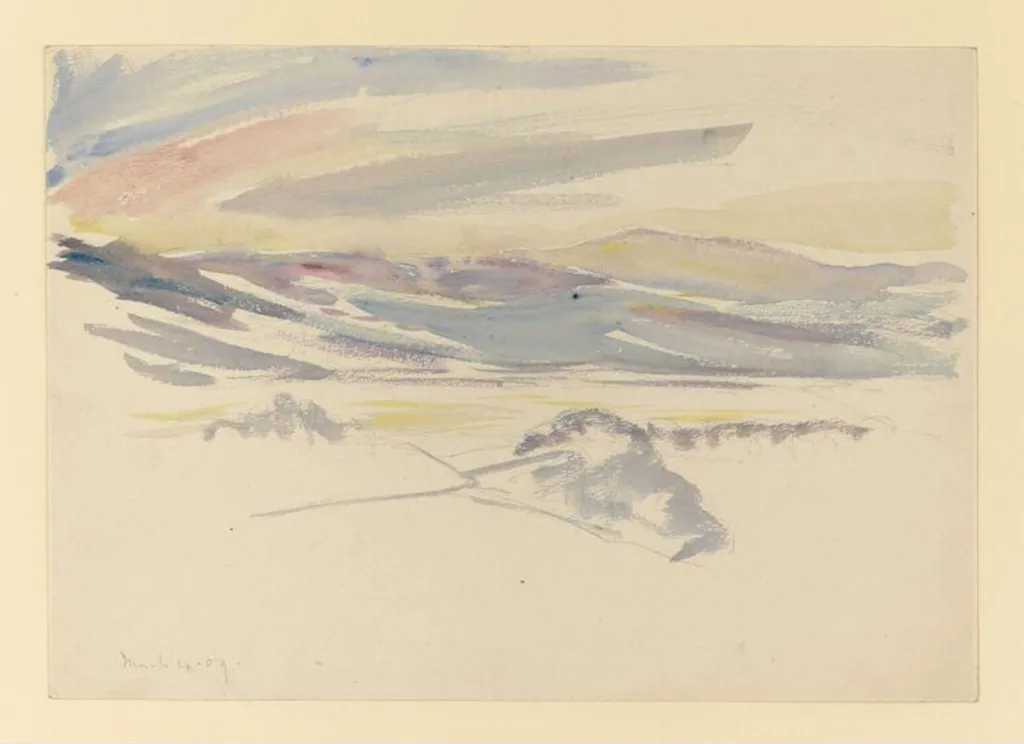
Snowy mountain landscape is a watercolor work on paper by the Impressionist artist Beatrix Potter. It dates from 4 and is held in the collection of the Victoria and Albert Museum.
About this work
In March 1909, staying there, she focused on the dramatic look of fells in mist and snow.
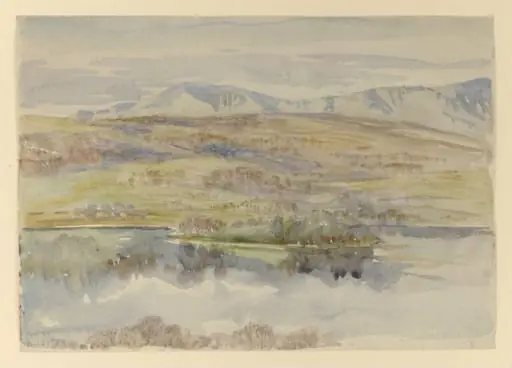
Beatrix Potter painted a snowy mountain landscape in 1909. She used watercolours to capture the Lake District’s hills under snow. This loose study shows her quick, outdoor sketching style.
She made many such studies after buying Hill Top in 1905. In March 1909, staying there, she focused on the dramatic look of fells in mist and snow.
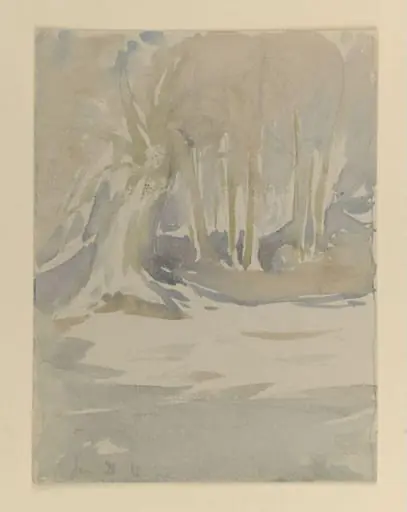
Potter is better known for children’s books like *Peter Rabbit*. Check out her other Lake District sketches at the Victoria and Albert Museum.
Overview
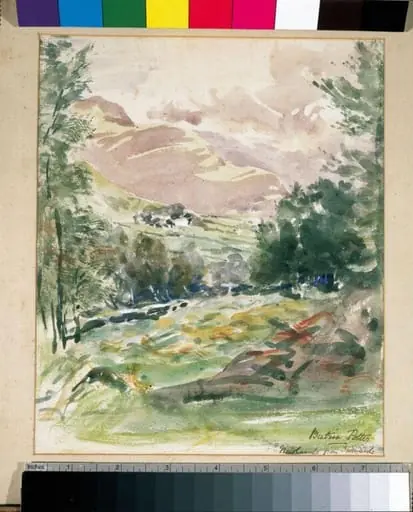
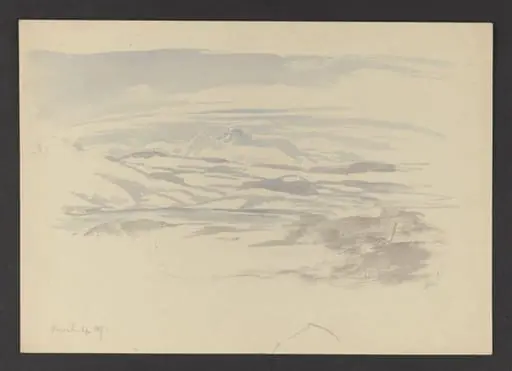
This watercolour, dated 4 March 1909, captures a winter landscape in the Lake District, painted by Beatrix Potter during her stay at Hill Top, Near Sawrey. Executed in loose, spontaneous strokes, it reflects her habit of sketching directly from nature. The work is one of several snow-covered studies she produced after purchasing the property in 1905, documenting seasonal changes in the surrounding fells.
Subject & Meaning
The painting depicts distant hills blanketed in snow, rendered with minimal detail to emphasize atmosphere over topography. Potter was drawn to the dramatic effects of mist and snow on the landscape, finding them more compelling than clear conditions. These studies were not intended as finished illustrations but as personal observations, revealing her deep engagement with the natural environment she lived in.
Technique & Style
Using watercolour on paper, Potter employed a fluid, rapid technique suited to outdoor sketching. Washes suggest snow-laden slopes and hazy horizons, while dry brushwork hints at rocky outcrops. The composition avoids precise detail, favoring impressionistic tone and light. This approach reflects her training in natural history illustration, where accuracy was balanced with expressive economy.
History & Provenance
Created during Potter’s residency at Hill Top, the work is part of a group of winter studies preserved in the Linder Bequest. These pieces remained largely private during her lifetime, distinct from her published children’s books. After her death, they were collected and later transferred to the Victoria and Albert Museum, where they now form part of a broader archive of her artistic practice.
Context
While Potter is widely recognized for her children’s literature, her landscape watercolours reveal a parallel artistic identity. Between 1905 and 1913, she produced hundreds of sketches of the Lake District, documenting its topography and weather with scientific curiosity. These works were made alongside her writing, serving as both personal record and visual research.
Legacy
Potter’s Lake District watercolours, though overshadowed by her literary fame, are now valued as significant contributions to British topographical art. They illustrate her disciplined observation of nature and offer insight into the environment that shaped her storytelling. Today, they are studied for their technical restraint and quiet sensitivity to seasonal change.
Own this work as a print
Artist & collection
Artist
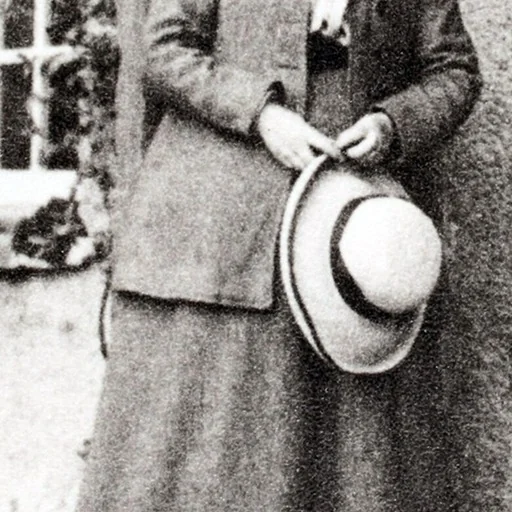
Helen Beatrix Heelis (née Potter; 28 July 1866 – 22 December 1943), usually known as Beatrix Potter ( BEE-ə-triks), was an English writer, illustrator, natural scientist, and conservationist.