Artwork
The fox and the stork eating a meal
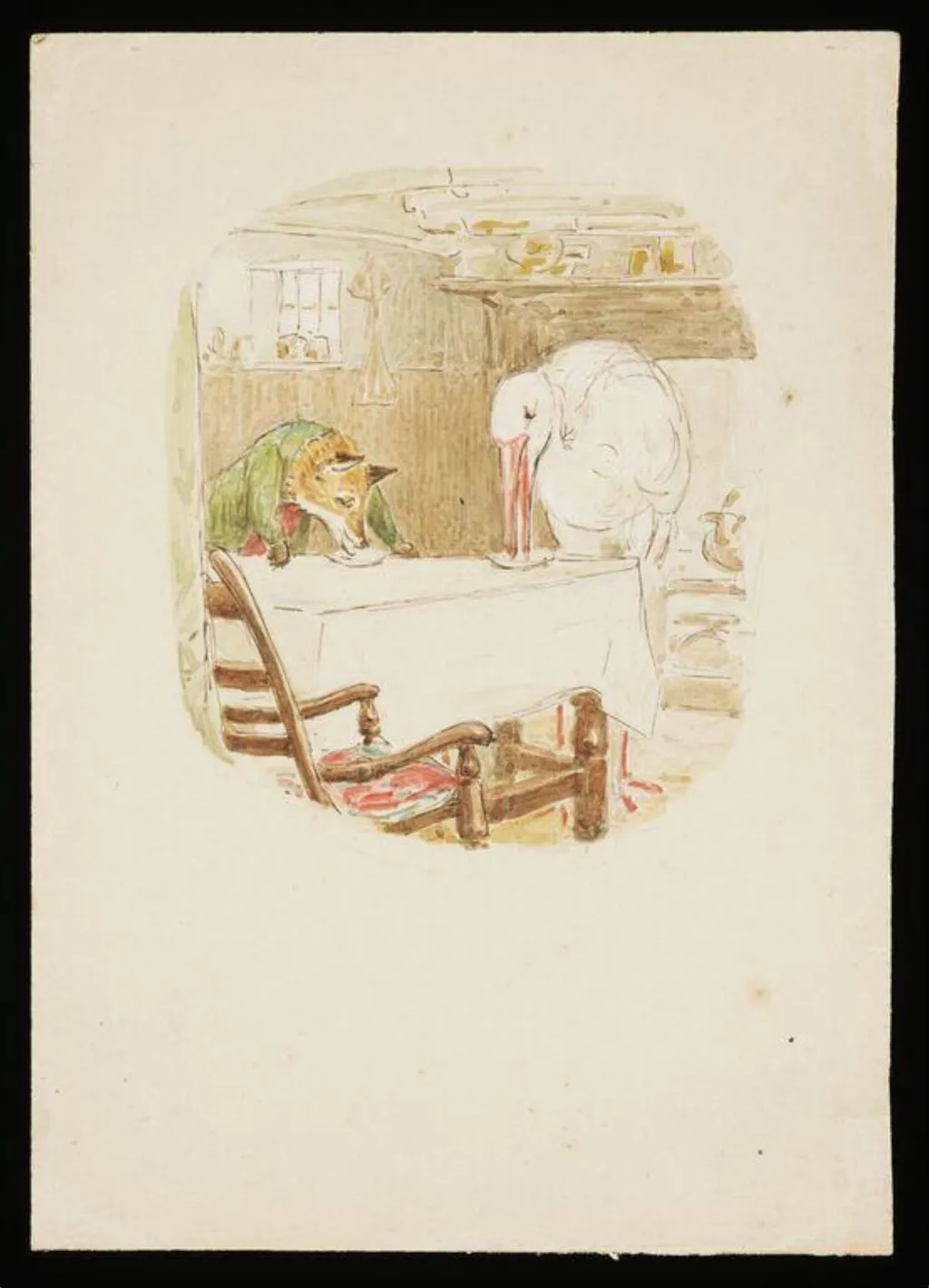
The fox and the stork eating a meal is a watercolor work on paper by Beatrix Potter. It dates from 1919 and is held in the collection of the Victoria and Albert Museum.
About this work
The fox and the stork eating a meal is a watercolour by Beatrix Potter. It was created in 1919.
Beatrix Potter was a children's author and illustrator. She wrote and illustrated many books, including The Tale of Peter Rabbit, before returning to her early interest in Aesop's fables in 1918.
You can learn more about Beatrix Potter at the Victoria and Albert Museum.
Overview
Created in 1919, this watercolour by Beatrix Potter depicts a scene from Aesop’s fable 'The Fox and the Stork.
Created in 1919, this watercolour by Beatrix Potter depicts a scene from Aesop’s fable 'The Fox and the Stork.' It was part of an unpublished project in which Potter planned to weave multiple fables into a single narrative featuring animal characters like Miss Jenny Crow, a fox, and a stork. Though her publisher rejected the concept, the illustration stands as a refined example of her later work, blending literary tradition with her signature naturalistic style.
Subject & Meaning
The scene illustrates the fable in which a fox serves soup in a shallow dish, denying a stork access to the meal due to its long beak. The stork later returns the favour by serving food in a narrow jar, which the fox cannot reach. Potter captures the moment of shared, awkward dining, subtly highlighting themes of reciprocity and fairness. Her animals are portrayed with quiet dignity, avoiding overt moralizing while preserving the fable’s underlying tension.
Technique & Style
Rendered in watercolour, the piece reflects Potter’s meticulous attention to anatomical detail and subtle tonal gradations. The fox and stork are rendered with observed realism—feathers, fur, and posture reflect actual animal behaviour. Background elements are softly suggested, keeping focus on the interaction between the two figures. Her brushwork is precise yet fluid, characteristic of her mature illustrative style, where clarity and restraint prevail over ornamentation.
History & Provenance
This watercolour was produced in 1919 as part of an abandoned book project pitched to Frederick Warne & Co. Potter had revived her early fascination with Aesop’s fables after publishing The Tale of Johnny Town-Mouse in 1918. Her proposal, which included sketches and a draft text, was declined with the remark that it was 'not Miss Potter, it is Aesop.' The artwork remained in her personal collection and later entered institutional holdings, preserved as a testament to her creative experimentation.
Context
By 1919, Potter had long since established herself as a children’s author and illustrator, but she continued to explore literary sources beyond her original tales. Her return to Aesop reflected both personal interest and a desire to engage with timeless narratives. While her Peter Rabbit stories were commercially successful, these fable-based works reveal a quieter, more reflective side of her artistry, rooted in observation and literary tradition rather than commercial appeal.
Legacy
Though never published as part of a book, this watercolour endures as evidence of Potter’s enduring engagement with classical fables and her commitment to naturalistic representation. It illustrates how her artistic vision extended beyond commercial success into personal projects that valued narrative depth and ecological accuracy. Today, it contributes to scholarly understanding of her creative process and the breadth of her literary influences.
Artist & collection
Artist
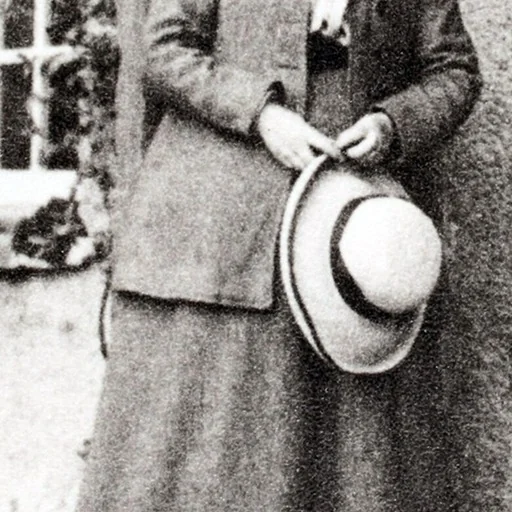
Helen Beatrix Heelis (née Potter; 28 July 1866 – 22 December 1943), usually known as Beatrix Potter ( BEE-ə-triks), was an English writer, illustrator, natural scientist, and conservationist.

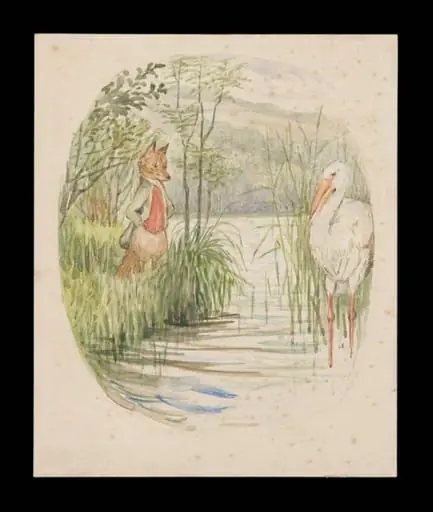 The fox looking over the stream at the stork
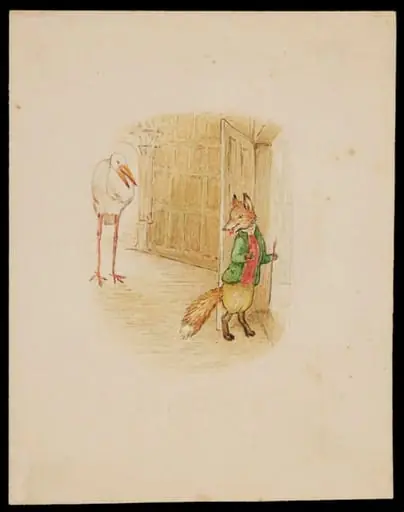 The fox taking leave of the stork
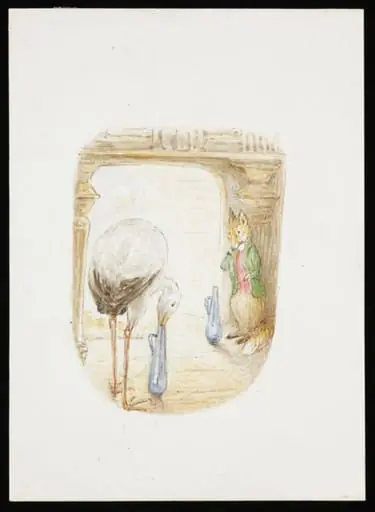 The fox watching the stork feeding from a narrow-necked jar
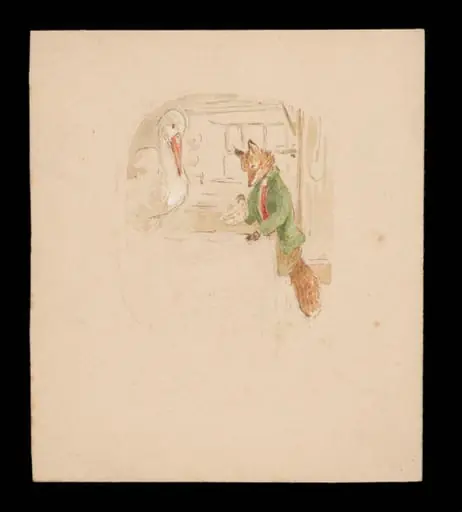 The fox pouring tea
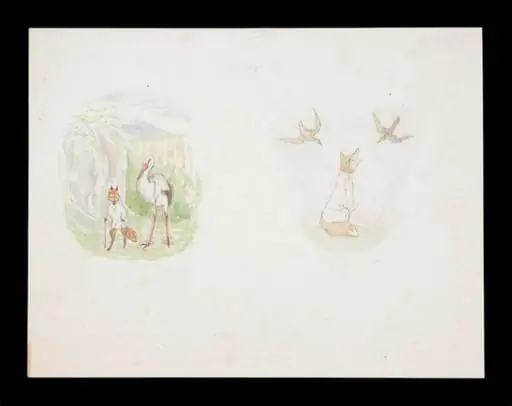 A fox in a glade with a stork; a fox looking up at two birds
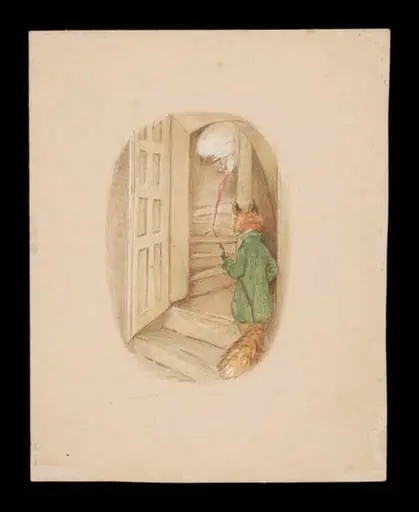 The fox following the stork up a staircase
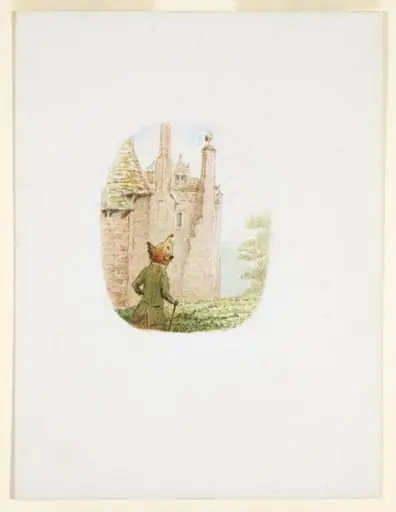 The fox looks up at the stork standing on top of a tower
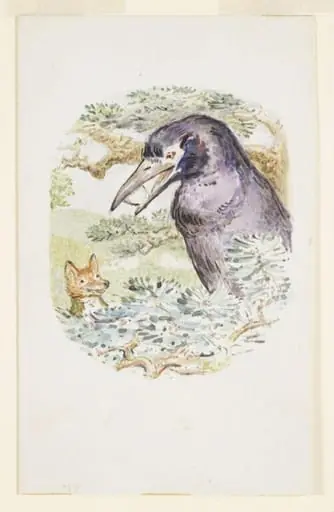 The Fox and the Crow
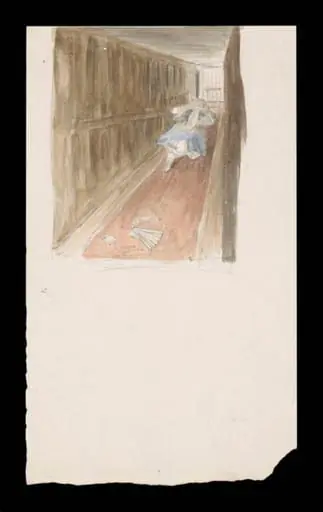 Rear view of the White Rabbit running away along the corridor
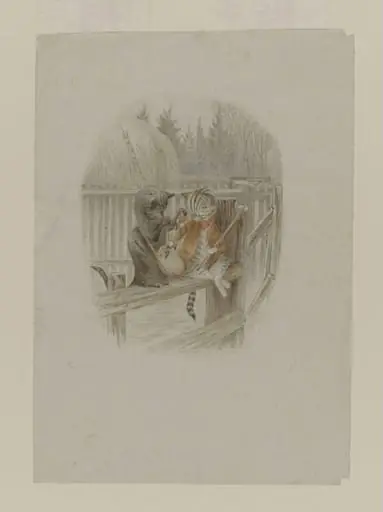 Kittens with game collected for the White Cat's supper
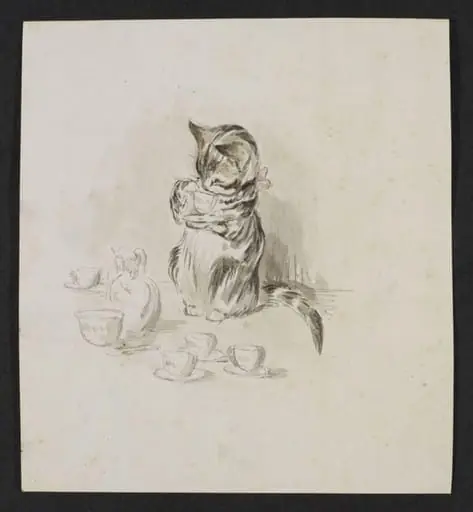 A cat drinking from a cup and saucer
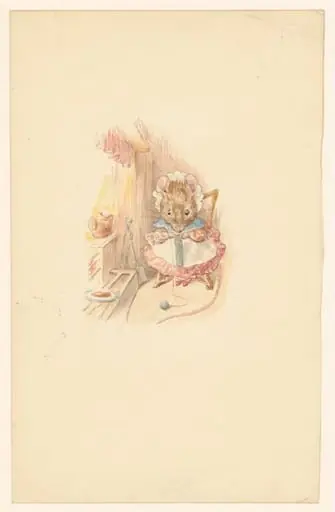 A mouse knitting