Artwork
Flower studies; a flower similar to purple vetch and dianthus
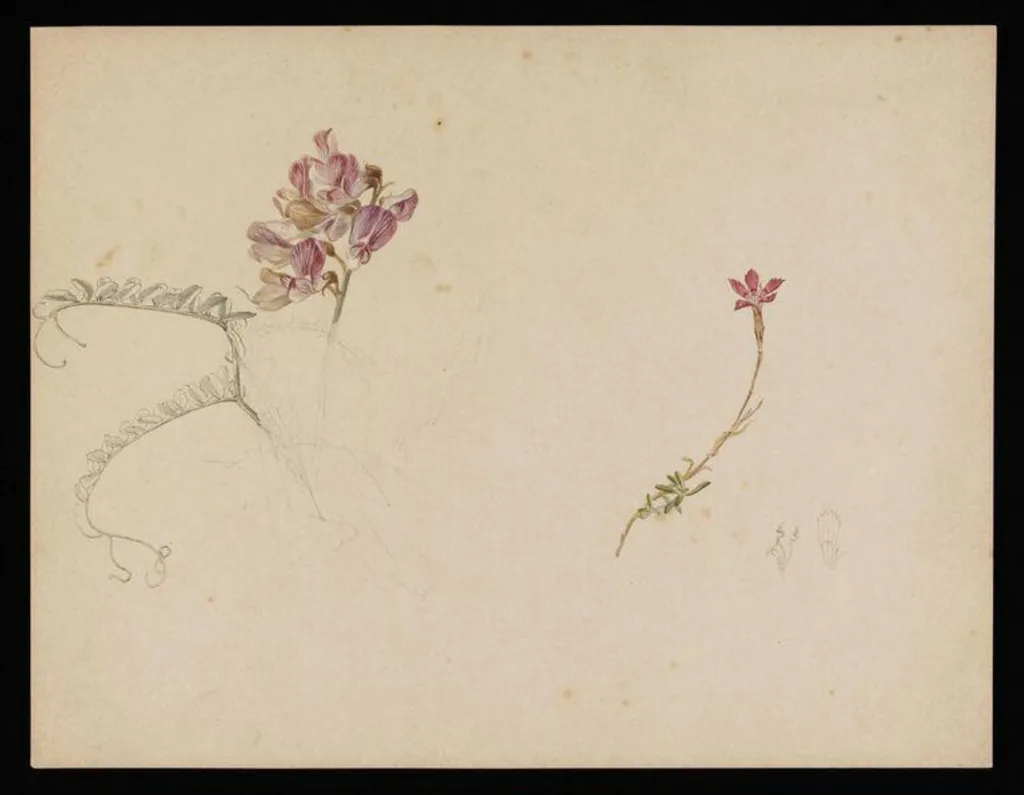
Flower studies; a flower similar to purple vetch and dianthus is a watercolor work on paper by the Impressionist artist Beatrix Potter. It dates from 12 and is held in the collection of the Victoria and Albert Museum. This watercolour, titled *Flower studies*, depicts a single bloom whose form recalls both purple vetch and the wild dianthus.
About this work
This is a watercolour piece called Flower studies. It features a flower similar to purple vetch and dianthus.
The artist, Beatrix Potter, created this work during a summer stay in the Scottish borders in 1894. She made many studies of flowers from nature during this time.
To learn more about the style and technique used in this piece, look up the movement: Realism.
Overview
This watercolour, titled *Flower studies*, depicts a single bloom whose form recalls both purple vetch and the wild dianthus. Executed by Beatrix Potter during a 1894 summer sojourn in the Scottish Borders, the work exemplifies her practice of rendering botanical subjects directly from observation.
Subject & Meaning
The plant illustrated combines characteristics noted by Potter in her journal: a fragrant, purple‑striped pea‑like flower reminiscent of common vetch, yet with more intricately crossed leaves, and a likeness to the low‑growing Dianthus deltoides she later recorded on the south slope of Smailholm Tower. The study reflects her interest in the subtle variations of native flora.
Technique & Style
Rendered in transparent watercolour washes, the piece employs a realistic approach, emphasizing accurate colour, form, and texture. Potter’s delicate brushwork captures the flower’s delicate petals and the fine veining of its foliage, aligning the work with the broader Realist tradition of meticulous natural observation.
History & Provenance
Potter produced the drawing during a three‑month stay near Coldstream, accompanying her father on visits to coastal Burnmouth and Smailholm Tower. The accompanying journal entries dated 14 and 25 September 1894 document the specific locations and botanical impressions that informed the study.
Context
At the time of this work, Potter was primarily known as a naturalist and illustrator, a practice that preceded her later fame as a children’s author. The Scottish Borders provided a rich environment for field sketching, and the study forms part of a larger series of botanical watercolours created during that summer.
Artist & collection
Artist
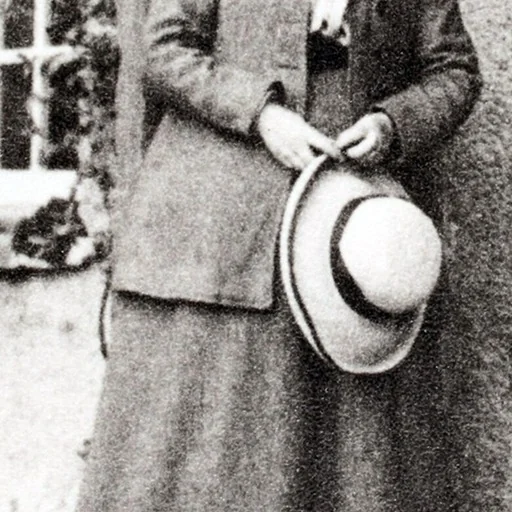
Helen Beatrix Heelis (née Potter; 28 July 1866 – 22 December 1943), usually known as Beatrix Potter ( BEE-ə-triks), was an English writer, illustrator, natural scientist, and conservationist.

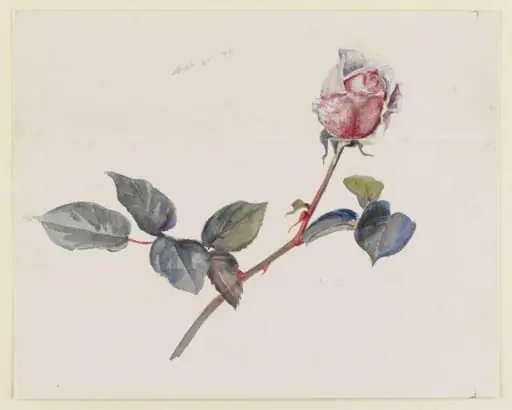 Pink rosebud with leaves
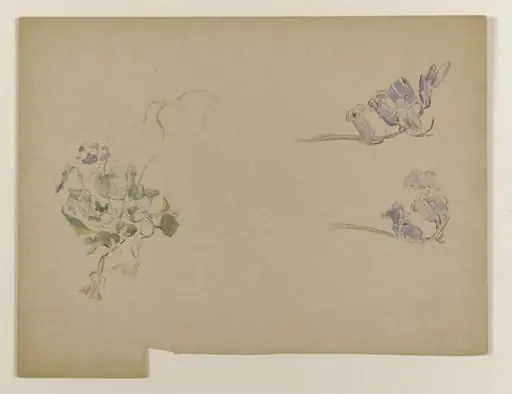 Violets and bluebells
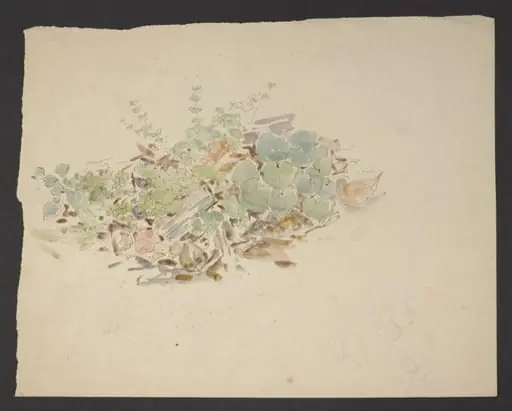 Study of a patch of ground with plants including clover
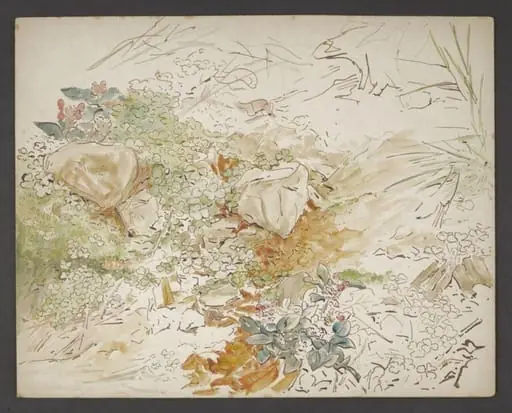 Study of a patch of ground with plants and rocks
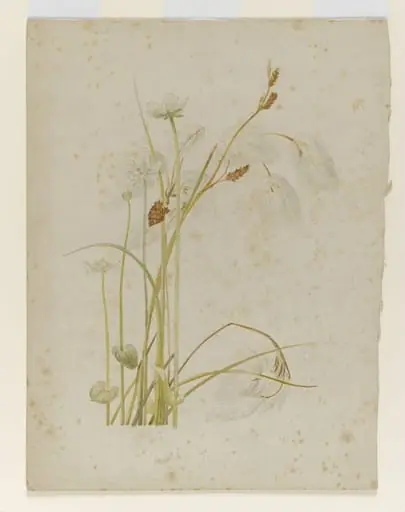 Cotton sedge with white wildflowers
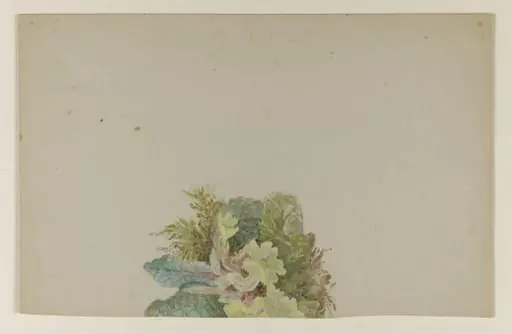 A cluster of primroses with leaves and moss
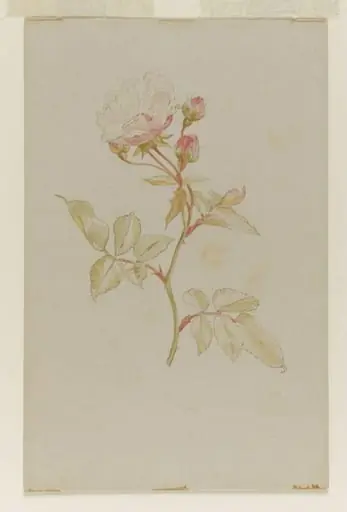 Pink rose
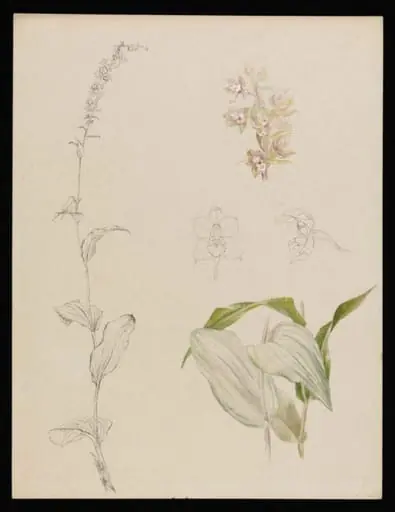 Sketches of marsh helleborine
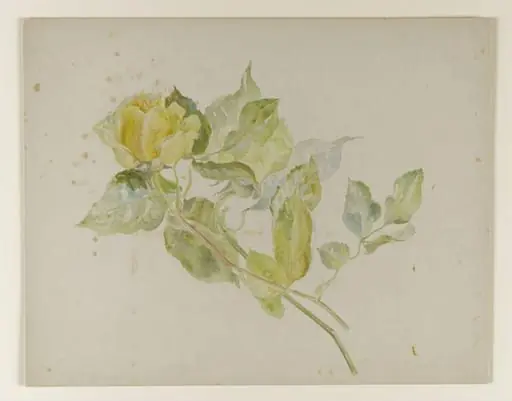 Yellow rose
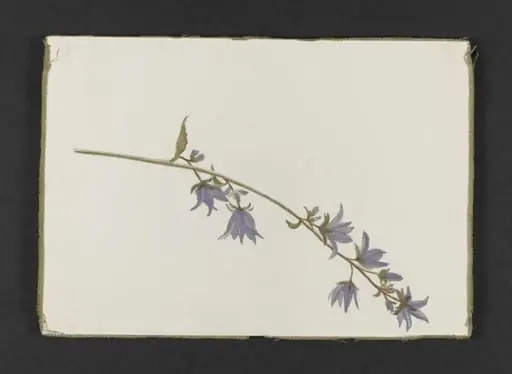 Spray of purple campanula