Artwork
The Right Honorable Elizabeth Countess of Northumberland
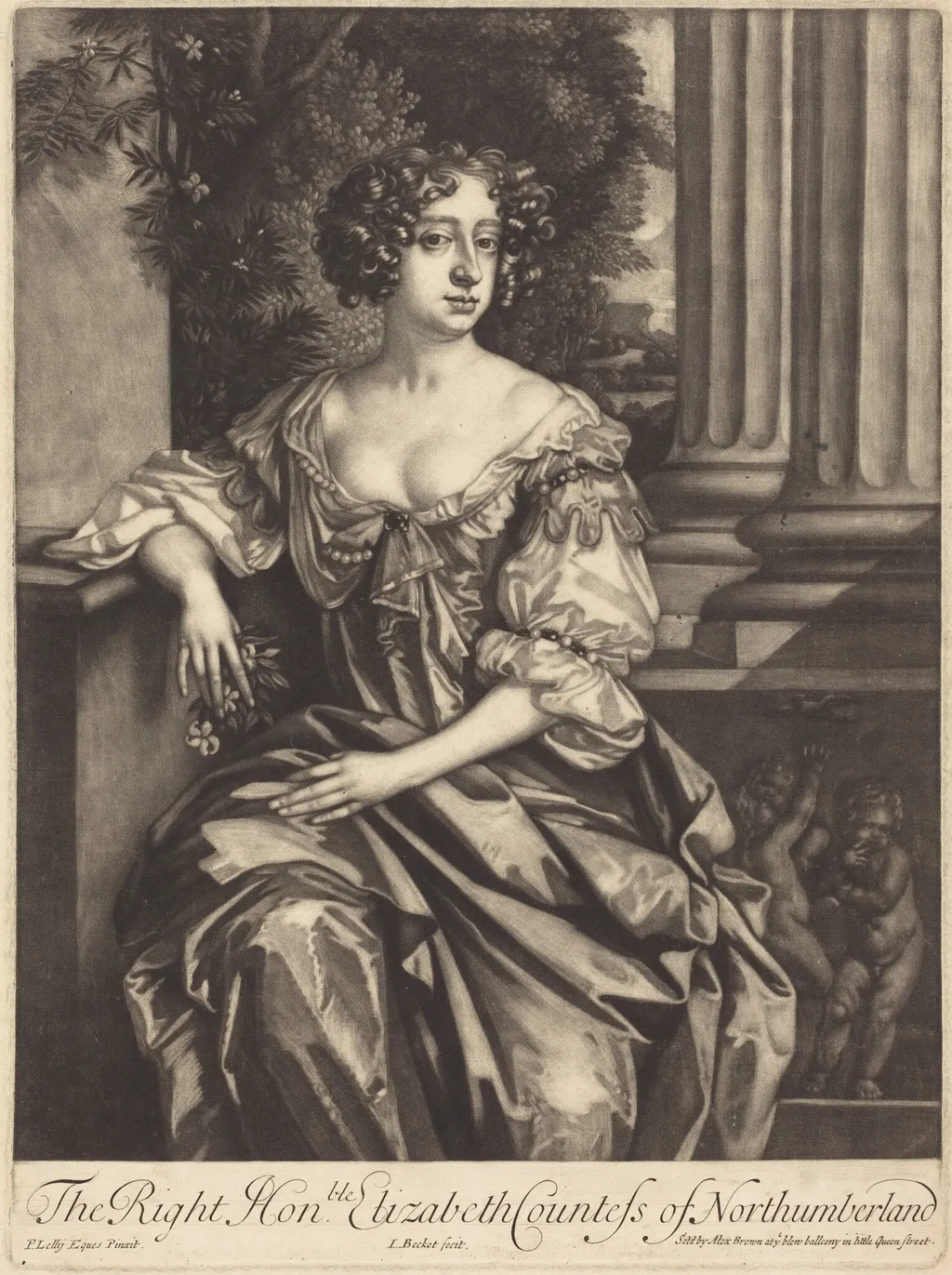
The Right Honorable Elizabeth Countess of Northumberland is an ink print by the Baroque artist Isaak Beckett. It dates from 1684 and is held in the collection of the National Gallery of Art.
About this work
Overview
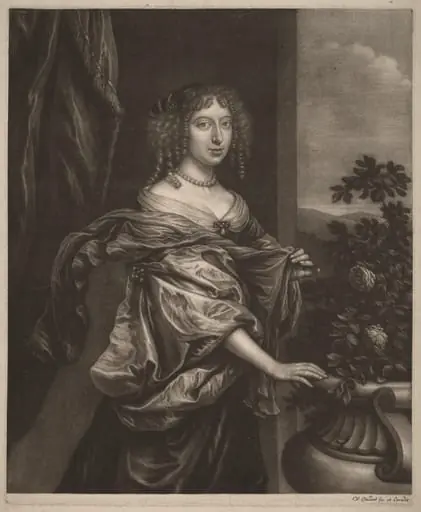
A mezzotint created in 1684 by Isaak Beckett, this print depicts Elizabeth, Countess of Northumberland, in a formal yet composed portrait.
A mezzotint created in 1684 by Isaak Beckett, this print depicts Elizabeth, Countess of Northumberland, in a formal yet composed portrait. Executed on laid paper, the work exemplifies the precision and tonal range achievable in mezzotint engraving during the late 17th century. The image captures the sitter in a moment of quiet dignity, reflecting the conventions of aristocratic portraiture of the period.
Subject & Meaning
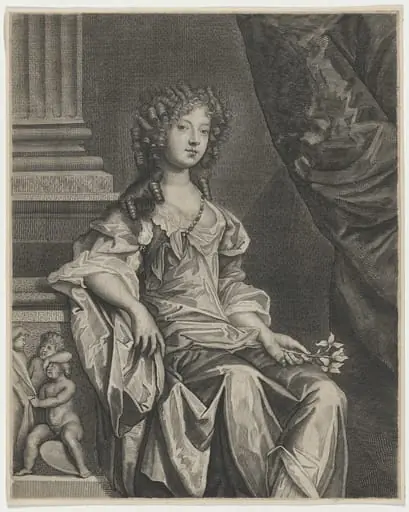
Elizabeth, Countess of Northumberland, is portrayed with subtle elegance, her posture relaxed yet composed. The flower she holds may symbolize virtue or transience, common motifs in aristocratic portraiture. Her gaze to the side suggests introspection rather than direct engagement, reinforcing an air of reserved nobility. The absence of overt symbols of power emphasizes personal refinement over political status.
Technique & Style
Beckett employed mezzotint, a technique known for its rich gradations of tone, to render the textures of fabric, skin, and foliage with softness and depth. The smooth transitions between light and shadow enhance the three-dimensionality of the figure. The background, rendered with minimal detail, directs focus to the sitter’s form and expression, aligning with the restrained aesthetics of late Baroque portraiture.
History & Provenance
The print was produced in 1684, during a period when mezzotint was widely used for reproducing portraits among the English elite. Beckett, a prominent engraver of the time, often worked from painted originals. While the original painting’s current location is unconfirmed, this print likely served to disseminate the countess’s image among her social circle, reinforcing familial prestige through visual culture.
Context
In late 17th-century England, portraiture was a tool for asserting social standing, particularly among the nobility. Mezzotints allowed for multiple copies of a likeness, making them ideal for circulation among kin and allies. The Countess’s attire and pose reflect contemporary ideals of feminine grace, while the naturalistic background hints at the growing interest in landscape as a complement to portraiture.
Legacy
Beckett’s mezzotint remains a representative example of English portrait printing in the Restoration era. Though not widely exhibited today, it contributes to the historical record of how aristocratic women were visually constructed in print culture. The work illustrates the intersection of craftsmanship, social identity, and the mechanical reproduction of status in pre-industrial Britain.
Artist & collection