Artwork
King Ferdinand I
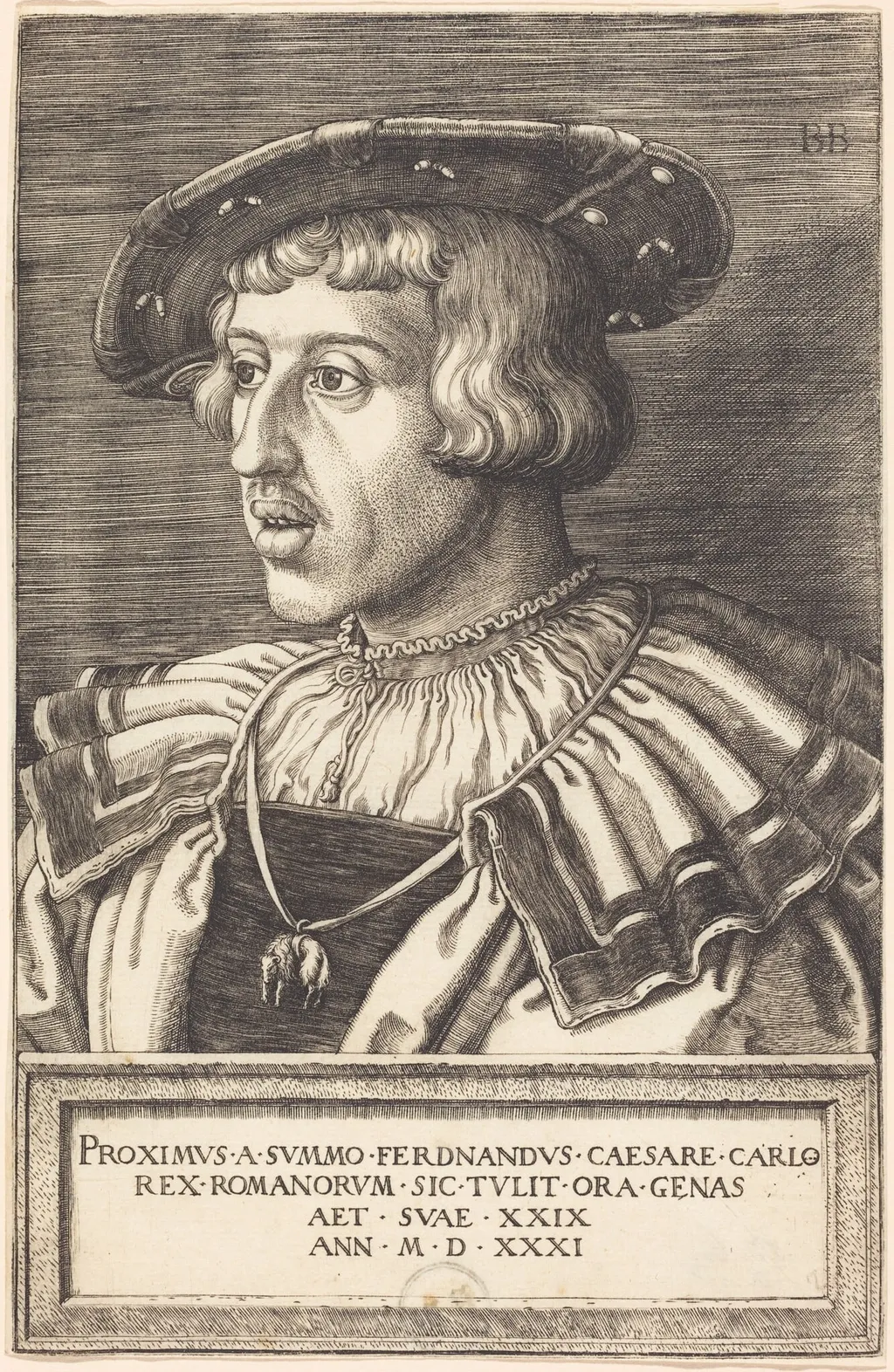
King Ferdinand I is an ink print by the Renaissance artist Barthel Beham. It dates from 1531 and is held in the collection of the National Gallery of Art.
About this work
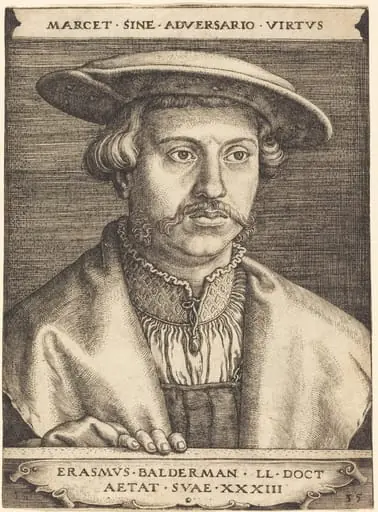
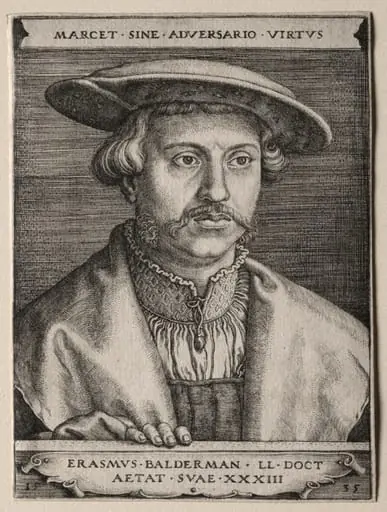
This is a black-and-white portrait of a man with a serious expression. He wears a ruff collar and a fancy hat with a feather. His sleeves are puffy, and his hands rest on his chest.
The text below the image is in Latin and mentions his age (29) and the year 1531. The lines in the print are all made by scratching into the metal plate.
Next, look up engraving to see how this kind of print was made.
Overview
Rendered in black and white on laid paper, the portrait captures the monarch in formal attire, with precise linear marks made by incising a metal plate.
Created in 1531 by Barthel Beham, this engraving depicts King Ferdinand I of Hungary and Bohemia. Rendered in black and white on laid paper, the portrait captures the monarch in formal attire, with precise linear marks made by incising a metal plate. The image is accompanied by Latin inscriptions noting his age and the year of production, typical of Renaissance portraiture meant to convey authority and identity.
Subject & Meaning
The portrait presents Ferdinand I at age twenty-nine, emphasizing his status as a ruling monarch. His rigid posture, hands folded over the chest, and direct gaze convey solemnity and composure. The elaborate clothing—puffed sleeves, ornate hat with feather, and high ruff collar—signals nobility and adherence to courtly dress codes of the era, reinforcing his political legitimacy through visual symbolism.
Technique & Style
Beham employed the engraving technique, using a burin to carve fine lines into a copper plate. The resulting print relies on controlled, incised strokes to model form and texture, with no tonal gradations. The precision of the lines highlights fabric folds, feather details, and facial structure, reflecting the Northern Renaissance emphasis on meticulous detail and linear clarity over atmospheric effects.
History & Provenance
Produced in 1531, the print likely served as a diplomatic or commemorative object, circulating among nobility and court circles. As a professional printmaker active in Nuremberg, Beham often produced portraits of European rulers for wider dissemination. The work’s survival in multiple institutional collections suggests its early reception and enduring value as a record of royal imagery.
Context
Ferdinand I, a Habsburg archduke, was elected King of Hungary and Bohemia amid political instability following the Battle of Mohács. Engravings like this were tools of political representation, helping to project authority across territories where direct rule was limited. Beham’s work aligns with a broader trend of using print to shape public perception of rulers during the Reformation era.
Legacy
This engraving remains a documented example of early 16th-century royal portraiture in print form. It illustrates how artists like Beham contributed to the visual culture of governance, translating political presence into reproducible images. Its technical discipline and formal restraint reflect the values of Northern Renaissance printmaking, influencing later generations of portrait engravers.
Artist & collection

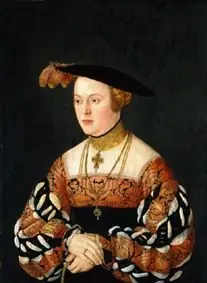 Portrait of Marie of Baden
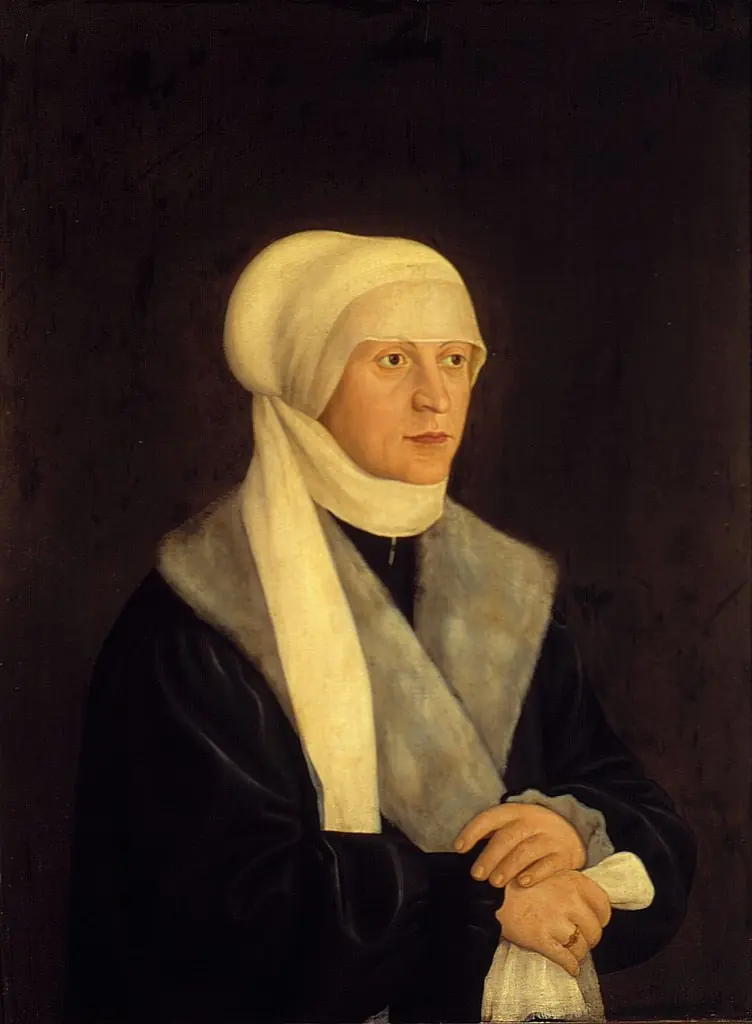 Portrait of Sabina of Bavaria
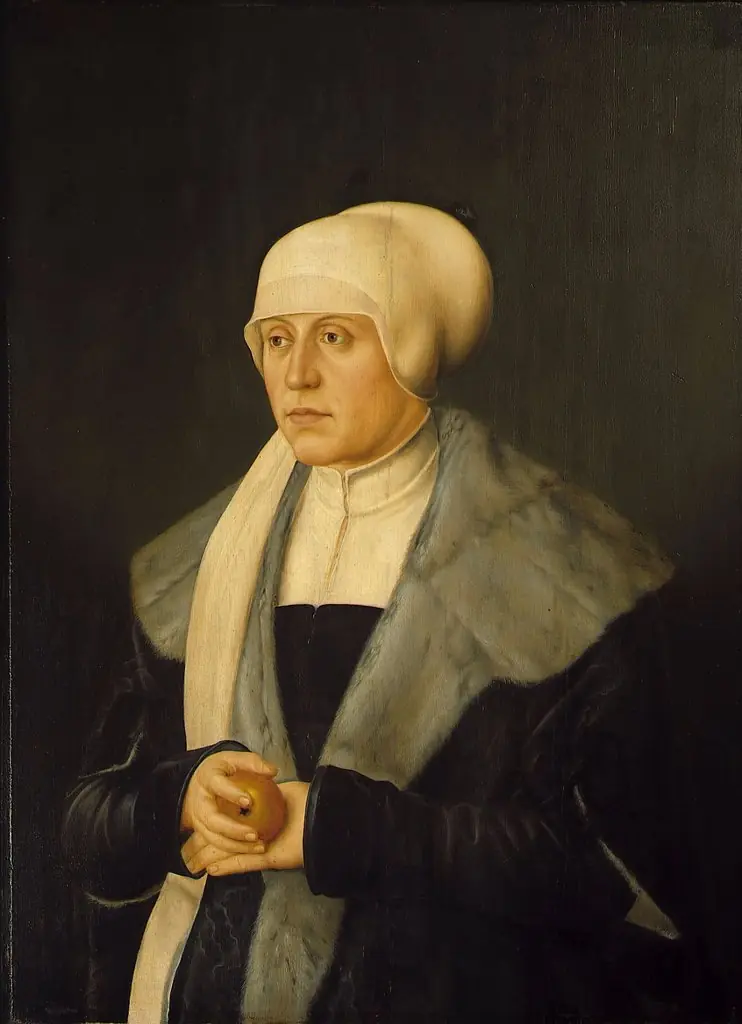 Kunigunde of Austria, wife of Duke Albrecht IV of Bavaria
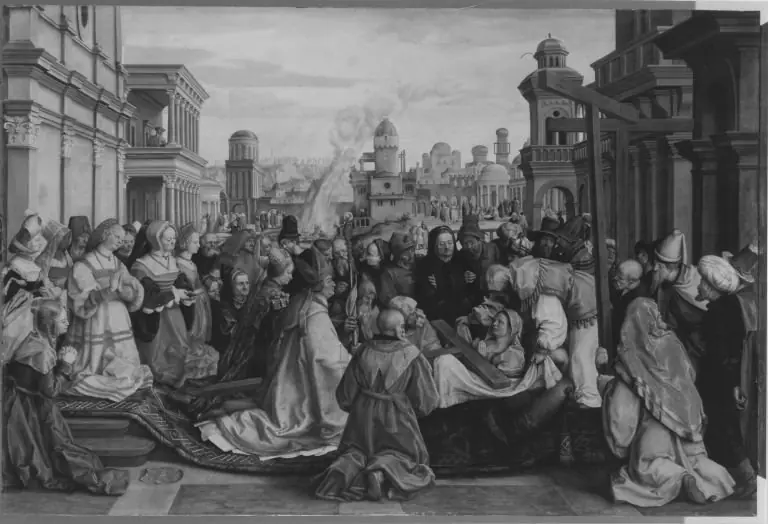 Historienzyklus: Kreuzauffindung der hl. Helena
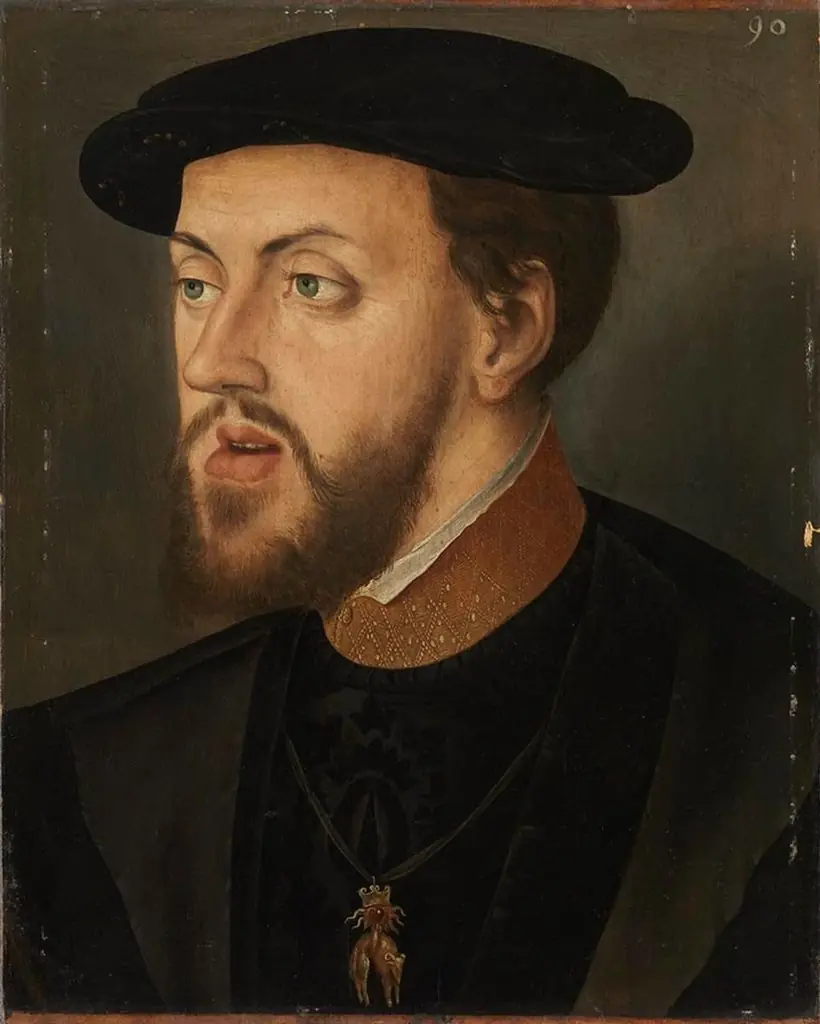 Emperor Charles V
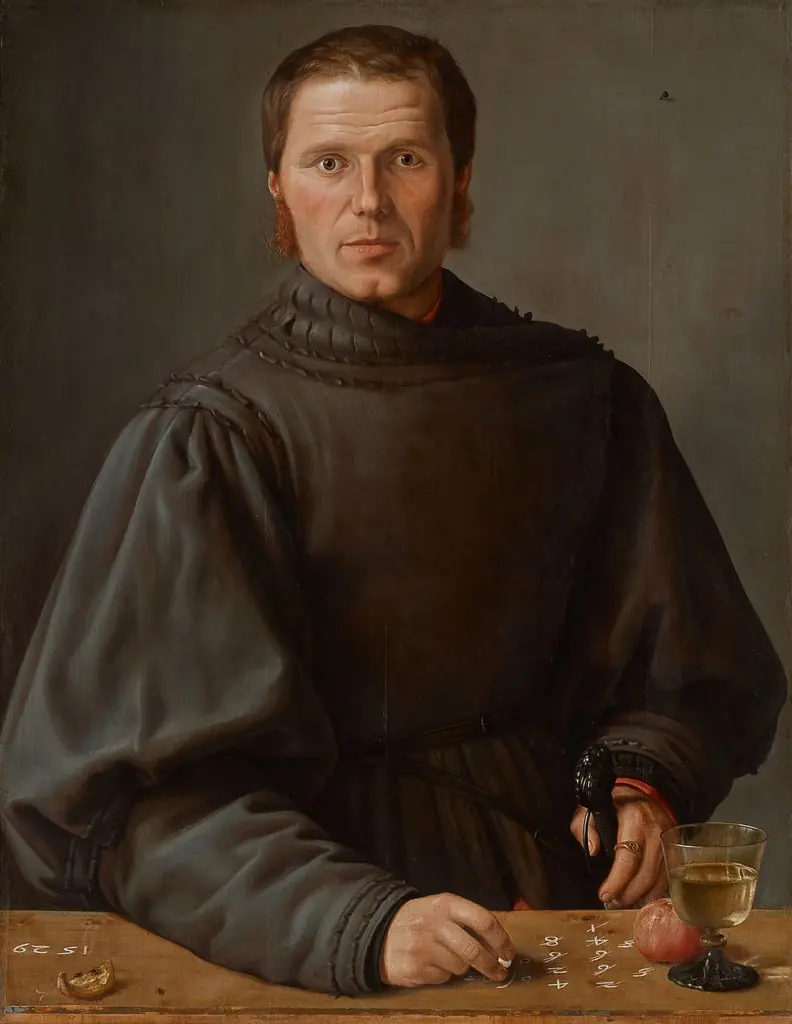 Portrait of a Man
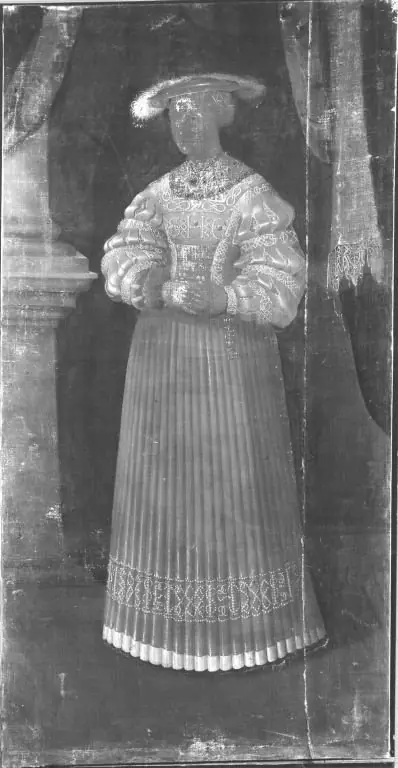 Susanna von Brandenburg, Gemahlin Ottheinrichs (Seitenverkehrte Kopie nach Inv.-Nr. 2450) (Kopie nach)
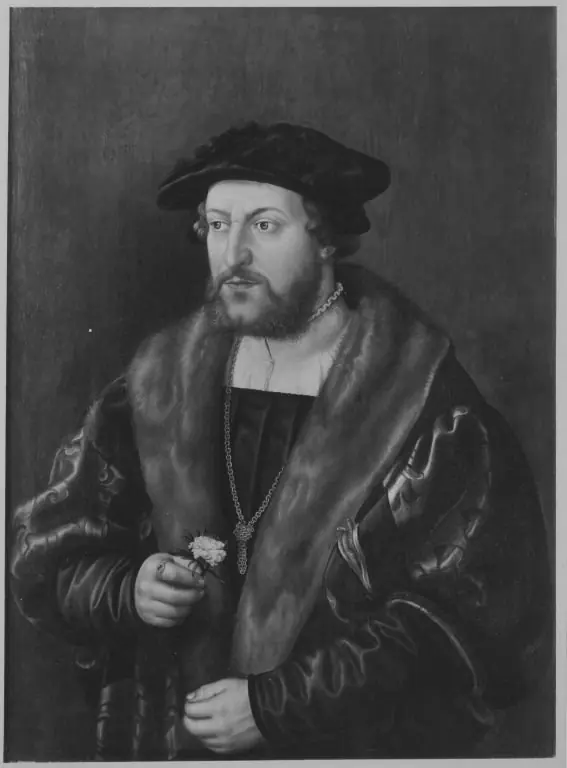 Portrait of Herzog Johann III, Paltzgraf bei Rhein (1488-1538)