Artwork
Mask Held by Two Genii
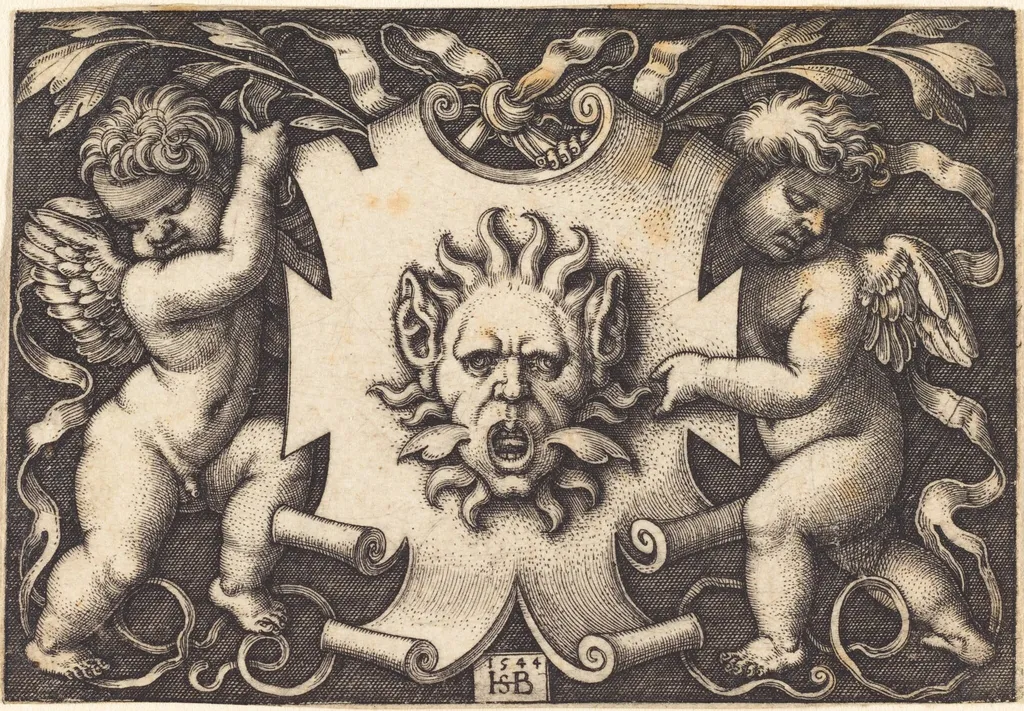
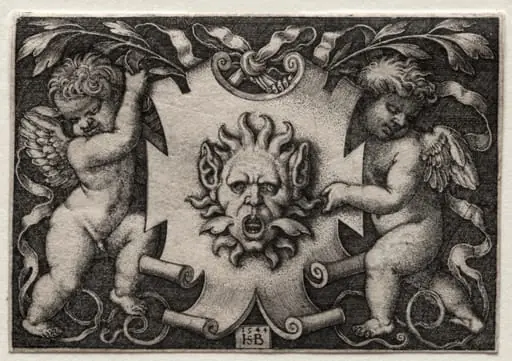
Mask Held by Two Genii is an ink print by the Renaissance artist Sebald Beham. It dates from 1544 and is held in the collection of the National Gallery of Art.
About this work
Overview
As a member of the Little Masters, Beham specialized in small, finely detailed prints, often produced in Nuremberg.
Created in 1544 by Sebald Beham, this engraving depicts two winged figures supporting a large, expressive mask. As a member of the Little Masters, Beham specialized in small, finely detailed prints, often produced in Nuremberg. The work exemplifies the technical precision and compact composition typical of German printmaking in the mid-16th century, rooted in the tradition established by Albrecht Dürer.
Subject & Meaning
The central mask, with its wild hair, beard, and intense expression, is held aloft by two muscular genii. Their dynamic posture and feathered wings suggest a ritual or symbolic act. While the exact meaning remains ambiguous, the image may allude to themes of theatrical illusion, hidden truths, or the duality of human nature—common motifs in Renaissance allegory.
Technique & Style
Beham employed fine-line engraving to render intricate textures and deep shadows. The sharp, controlled strokes define the musculature of the figures, the texture of the mask, and the delicate feathers of the wings. The contrast between light and dark areas enhances the three-dimensionality of the forms, showcasing Beham’s mastery of metal engraving and his attention to minute detail.
History & Provenance
Sebald Beham produced this print during his active years in Nuremberg, before relocating to Frankfurt. As a prolific engraver, he circulated his works widely among collectors and fellow artists. Though specific early ownership records are sparse, the print survives in multiple institutional collections, reflecting its circulation within Northern European artistic networks of the period.
Context
In mid-16th century Germany, small-scale engravings served both artistic and intellectual purposes, often circulating among humanist circles. Beham’s work responded to the legacy of Dürer while embracing mythological and allegorical subjects. The emphasis on craftsmanship and symbolic imagery aligned with broader Renaissance interests in classical themes reinterpreted through a Northern European lens.
Legacy
Beham’s engravings, including this one, influenced later generations of printmakers through their technical rigor and compact narrative power. Though less celebrated than Dürer, his contributions helped sustain the tradition of fine engraving in Germany. The work remains a reference point for understanding the evolution of printmaking as a medium for complex visual allegory.
Artist & collection
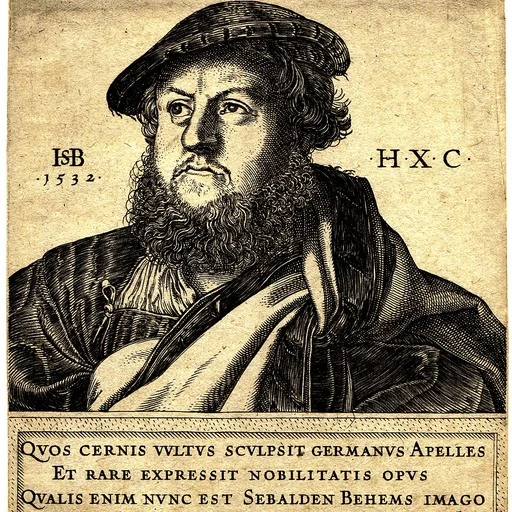
Artist
Sebald Beham (1500–1550) was a German painter and printmaker, mainly known for his very small engravings.


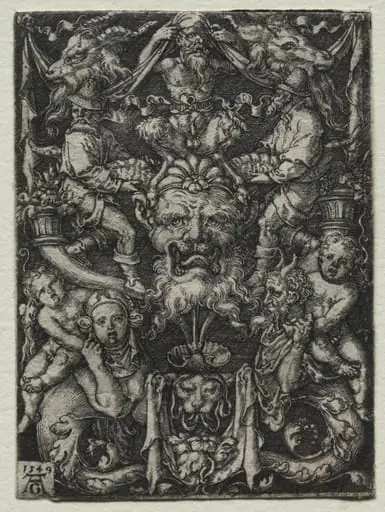 Ornament Design with a Mask, A Couple of Tritons, and Two Children Below
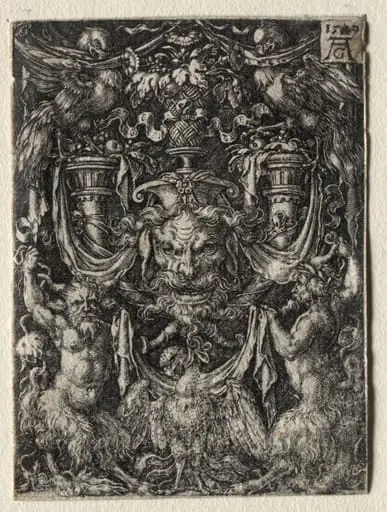 Ornament Design with a Mask and an Eagle between Two Fauns Below
 Vignette au Mascaron
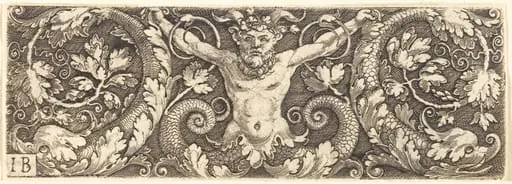 Ornament with Fantastic Satyr and Dolphins
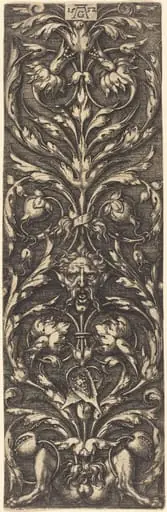 Ornament
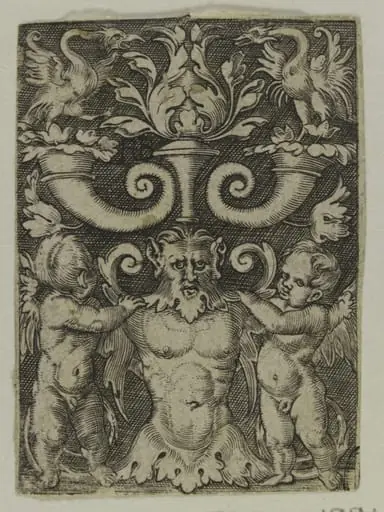 Untitled
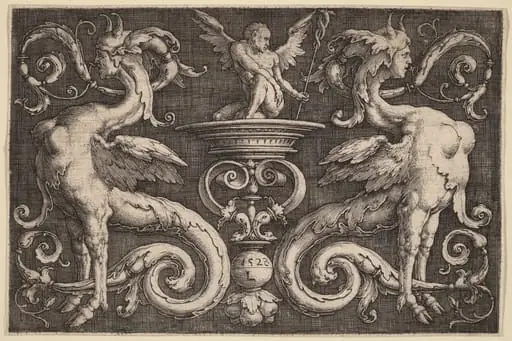 Ornament with Two Sphinxes and a Winged Man
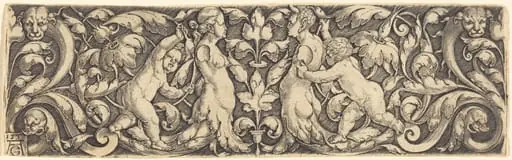 Cross Panel with Vine in Center and Tritons' Couple
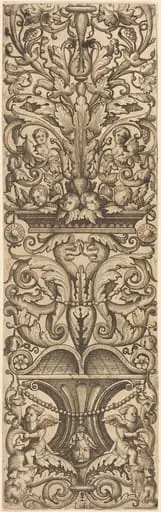 Ascending Ornament