Artwork
The Prodigal Son Tending the Swine
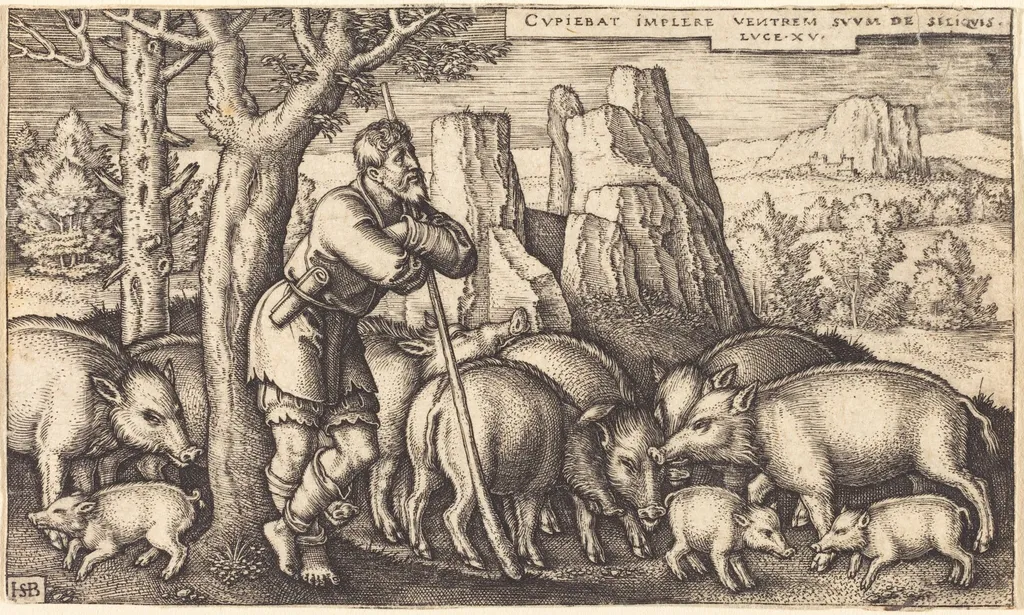
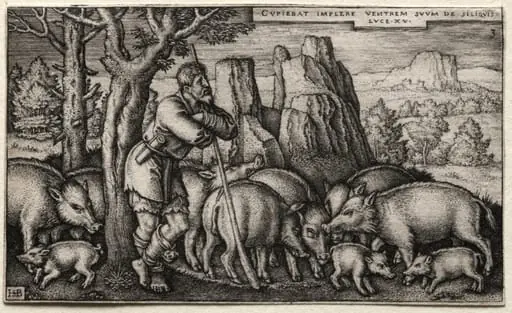
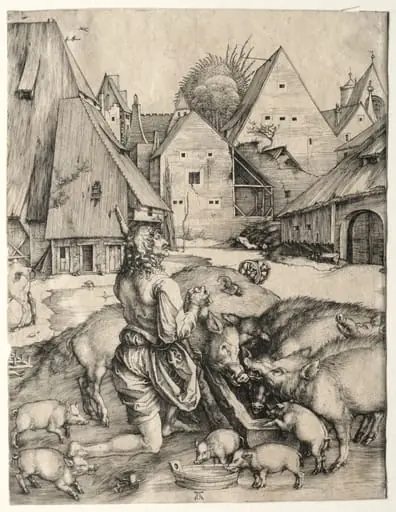
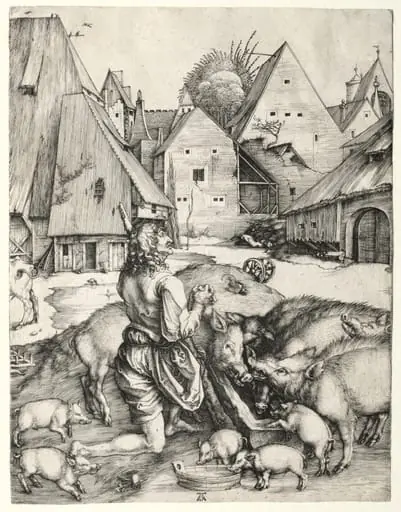
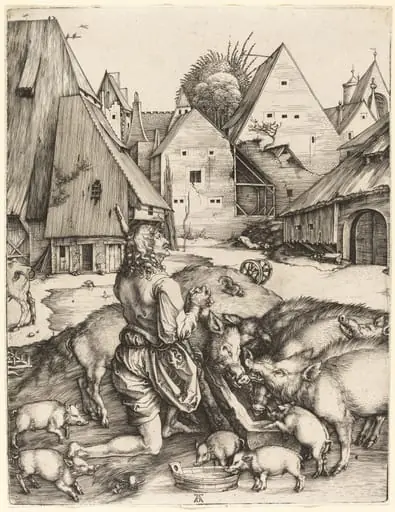
The Prodigal Son Tending the Swine is an ink print by the Renaissance artist Sebald Beham. It dates from 1540 and is held in the collection of the National Gallery of Art.
About this work
Overview
Unlike large-scale paintings, this piece relies on intricate detail and tonal contrast to convey narrative and emotion within a compact format.
Created in 1540 by Sebald Beham, this engraving portrays a moment from the biblical parable of the Prodigal Son. Executed in fine, controlled lines typical of Beham’s technique, the work is part of a broader body of small-scale prints that defined the German 'Little Masters' tradition. Unlike large-scale paintings, this piece relies on intricate detail and tonal contrast to convey narrative and emotion within a compact format.
Subject & Meaning
The scene captures the prodigal son in his lowest state, tending swine in a desolate landscape. His weary stance and simple staff suggest exhaustion and isolation, while the pigs—some nursing, others resting—emphasize his degradation according to the parable’s moral. The distant castle hints at the wealth he abandoned, reinforcing the theme of fallen grace and the cost of reckless living.
Technique & Style
Beham employed engraving to achieve fine, linear precision, using closely spaced hatching and cross-hatching to model form and depth. The textures of bark, stone, and animal hide are rendered with meticulous attention, while deep shadows ground the composition. The absence of color heightens the somber mood, allowing the contrast between light and dark to guide the viewer’s emotional response.
History & Provenance
Beham, a Nuremberg-born artist active in the early 16th century, was part of a generation that extended Albrecht Dürer’s legacy in printmaking. He later worked in Frankfurt, producing hundreds of engravings for a growing market of collectors. This piece, dated 1540, reflects the period’s interest in biblical narratives rendered for private devotion and intellectual engagement rather than public display.
Context
In Reformation-era Germany, religious imagery shifted from grand altarpieces to intimate prints suitable for domestic use. Beham’s work catered to this demand, offering moral tales in accessible form. The inclusion of Latin text signals literacy among viewers, while the focus on human frailty aligned with Protestant themes of repentance and humility, even as Catholic iconography remained influential.
Legacy
Beham’s engravings, including this one, influenced later Northern European printmakers through their technical refinement and psychological nuance. Though less celebrated than Dürer, his ability to convey complex narratives in miniature helped sustain the printmaking tradition through the 16th century. This work endures as an example of how small-scale art could carry profound moral weight.
Artist & collection
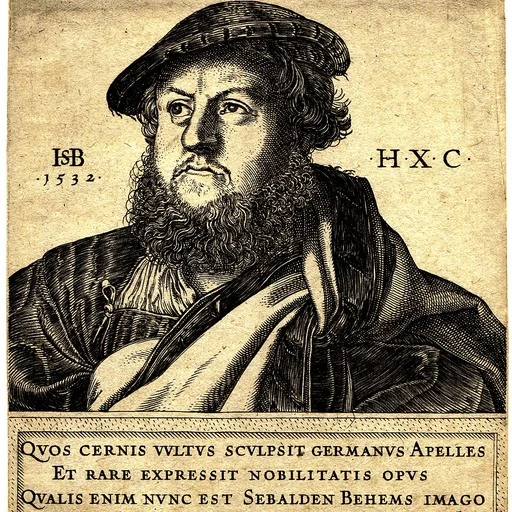
Artist
Sebald Beham (1500–1550) was a German painter and printmaker, mainly known for his very small engravings.