Artwork
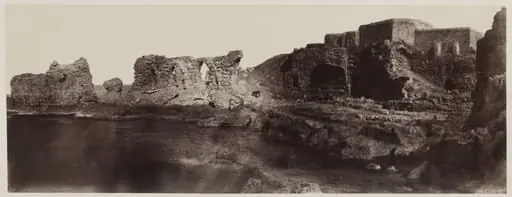
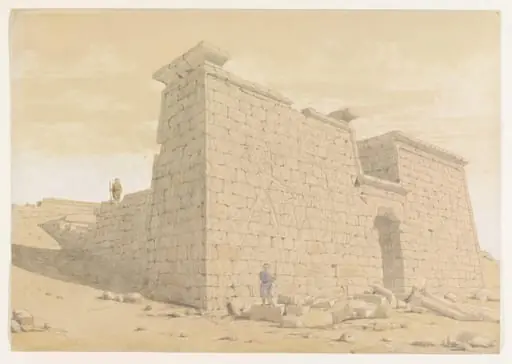
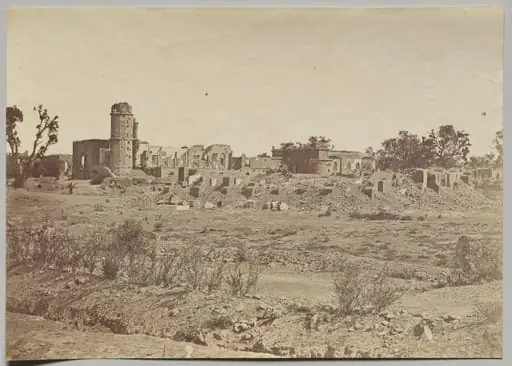
Photograph of a a ruined temple with a Turkish soldier in the Great Iwan at Hatra, Iraq
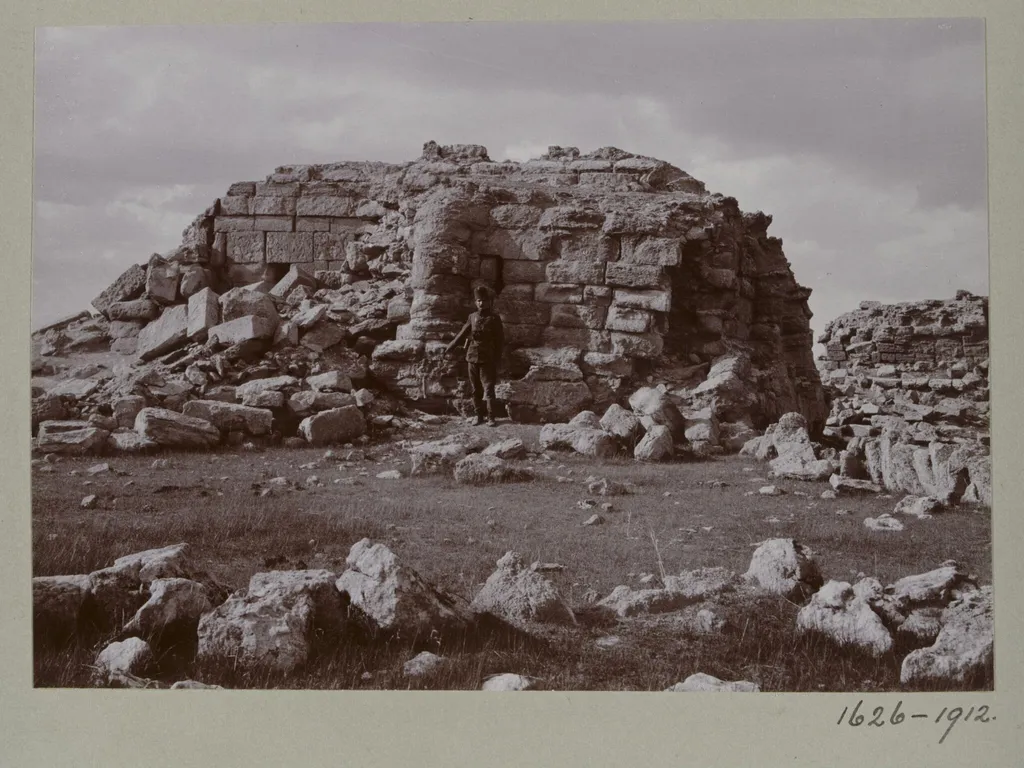
Photograph of a a ruined temple with a Turkish soldier in the Great Iwan at Hatra, Iraq is a photographic photography by Gertrude Margaret Lowthian Bell. It dates from 1911 and is held in the collection of the Victoria and Albert Museum.
About this work
Overview
This black-and-white photograph is one of forty-two topographical images documenting the ruins of Hatra in Iraq, taken by Gertrude Bell in 1911.
This black-and-white photograph is one of forty-two topographical images documenting the ruins of Hatra in Iraq, taken by Gertrude Bell in 1911. The set was later donated to the V&A’s Art Library by Bell herself. Captured with a plate camera, the image records architectural decay and human presence within the ancient site, reflecting Bell’s methodical approach to archaeological documentation during her third major expedition across the Middle East.
Subject & Meaning
The photograph shows the Great Iwan, a monumental vaulted hall at Hatra, partially collapsed and occupied by a Turkish soldier. The juxtaposition of imperial ruins with a contemporary military figure underscores the layering of histories in the region—ancient Parthian grandeur alongside Ottoman presence. Bell’s framing avoids romanticism, instead presenting the site as a lived landscape, not merely a relic.
Technique & Style
Bell used a heavy plate camera, requiring careful setup and long exposures, typical of early 20th-century field photography. The image exhibits sharp detail in stone textures and clear tonal contrast, demonstrating her technical discipline. Composition is deliberate: the soldier’s posture and placement anchor the scene, guiding attention to the scale and erosion of the architecture without staged drama.
History & Provenance
The photograph was taken during Bell’s 1911 journey through Mesopotamia, part of a broader effort to record archaeological sites before increased modern disruption. She personally donated the full set to the V&A’s Art Library, ensuring scholarly access. The images remain tied to her legacy as both an observer and participant in the region’s political and cultural transitions during the waning years of Ottoman rule.
Context
In 1911, Hatra lay within the Ottoman Empire, far from centralized control. Bell’s presence as a Western woman traveling independently was exceptional. Her fluency in Arabic and relationships with local leaders granted her access rarely afforded to outsiders. These photographs were not merely records but tools for understanding a region on the brink of geopolitical transformation.
Legacy
Bell’s photographic work contributed to early archaeological surveys of Mesopotamia, influencing later studies of Hatra and other sites. Her images remain valuable for documenting conditions before 20th-century excavation and conflict. Though her political role in Iraq’s formation is better known, her photographic archive endures as a quiet, precise record of a vanishing landscape.
Artist & collection
Artist
Gertrude Margaret Lowthian Bell
Gertrude Bell was a British traveler who took photographs in the Middle East in the early 1900s.