Artwork
In the Studio
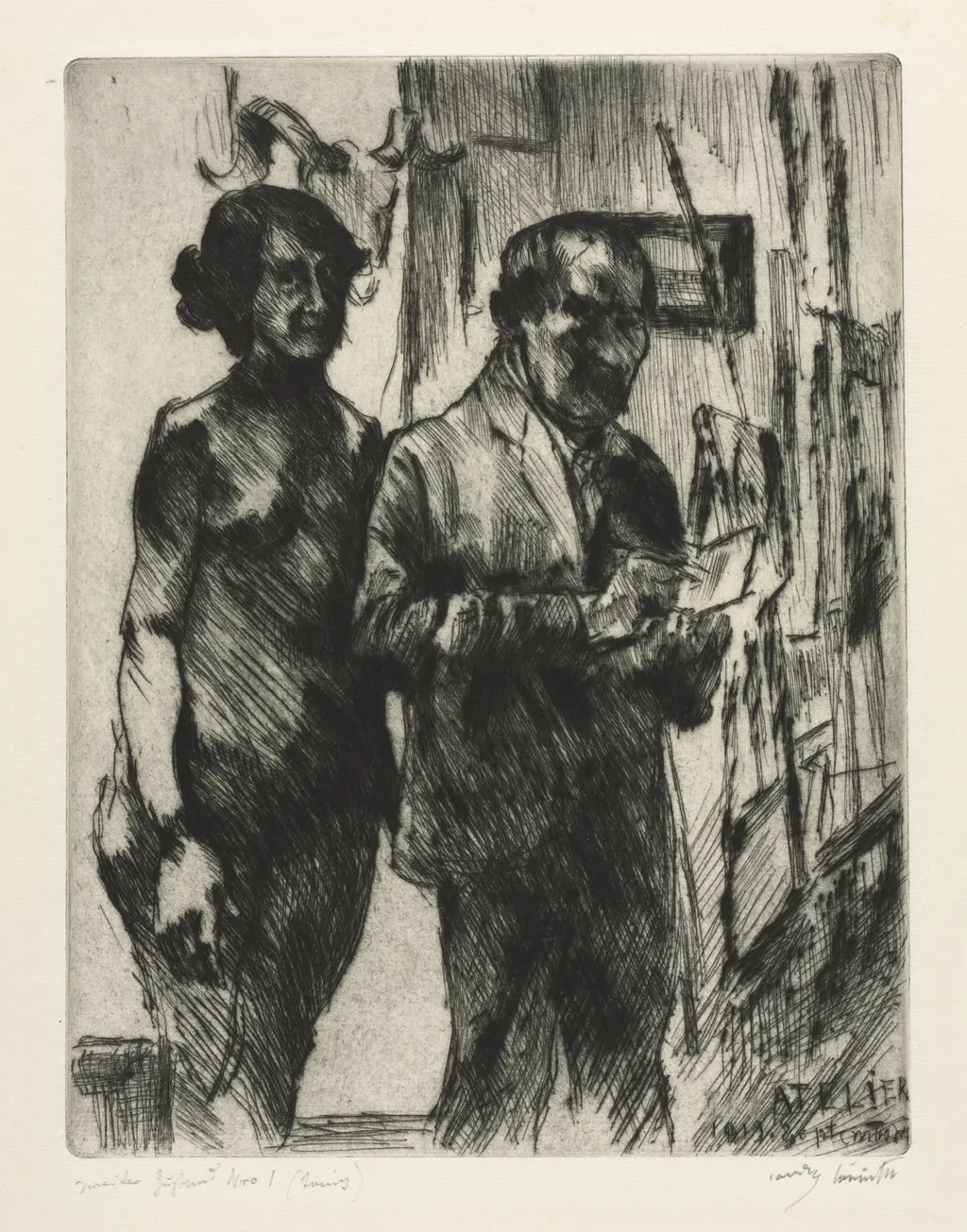
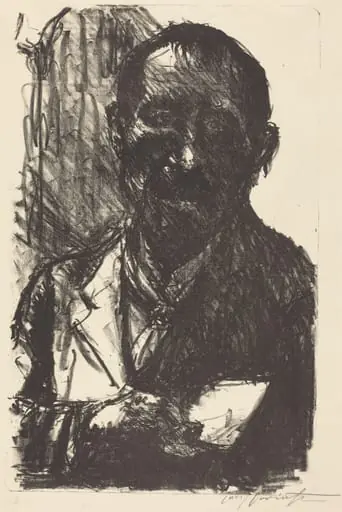
In the Studio is a print by Lovis Corinth. It dates from 1919 and is held in the collection of the Cleveland Museum of Art.
About this work
His wife Charlotte stands behind him, nude but with her face mostly hidden.
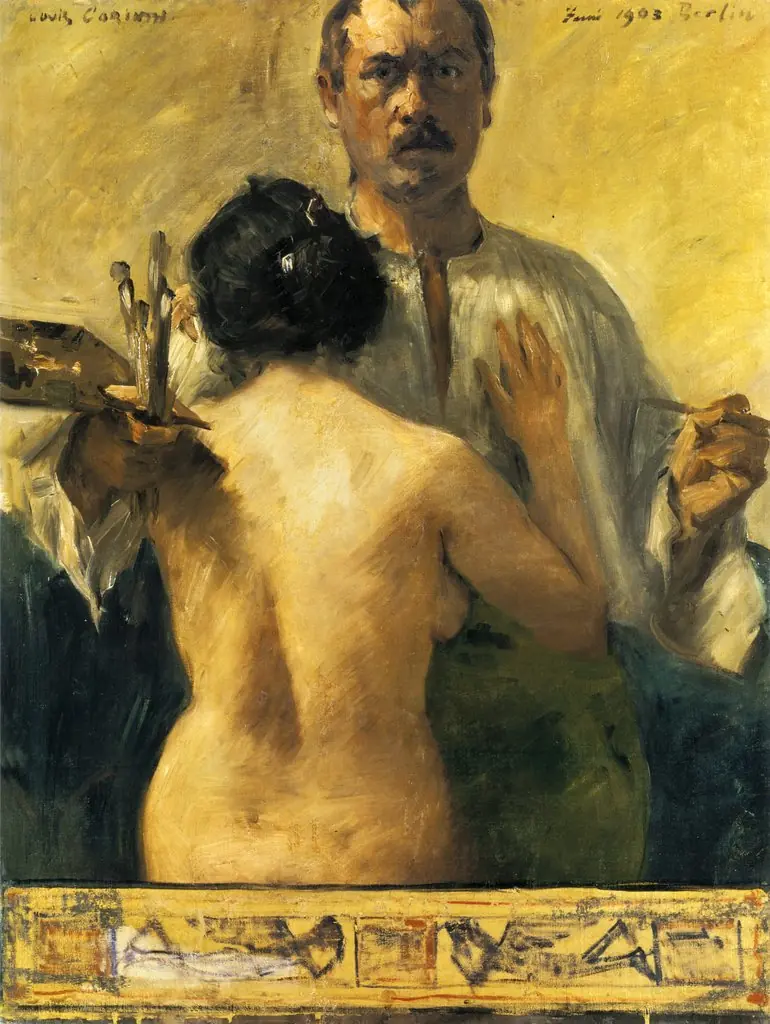
In 1919, Lovis Corinth painted himself standing in his large studio. His wife Charlotte stands behind him, nude but with her face mostly hidden. Corinth had a stroke in 1911. With Charlotte’s help he kept painting, often focusing on family.
This isn’t just a self-portrait. It shows how Charlotte supported him after his stroke. You can almost feel the quiet bond between them.
See how Charlotte’s pose mirrors classic studio nudes. Look up Lovis Corinth (German, 1858–1925).
Overview
Created in 1919, this print captures Lovis Corinth in his Berlin studio during the final phase of his career. Though he had suffered a debilitating stroke in 1911, he continued to produce art with the steadfast support of his wife, Charlotte. The composition centers on his figure, anchored by her presence behind him, suggesting a quiet partnership that sustained his creative life.
Subject & Meaning
The image is not merely a self-portrait but a testament to domestic resilience. Charlotte, depicted nude yet with her face obscured, embodies both muse and caretaker. Her posture echoes classical studio nudes, yet her anonymity shifts focus from idealized beauty to the private, unspoken role she played in his recovery and artistic continuity.
Technique & Style
Corinth employed a direct, expressive line typical of his late graphic work, with tonal contrasts emphasizing form over detail. The shading around Charlotte’s face softens her identity, drawing attention to the spatial relationship between the two figures. His brushwork retains emotional urgency, even as the composition grows more restrained.
History & Provenance
The print dates from the last years of Corinth’s life, following his stroke and subsequent reorientation toward intimate subjects. It emerged from a period when he increasingly turned to family as both subject and support. The work was likely produced in his studio, where he resumed regular artistic practice under Charlotte’s care.
Context
In postwar Germany, many artists grappled with trauma and physical decline. Corinth’s focus on domestic scenes reflected a broader shift toward personal narrative in expressionist circles. His choice to depict Charlotte not as a symbol but as a silent, essential presence aligns with his evolving interest in vulnerability and endurance.
Legacy
This print endures as a quiet record of artistic perseverance shaped by intimate partnership. It avoids grandeur, instead offering a restrained meditation on dependency, care, and the quiet labor behind creative survival. Later scholars have noted its significance in redefining the artist’s self-image through the lens of shared life.
Artist & collection

Artist
Lovis Corinth was a German artist and writer whose mature work as a painter and printmaker realized a synthesis of impressionism and expressionism.

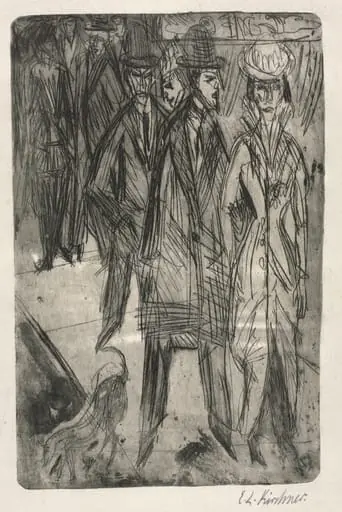 On the Street
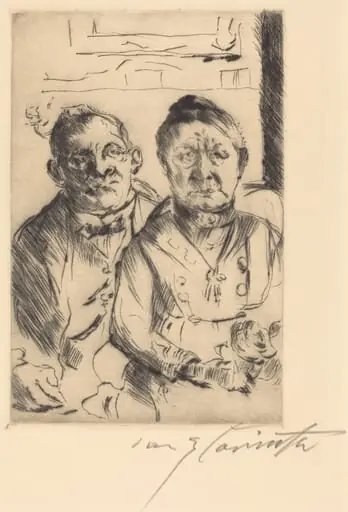 Ostpreussisches Ehepaar (Couple from East Prussia)
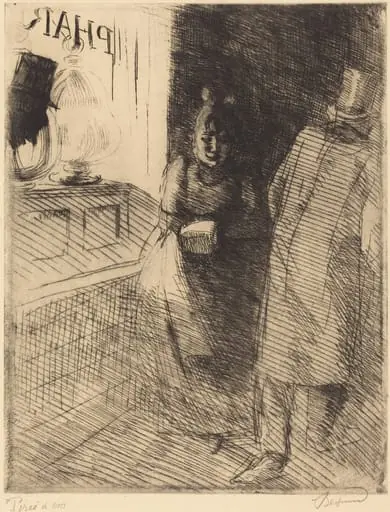 Prostitution (La Prostitution)
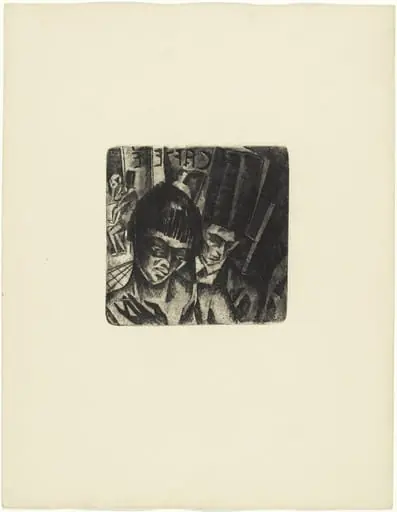 Untitled
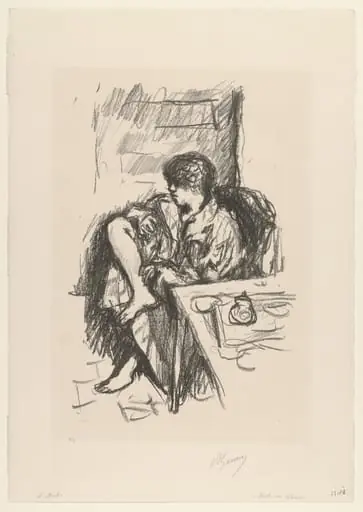 Untitled
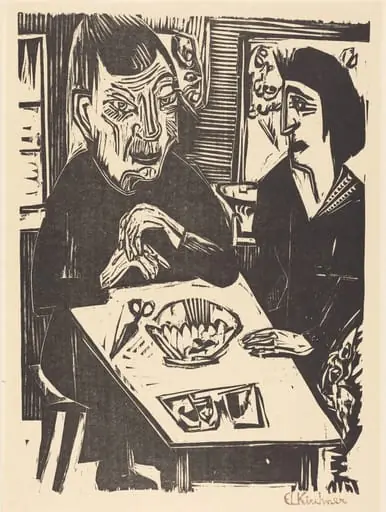 Old and Young Woman (Alte und jungere Frau)
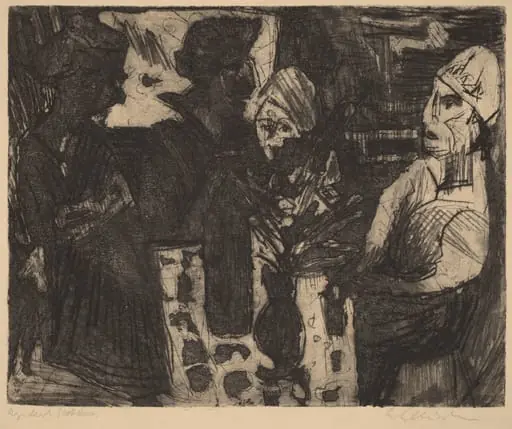 Women at a Table in a Room (recto) / Nude Woman (verso)
 Untitled
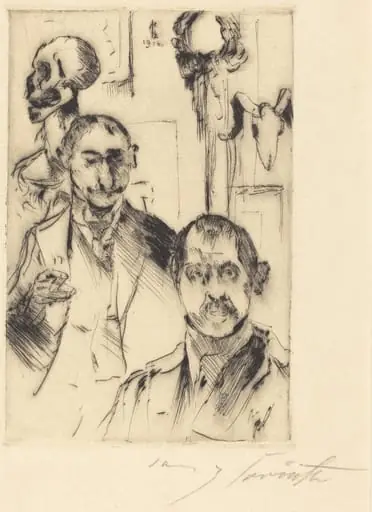 Doppelbildnis mit Skelett (Double Portrait with Skeleton)
 Court Recess
 Yahne and Mayer in "L'age difficile" (Yahne et Mayer dans "L'age difficile")
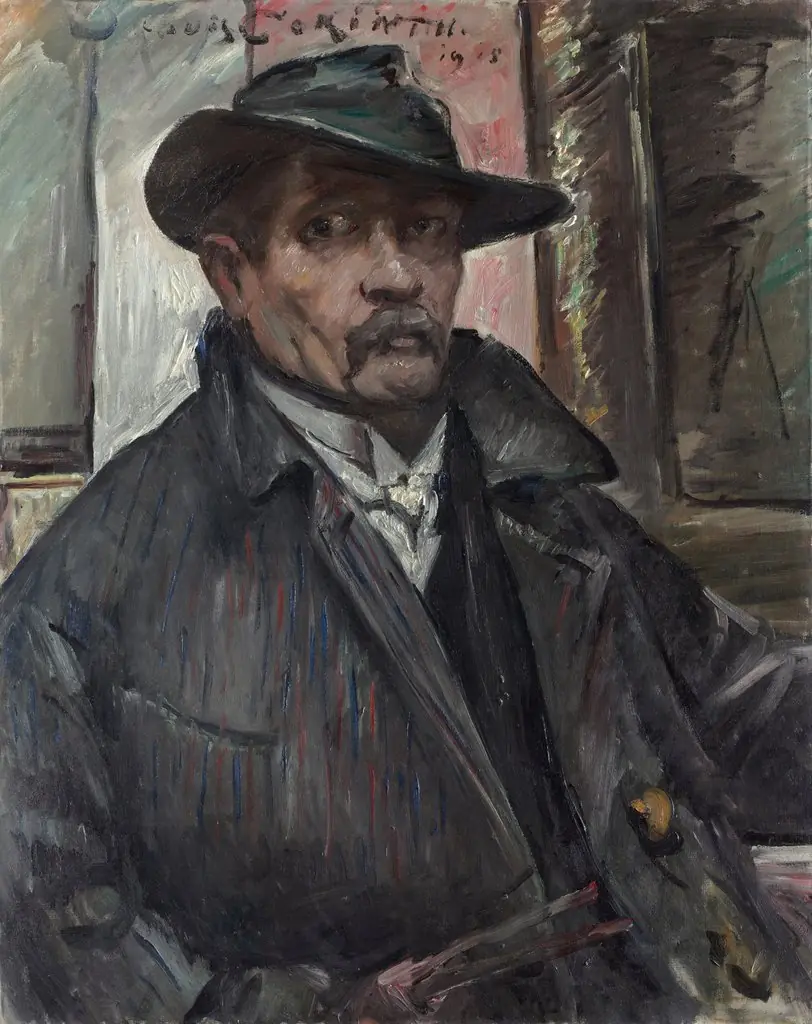
 Selbstbildnis 1919 (Self-Portrait 1919)