Artwork
The Charge
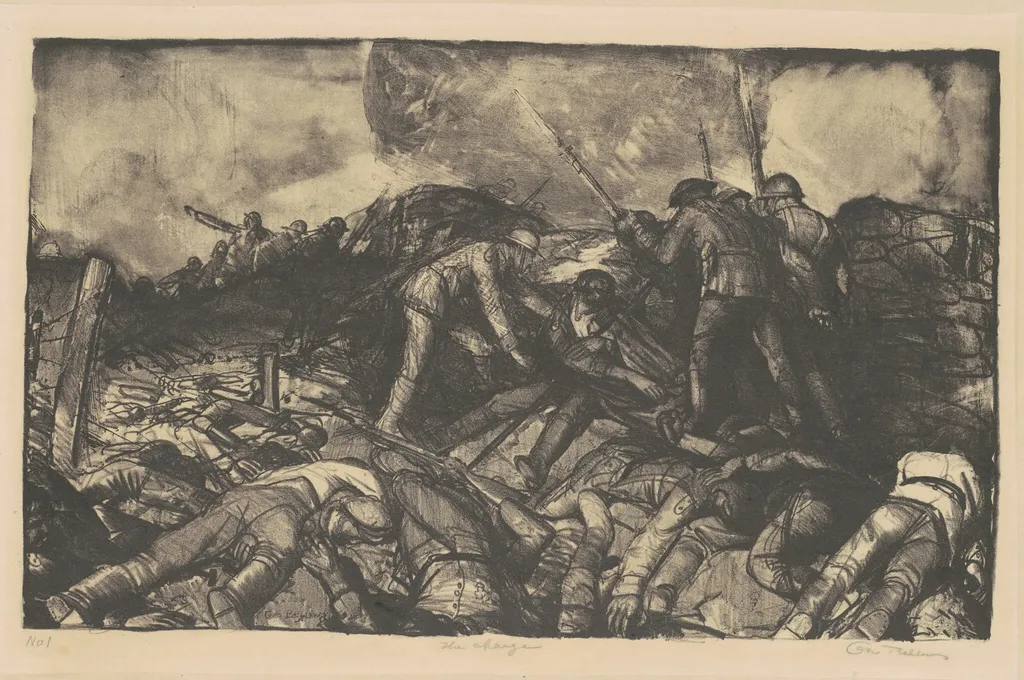
The Charge is an ink print by George Bellows. It dates from 1918 and is held in the collection of the National Gallery of Art.
About this work
Overview
The Charge is a 1918 lithograph by George Bellows, executed in black ink with chine collé on wove paper. It captures a moment of intense motion—horses and riders surging forward in a fragmented, dynamic composition. The work belongs to Bellows’s series of sports and battle scenes, reflecting his interest in physical exertion and raw energy, rendered through the immediacy of printmaking.
Subject & Meaning
The scene depicts a cavalry charge, likely inspired by contemporary military training or wartime imagery, though not tied to a specific historical event. The figures are reduced to essential forms, emphasizing momentum over individual identity. The absence of clear narrative details invites interpretation as a universal representation of force, urgency, and the chaos of movement.
Technique & Style
Bellows employed lithography to achieve bold, fluid lines and high contrast, enhancing the sense of motion. Chine collé added subtle texture and depth to the paper’s surface. Forms are simplified, edges are sharp, and overlapping shapes create rhythmic tension. The technique favors spontaneity, aligning with the subject’s kinetic energy and rejecting polished detail in favor of visceral impact.
History & Provenance
Created during World War I, The Charge emerged from Bellows’s engagement with themes of conflict and physicality, though he did not serve in the war. The print was produced in a limited edition and circulated through art dealers and exhibitions. It entered institutional collections in the mid-20th century, where it remains as part of broader surveys of American modernist printmaking.
Context
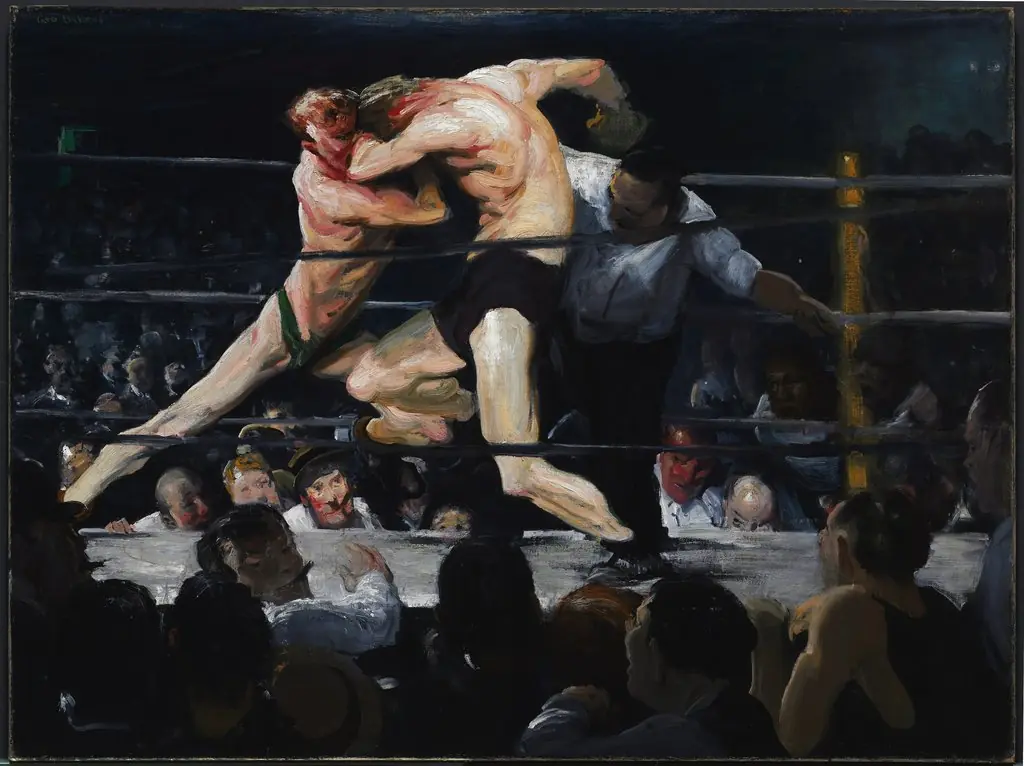
Bellows made this work amid rising American involvement in global conflict, though his focus remained on the physicality of movement rather than political messaging. His earlier boxing and urban scenes had established a visual language of force and compression; The Charge extends this into a more abstracted, militarized context, reflecting broader cultural anxieties about speed, power, and violence.
Legacy
While not widely reproduced, it remains a key example of early 20th-century American prints that prioritized emotional resonance over literal representation.
The Charge exemplifies Bellows’s contribution to American printmaking through its expressive use of lithography and its departure from realism. It influenced later artists interested in conveying motion through simplified form and graphic intensity. While not widely reproduced, it remains a key example of early 20th-century American prints that prioritized emotional resonance over literal representation.
Artist & collection
Artist
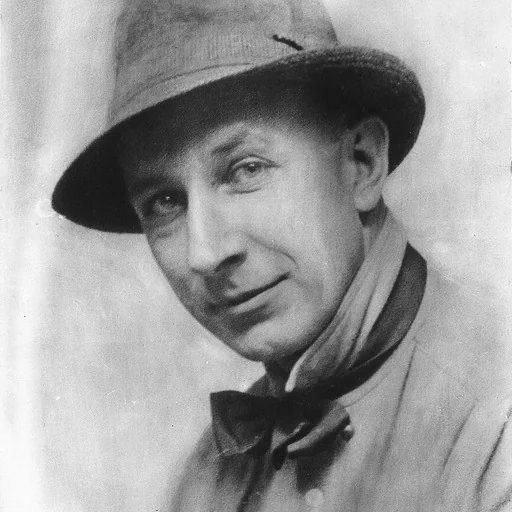
George Wesley Bellows (August 12 or August 19, 1882 – January 8, 1925) was an American realist painter, known for his bold depictions of urban life in New York City.

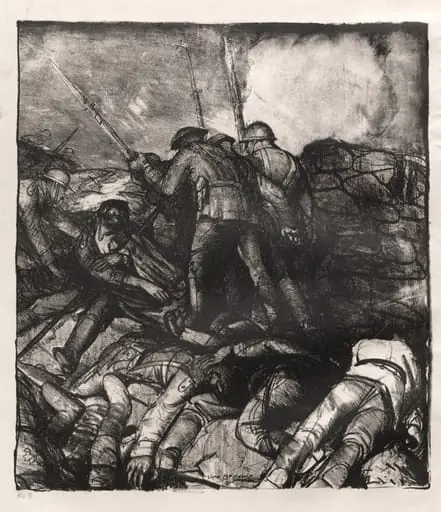 War Series: The Charge, Right Detail, first state
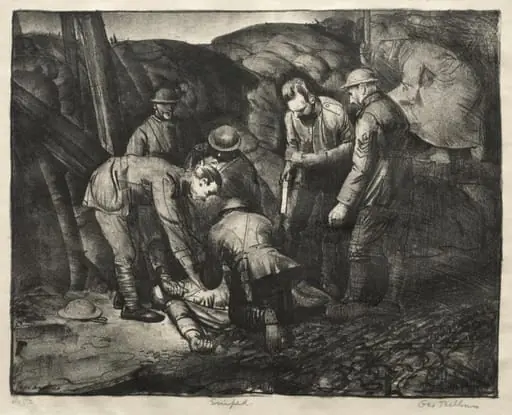 War Series: Sniped
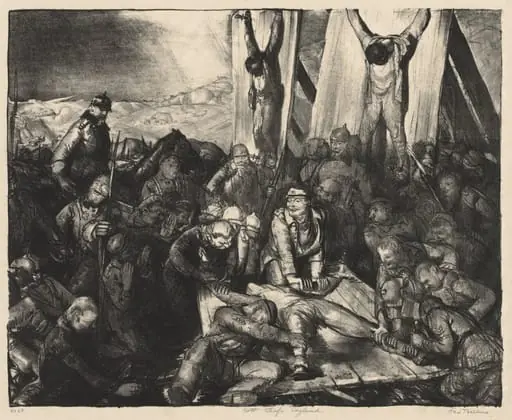 War Series: Gott Strafe, England
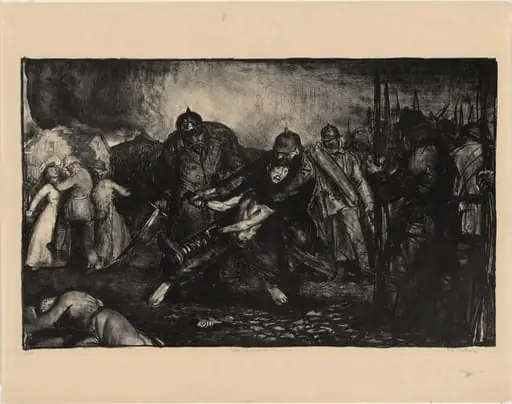 The Germans Arrive
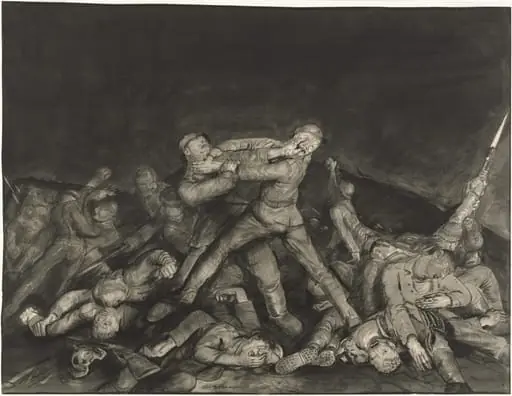 Ghost of Sergeant Pelly
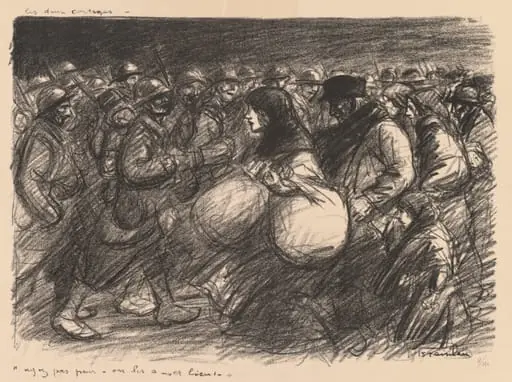 War Sketches: The Two Processions (Croquis de guerre: Les deux cortèges – “Ayez pas peur - on les a - et bien!”)
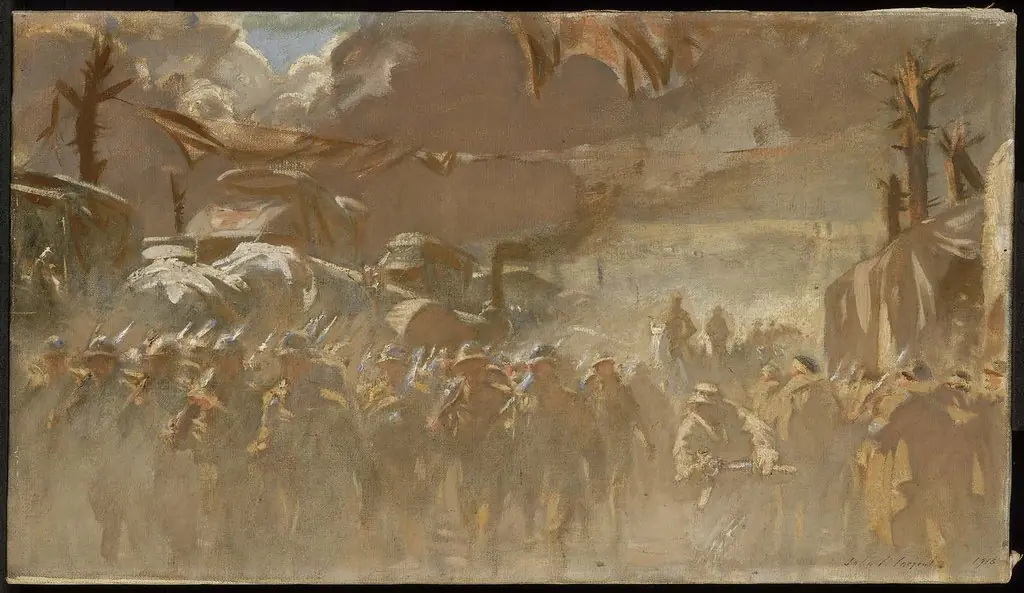 The Road
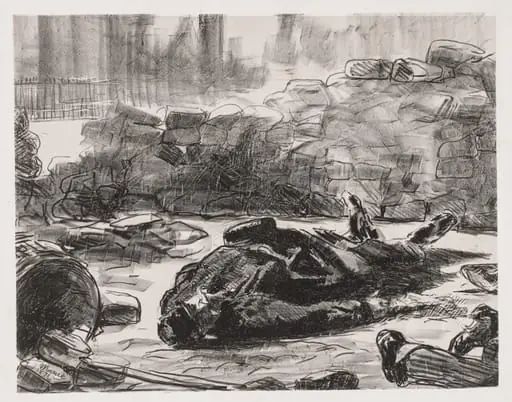 Civil War (Scene of the Commune of Paris)
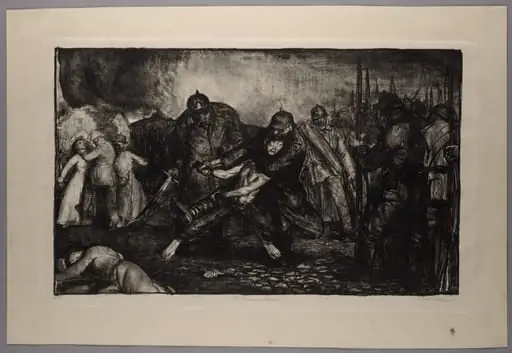 War Series: The Germans Arrive
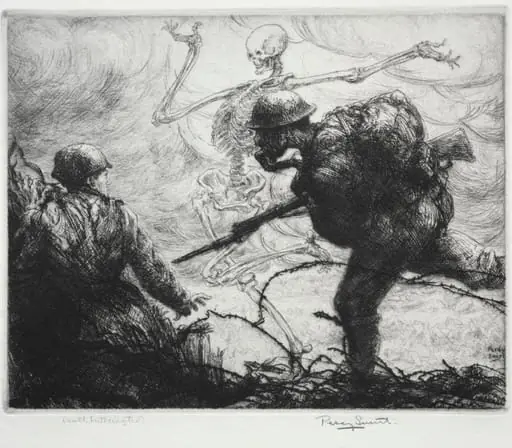 Dance of Death: Death Intoxicated