Artwork
Theseus mit den beiden Töchtern des Minos
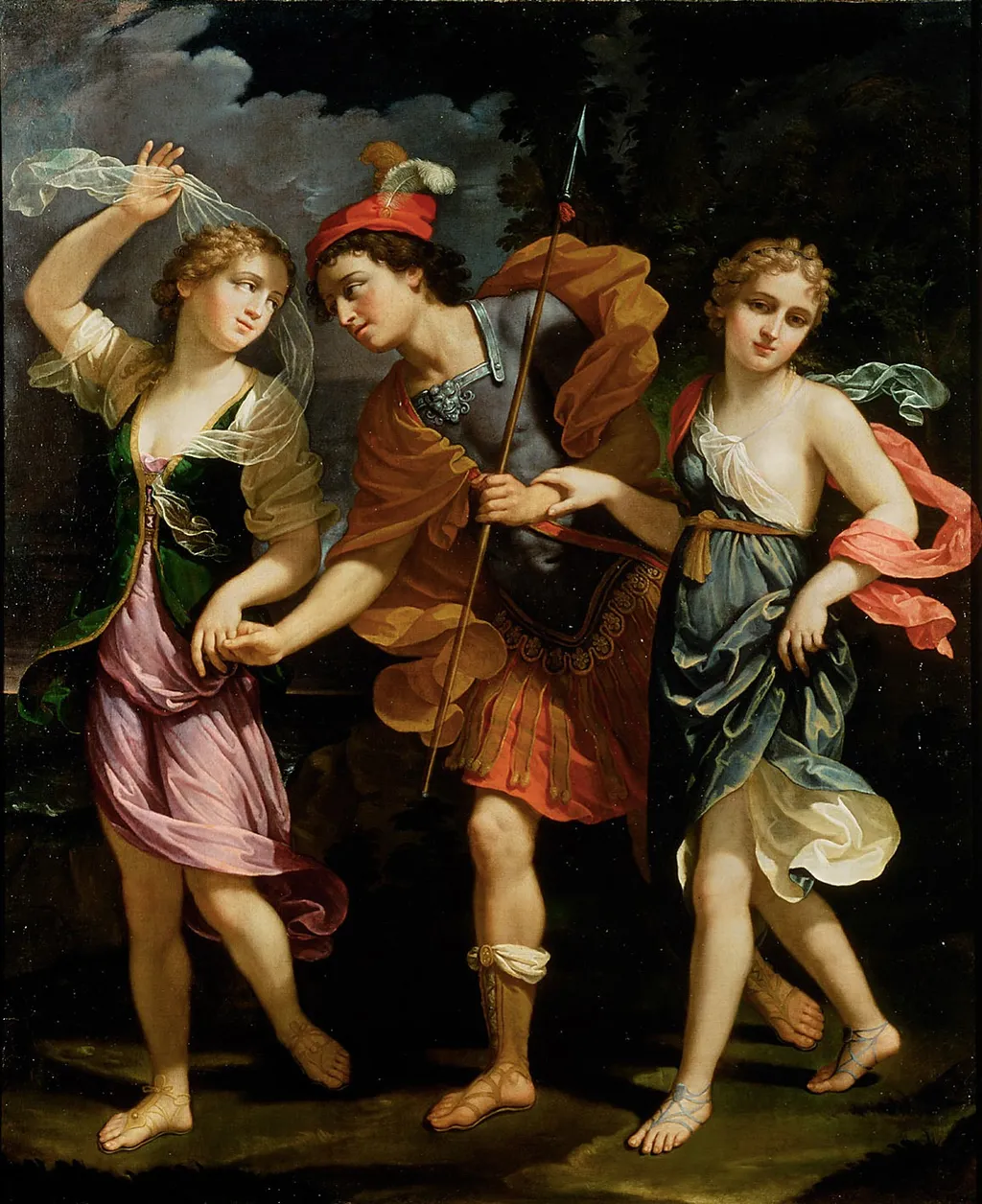
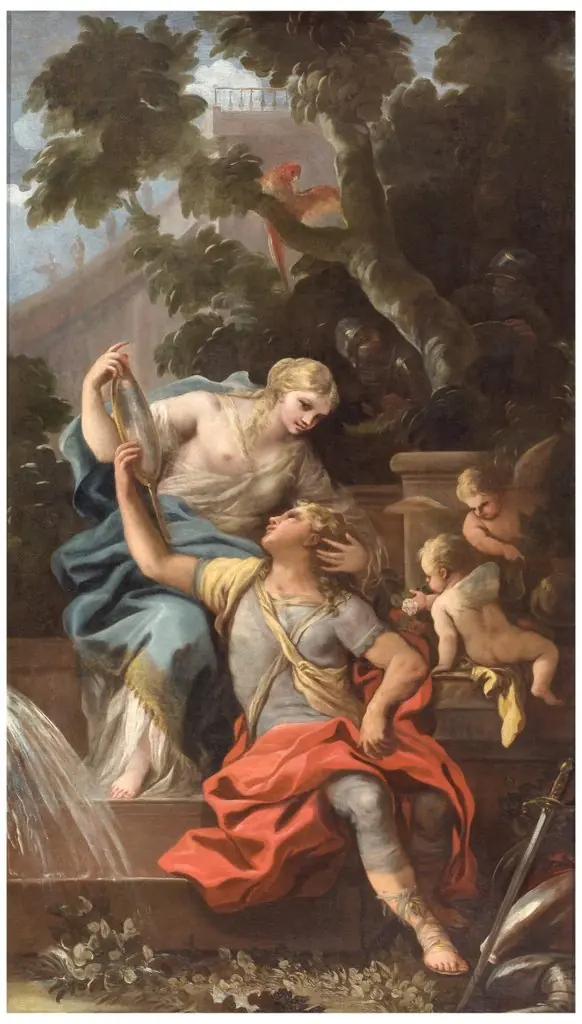
Theseus mit den beiden Töchtern des Minos is an unspecified painting by the Rococo painting artist Benedetto Gennari II. It dates from 1702 and is held in the collection of the Kunsthistorisches Museum.
About this work
Overview
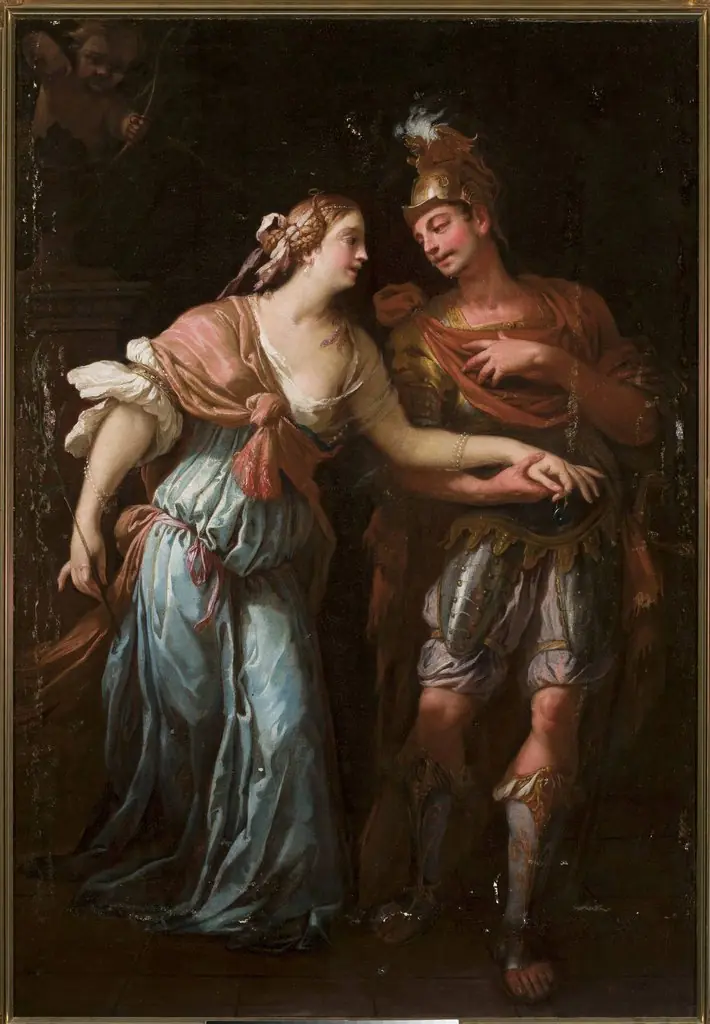
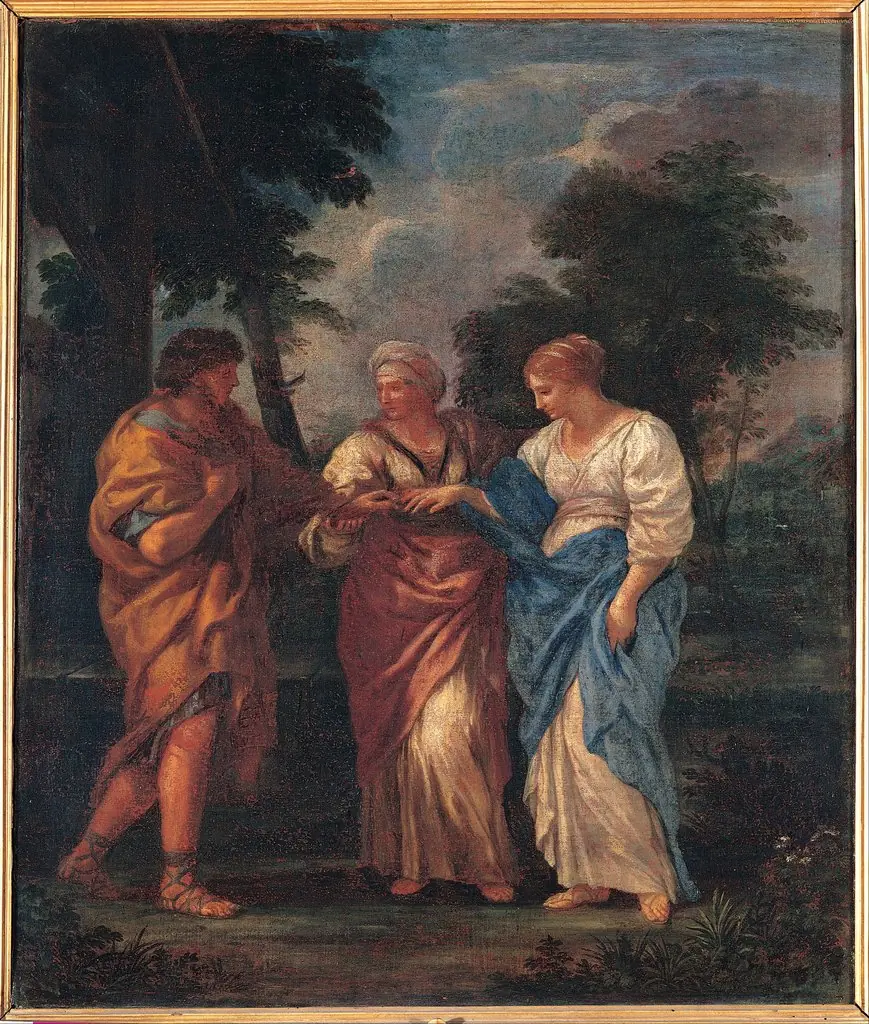
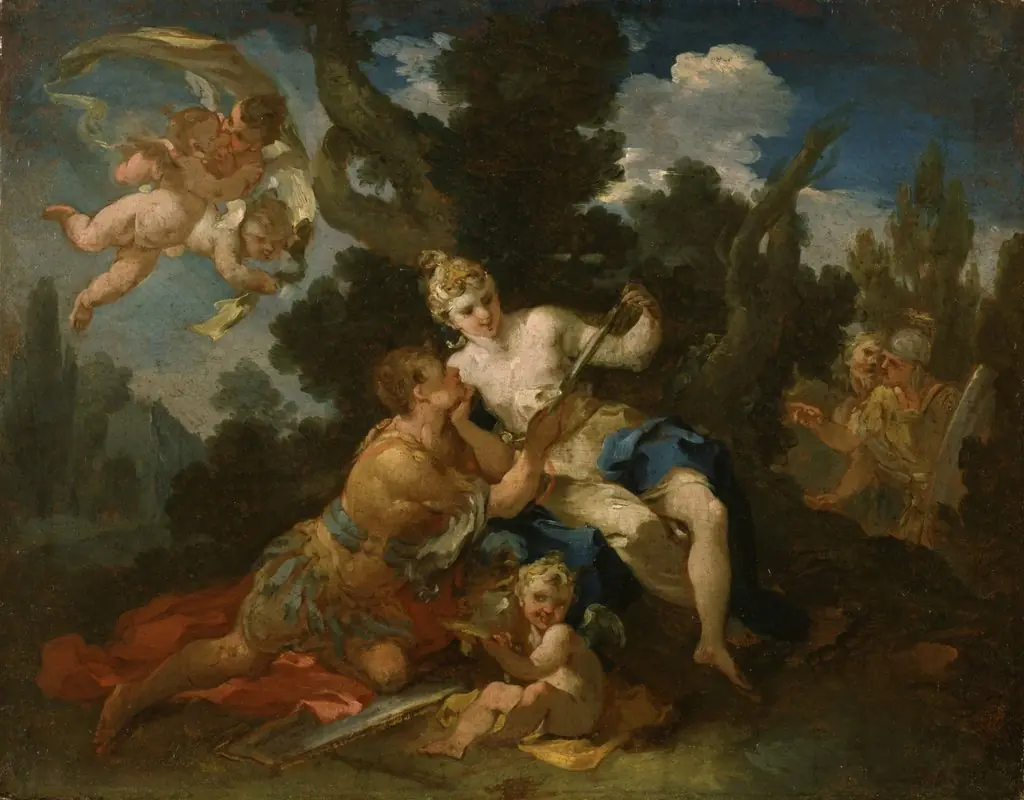
Benedetto Gennari II’s 1702 oil painting, titled *Theseus mit den beiden Töchtern des Minos*, is part of the collection of the Kunsthistorisches Museum in Vienna. The work presents a compact, three‑person composition set against a dimly lit backdrop, drawing the viewer’s focus to the central male figure and the two women flanking him.
Subject & Meaning
The scene portrays the mythic hero Theseus confronting the two daughters of King Minos. Theseus, identifiable by his red hat and red‑yellow tunic, holds a spear, suggesting a moment of confrontation or negotiation. The women, dressed in contrasting green‑pink and blue‑white robes, emphasize the narrative tension between the heroic male and the royal female figures.
Technique & Style
Gennari employs a pronounced chiaroscuro, using deep shadows to model the figures against a nearly black landscape. The dramatic lighting isolates the characters, while the vivid costume colors—reds, greens, blues—enhance the visual tension. The brushwork is typical of early‑18th‑century Italian Baroque, balancing realism with theatricality.
History & Provenance
Created in 1702, the painting entered the Kunsthistorisches Museum’s holdings as part of its Baroque collection, though the exact acquisition path remains undocumented in public records. Its presence in the museum underscores the institution’s commitment to preserving works by lesser‑known Italian painters of the period.
Context
Benedetto Gennari II, a member of the Gennari family of painters, worked within the artistic currents of the late Baroque, where mythological subjects were often rendered with heightened drama. This composition reflects contemporary interest in classical narratives, serving both decorative and didactic purposes in aristocratic settings.
Artist & collection