Artwork
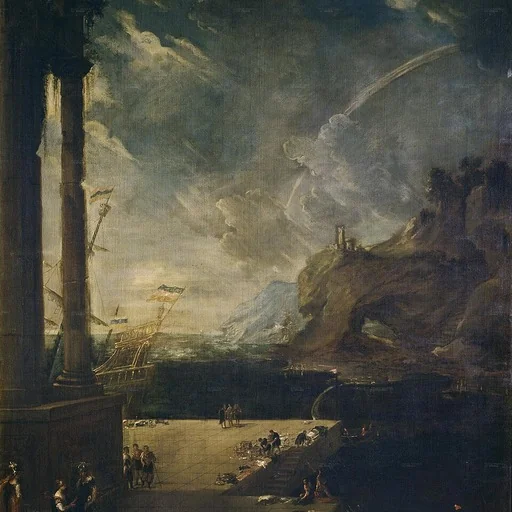
Paisaje con la salida de Eneas de Cartago
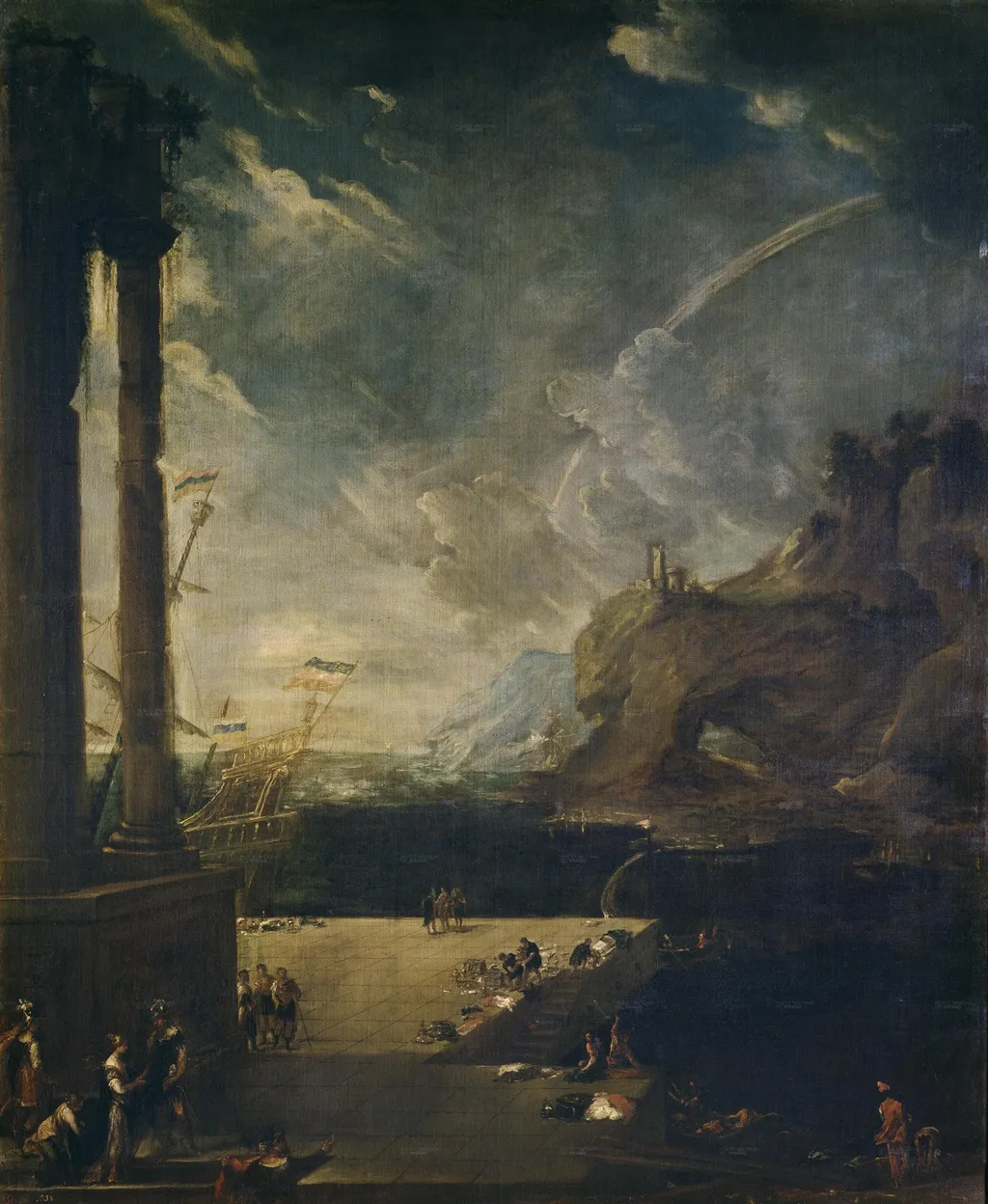
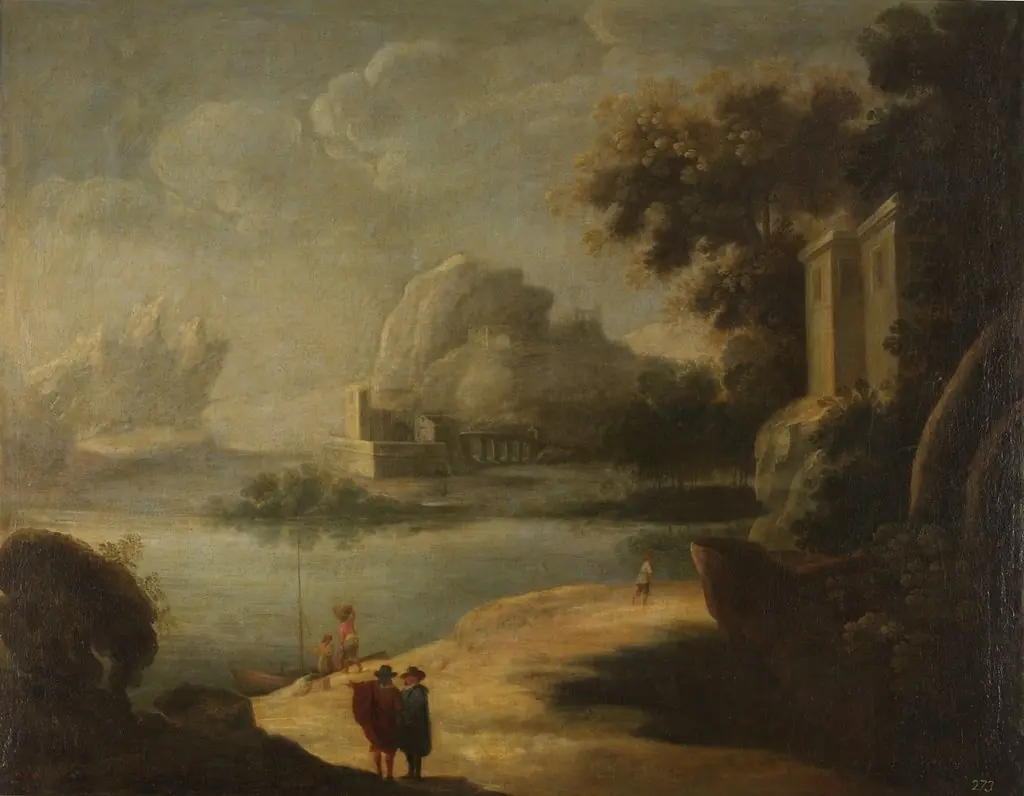
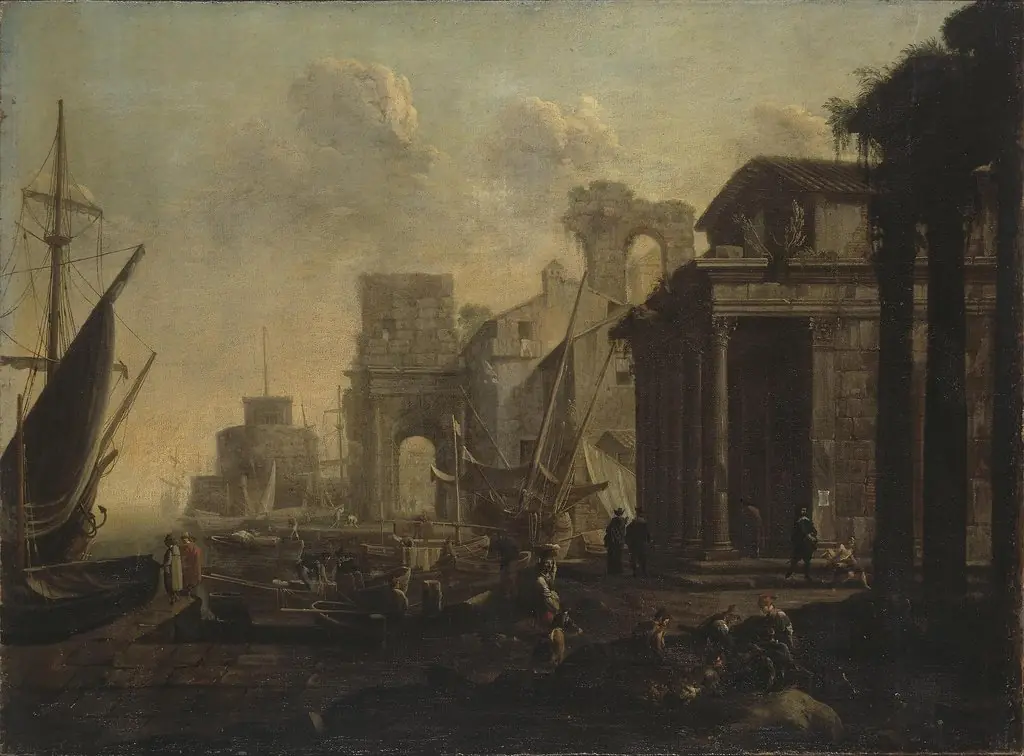
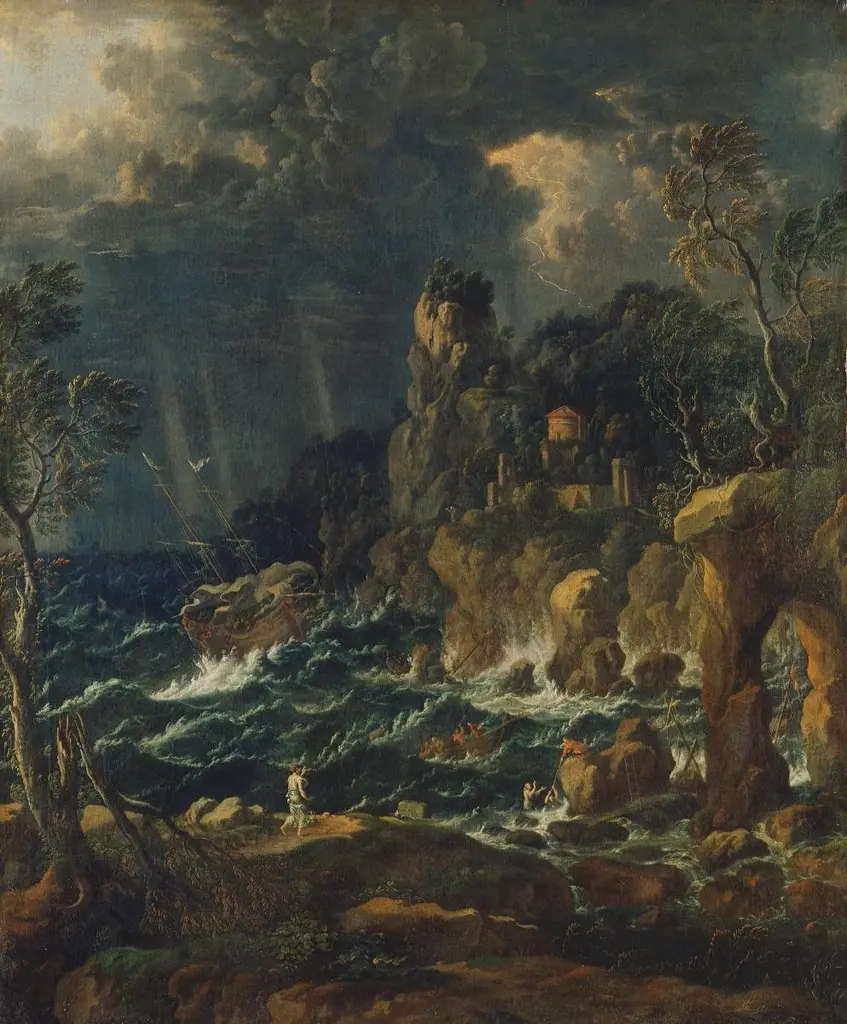
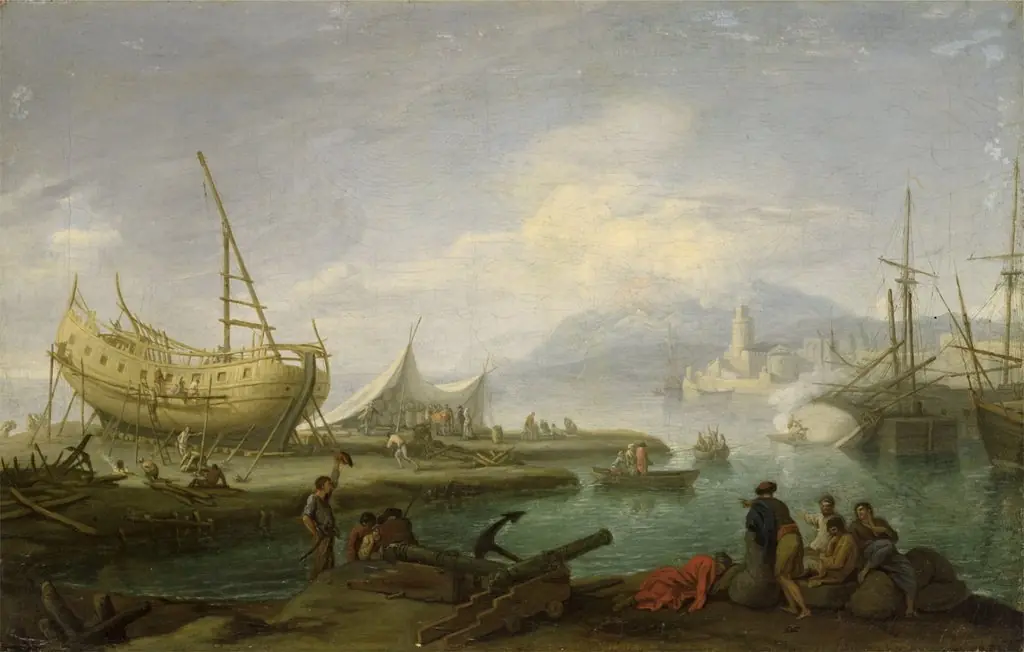
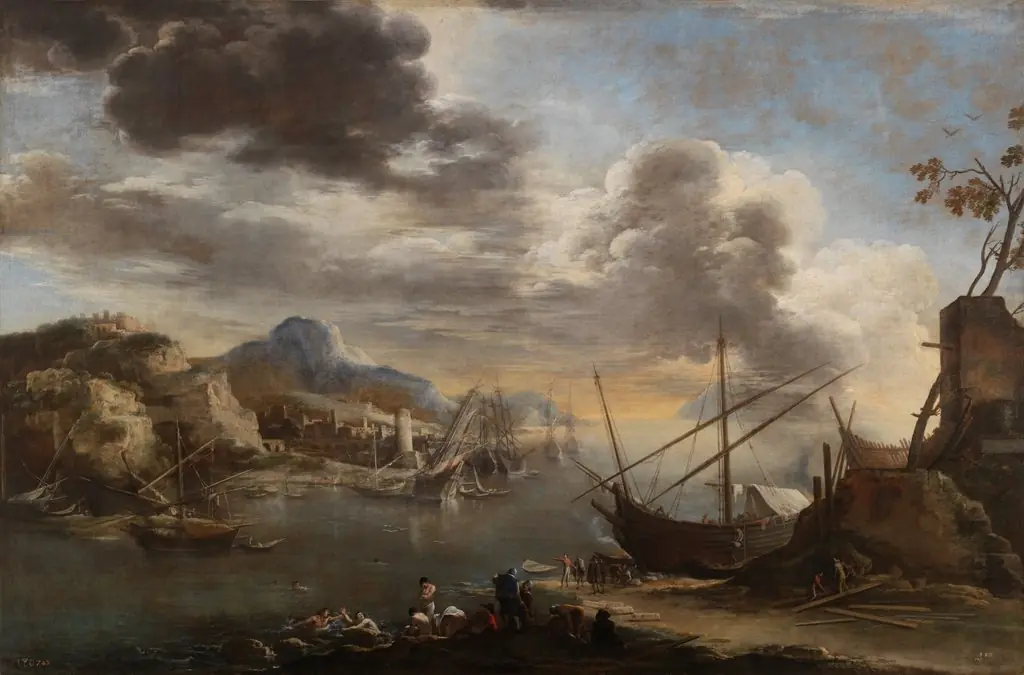
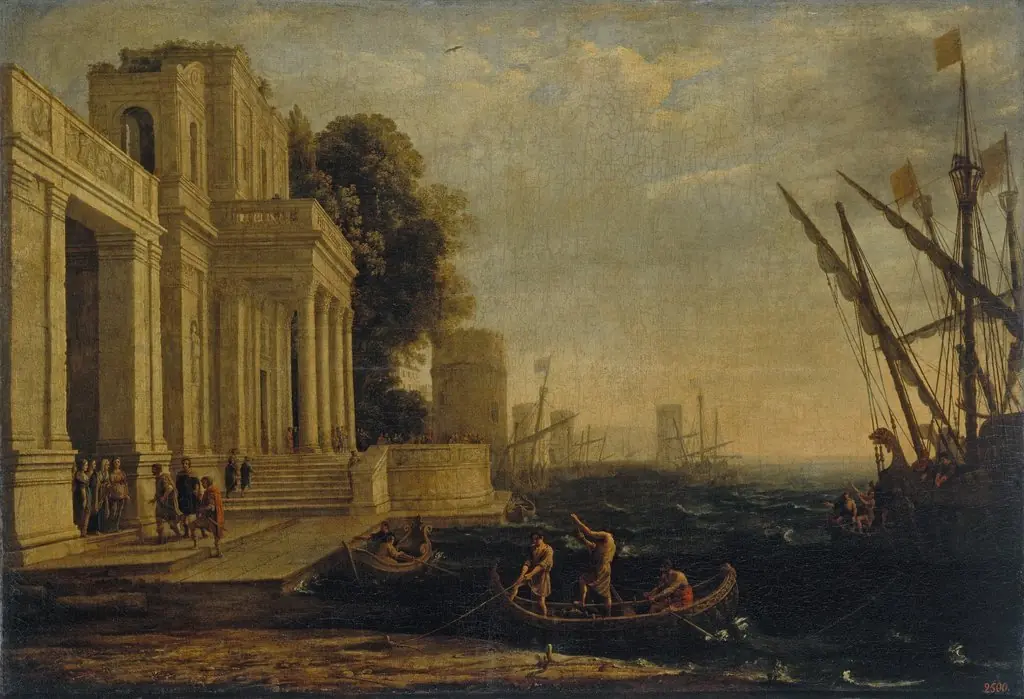
Paisaje con la salida de Eneas de Cartago is an oil painting by the Early Baroque Italian artist Benito Manuel Agüero. It dates from 1651 and is held in the collection of the Museo del Prado.
About this work
Overview
Painted in 1651 by Spanish artist Benito Manuel Agüero, this oil-on-canvas work presents a mythological landscape centered on Aeneas’s departure from Carthage.
Painted in 1651 by Spanish artist Benito Manuel Agüero, this oil-on-canvas work presents a mythological landscape centered on Aeneas’s departure from Carthage. Executed in the early Baroque tradition, it reflects Agüero’s focus on expansive natural settings and narrative drama. The painting resides in the Museo del Prado, Madrid, where it stands as a rare example of Spanish landscape painting infused with classical themes during the mid-seventeenth century.
Subject & Meaning
The scene illustrates Aeneas leaving Carthage after his fateful encounter with Dido, as recounted in Virgil’s Aeneid. The towering column and clustered figures suggest a moment of departure and emotional rupture. The stormy sky and rainbow imply divine intervention and fate, while the ships on the water signify the hero’s destined journey to Italy. The composition conveys transition—not merely physical movement, but the weight of duty over personal desire.
Technique & Style
Agüero employs chiaroscuro to heighten emotional tension, contrasting deep shadows in the rocky cliff with faint, diffused light on the figures and sky. The brushwork is controlled yet expressive, particularly in the rendering of clouds and water. The palette leans toward muted earth tones and cool grays, punctuated by the pale arc of the rainbow. These choices align with Italianate landscape conventions, adapted to Spanish sensibilities of the period.
History & Provenance
Commissioned or acquired during Agüero’s active years in Madrid, the painting entered the Spanish royal collection before being transferred to the Museo del Prado. Its survival through the 18th and 19th centuries reflects its recognized status among courtly artworks. Though not widely exhibited in its early history, it was cataloged in 19th-century inventories as a significant example of Agüero’s landscape output.
Context
In mid-17th-century Spain, landscape painting remained secondary to religious and courtly portraiture. Agüero’s work stands out for its integration of classical narrative into natural settings, a trend influenced by Italian artists like Domenichino and Claude Lorrain. His approach reflects a broader, if limited, interest among Spanish painters in mythological subjects, often mediated through prints and literary sources rather than direct study abroad.
Legacy
While Agüero’s reputation has not endured as strongly as his contemporaries, this painting remains a key reference for understanding the evolution of Spanish landscape painting. It demonstrates how classical themes were localized within a distinctly Spanish visual language, bridging Italian models and native traditions. The work continues to inform scholarly discussions on the reception of antiquity in Habsburg-era Spain.
Own this work as a print
Artist & collection
Artist
Benito Manuel Agüero (1626–1668) was a Spanish painter of the Baroque period, active mainly in Madrid as a landscape and battle painter.