Artwork
View of El Campillo the El Escorial Monks' country home
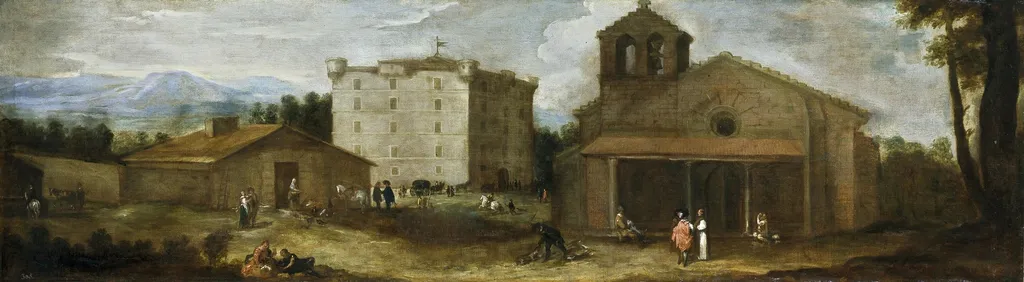
View of El Campillo the El Escorial Monks' country home is an oil painting by the Early Baroque Italian artist Benito Manuel Agüero. It dates from 1650 and is held in the collection of the Museo del Prado.
About this work
Overview
Painted around 1650 by Benito Manuel Agüero, this oil on canvas depicts El Campillo, a rural retreat used by monks from the Monastery of El Escorial.
Painted around 1650 by Benito Manuel Agüero, this oil on canvas depicts El Campillo, a rural retreat used by monks from the Monastery of El Escorial. Agüero, known for landscapes and battle scenes, rendered the estate with quiet precision, aligning with the Spanish Baroque preference for restrained naturalism. The work is part of the Museo del Prado’s collection, reflecting Madrid’s interest in documenting aristocratic and religious country properties during the mid-seventeenth century.
Subject & Meaning
The painting presents El Campillo not as a grand palace but as a modest, functional estate nestled in the Spanish countryside. Figures scattered across the grounds—monks, laborers, or visitors—suggest daily life rather than ceremonial use. The absence of dramatic action or idealized elements points to a documentary intent, emphasizing the estate’s role as a place of retreat and quiet labor within the monastic economy.
Technique & Style
Agüero employed earth-toned pigments and subtle chiaroscuro to model forms without theatrical contrast. The composition follows a horizontal rhythm, with the central building anchoring a balanced arrangement of trees and distant figures. Brushwork is controlled, favoring atmospheric cohesion over detail, reflecting Italianate landscape influences adapted to Spanish sensibilities of restraint and spatial clarity.
History & Provenance
The painting entered the Museo del Prado’s collection in the early nineteenth century, likely transferred from royal or ecclesiastical holdings following the Napoleonic seizures and subsequent reorganization of Spanish art collections. Its survival through political upheavals underscores its status as a record of religious property rather than a celebrated work of art during its time.
Context
In mid-seventeenth-century Spain, landscape painting remained secondary to religious and courtly subjects. Yet, depictions of monastic estates like El Campillo served practical purposes: documenting land use, reinforcing institutional presence, and offering visual reassurance of order. Agüero’s work fits within this niche, bridging topographical record and quiet aesthetic contemplation.
Legacy
Though not widely known outside specialist circles, the painting contributes to understanding how Spanish artists engaged with landscape as a genre. Agüero’s restrained approach influenced later regional painters who sought to depict Spain’s rural architecture without romanticism. Today, it stands as a quiet testament to the everyday life of monastic communities beyond the grandeur of El Escorial itself.
Artist & collection
Artist
Benito Manuel Agüero (1626–1668) was a Spanish painter of the Baroque period, active mainly in Madrid as a landscape and battle painter.

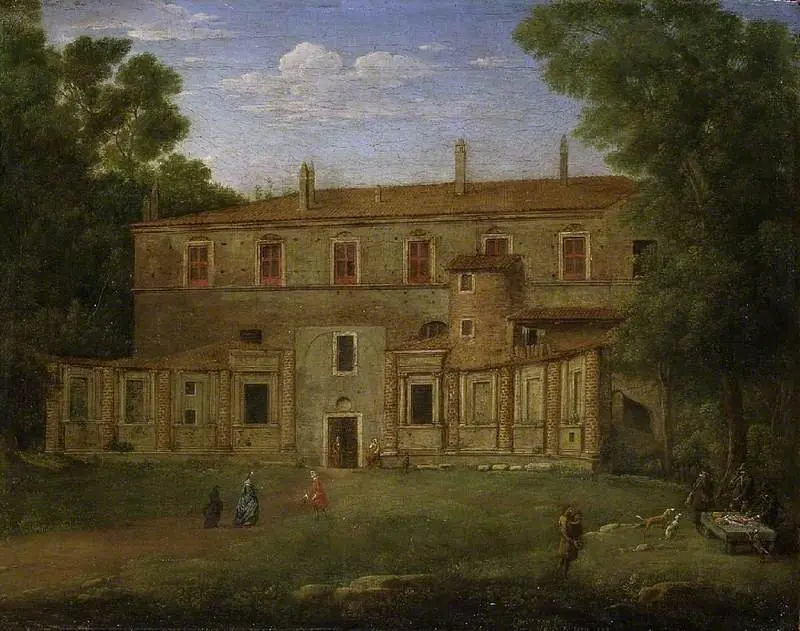 The Villa Madama, Rome
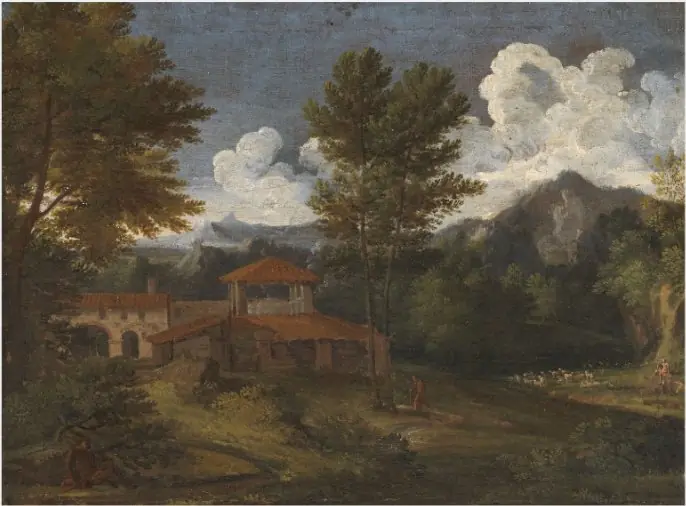 A Classical Landscape
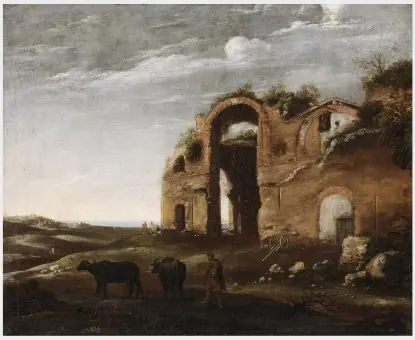 Landscape with the Ruins of the Baths of Diocletian, Rome
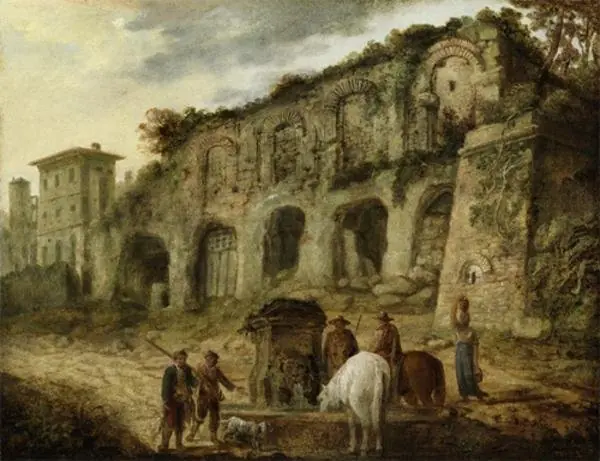 Peasants and Horses Standing By A Fountain: The Curia Ostilia and the Basilica Porzia on the Palatine Hill Beyond
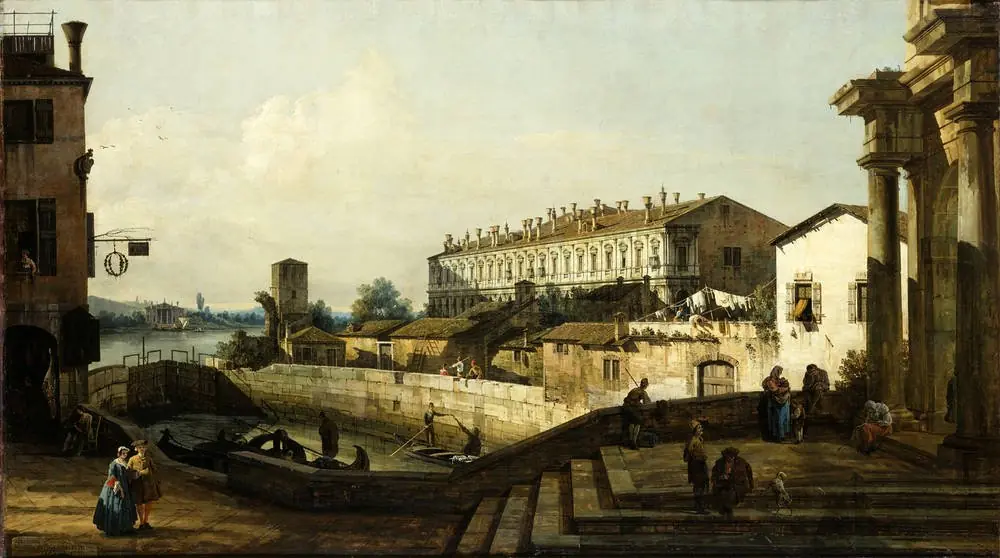 Capriccio with the Dolo lock
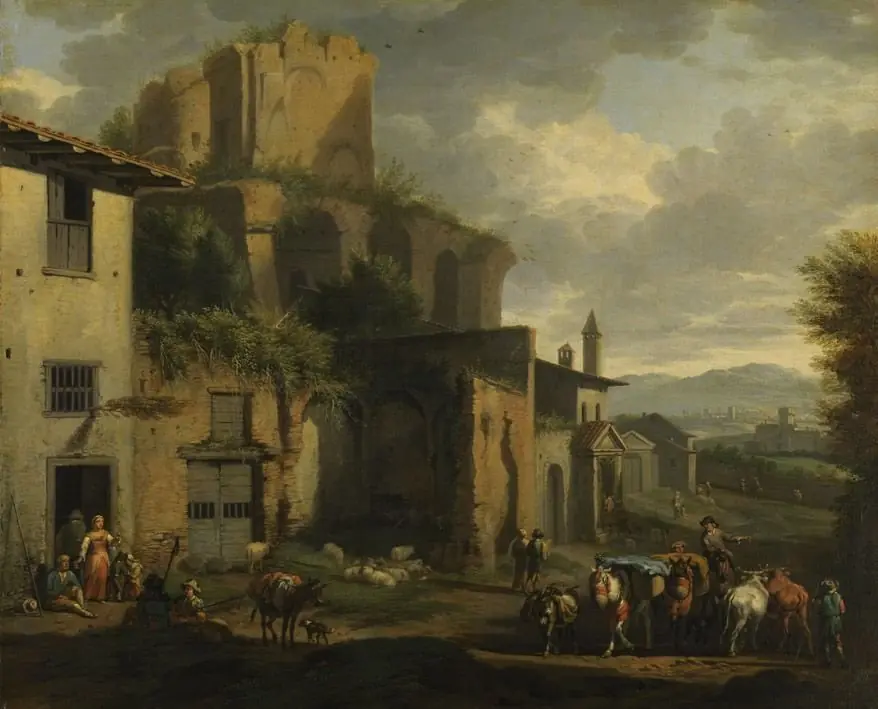 Szene vor einer römischen Ruine
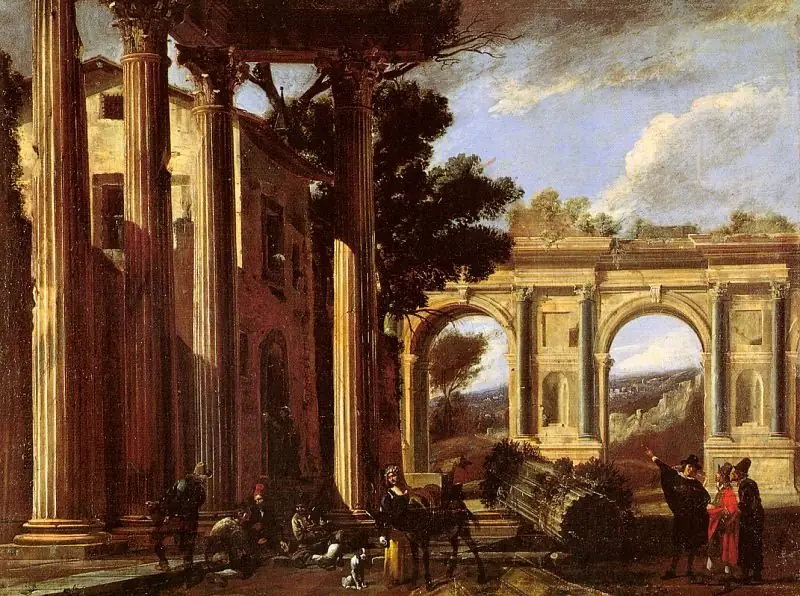 Architectural View
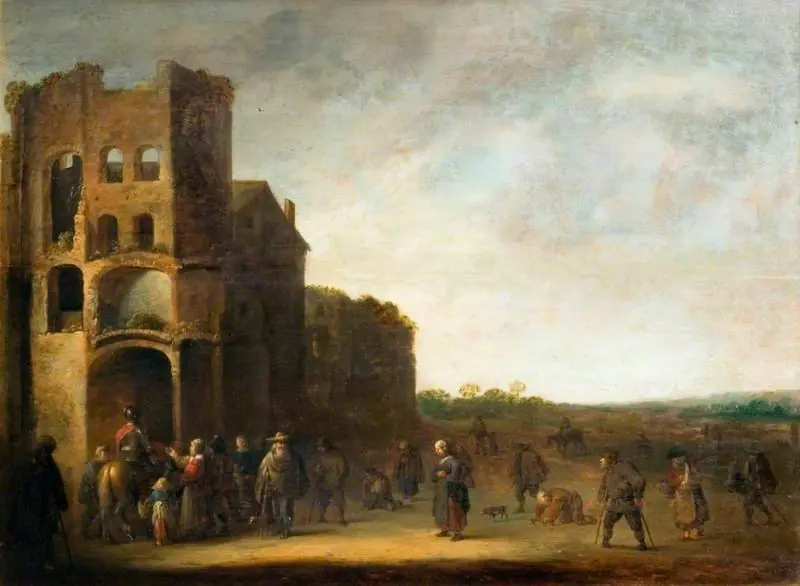 Saint Martin and the Beggar
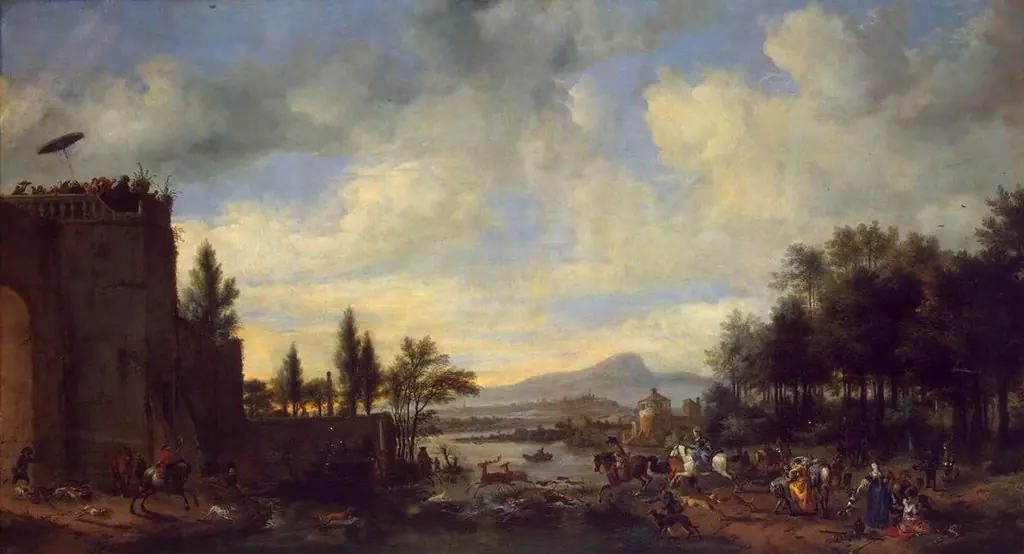 Deer Hunt