Artwork
Positions of Power on the Question of the Orient
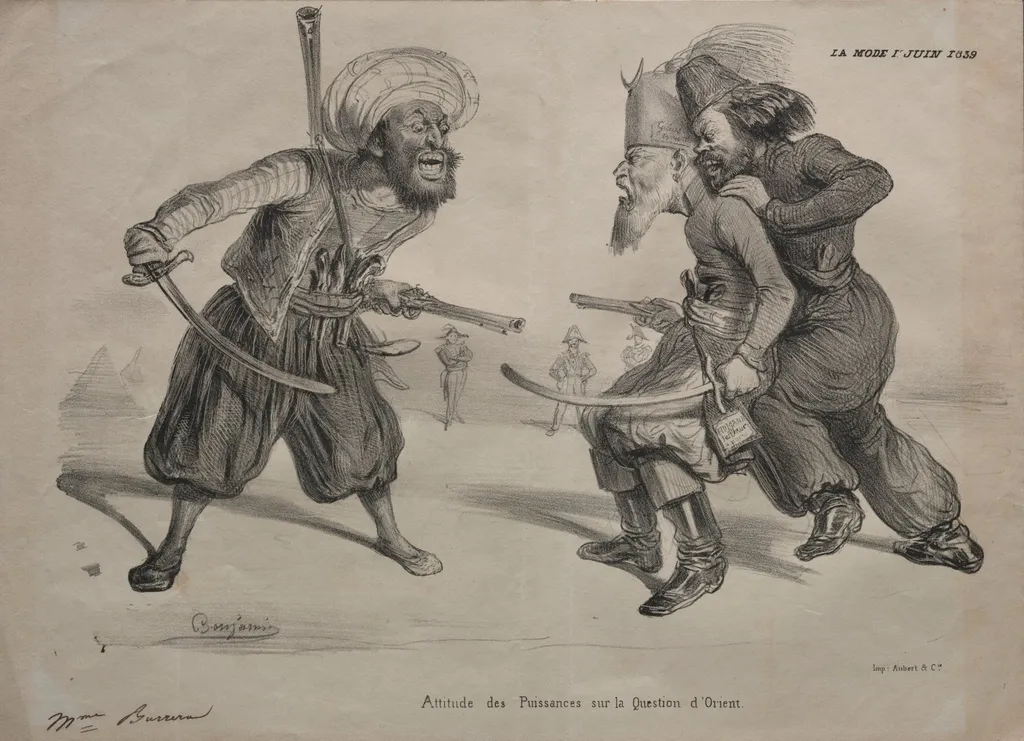
Positions of Power on the Question of the Orient is a print by the Romanticist artist Benjamin (Benjamin Roubaud). It dates from 1839 and is held in the collection of the Cleveland Museum of Art. Created in 1839 by Benjamin, this print is part of the collection at The Cleveland Museum of Art.
About this work
Overview
Created in 1839 by Benjamin, this print is part of the collection at The Cleveland Museum of Art. It presents a satirical scene of two figures clad in stylized Orientalist attire engaged in violent conflict. The composition is dynamic, with exaggerated gestures and sharp linear contrasts, suggesting a commentary on geopolitical tensions rather than a literal depiction of Middle Eastern conflict.
Subject & Meaning
Their violent struggle, observed by distant onlookers and a lone boat, symbolizes the absurdity of imperial competition over distant territories.
The two figures represent European powers projecting their rivalries onto the Middle East, dressed in caricatured Eastern garments to underscore foreign intervention. Their violent struggle, observed by distant onlookers and a lone boat, symbolizes the absurdity of imperial competition over distant territories. The title frames the scene as ironic, exposing how colonial ambitions were often masked as civilizing missions.
Technique & Style
The artist employs bold, incisive lines and high-contrast shading to heighten the drama. Figures are rendered with exaggerated motion—lunging, grappling—emphasizing chaos over realism. Background elements are minimized, drawing focus to the central confrontation. The style aligns with Romantic-era sensibilities, prioritizing emotional intensity and theatricality over precise detail.
History & Provenance
The print was produced in 1839, during a period of heightened European interest in the Ottoman Empire and its territories. It entered the collection of The Cleveland Museum of Art through documented acquisition, though its early circulation remains unclear. As a satirical print, it likely circulated among educated audiences familiar with contemporary diplomatic tensions.
Context
In the 1830s, European powers vied for influence in the declining Ottoman Empire, often justifying intervention through cultural and religious narratives. This print responds to those dynamics by mocking the performative nature of such claims. The use of Orientalist dress reflects a broader trend in European art that exoticized the East while asserting dominance over it.
Legacy
The work stands as an early visual critique of imperial posturing, using humor to reveal the contradictions of colonial ideology. While not widely known today, it contributes to a growing body of 19th-century satire that questioned the moral foundations of empire. Its preservation in a major museum underscores its value as a historical document of political critique.
Artist & collection

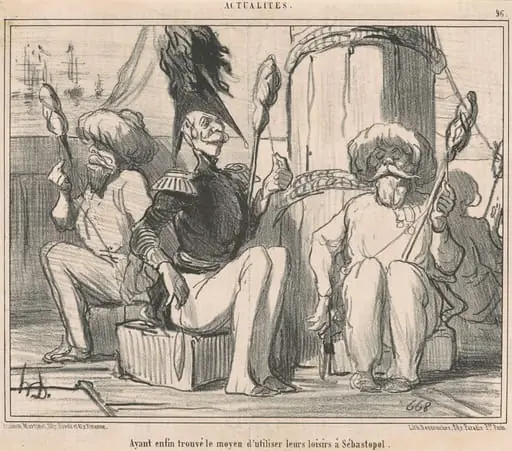 Ayant enfin trouvé le moyen d'ultiliser leurs loisirs!
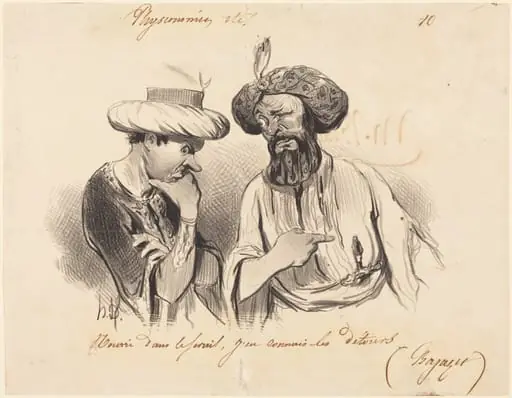 Nourri dans le séraii...
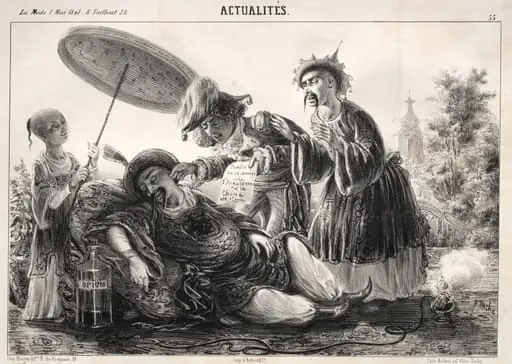 Actualités: --Dites donc! dites donc! celeste Empereur....
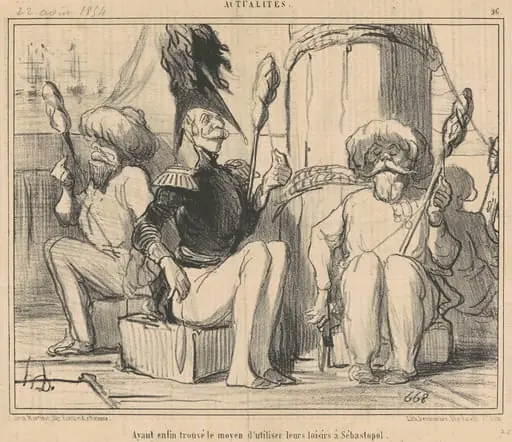 Ayant enfin trouvé le moyen d'utiliser leurs loisirs!
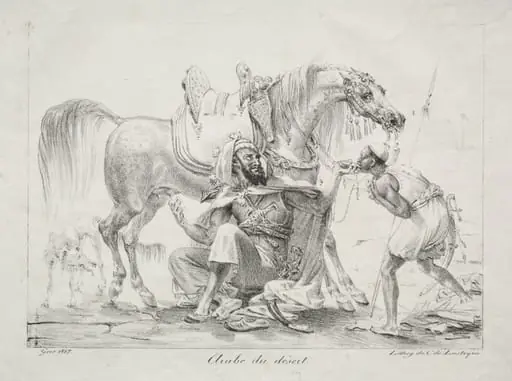 Arab of the Desert
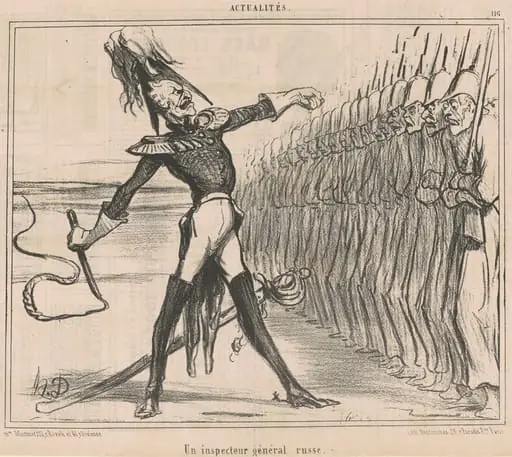 Un inspecteur général russe
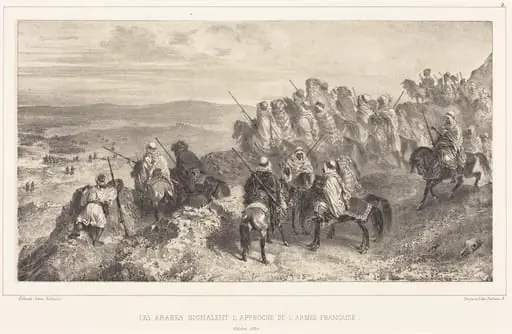 Les Arabes signalent l'approche de l'armée française
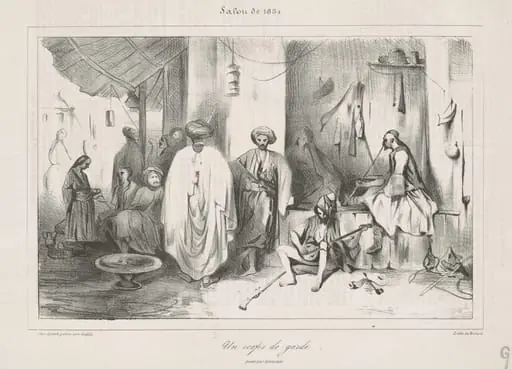 Un corps de garde peint par Decamps
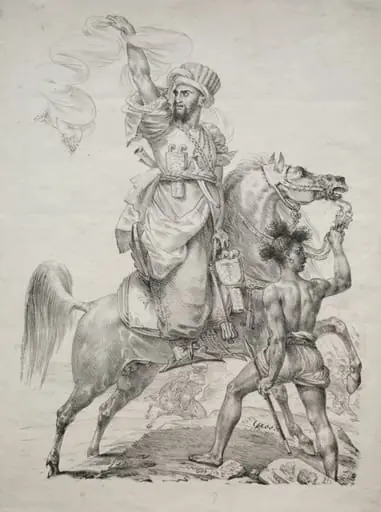 A Mameluke Chief on Horseback Signaling for Help
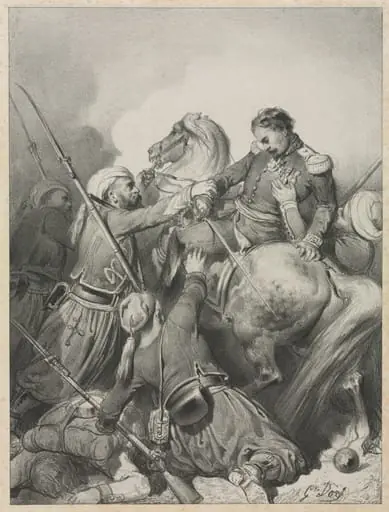 Sardinian Officer
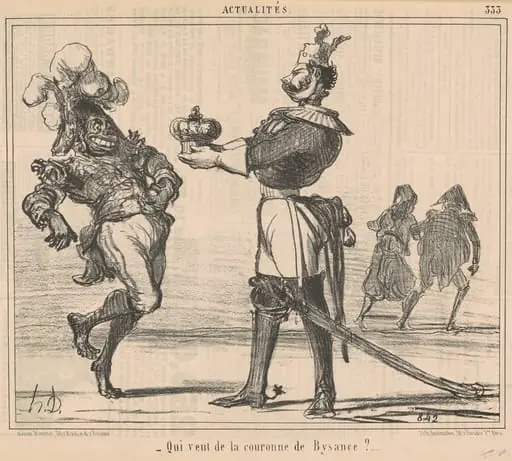 Qui veut de la couronne de Bysance?
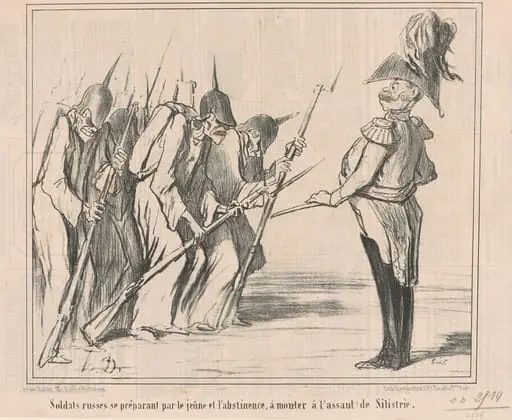 Soldats russes se préparant par le jeune ...