Artwork
Ayant enfin trouvé le moyen d'utiliser leurs loisirs!
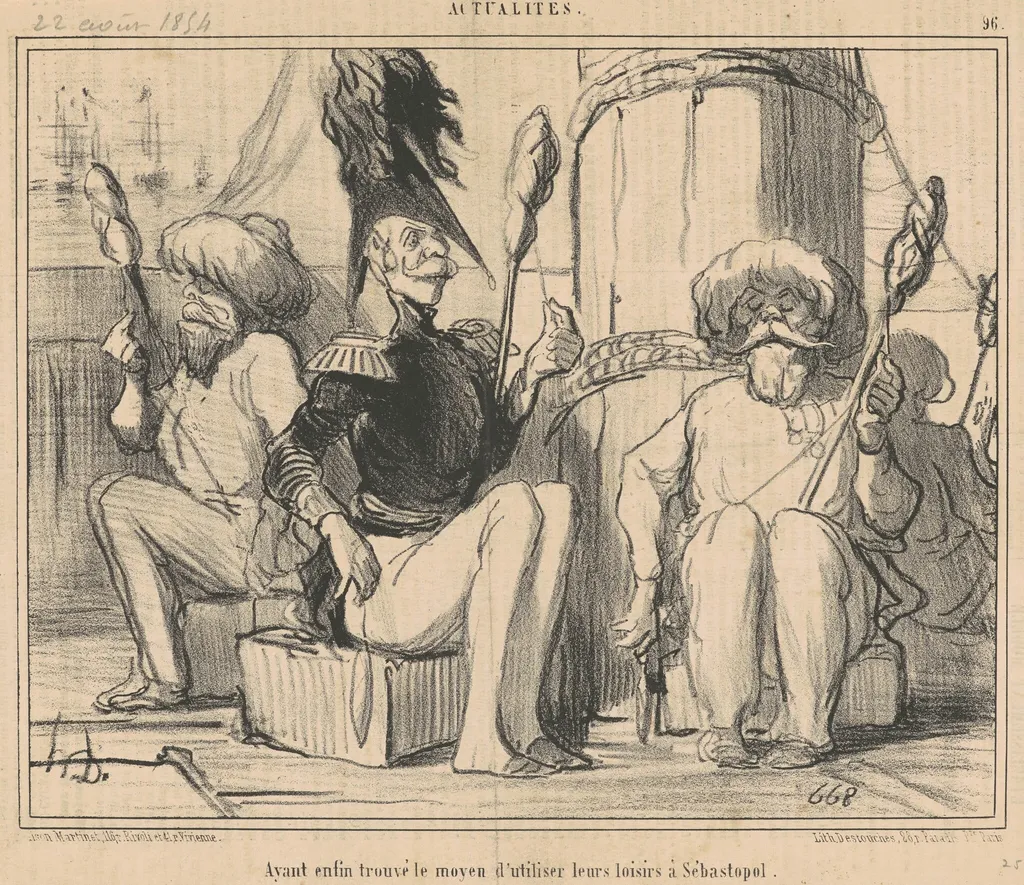
Ayant enfin trouvé le moyen d'utiliser leurs loisirs! is an ink print by the Impressionist artist Honoré Daumier. It dates from 1854 and is held in the collection of the National Gallery of Art.
About this work
This lithograph shows three men in fancy clothes holding big spools of thread. The man in the middle wears a fancy uniform. The other two wear turbans and look relaxed.
Daumier used satire to show how rich men waste time. The huge spools make it funny—they look like tools but act like toys. This was made in 1854, before workers had much free time.
Look up Daumier, Honoré next.
Overview
The medium—lithography—allowed Daumier to distribute such critiques widely, aligning with his role as a social commentator in mid-19th-century France.
Created in 1854, this lithograph by Honoré Daumier captures three figures engaged in an absurdly elaborate leisure activity. The scene presents a satirical take on upper-class pastimes, using exaggerated props to underscore the disconnect between privilege and productivity. The medium—lithography—allowed Daumier to distribute such critiques widely, aligning with his role as a social commentator in mid-19th-century France.
Subject & Meaning
The three figures—two in turbans and one in a military uniform—represent contrasting social identities, yet all are united in a futile, theatrical pursuit. The oversized spools of thread, resembling tools but used without purpose, mock the performative nature of elite leisure. Daumier implies that their freedom from labor does not equate to meaningful activity, revealing a critique of idle wealth and superficial status displays.
Technique & Style
Daumier employed lithography to achieve sharp, expressive lines and tonal contrasts that emphasize gesture and costume. His brushwork is economical yet evocative, capturing the stiffness of the uniform and the loose drapery of the turbans with minimal detail. The composition is tightly framed, focusing attention on the figures’ exaggerated postures and the absurd scale of the spools, enhancing the satirical tone.
History & Provenance
Produced during the reign of Napoleon III, this print emerged from Daumier’s prolific output for satirical journals like Le Charivari. It was likely circulated among urban readers familiar with class tensions and the growing spectacle of bourgeois leisure. Though no specific early ownership is documented, its survival in institutional collections reflects its enduring relevance as a social document.
Context
In 1854, most working-class French citizens labored long hours with little to no leisure time, while the affluent cultivated elaborate rituals of idleness. Daumier’s image responds to this disparity, using irony to expose the emptiness of upper-class self-indulgence. The turbans evoke Orientalist fashion trends popular among the elite, further complicating the satire by mocking cultural appropriation as another form of performative excess.
Legacy
This work contributes to Daumier’s reputation as a keen observer of social absurdity. Its blend of visual wit and class critique influenced later satirical artists and cartoonists. The lithograph remains a reference point in discussions of 19th-century visual culture, illustrating how art could function as both entertainment and quiet resistance to societal norms.
Artist & collection
Artist
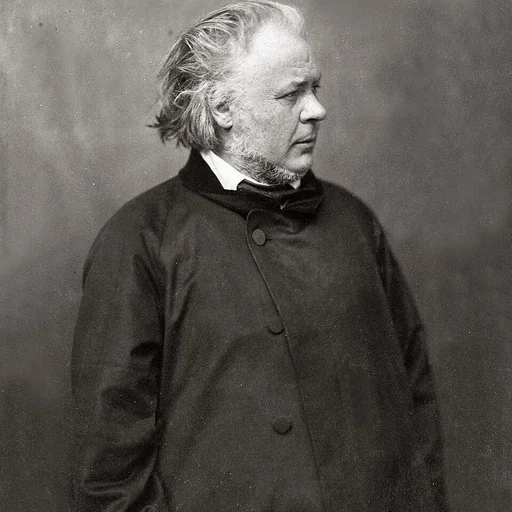
Honoré-Victorin Daumier was a French painter, sculptor, and printmaker, whose many works offer commentary on the social and political life in France, from the Revolution of 1830 to the fall of the Second French Empire in 1870.

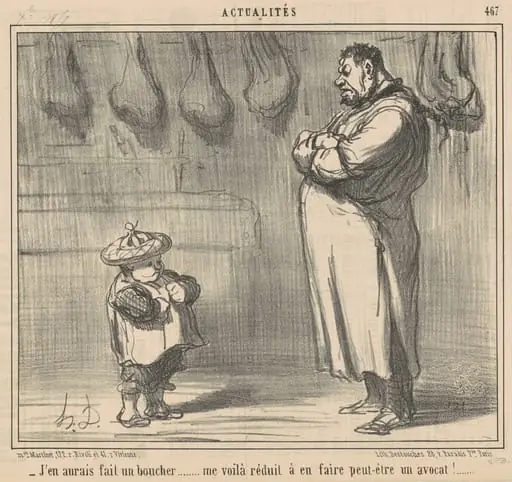 J'en aurais fait un boucher ...
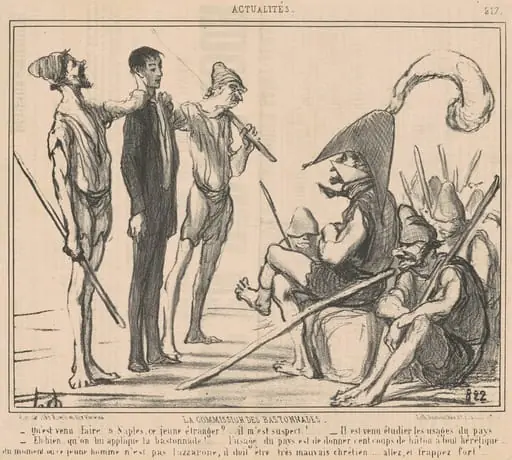 Commission des bastonnades
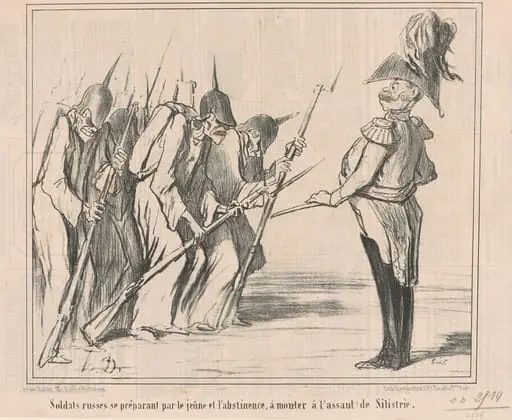 Soldats russes se préparant par le jeune ...
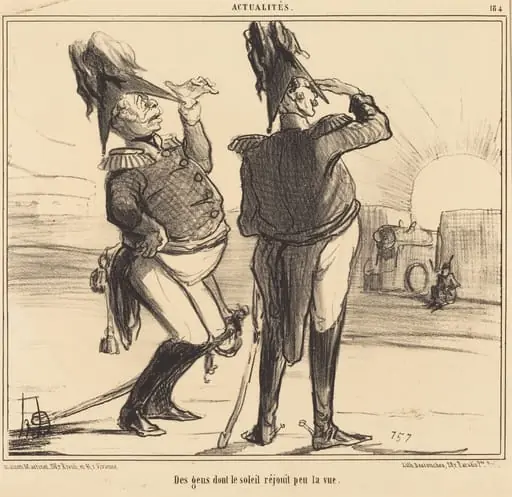 Des gens dont le soleil réjouit peu la vue
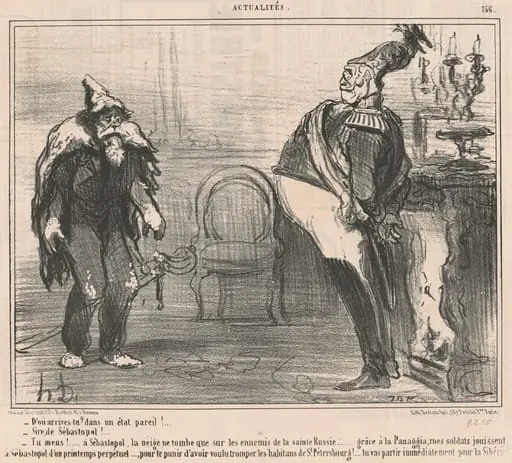 D'ou arrives-tu?
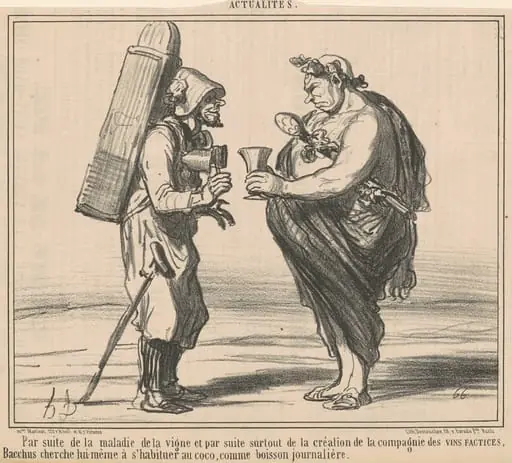 Par suite de la maladie de la vigne
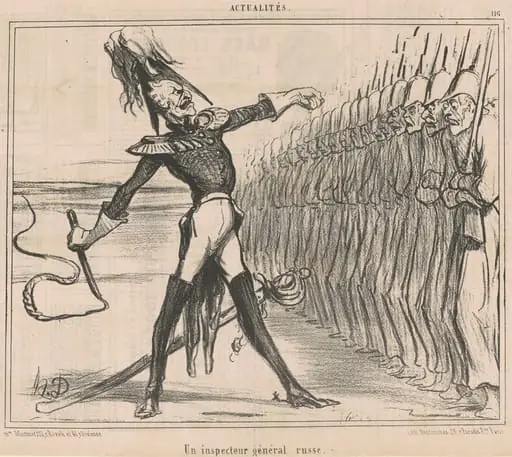 Un inspecteur général russe
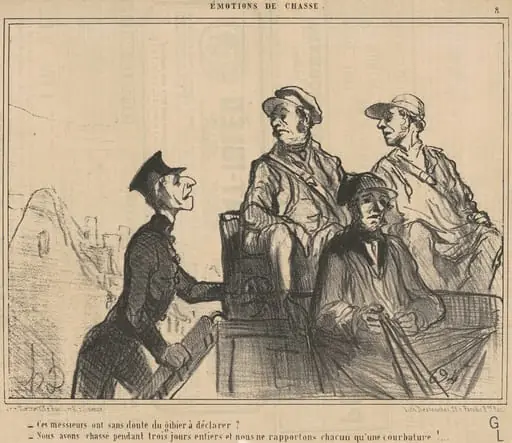 Ce messieurs ont ... du gibier a déclarer? ...
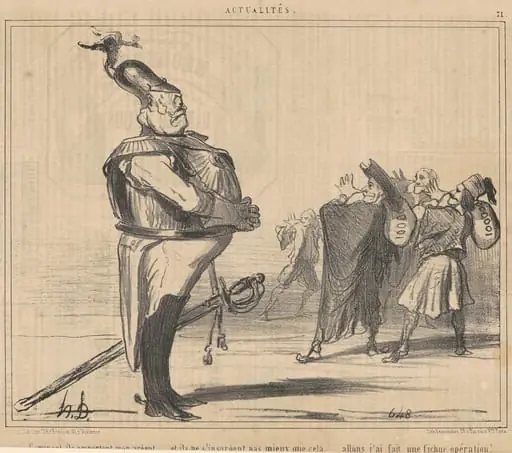 Comment, ils emportent mon argent ...