Artwork
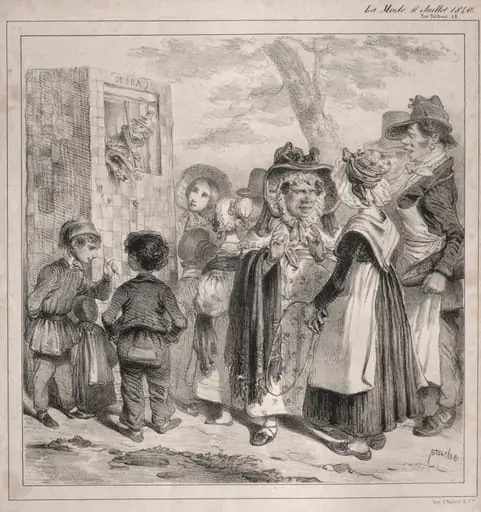
Actualités: --Dites donc! dites donc! celeste Empereur....
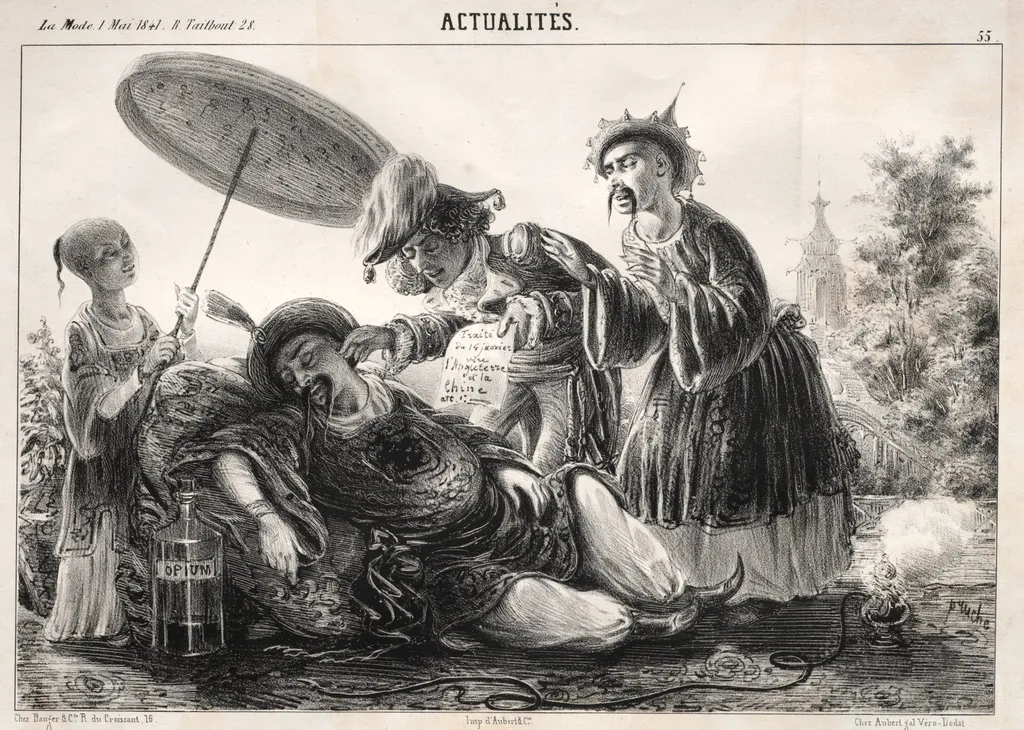
Actualités: --Dites donc! dites donc! celeste Empereur.... is a print by the Romanticist artist Clémente Pruche. It dates from 1841 and is held in the collection of the Cleveland Museum of Art.
About this work
Overview
Created in 1841 by Clémente Pruche, this print is part of a series documenting contemporary social scenes in France. It is held in the collection of The Cleveland Museum of Art. The work captures a moment of public alarm, rendered with attention to costume, gesture, and setting, reflecting the era’s interest in urban life and its disruptions.
Subject & Meaning
The composition invites interpretation of moral panic, public spectacle, or the consequences of indulgence in a society undergoing rapid change.
The scene depicts a man collapsed on the ground, surrounded by onlookers in varied attire, suggesting a moment of crisis. One figure holds a bottle labeled 'OPiUM,' hinting at substance use as a possible cause. The title, spoken in exclamatory French, evokes shock and gossip. The composition invites interpretation of moral panic, public spectacle, or the consequences of indulgence in a society undergoing rapid change.
Technique & Style
Executed as a printed image, the work employs fine linework and tonal contrast to define figures and environment. The figures are rendered with expressive postures, and the background includes simplified architectural and natural elements. The style aligns with 19th-century graphic illustration, prioritizing narrative clarity over idealized form, though it retains emotional intensity characteristic of Romantic-era visual culture.
History & Provenance
The print was produced in Paris during a period when illustrated periodicals were gaining popularity as vehicles for social commentary. It entered the Cleveland Museum of Art’s collection through documented acquisition, likely as part of a broader effort to preserve French graphic art from the mid-19th century. Its origin as a printed sheet suggests it was once distributed widely, possibly in journals or broadsheets.
Context
In 1840s France, opium use was becoming a subject of public concern, especially in urban centers. Illustrated prints like this one responded to shifting social norms and emerging anxieties around health, class, and morality. The garden setting contrasts with the tension of the scene, a common device to underscore the intrusion of disorder into orderly spaces, a theme prevalent in contemporary visual satire.
Legacy
Though not widely known today, the print contributes to a body of work that documented everyday drama in pre-modern France. It reflects the transition from academic painting to mass-produced imagery, capturing how visual media began to shape public perception of social issues. Its preservation allows ongoing study of how crises were visually framed in the early Victorian era.
Artist & collection

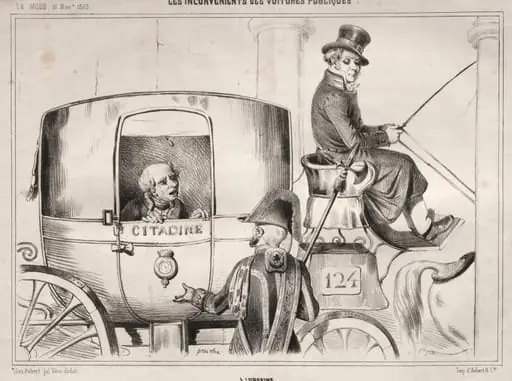 Actualités: Les Inconvénients des voitures publique: L'Urbaine
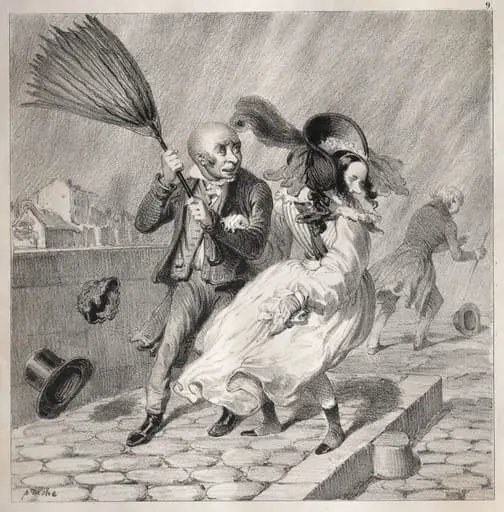 Bambochades: Vois-tu que mon baromêtre est au beau!...c'est un riche temps pour les biens de la terre!!!
 Voyez-vous ma Chère! c'est la police qui fait jouer ces polichinels là, pour détourner l'attention...
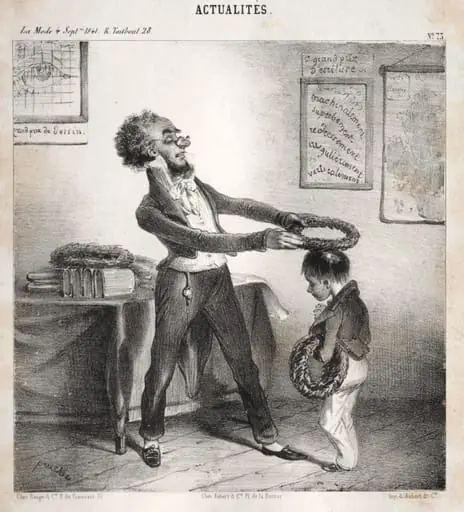 Actualités: Les distributions de Prix
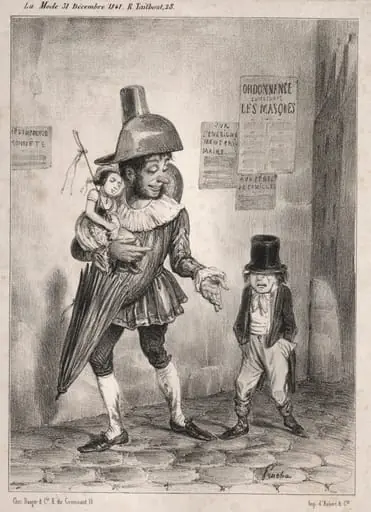 Pochades de carnaval: Vois-tu, si ton maître est bien content de toi et si tu as le prix de sagesse cette année! je te laisserai deguiser en paillasse! ...l'année prochaine!!
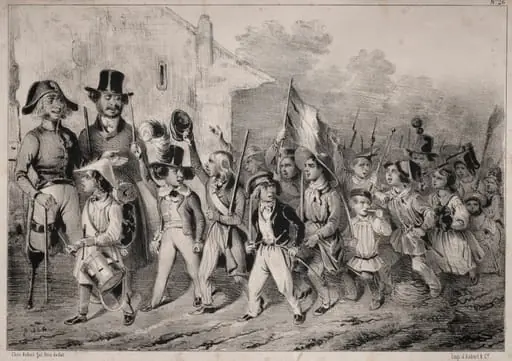 Actualités: Bon! Les moutards en veulent sussi! quand on parle de guerre! comme toute ca prend feu! ... On voit que c'est de la plante indigène!... ca promet!!
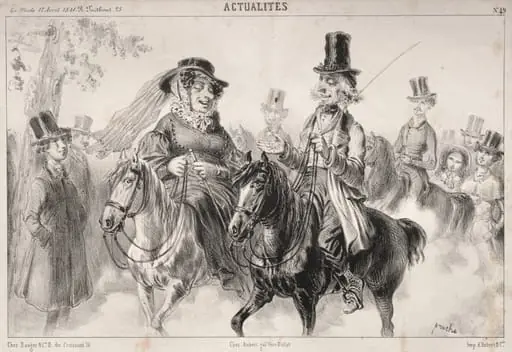 Actualités: Dis donc Madame Miroton il paraitrait que c'est nous qui donnons le ton à Longchamps cette année....
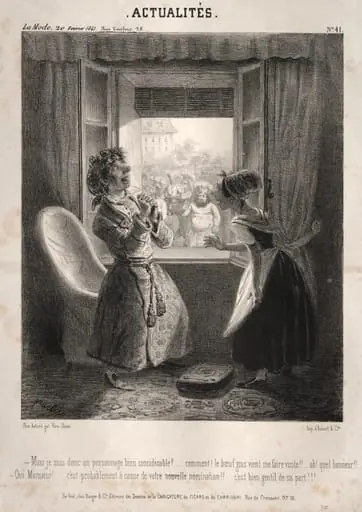 Actualités: ---Mais je suis donc un personnage bien considerable?
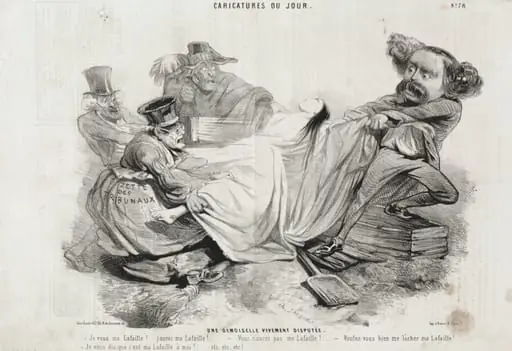 An Intensely Contested Young Woman
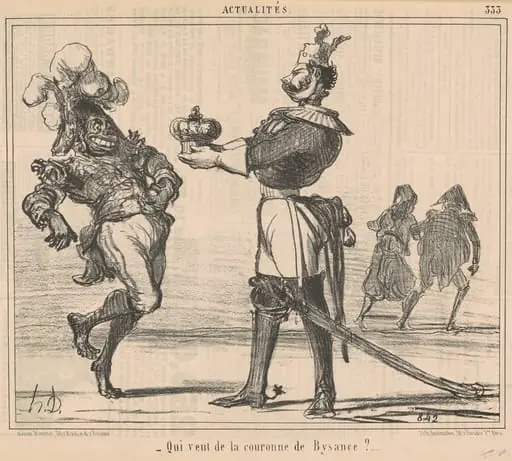 Qui veut de la couronne de Bysance?
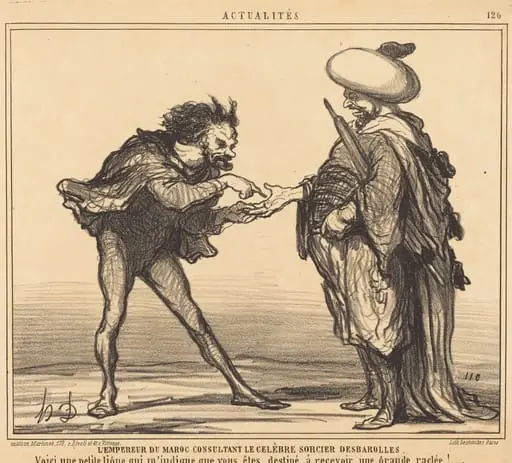 L'Empereur du Maroc consultant... Desbarolles
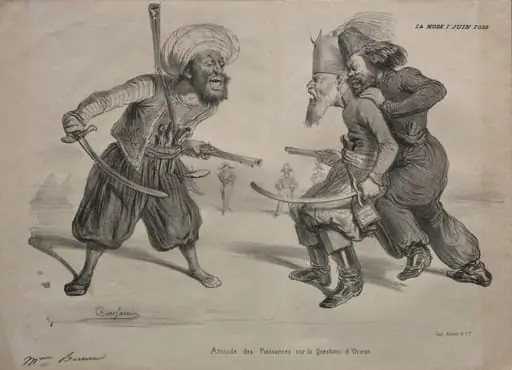 Positions of Power on the Question of the Orient
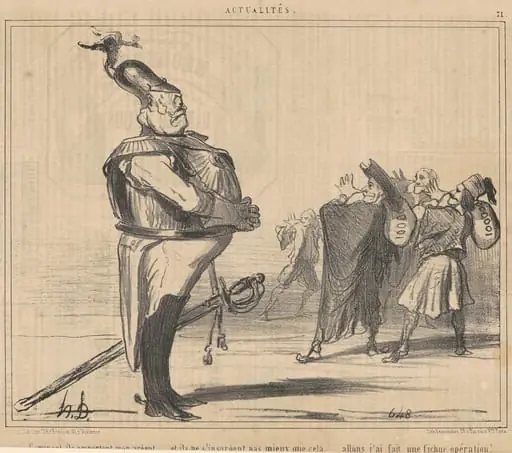 Comment, ils emportent mon argent ...
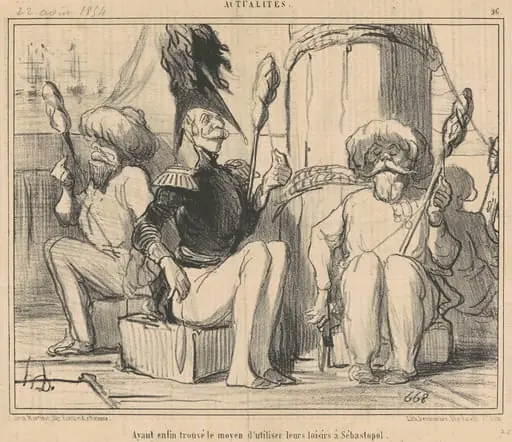 Ayant enfin trouvé le moyen d'utiliser leurs loisirs!
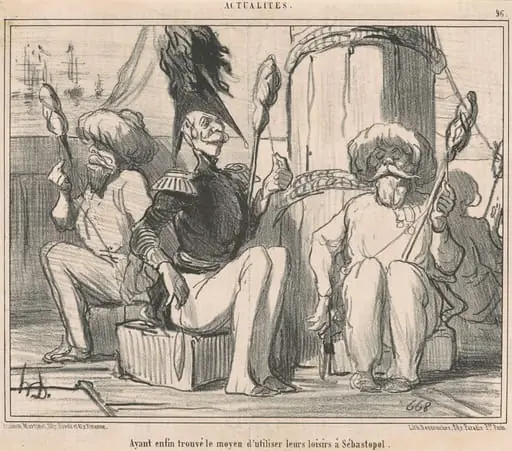 Ayant enfin trouvé le moyen d'ultiliser leurs loisirs!
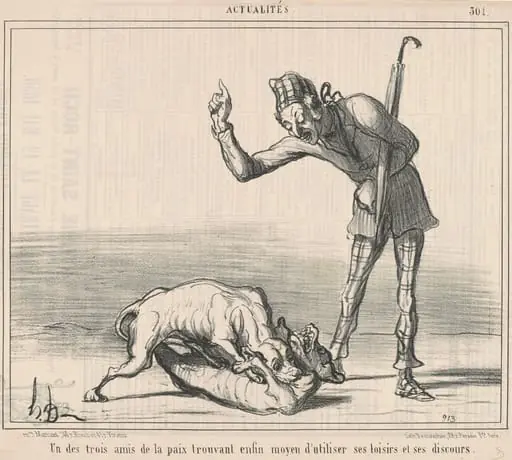 Un des trois amis de la paix ...
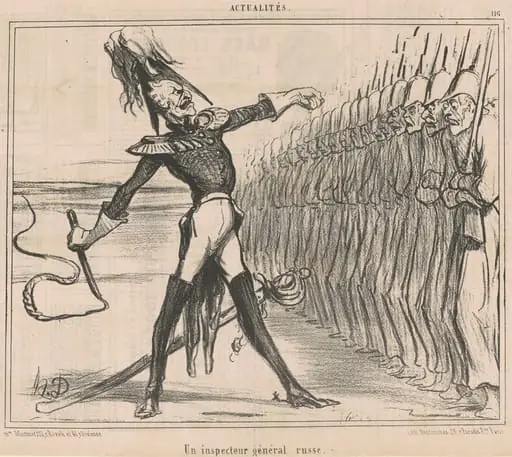 Un inspecteur général russe
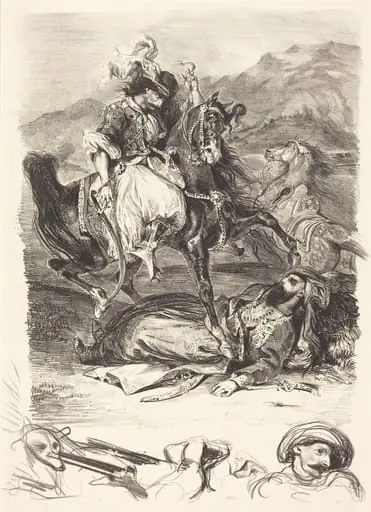 The Battle of the Giaour and the Pasha (Combat du Giaour et du Pacha)
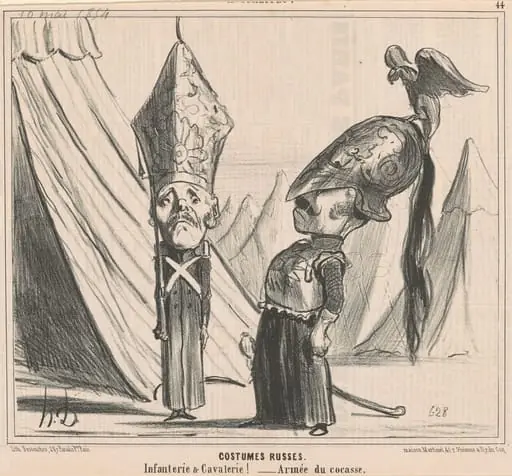 Costumes russes
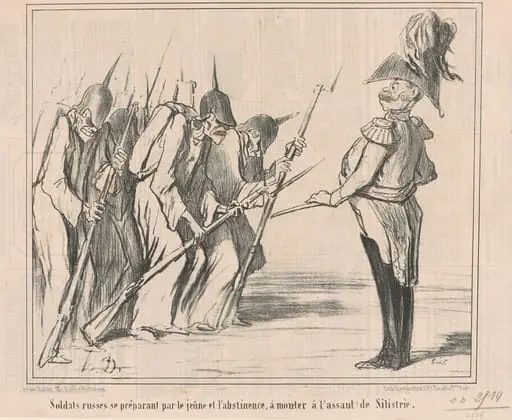 Soldats russes se préparant par le jeune ...