Artwork
Untitled
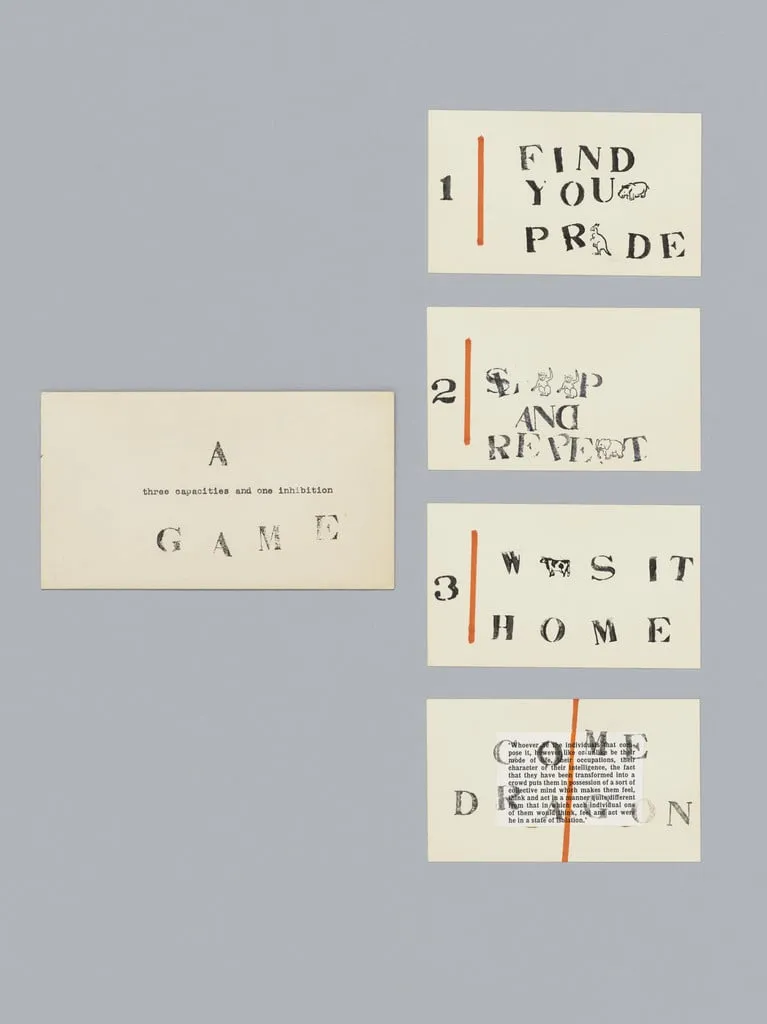
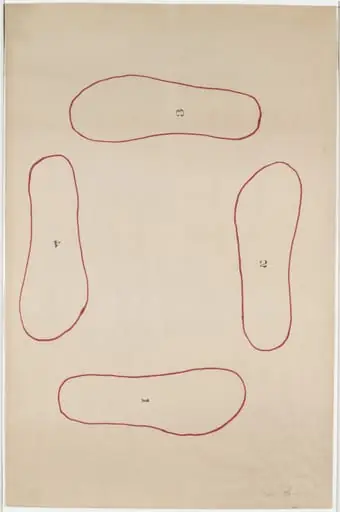
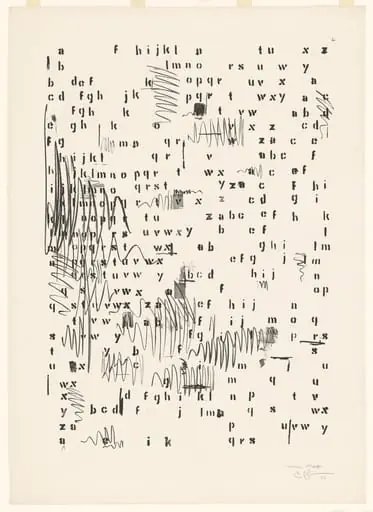
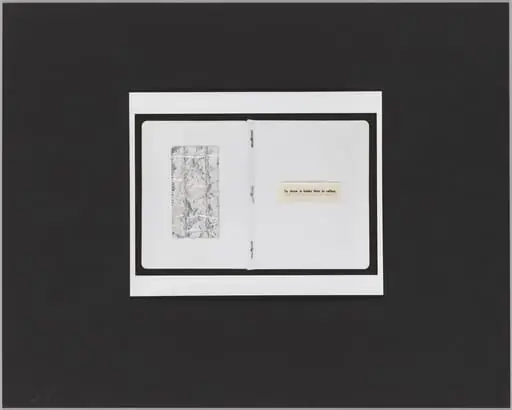
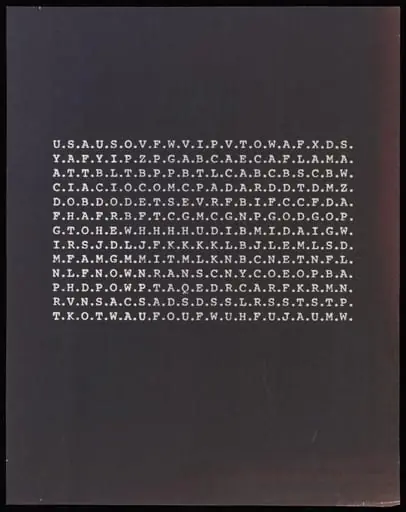
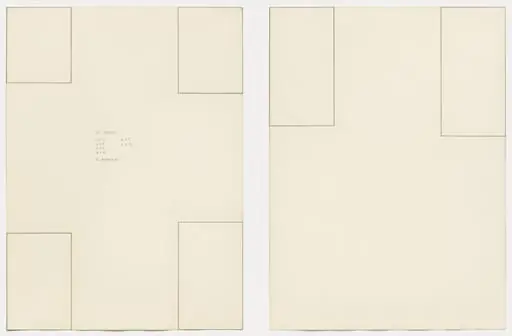
Untitled is an ink drawing by Benjamin Patterson. It dates from 1963 and is held in the collection of the Museum of Modern Art.
About this work
Overview
The ensemble functions as a found object transformed through intervention, blurring boundaries between writing, drawing, and performance documentation.
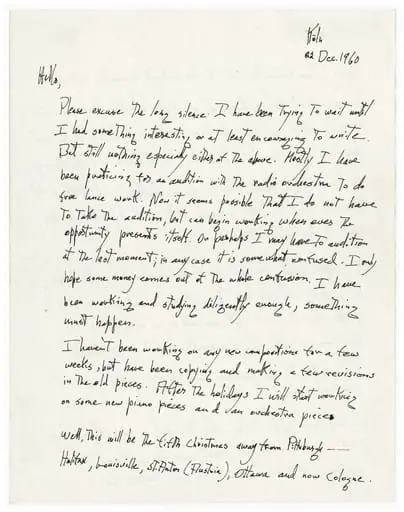
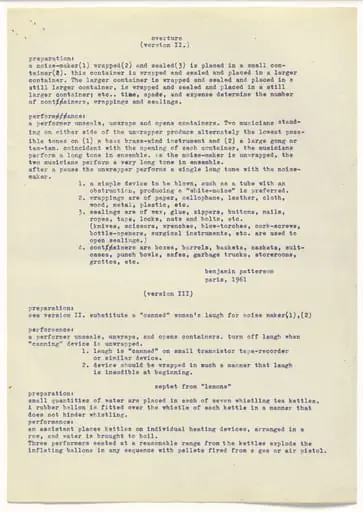
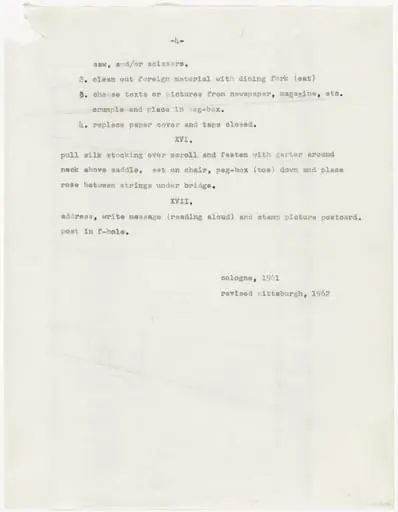
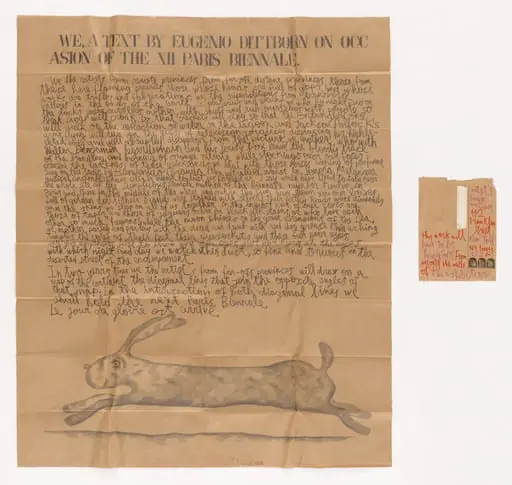
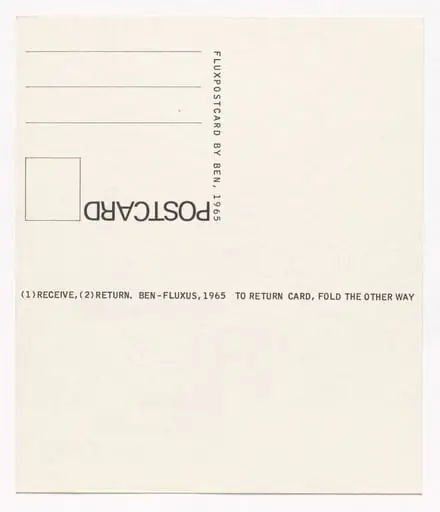
Created around 1963, this work by Benjamin Patterson consists of a simple envelope containing four small paper cards. Each card bears typewritten text, supplemented by hand-applied red ink marks and stamped impressions. The materials are modest—beige paper, black type, and thin red lines—emphasizing the work’s conceptual rather than aesthetic focus. The ensemble functions as a found object transformed through intervention, blurring boundaries between writing, drawing, and performance documentation.
Subject & Meaning
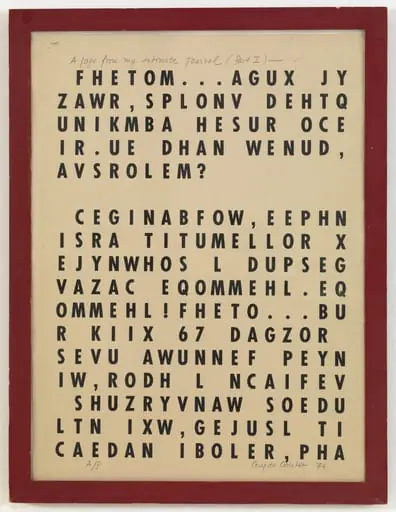
The text fragments—such as 'FIND YOU PRIDE' and 'STEP AND REVENT'—suggest distorted phrases, possibly misspelled or deliberately altered. These appear as linguistic puzzles, inviting interpretation through disruption. The red lines intersecting the words resemble censorship, erasure, or game-like constraints. One card includes the phrase 'A GAME,' reinforcing the idea of rules, play, and ambiguity. The work resists fixed meaning, instead proposing language as something mutable and subject to intervention.
Technique & Style
Patterson combined mechanical typewriting with manual additions: red ink strokes, hand-stamped symbols, and minimal collage elements. The typewritten text is uniform, but the red marks are irregular, suggesting spontaneous, physical gestures. Stamped motifs introduce repetition and rhythm, contrasting with the haphazard lines. The use of everyday materials—envelope, stationery, ink—reflects a Fluxus-inspired approach, prioritizing process and accessibility over traditional artistic media.
History & Provenance
The work dates from the early 1960s, a period when Patterson was active in the international Fluxus network. It was likely produced in connection with experimental performances or mail art exchanges. Acquired by The Museum of Modern Art, it entered the collection as part of a broader recognition of Fluxus practices as legitimate art forms. Its preservation as a sealed envelope suggests it was intended to be opened and experienced as a physical event.
Context
Emerging from the Fluxus movement, this piece reflects a broader interest in dematerializing art, challenging authorship, and incorporating chance. Artists like Patterson used typewriters, stamps, and everyday paper to question the authority of language and the sanctity of the art object. The work aligns with contemporaneous experiments in conceptual writing and performance scores, where meaning was generated through interaction rather than representation.
Legacy
This work contributes to the redefinition of drawing as an act of linguistic and procedural intervention. It influenced later generations of artists exploring text-based art, institutional critique, and participatory forms. Its modest materials and open-ended structure continue to resonate in contemporary practices that prioritize process, ephemerality, and viewer engagement over finished objects.
Artist & collection