Artwork
Untitled
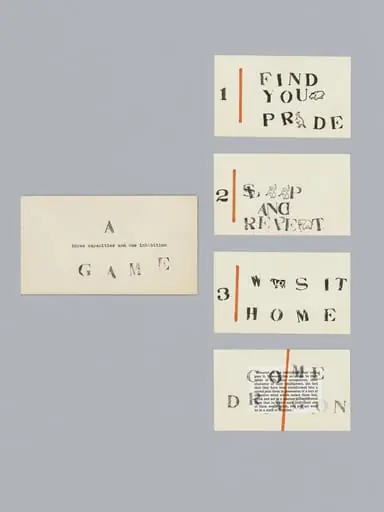
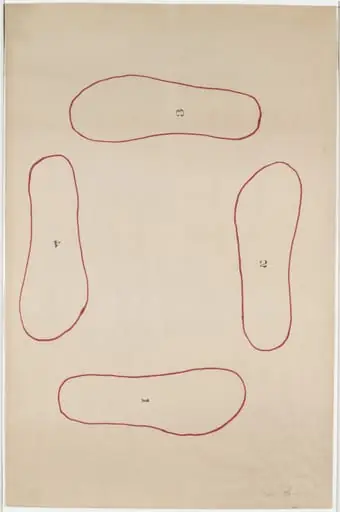
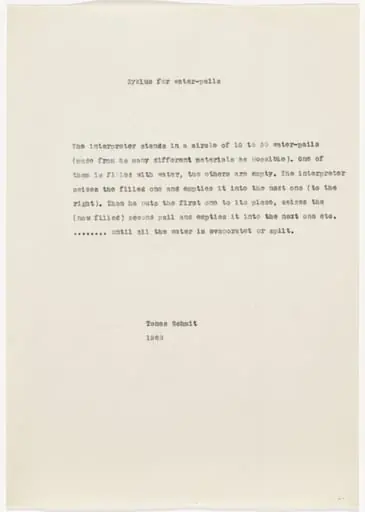
Untitled is a print by Benjamin Patterson. It dates from 1962 and is held in the collection of the Museum of Modern Art.
About this work
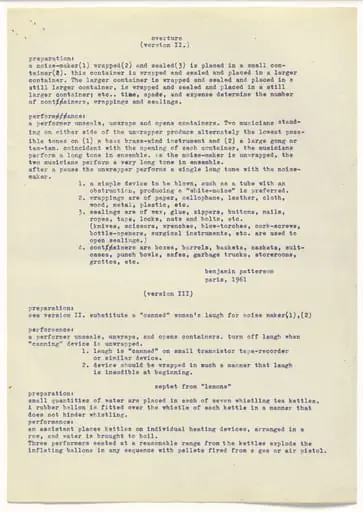
” The instructions look like a mix of craft directions and performance notes, almost like a recipe for an odd assembly.
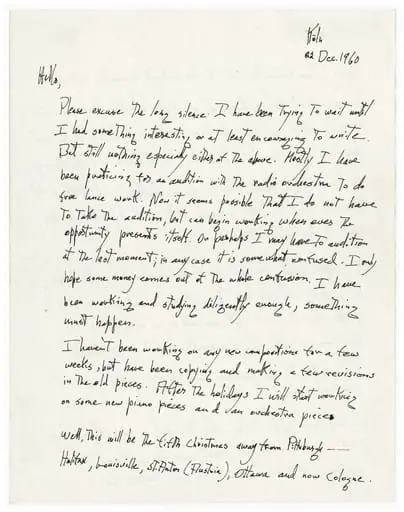
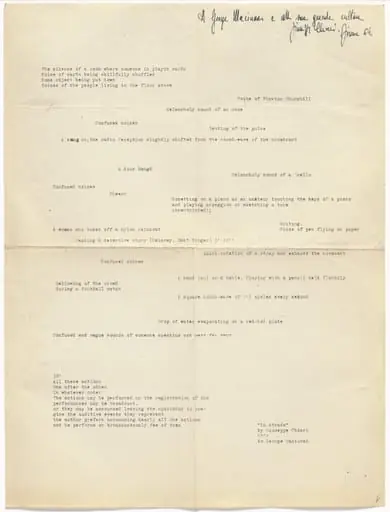
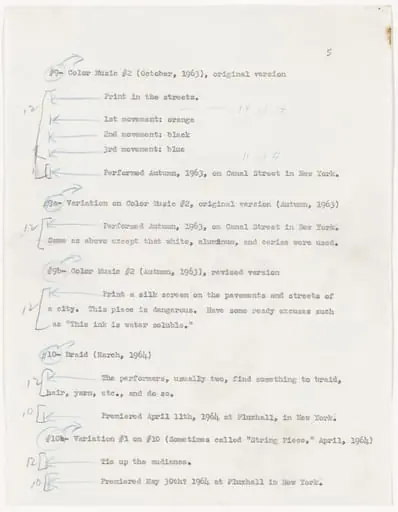
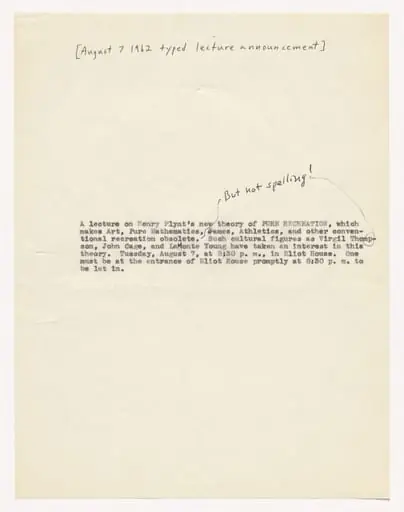
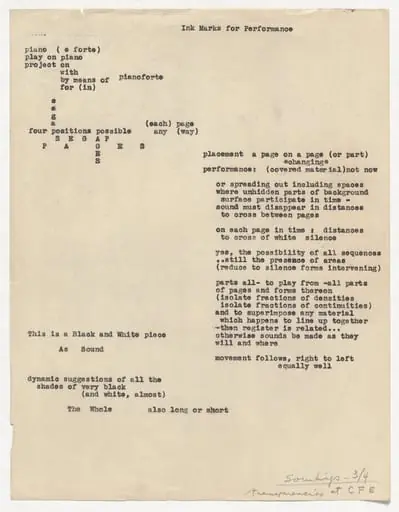
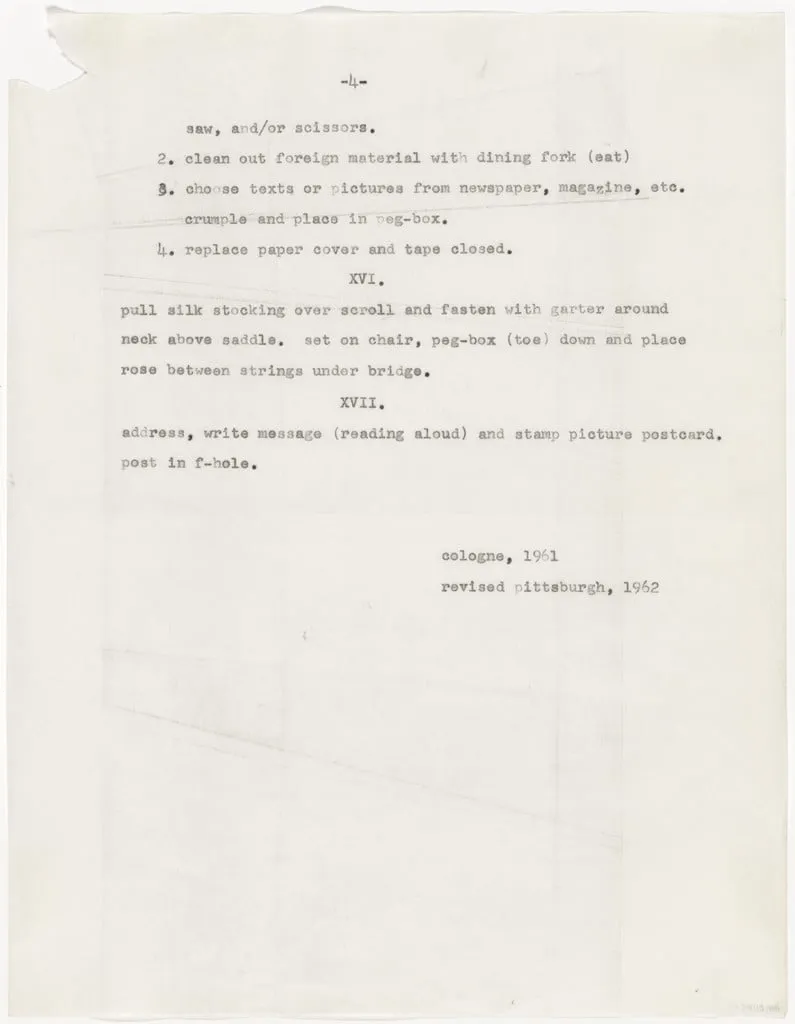
This image shows typed instructions written in black ink on lined paper. The text is numbered and lists steps for making something with scissors, tape, a peg-box, and a chair. There’s a date at the bottom—“Cologne, 1961” crossed out and replaced with “revised Pittsburgh, 1962.”
The instructions look like a mix of craft directions and performance notes, almost like a recipe for an odd assembly. The handwriting is neat but slightly messy, like someone scribbling while thinking.
This piece is part of a collection at The Museum of Modern Art.
Overview
Created around 1962, this untitled work by Benjamin Patterson consists of four sheets of lined paper bearing typed instructions. Executed as a carbon‑paper transfer, the piece is classified as a print and is part of the Museum of Modern Art’s collection.
Subject & Meaning
The sheets display a numbered list of steps that combine ordinary materials—scissors, tape, a peg‑box, and a chair—into a set of instructions resembling a craft manual or performance score. The text invites the viewer to contemplate the boundary between everyday activity and artistic action.
Technique & Style
Patterson employed a typed carbon‑paper process, reproducing the black ink on multiple pages with a mechanical, uniform appearance. The neat yet slightly irregular lettering suggests a hand‑written quality, reinforcing the work’s hybrid nature as both document and artwork.
History & Provenance
The piece bears a dated note indicating an original reference to Cologne in 1961, later crossed out and replaced with a revision dated Pittsburgh, 1962. This alteration hints at the work’s evolving context before its acquisition by MoMA, where it remains on view.
Context
Emerging in the early 1960s, the work aligns with the era’s interest in instructional scores and participatory art, echoing the practices of Fluxus and other avant‑garde movements that emphasized process over finished object.
Artist & collection