Artwork
Christ Healing the Sick (sketch)
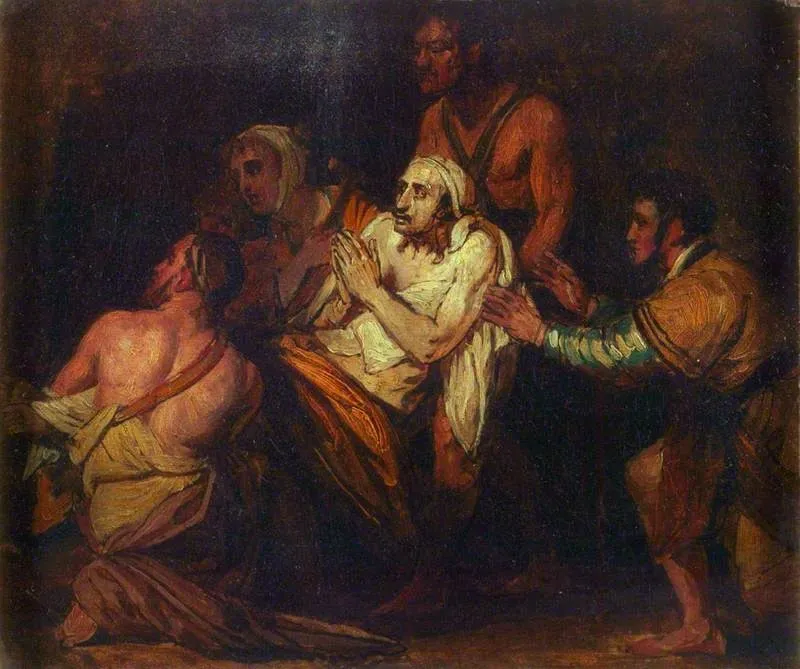
Christ Healing the Sick (sketch) is an oil painting by the Neoclassicist artist Benjamin West. It dates from 1780 and is held in the collection of the Victoria and Albert Museum.
About this work
Overview
Though self-taught, he rose to prominence in British art circles, holding key positions at the Royal Academy.
Benjamin West, an American artist who established his career in London, produced this oil sketch around 1780 as a preparatory study for a larger religious composition. Though self-taught, he rose to prominence in British art circles, holding key positions at the Royal Academy. The work exemplifies his engagement with sacred narratives through the lens of contemporary historical painting conventions, blending emotional immediacy with formal structure.
Subject & Meaning
The scene portrays Christ in a moment of divine intervention, his raised hands radiating calm authority amid a crowd of the afflicted. Figures surround him in varied postures—kneeling, reaching, or leaning—each conveying physical suffering or desperate hope. The composition centers on compassion as an active, visible force, aligning with Enlightenment ideals of benevolence and moral clarity while retaining the spiritual gravity of biblical narrative.
Technique & Style
West employed loose, expressive brushwork to convey movement and emotional urgency, avoiding rigid precision in favor of atmospheric suggestion. Warm tones dominate the palette, enhancing the sense of warmth and human connection. Light falls selectively, modeling forms with subtle chiaroscuro to guide the viewer’s eye toward the central figure without theatrical exaggeration. The sketch’s unfinished quality underscores its role as a working study rather than a final piece.
History & Provenance
Created during West’s tenure as historical painter to King George III, the sketch was likely intended for a planned monumental altarpiece that was never completed. It remained in the artist’s possession until his death, later entering the Victoria and Albert Museum’s collection through established acquisition channels. Its survival as a preparatory work offers insight into West’s creative process and the evolving nature of his religious compositions.
Context
In late 18th-century Britain, religious subjects were increasingly framed through classical ideals of dignity and moral clarity. West’s approach aligned with Neoclassicism’s preference for historical authenticity and emotional restraint, even as he infused scenes with psychological depth. His position within the Royal Academy positioned him to shape public taste, making his sketches like this one influential models for emerging artists seeking to elevate religious themes in painting.
Legacy
Though the final painting was never realized, this sketch endures as a testament to West’s ability to merge narrative power with technical experimentation. It influenced later artists exploring emotional expression within religious contexts and remains a key example of how preparatory works can capture the vitality of an artist’s vision. Its presence in the V&A underscores its value as a document of artistic process rather than merely a finished image.
Artist & collection

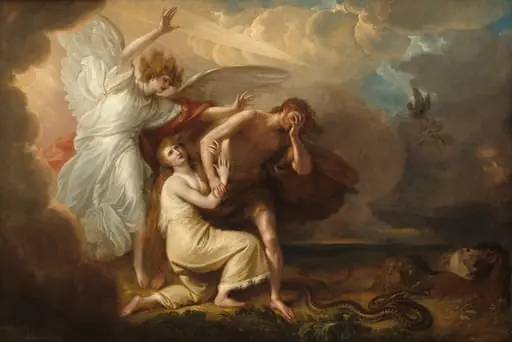 The Expulsion of Adam and Eve from Paradise
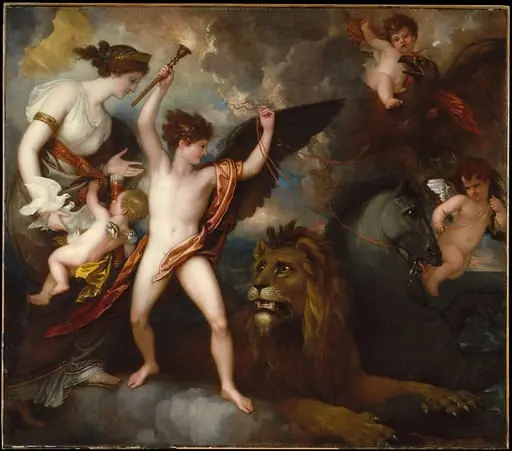 Omnia Vincit Amor, or The Power of Love in the Three Elements
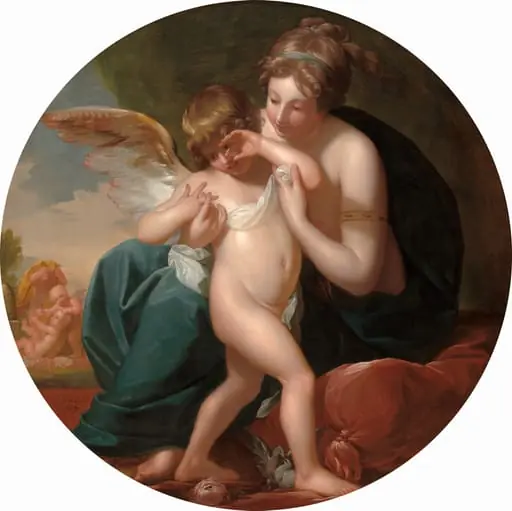 Cupid, Stung by a Bee, Is Cherished by his Mother
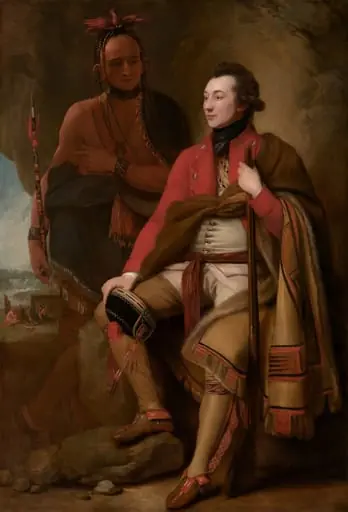 Colonel Guy Johnson and Karonghyontye (Captain David Hill)
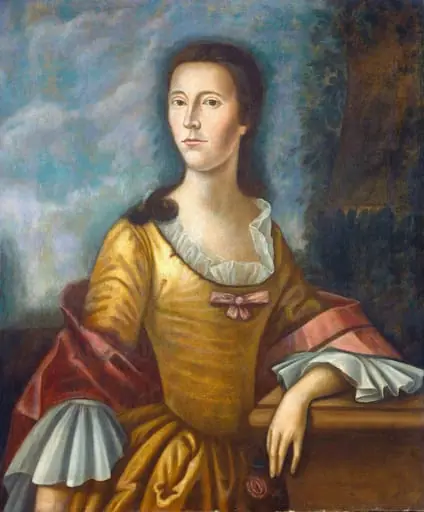 Mary Bethel Boude (Mrs. Samuel Boude)
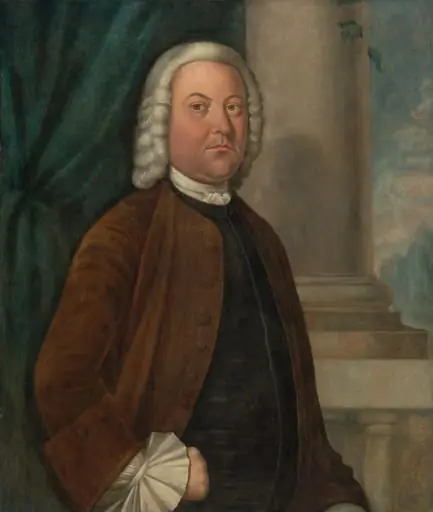 Dr. Samuel Boude
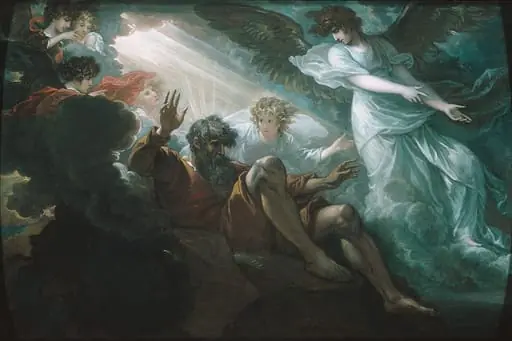 Moses Shown the Promised Land
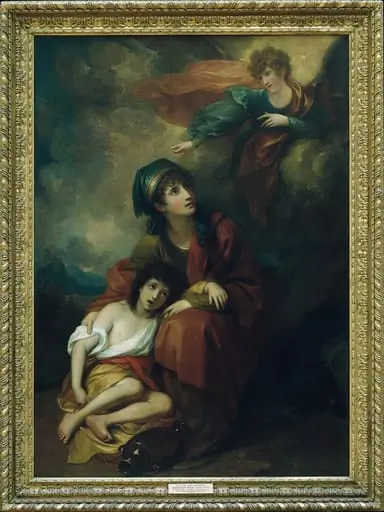 Hagar and Ishmael
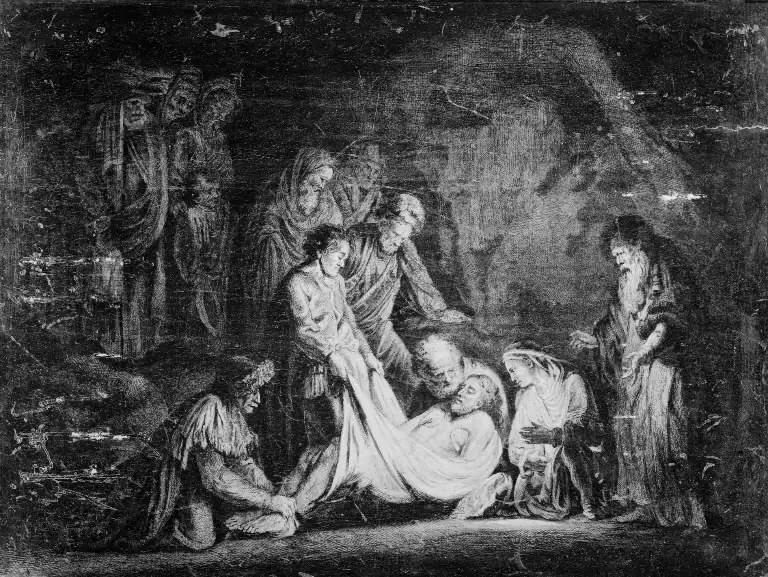 The Entombment of Christ
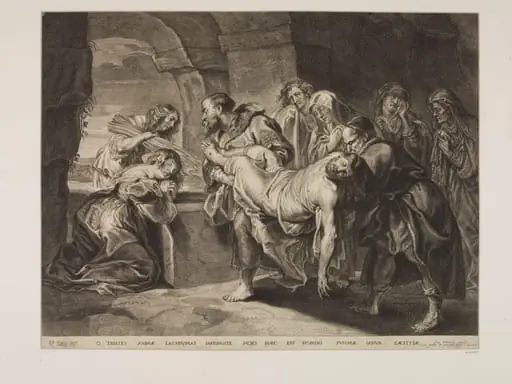 The Entombment
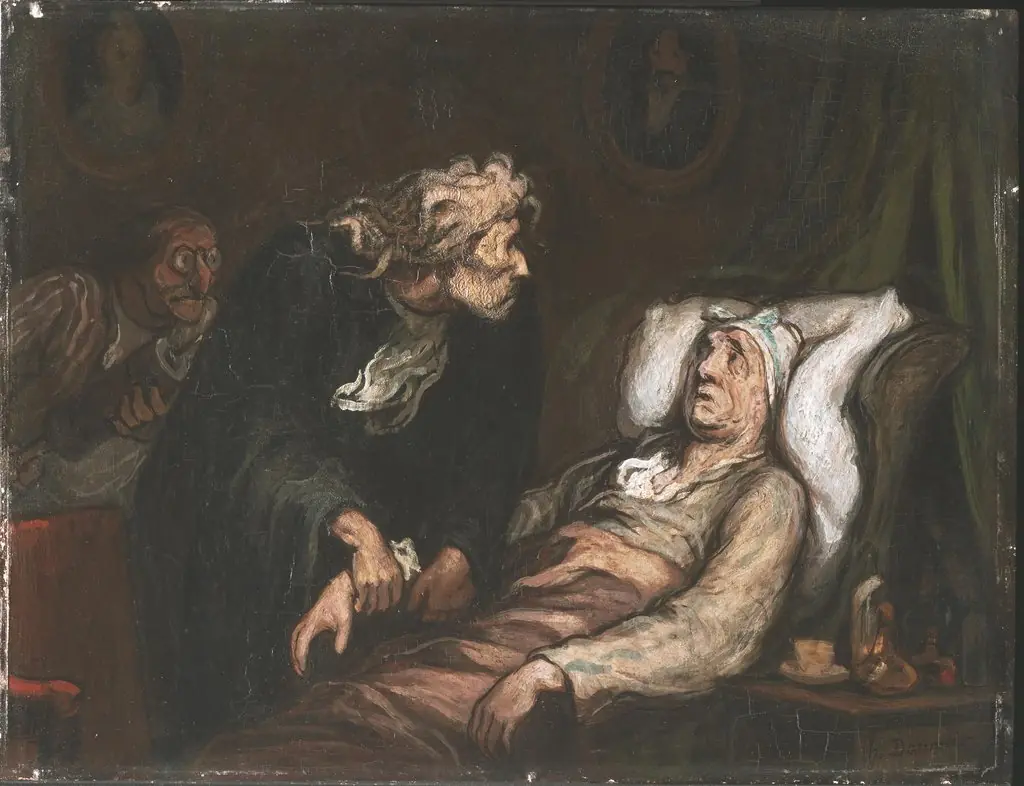 The Imaginary Illness
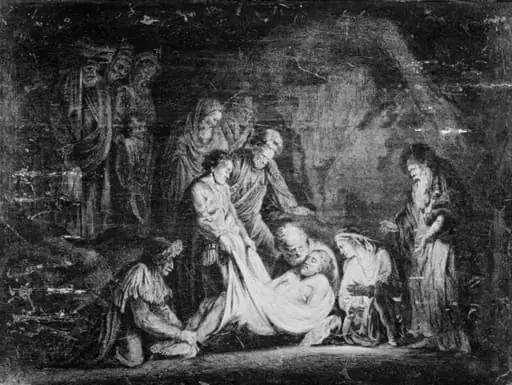 The Entombment of Christ
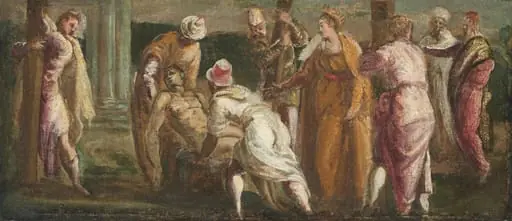 Saint Helen Testing the True Cross
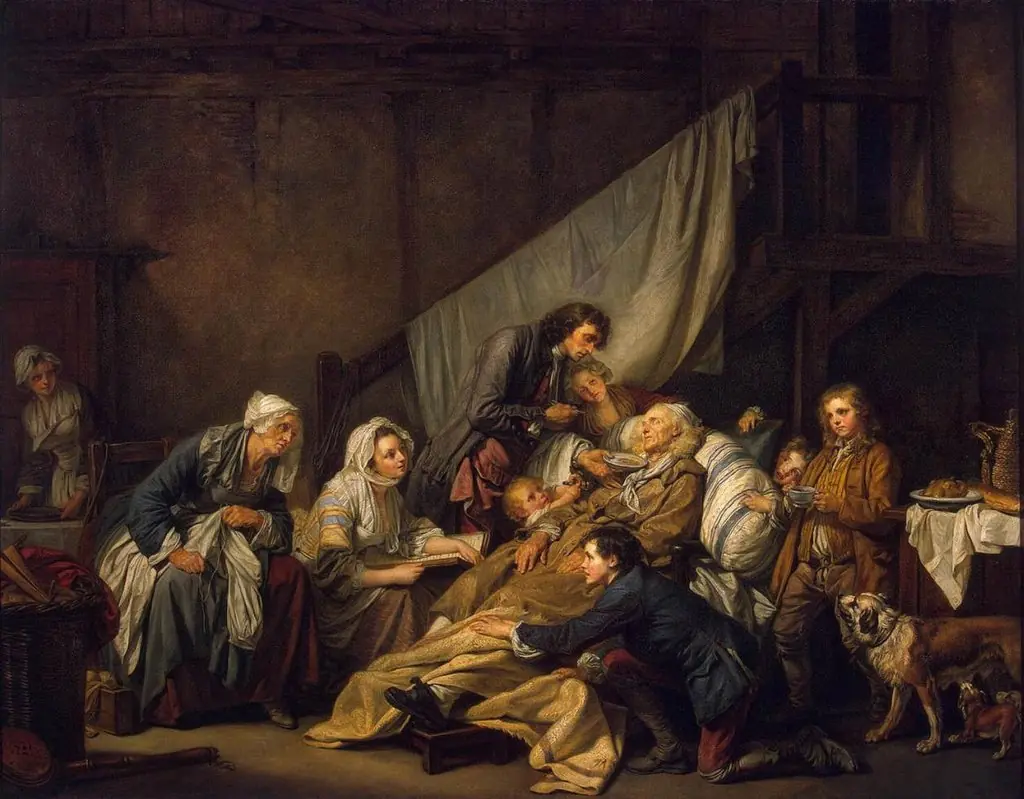 Filial Piety (The Paralytic)
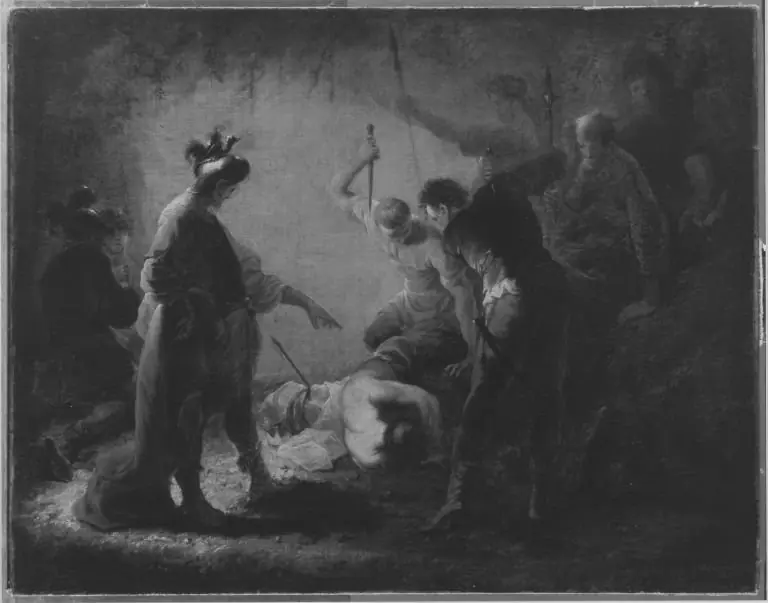 Die Ermordung des hl. Severus
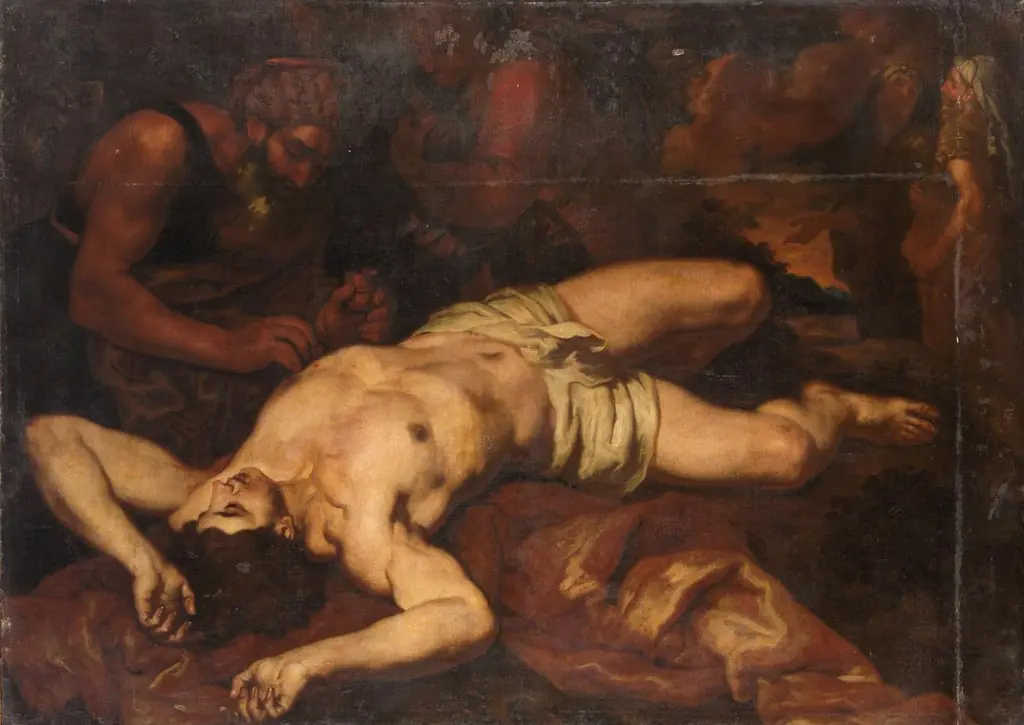 The Good Samaritan
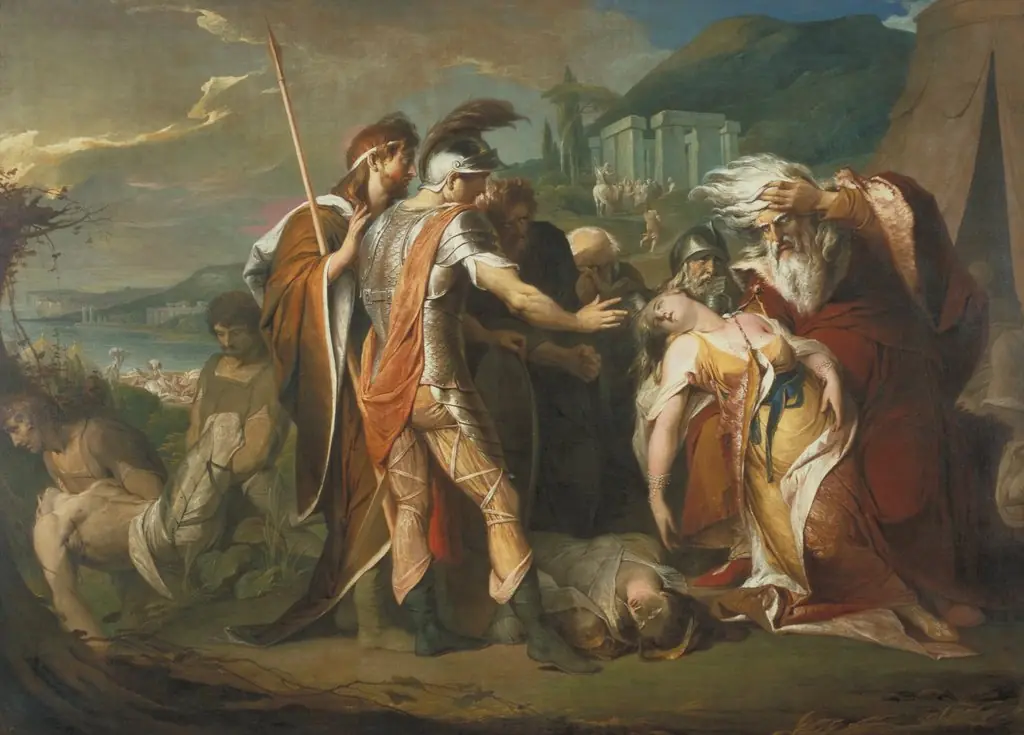 King Lear Weeping over the Dead Body of Cordelia
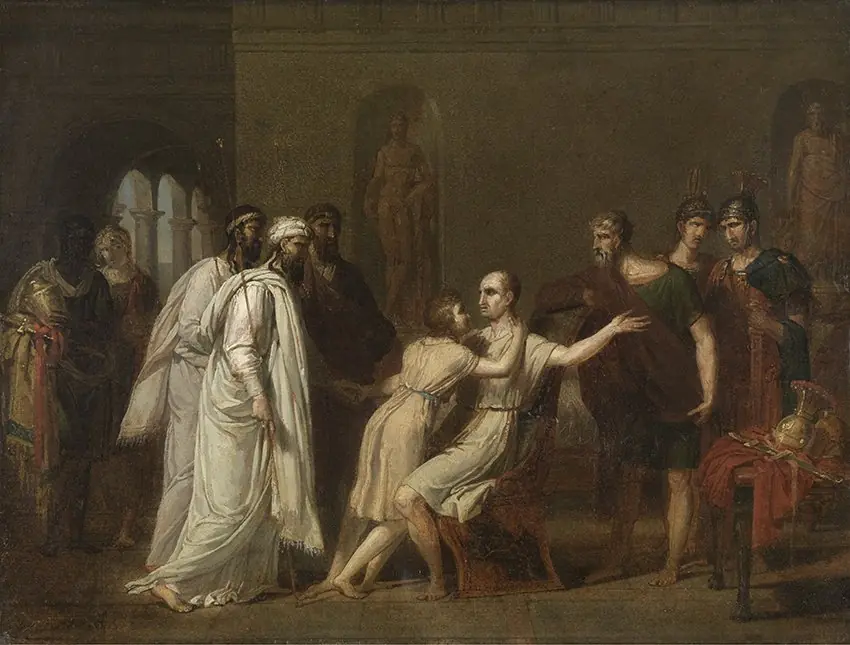 Terugkeer van Scipio's zoon
 Saint Helen Testing the True Cross
 El sacamuelas