Artwork
The Bard
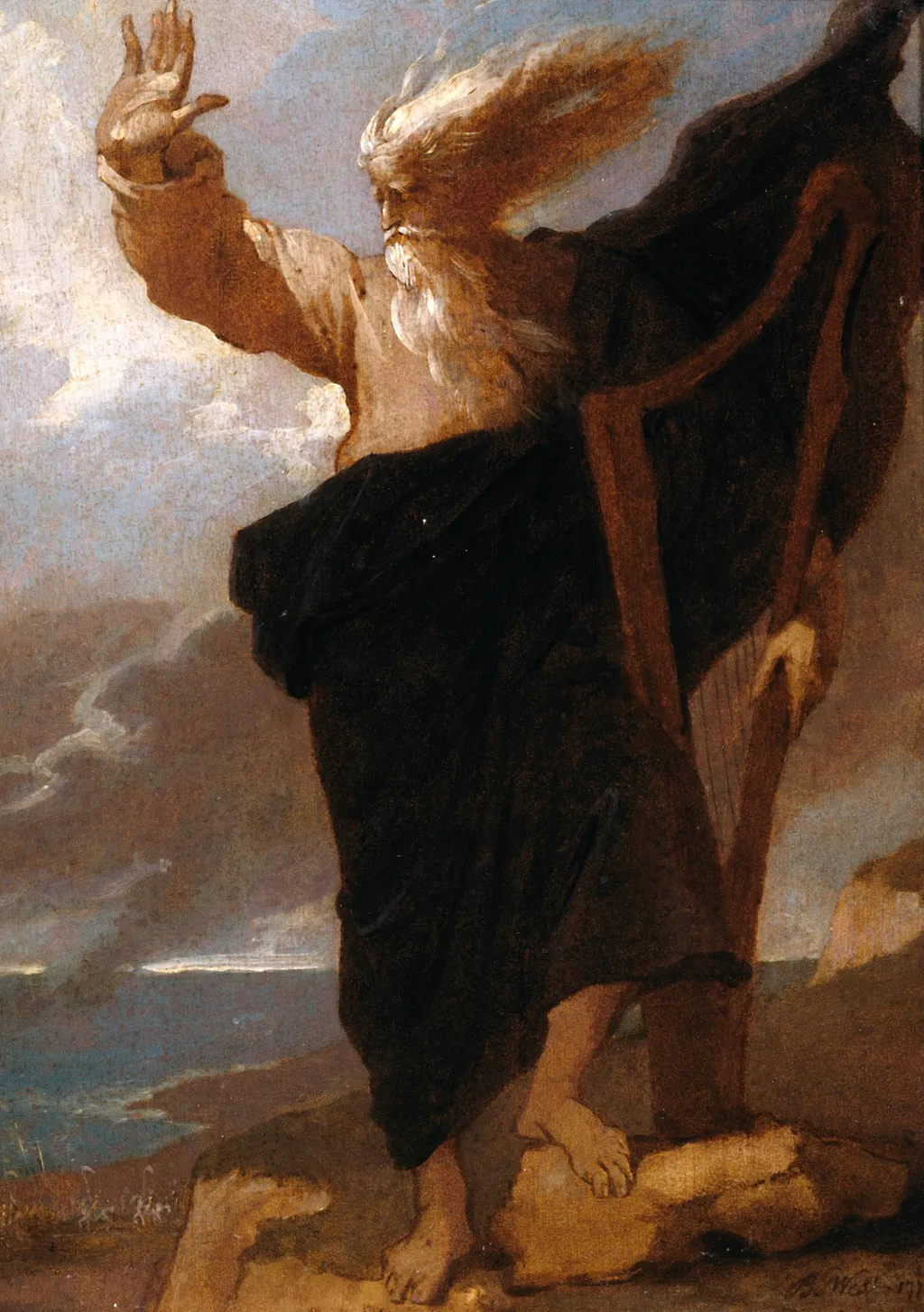
The Bard is an oil painting by the Neoclassicist artist Benjamin West. It dates from 1790 and is held in the collection of the Tate.
About this work
Overview
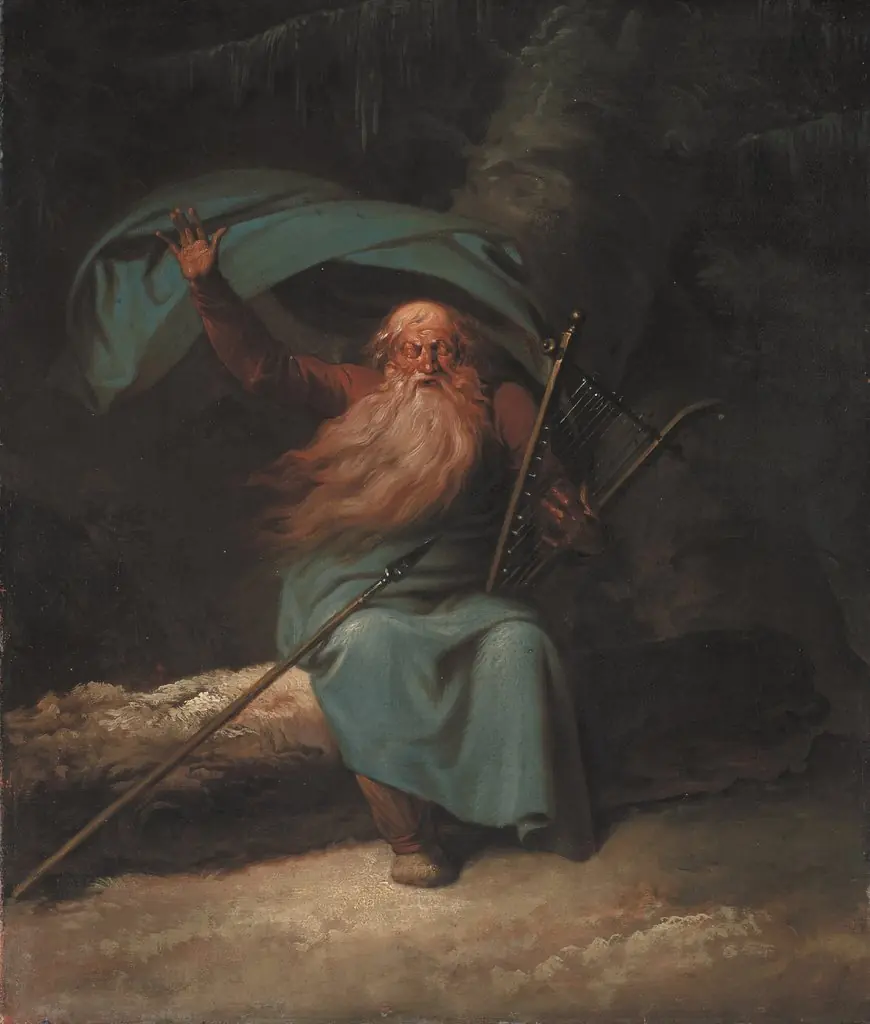
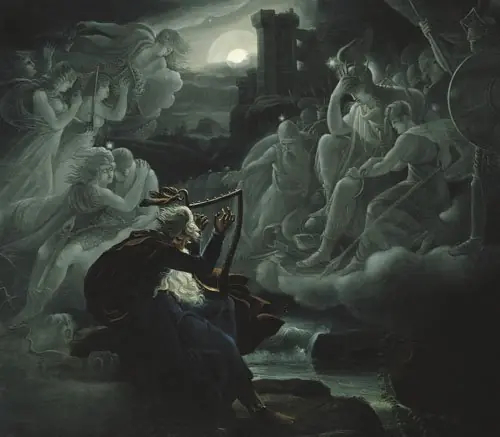
Benjamin West’s 1790 oil painting *The Bard* depicts a solitary figure on a rocky outcrop, his right hand raised as if delivering verse while his left hand cradles a harp. Dressed in a dark robe and distinguished by a white beard, the man stands against a bright sky dotted with clouds, creating a stark visual contrast that highlights his theatrical pose.
Subject & Meaning
The central figure represents a poet‑bard, a traditional emblem of lyrical and musical inspiration. His raised arm and focused expression suggest the act of singing or reciting poetry, while the harp reinforces the link between verse and melody. The composition thus celebrates the creative power of oral tradition and the harmonious union of word and music.
Technique & Style
West employs chiaroscuro, juxtaposing deep shadows on the figure and rock with luminous sky and cloud, to model volume and heighten drama. The restrained palette and clear outlines align the work with neoclassical ideals, emphasizing narrative clarity and moral gravitas typical of history painting in the late eighteenth century.
History & Provenance
Created while West was establishing his reputation as a history painter in London, *The Bard* entered the collection of Tate Britain, where it remains on display. West later ascended to the presidency of the Royal Academy and served as historical painter to the British court, cementing his influence on British academic art.
Context
The painting reflects the neoclassical fascination with antiquity and the moralizing potential of historical subjects. By portraying a timeless bard, West taps into Enlightenment ideas about the civilizing role of the arts, positioning the figure as a conduit for cultural values amid the period’s renewed interest in classical literature and music.
Artist & collection
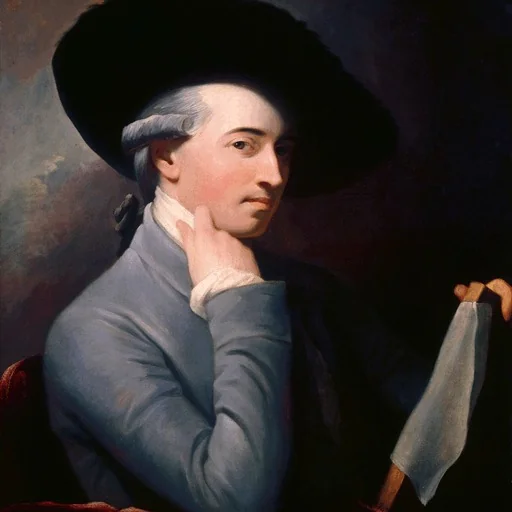

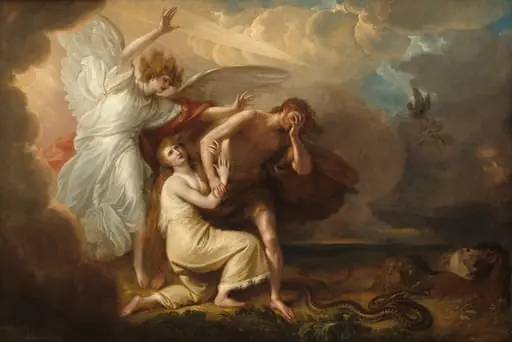 The Expulsion of Adam and Eve from Paradise
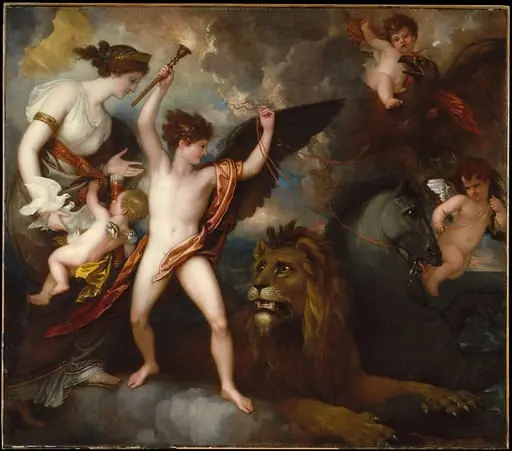 Omnia Vincit Amor, or The Power of Love in the Three Elements
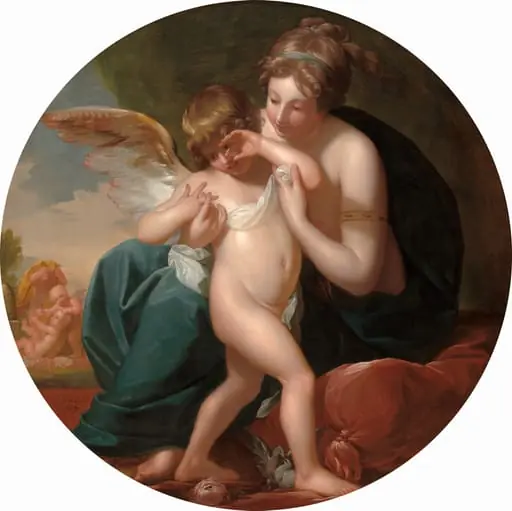 Cupid, Stung by a Bee, Is Cherished by his Mother
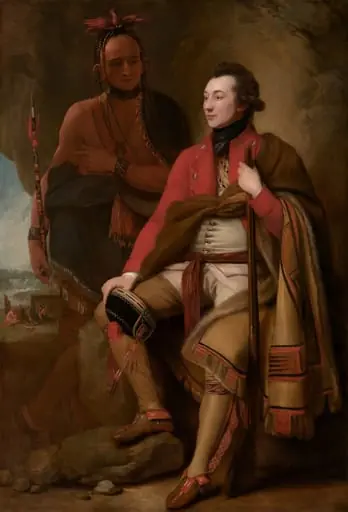 Colonel Guy Johnson and Karonghyontye (Captain David Hill)
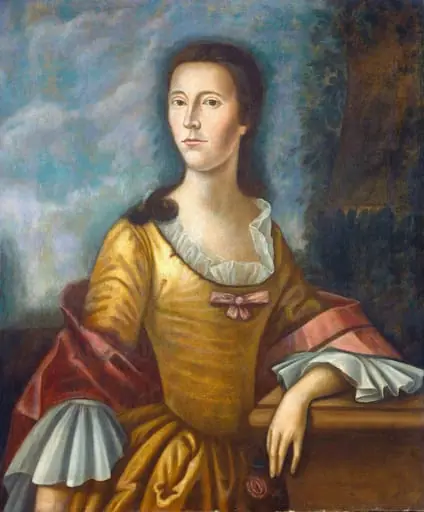 Mary Bethel Boude (Mrs. Samuel Boude)
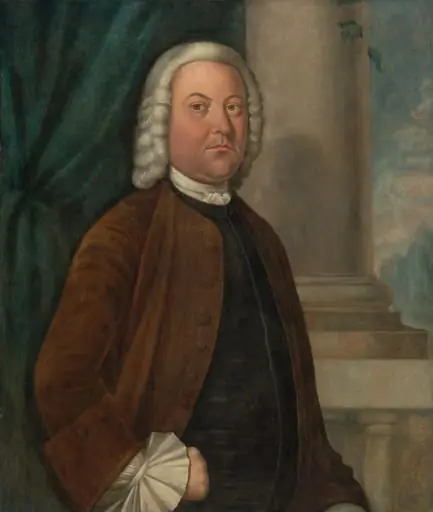 Dr. Samuel Boude
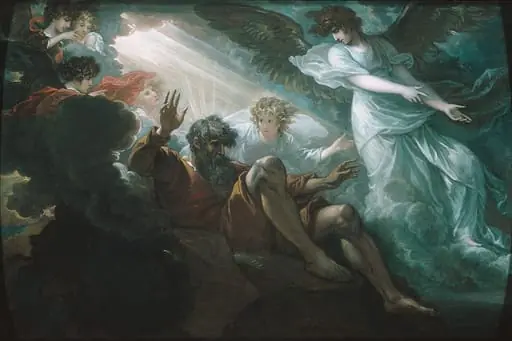 Moses Shown the Promised Land
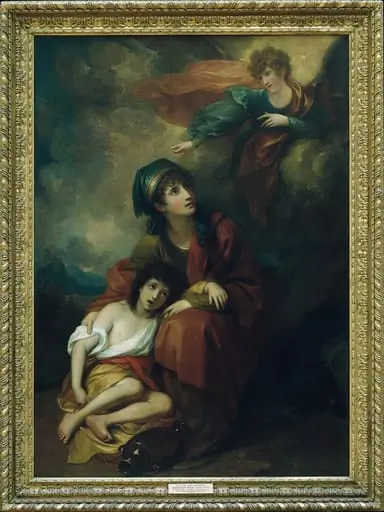 Hagar and Ishmael