Artwork
The Choice of Hercules between Virtue and Pleasure
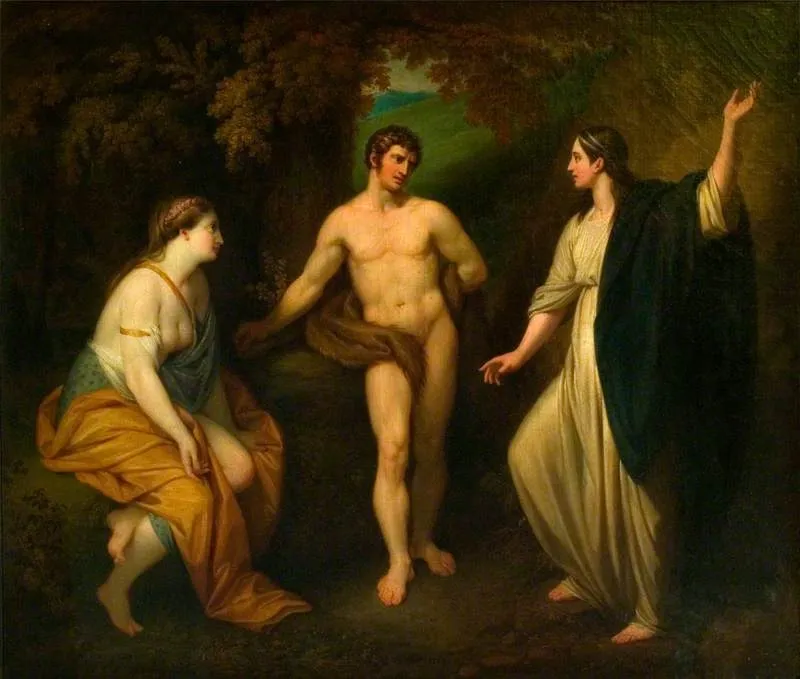
The Choice of Hercules between Virtue and Pleasure is an oil painting by the Rococo painting artist Benjamin West. It dates from 1764 and is held in the collection of the Victoria and Albert Museum.
About this work
Overview
It illustrates a classical allegory from ancient moral tradition, depicting the moment Hercules must choose between two paths in life.
Benjamin West, an American artist based in London, completed this oil painting in 1764. It illustrates a classical allegory from ancient moral tradition, depicting the moment Hercules must choose between two paths in life. West, known for his historical subjects, rendered the scene with deliberate clarity and symbolic weight, reflecting his commitment to narrative painting over decorative flourish.
Subject & Meaning
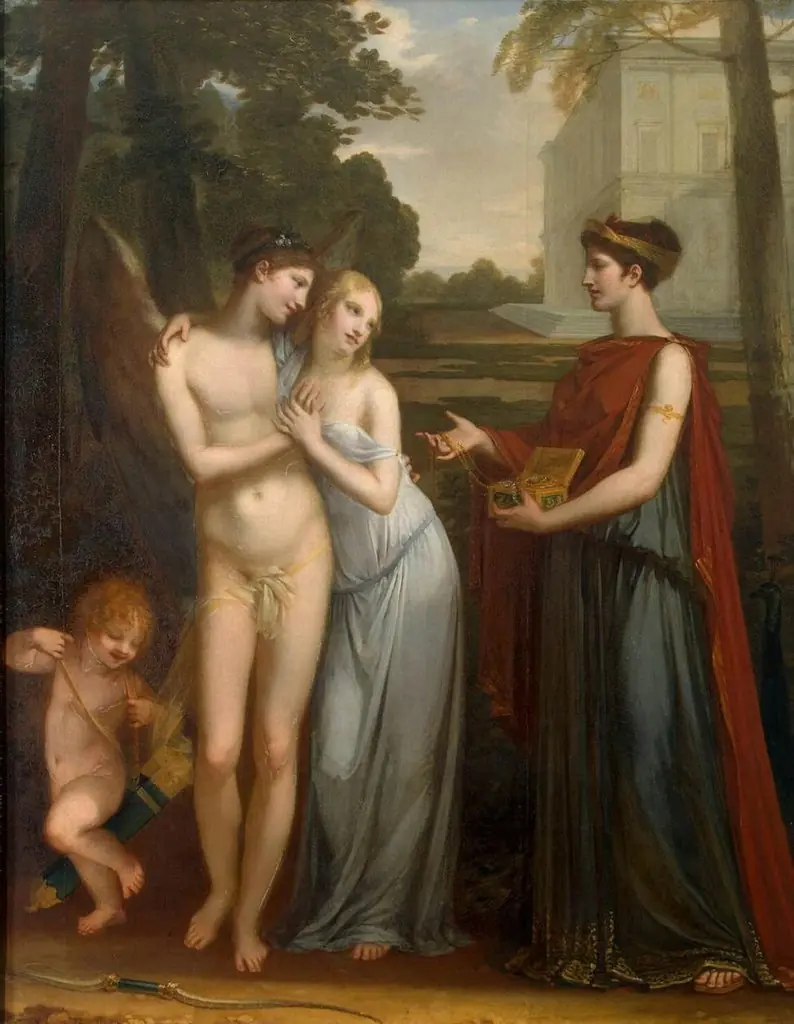
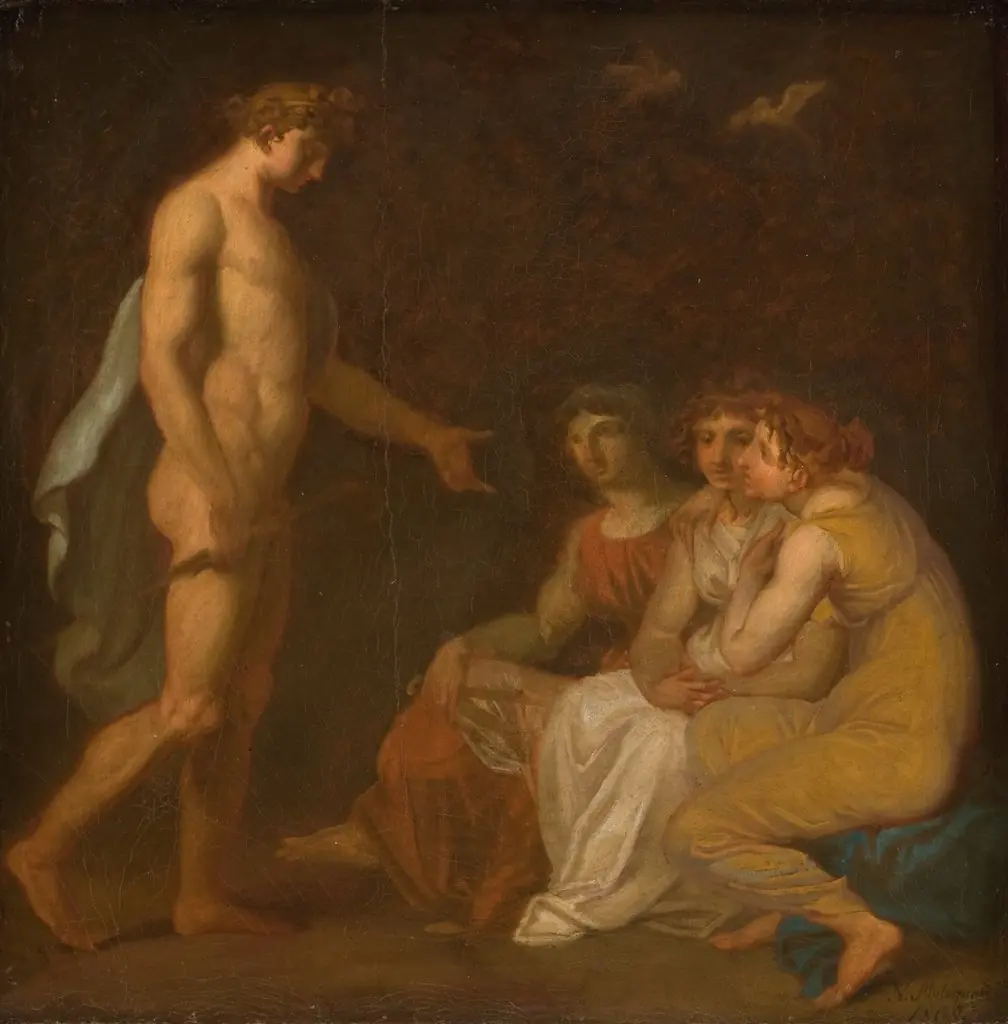
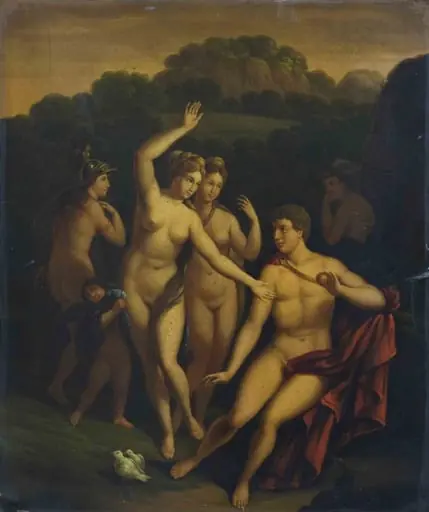
The central figure represents Hercules at a moral crossroads. To his left, a solemn woman in yellow and blue embodies Virtue, her posture and gaze conveying discipline and resolve. To his right, a more languid figure in white and green signifies Pleasure, her raised arm and relaxed expression suggesting ease and indulgence. The contrast between the two figures underscores the ethical dilemma central to the myth: the cost of greatness versus the comfort of indulgence.
Technique & Style
West employed oil paint with restrained brushwork, favoring clear forms and balanced composition over the ornamental flair typical of Rococo. The figures are rendered with sculptural solidity, their drapery defined by soft folds rather than glittering detail. The background, lightly suggested with trees and foliage, directs focus to the psychological tension between the three figures, emphasizing narrative over decorative richness.
History & Provenance
Painted in 1764, the work entered the collection of the Victoria and Albert Museum in London, where it remains today. West created it during his early career in England, before his rise to prominence as a founding figure of the Royal Academy. Though not commissioned for a specific patron, it reflects his ambition to elevate historical painting through moral allegory, aligning with Enlightenment ideals of rational choice.
Context
In mid-18th-century Britain, classical myths were frequently invoked to explore ethical themes in art. West’s painting responds to this intellectual climate, drawing from sources like Xenophon’s Memorabilia, which recounts Hercules’ choice. His approach diverged from the frivolity of Rococo, instead aligning with emerging Neoclassical values that prized moral clarity and disciplined form over ornamentation.
Legacy
Though less widely known than West’s later historical works, this painting exemplifies his early commitment to moral allegory as a vehicle for serious art. It contributed to his reputation as a painter who prioritized intellectual content, helping to shape the direction of British academic art. The work remains a quiet but significant example of how classical myth was repurposed to address contemporary ethical concerns.
Artist & collection

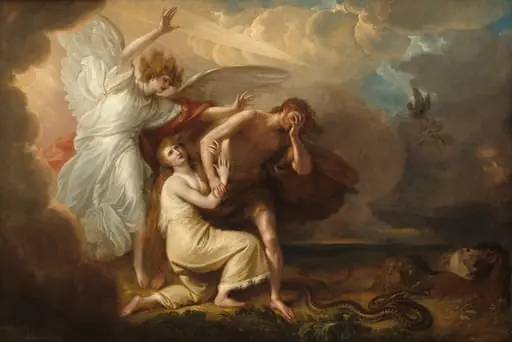 The Expulsion of Adam and Eve from Paradise
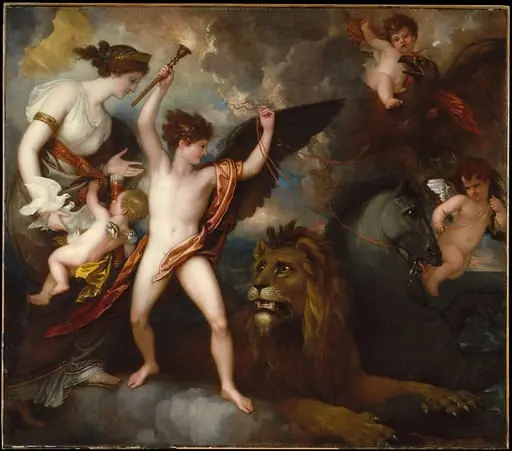 Omnia Vincit Amor, or The Power of Love in the Three Elements
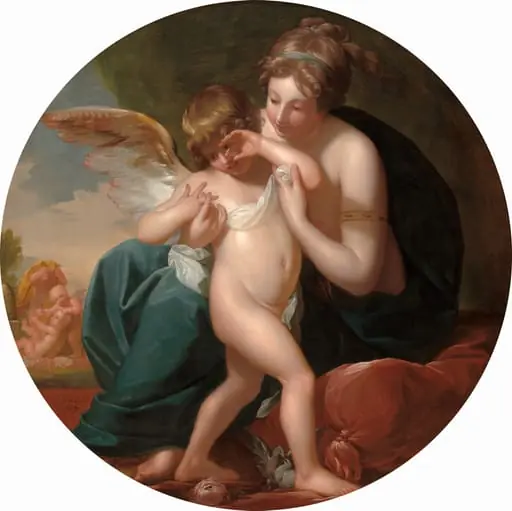 Cupid, Stung by a Bee, Is Cherished by his Mother
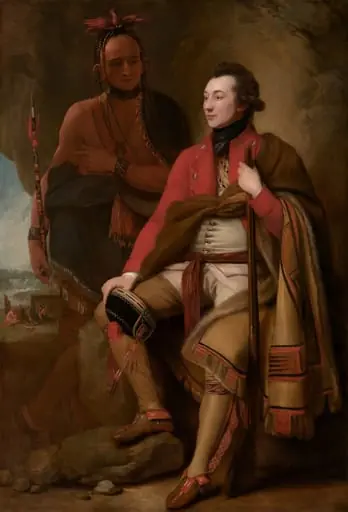 Colonel Guy Johnson and Karonghyontye (Captain David Hill)
 Mary Bethel Boude (Mrs. Samuel Boude)
 Dr. Samuel Boude
 Moses Shown the Promised Land
 Hagar and Ishmael