Artwork
Innocence Preferring Love to Wealth
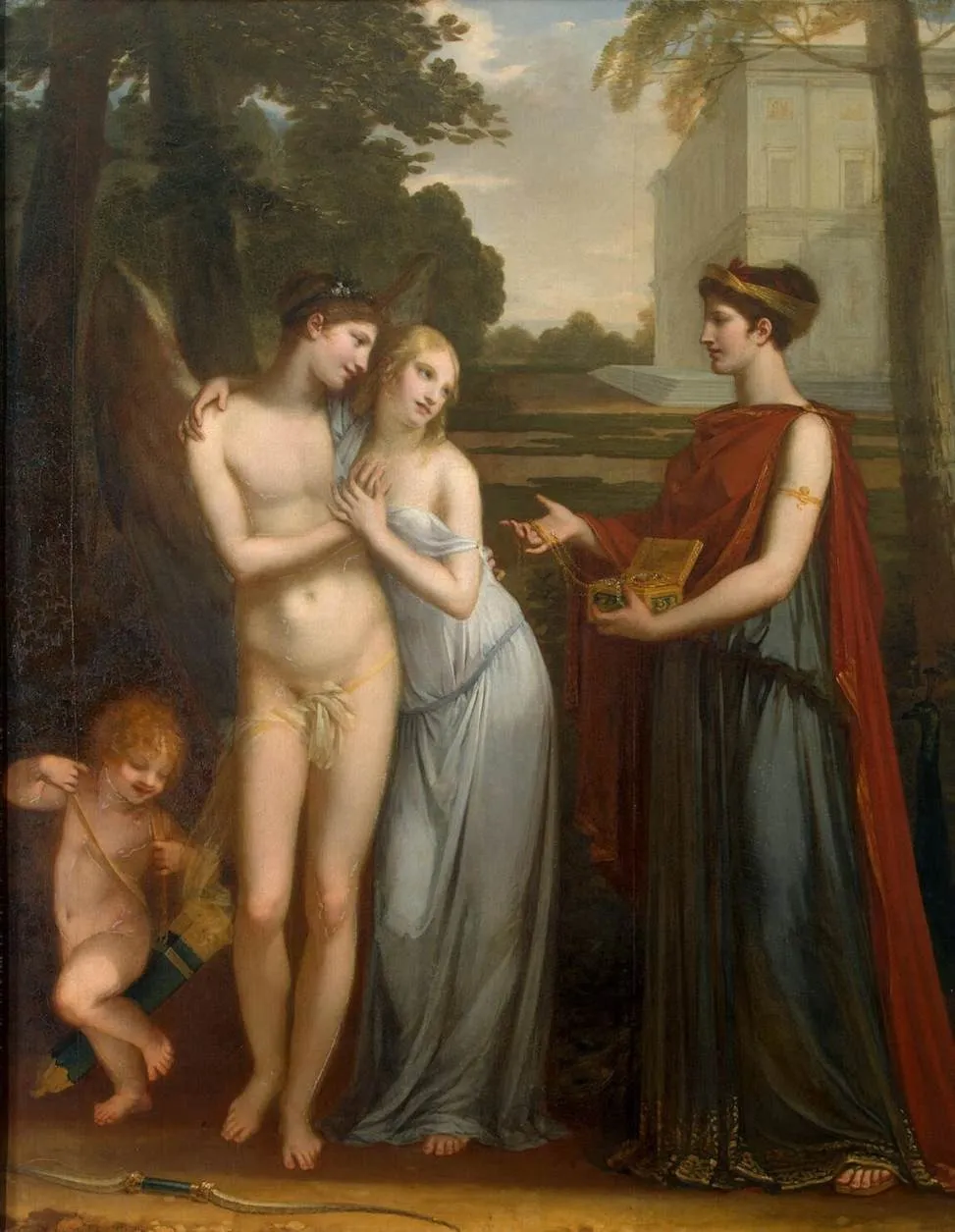
Innocence Preferring Love to Wealth is an oil painting by the Neoclassicist artist Constance Mayer. It dates from 1804 and is held in the collection of the Hermitage Museum.
About this work
Overview
Though primarily known for portraiture and miniature works, Mayer turned to symbolic composition in this piece, reflecting her engagement with moral themes.
Constance Mayer’s 1804 oil painting, *Innocence Preferring Love to Wealth*, presents an allegorical narrative in the neoclassical tradition. Though primarily known for portraiture and miniature works, Mayer turned to symbolic composition in this piece, reflecting her engagement with moral themes. The painting is held in the State Hermitage Museum’s collection, where it stands as one of her few large-scale allegorical works. Its quiet tone and restrained palette distinguish it from more dramatic contemporaries.
Subject & Meaning
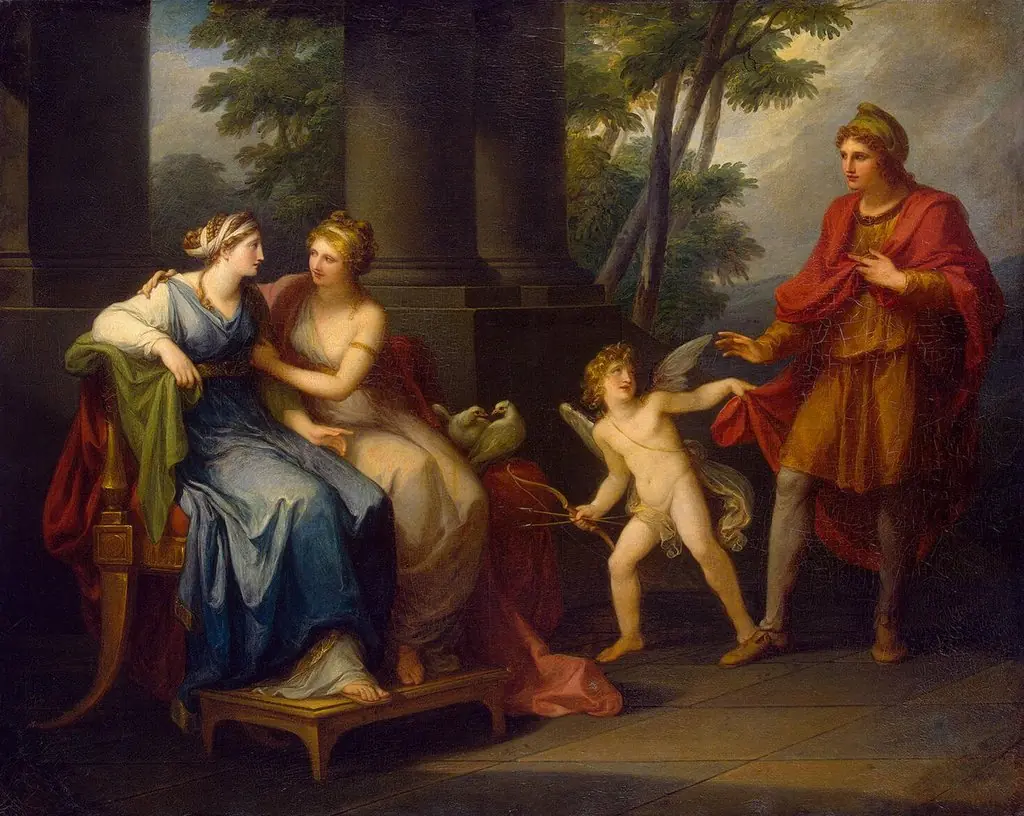
The painting personifies Innocence as a central female figure, clad in white, who turns away from a woman in red offering a chest of riches. To her left, a cherub with bow and arrow suggests the guiding force of affection over material gain. The third figure, partially obscured, may represent worldly temptation or passive observation. The scene unfolds without conflict, emphasizing choice over struggle—love, symbolized by the child, is presented as a gentle, superior value to wealth.
Technique & Style
Mayer employs smooth, even brushwork and a muted color palette to evoke calmness and moral clarity. The figures are rendered with soft contours, typical of neoclassical ideals, while the background—trees, distant architecture, and a hazy sky—lacks detail, directing focus to the central interaction. Light falls evenly across the figures, minimizing shadow and enhancing the scene’s stillness. The composition is balanced, with the cherub’s diagonal gesture subtly guiding the viewer’s eye.
History & Provenance
Executed in 1804, the painting entered the Hermitage collection in the early 19th century, likely acquired during a period of increased Russian interest in French academic art. Mayer’s career, though respected, was overshadowed by personal adversity, and few of her large allegories survived. This work remains one of the best-preserved examples of her ambition beyond portraiture, offering rare insight into her thematic concerns during a time when female artists faced institutional barriers.
Context
In early 19th-century France, allegorical painting was a respected genre, often used to convey moral or civic virtues. Mayer worked within this tradition, influenced by the legacy of David and the lingering ideals of the Revolution. While male artists dominated public commissions, women like Mayer often explored domestic or ethical subjects. Her choice to depict innocence as an active moral agent reflects a subtle challenge to gendered artistic norms of the era.
Legacy
Though Mayer’s reputation faded after her death in 1821, *Innocence Preferring Love to Wealth* endures as a quiet testament to her skill in conveying complex ideas through restrained imagery. It remains a significant example of female authorship in neoclassical allegory, offering a counterpoint to the more heroic or mythological themes typically assigned to male artists. The painting continues to be studied for its nuanced portrayal of virtue and its understated resistance to conventional gender roles.
Artist & collection
Artist
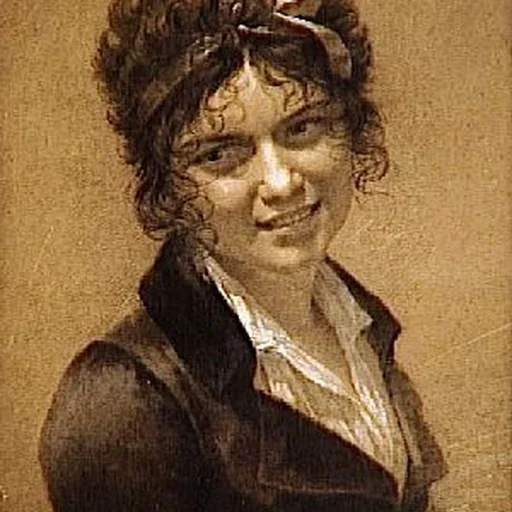
Marie-Françoise Constance Mayer La Martinière (9 March 1775 – 26 May 1821) was a French painter of portraits, allegorical subjects, miniatures and genre works. She had "a brilliant but bitter career."