Artwork
Boston: From the Ship House West End of the Navy Yard
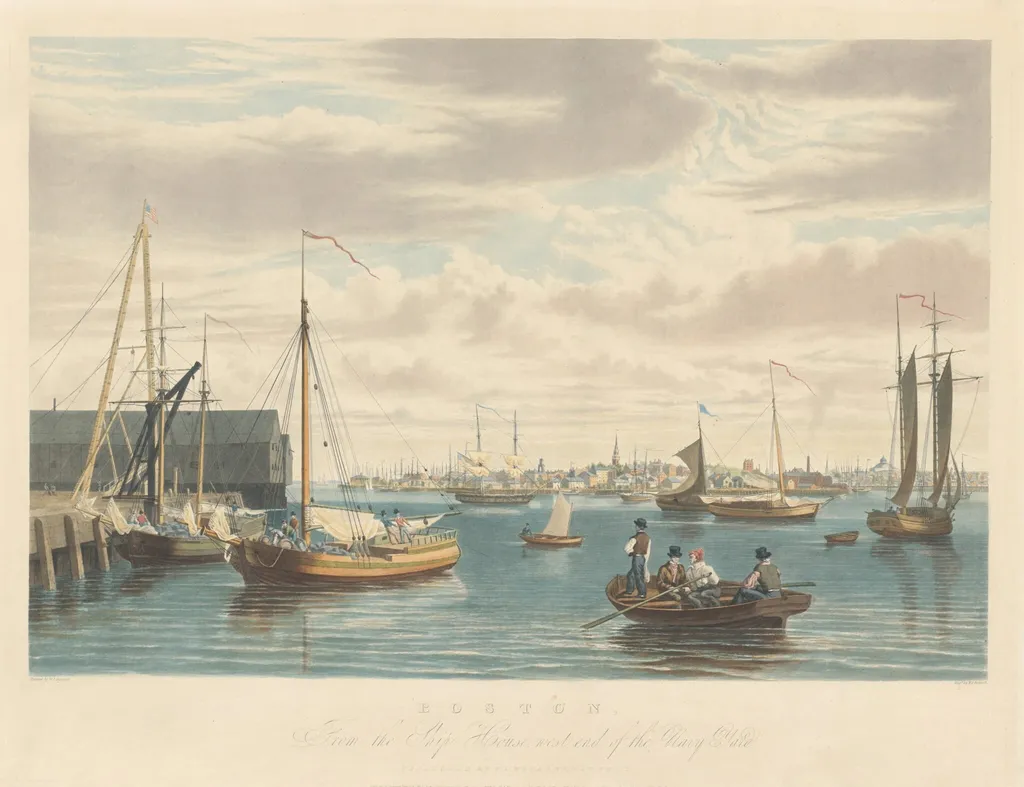
Boston: From the Ship House West End of the Navy Yard is an ink print by the Romanticist artist William James Bennett. It dates from 1833 and is held in the collection of the National Gallery of Art.
About this work
Overview
The print captures the harbor’s active maritime life through delicate lines and subtle color washes, emphasizing the interplay of water, sky, and architecture.
Created in 1833, this hand-colored aquatint by William James Bennett depicts a view of Boston Harbor from the Ship House at the west end of the Navy Yard. The print captures the harbor’s active maritime life through delicate lines and subtle color washes, emphasizing the interplay of water, sky, and architecture. Its wove paper support and refined detailing reflect the technical standards of early 19th-century topographical prints.
Subject & Meaning
The scene portrays Boston as a working port, with anchored ships, rowboats, and shoreline buildings suggesting commercial and naval activity. Figures in period dress and flags on masts imply daily routines and national identity. The view from the Ship House offers a grounded, observational perspective, documenting the city’s maritime infrastructure without idealization or grandeur.
Technique & Style
Bennett combined aquatint for tonal gradations with engraving for fine linear detail, enhancing textures like water ripples and wooden planks. Hand-coloring added localized hues to sails, buildings, and clothing, lending realism without overt theatricality. The composition balances foreground movement with distant horizontals, guiding the eye across the harbor’s spatial depth through controlled contrast and scale.
History & Provenance
The print was produced during a period of Boston’s expansion as a commercial and naval hub. Bennett, known for his American and European views, likely created this as part of a series documenting key ports. Its survival in institutional collections suggests early interest in topographical documentation, though its original ownership and distribution remain largely unrecorded.
Context
In the 1830s, Boston’s harbor was central to trade, shipbuilding, and military readiness. Prints like this served both as records and as souvenirs for residents and visitors. The emphasis on precise detail aligns with contemporary scientific and civic interests in mapping and documenting urban growth, reflecting a broader cultural shift toward visual documentation of everyday landscapes.
Legacy
This print contributes to a body of early American topographical art that prioritized accuracy over romanticism. While not widely exhibited today, it remains a valuable resource for historians studying maritime infrastructure, urban development, and print culture in antebellum New England. Its quiet precision distinguishes it from more dramatic contemporaneous works.
Own this work as a print
Artist & collection

Artist
William James Bennett (1787−1844), was a British-born painter and engraver, active in the United States from 1816.

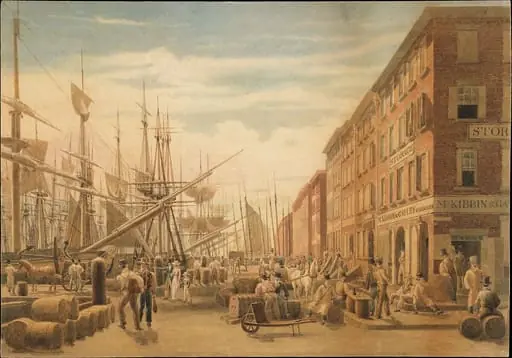 View of South Street, from Maiden Lane, New York City
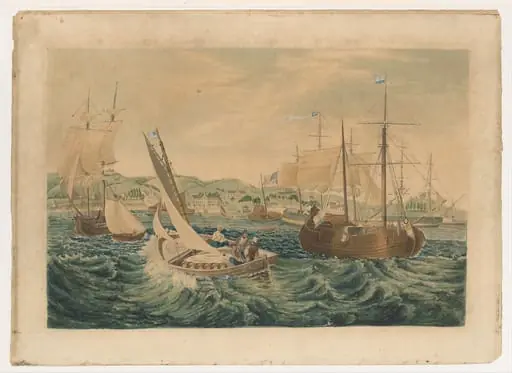 Quarantine, Staten Island
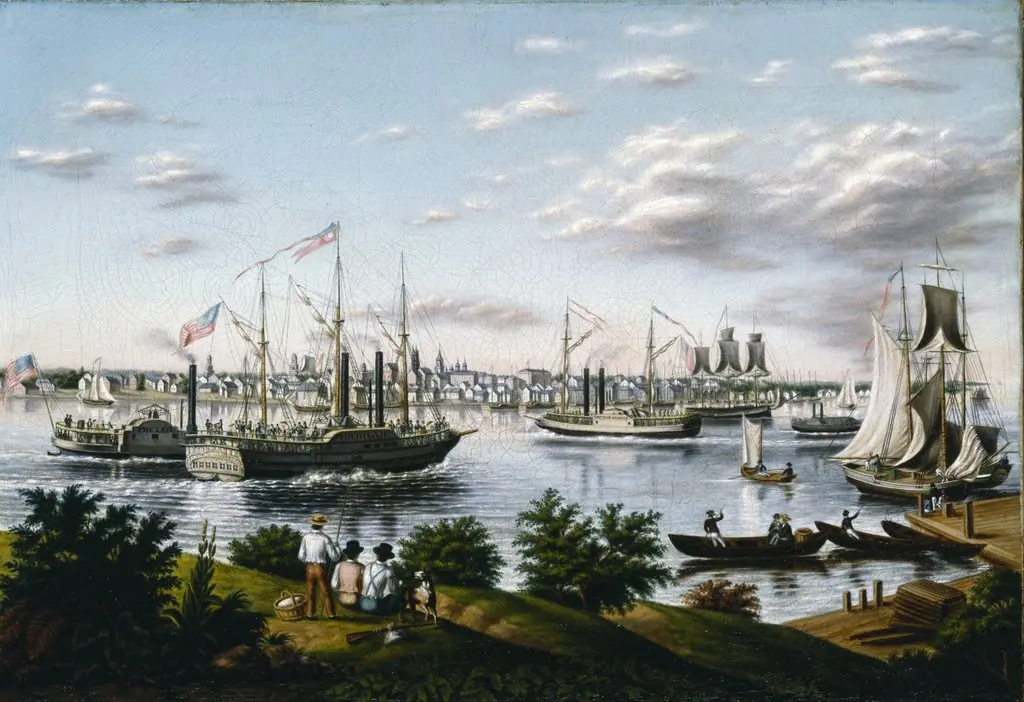 View of Detroit in 1836
 Spring--Burning Fallen Trees in a Girdled Clearing. Western Scene
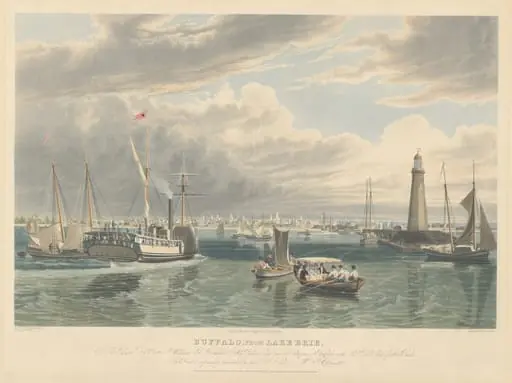 Buffalo, from Lake Erie
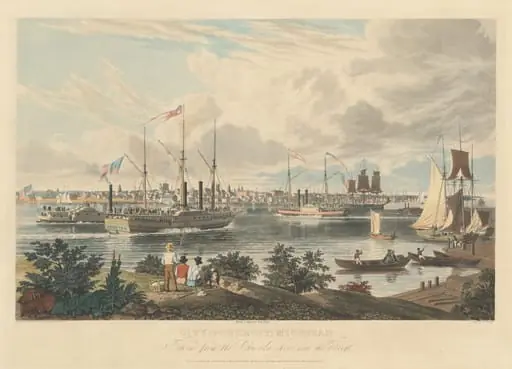 City of Detroit, Michigan: Taken from the Canada Shore near the Ferry
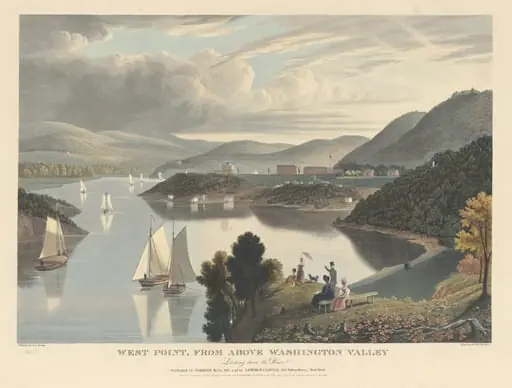 West Point, from above Washington Valley: Looking down the River
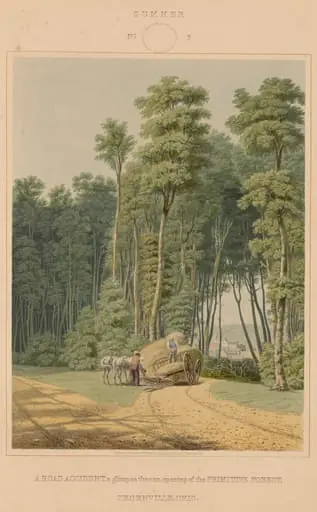 Summer--A Road Accident. A glimpse thro' an opening of the Primitive Forest. Thornville, Ohio
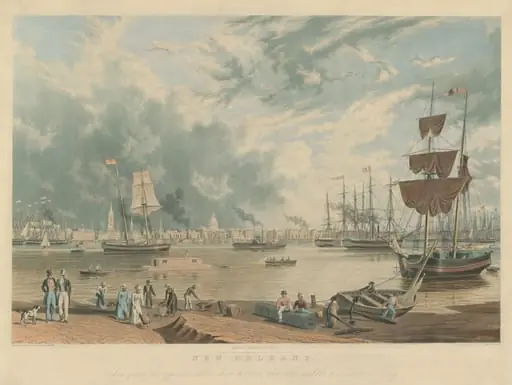 New Orleans: Taken from the Opposite Side, a Short Distance above the Middle or Picayyune Ferry
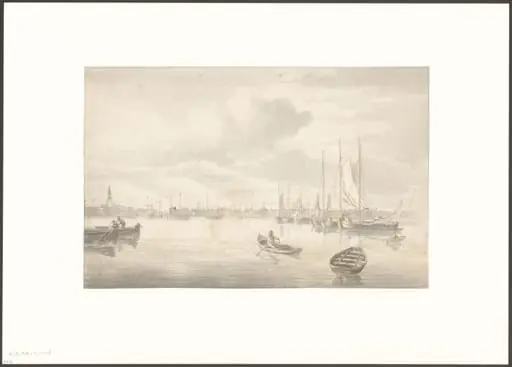 Untitled
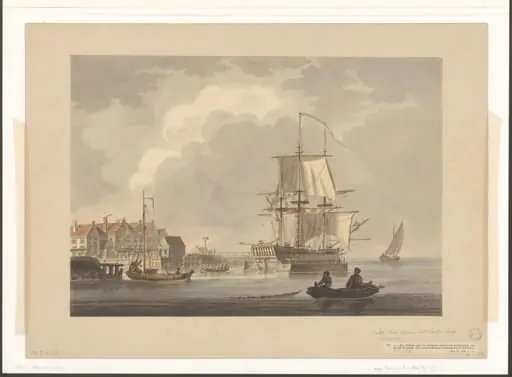 Untitled
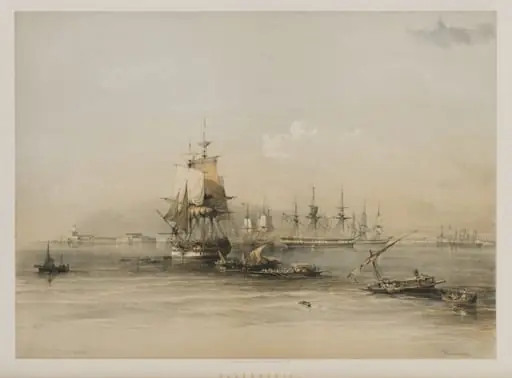 Egypt and Nubia, Volume III: Alexandria
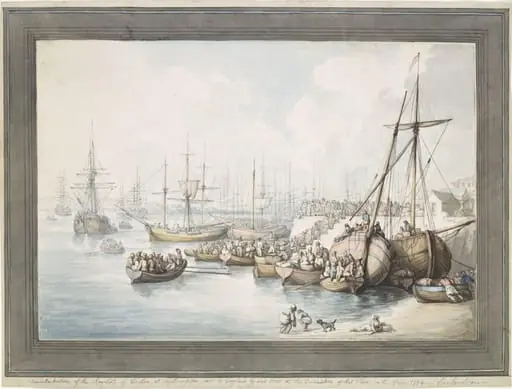 Disembarkation of the Royalists of Toulon at Southampton, 1794
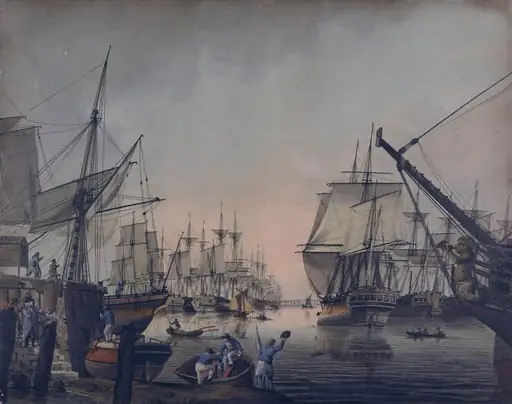 A view of the Pool, below London Bridge.
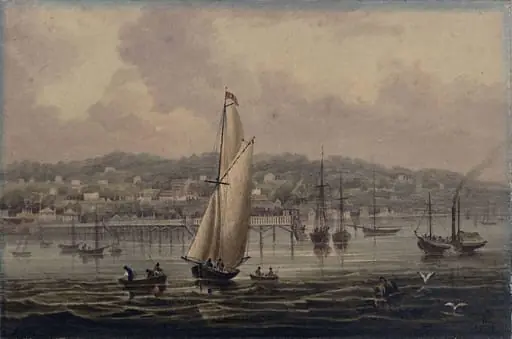 Ryde, Isle of Wight
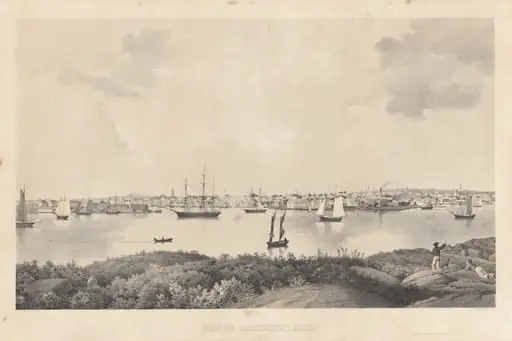 View of Gloucester, Mass.
 View on the Thames
 Troy: Taken from the West Bank of the Hudson in front of the United States Arsenal