Artwork
Portrait of Count Nikolai Samoilov
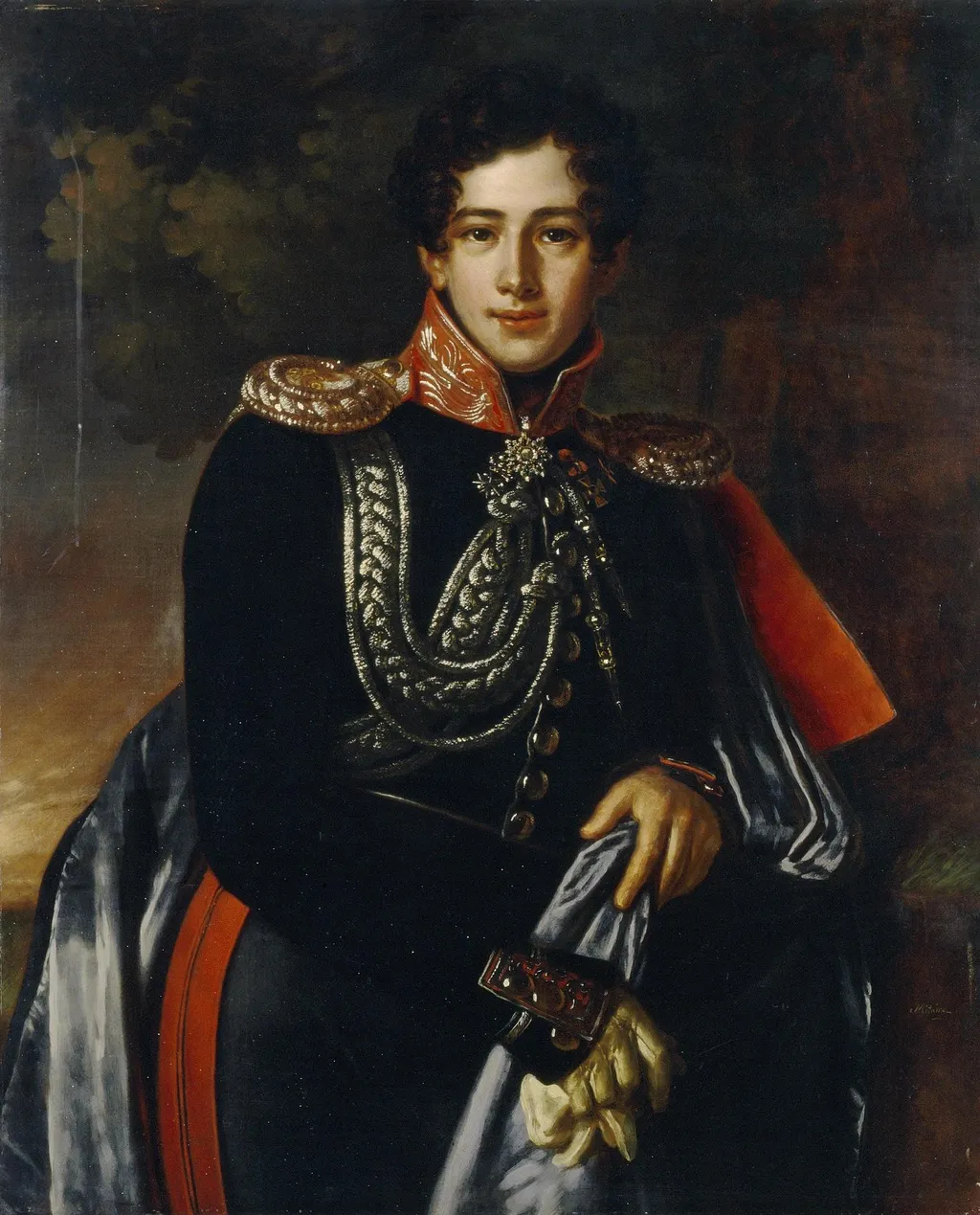
Portrait of Count Nikolai Samoilov is an oil painting by the Neoclassicist artist Benoît Charles Mitoire. It dates from 1825 and is held in the collection of the Hermitage Museum. This 1825 oil painting by Benoît-Charles Mitoire depicts Count Nikolai Samoilov, a figure of Russian nobility.
About this work
Overview
This 1825 oil painting by Benoît-Charles Mitoire depicts Count Nikolai Samoilov, a figure of Russian nobility. The work is part of the State Hermitage Museum’s collection. Rendered in a restrained palette dominated by dark tones, the portrait emphasizes the subject’s military affiliation through precise detailing of uniform and insignia.
Subject & Meaning
The portrait presents Count Nikolai Samoilov in formal military attire, his posture suggesting authority and composure. The red collar and gold braiding of his uniform, along with a star-shaped medal, signify rank and distinction. His expression, neither stern nor relaxed, reinforces a sense of disciplined dignity appropriate to his station.
Technique & Style
Mitoire employs chiaroscuro to model the subject’s features, contrasting luminous flesh tones with a shadowed background. The smooth, almost polished surface of the face contrasts with the meticulous rendering of fabric and metal details. This approach aligns with early 19th-century portrait conventions, balancing realism with idealized refinement.
History & Provenance
Executed in 1825, the portrait entered the Hermitage’s holdings as part of its broader collection of European and Russian art. Little documentation survives regarding its commission or early ownership, though its preservation suggests recognition of its historical and artistic value. The work remains in stable condition, retaining its original composition.
Context
Created during a period of heightened cultural exchange between Western Europe and Russia, the portrait reflects the influence of French academic painting on Russian artists. Military portraits of this era often served to affirm the sitter’s social standing and loyalty to the state, a function likely intended here given Samoilov’s rank and attire.
Own this work as a print
Artist & collection

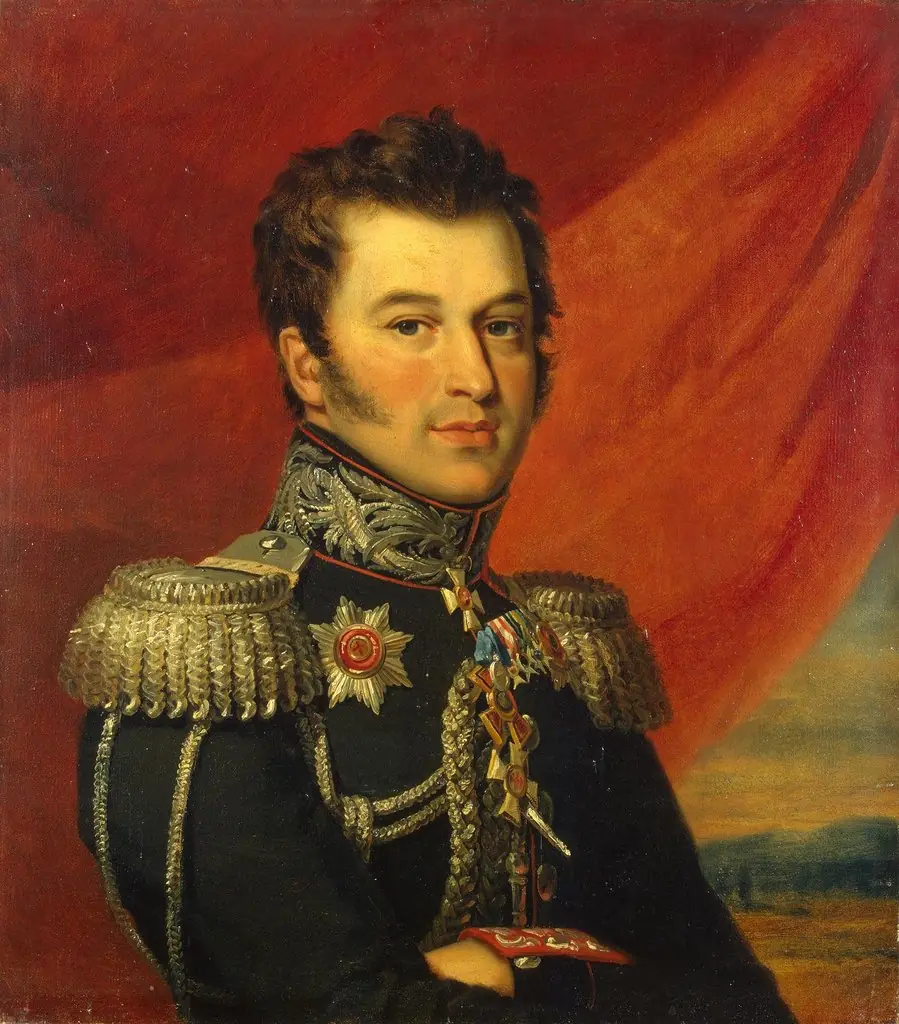 Portrait of Paisy S. Kaisarov (1783-1844)
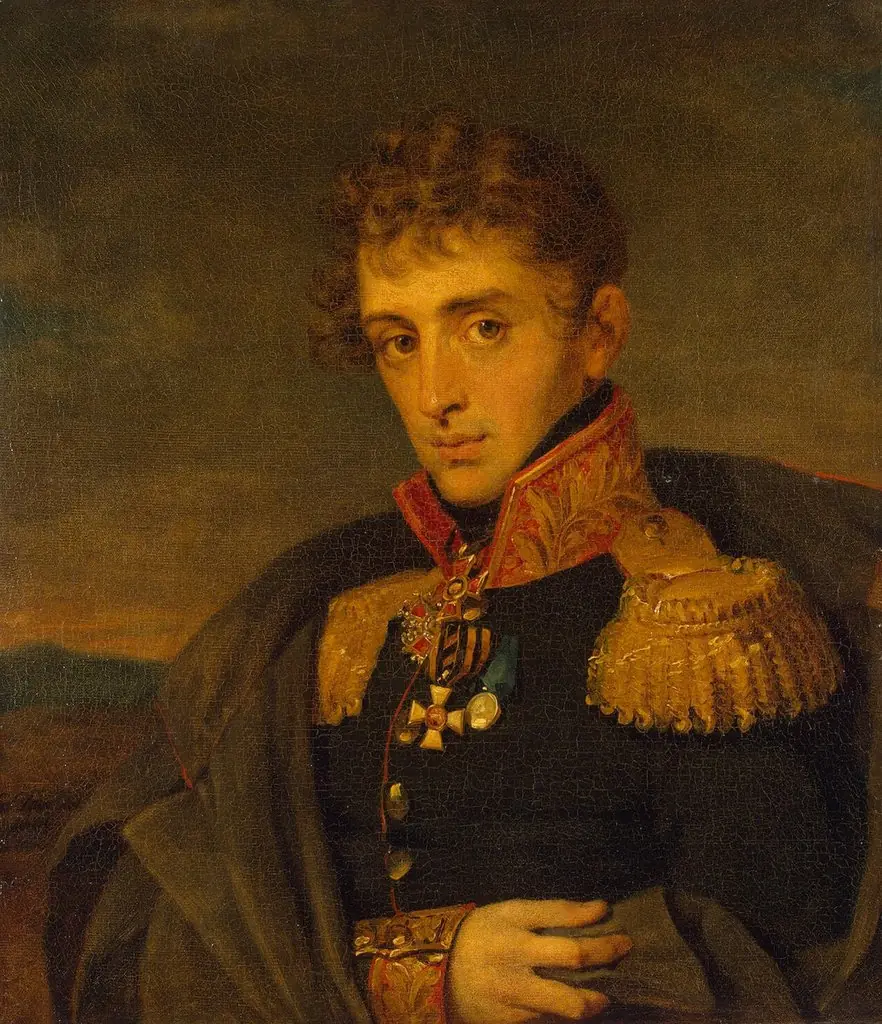 Portrait of Alexander A. Tuchkov (1777/78-1812) (4th)
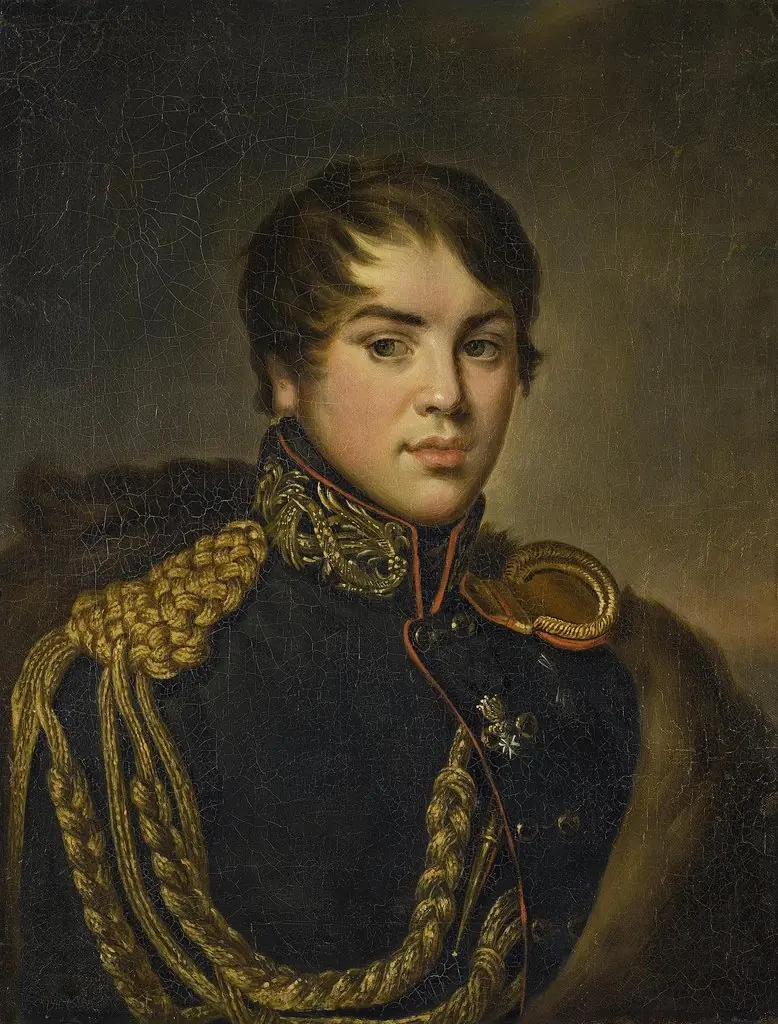 Vladimir Stepanovich Apraksin
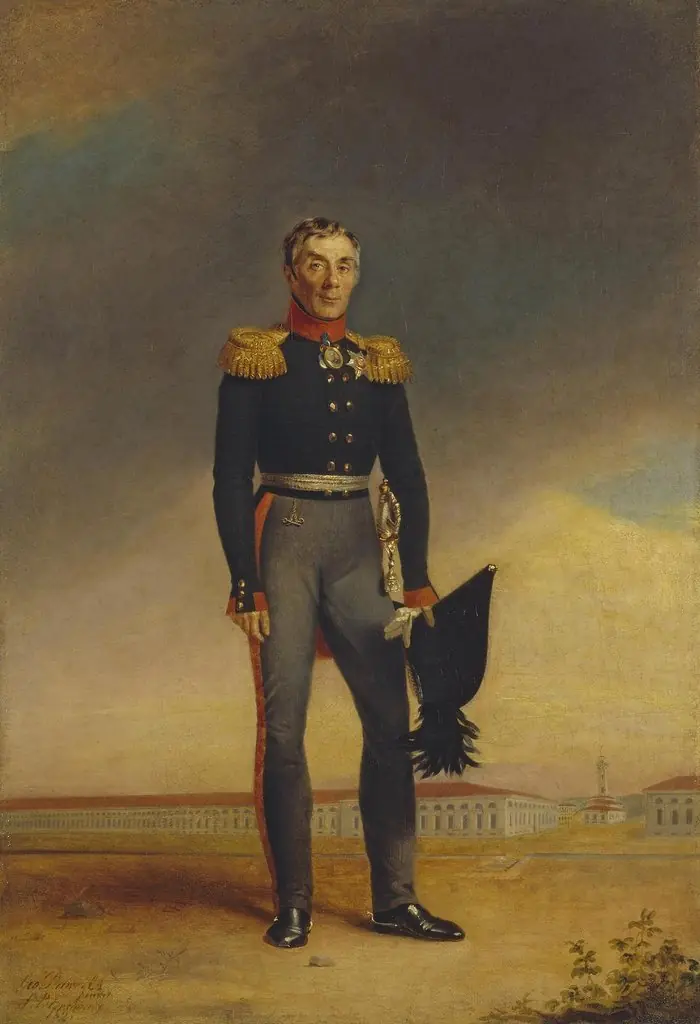 Portrait of Count Alexey Arakcheyev
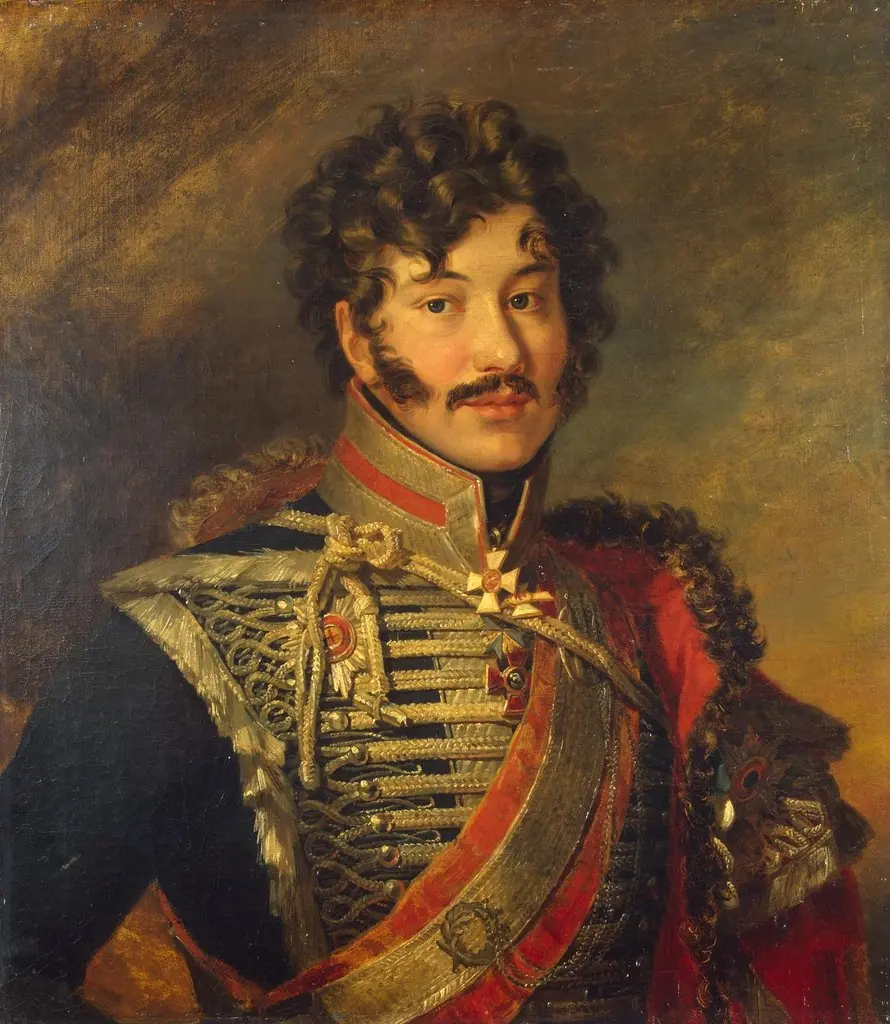 Portrait of Sergey N. Lanskoy (1774-1814)
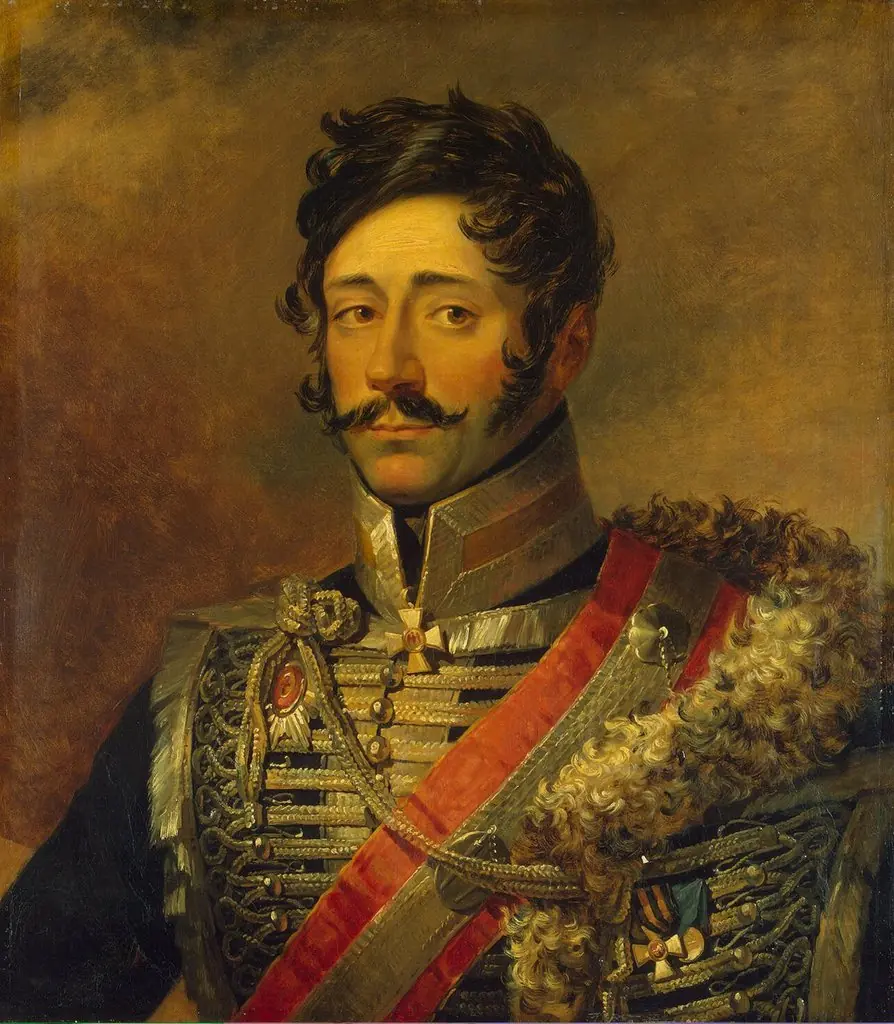 Portrait of Alexey P. Melissino (1759-1813)
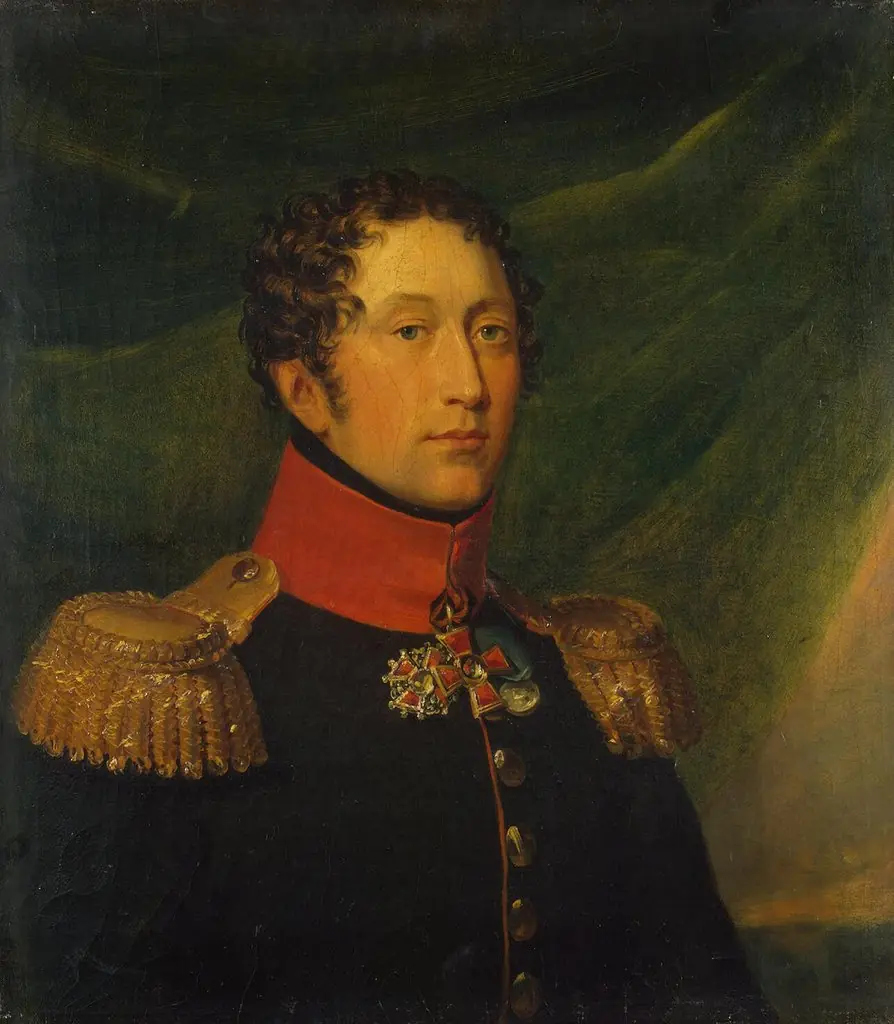 Portrait of Alexey S. Kologrivov (1776-1818)
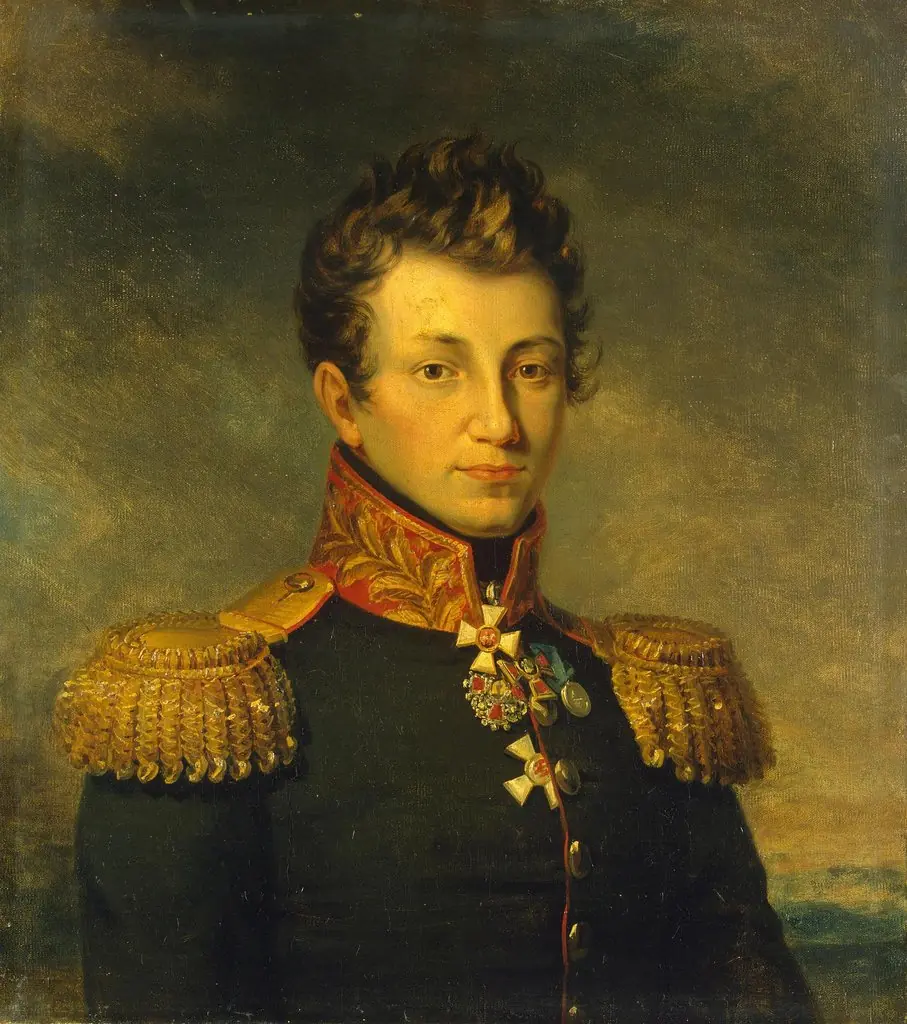 Portrait of Nikolai D. Myakinin (1787-1814)
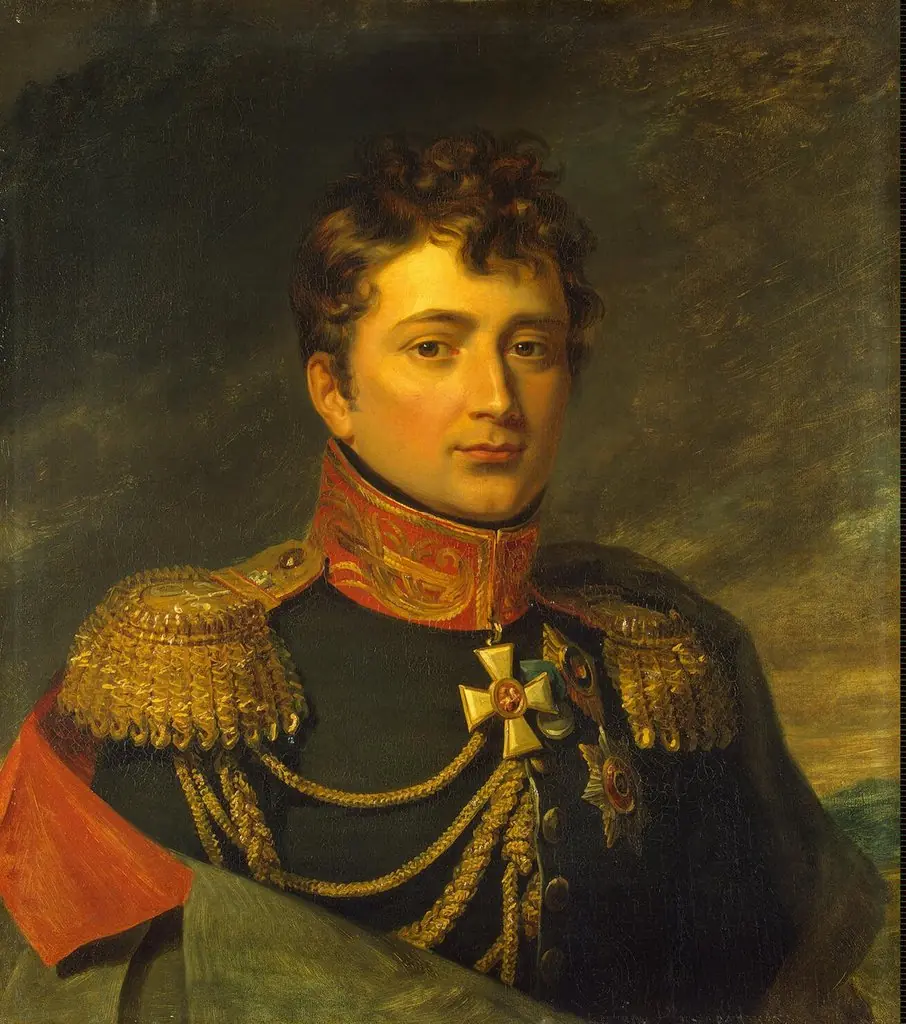 Portrait of Emmanuil (Emmanuel) de Saint-Priest (1776-1814)
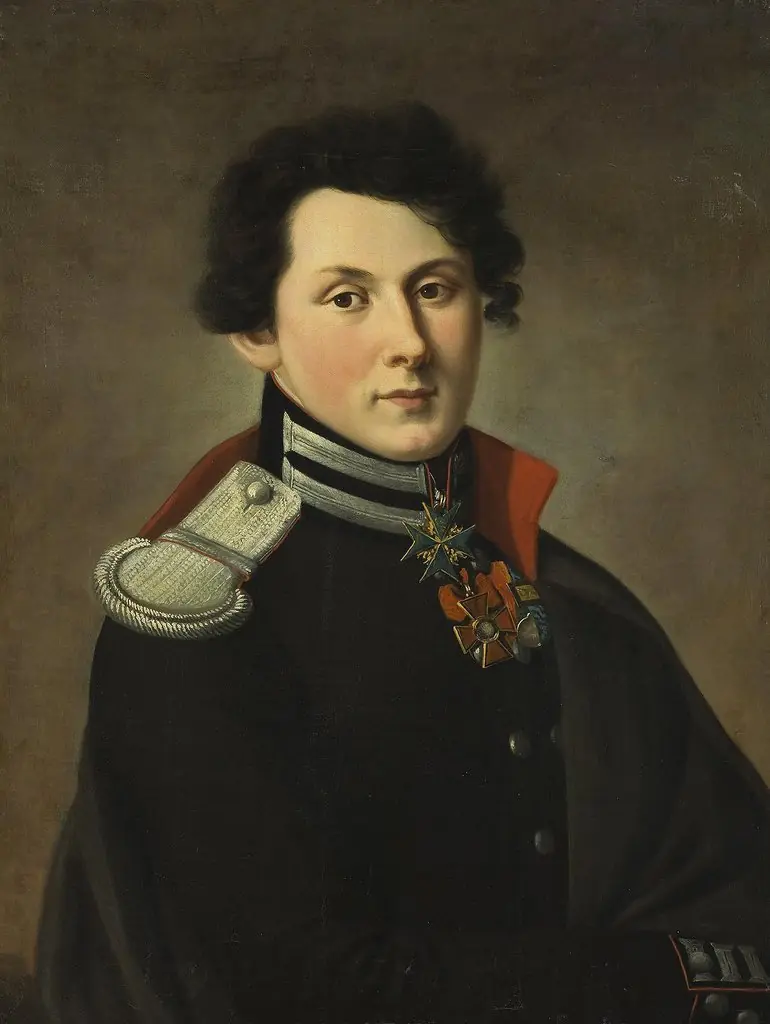 Portrait of Lieutenant V.A. Bibikov of the Corps of Engineers