Artwork
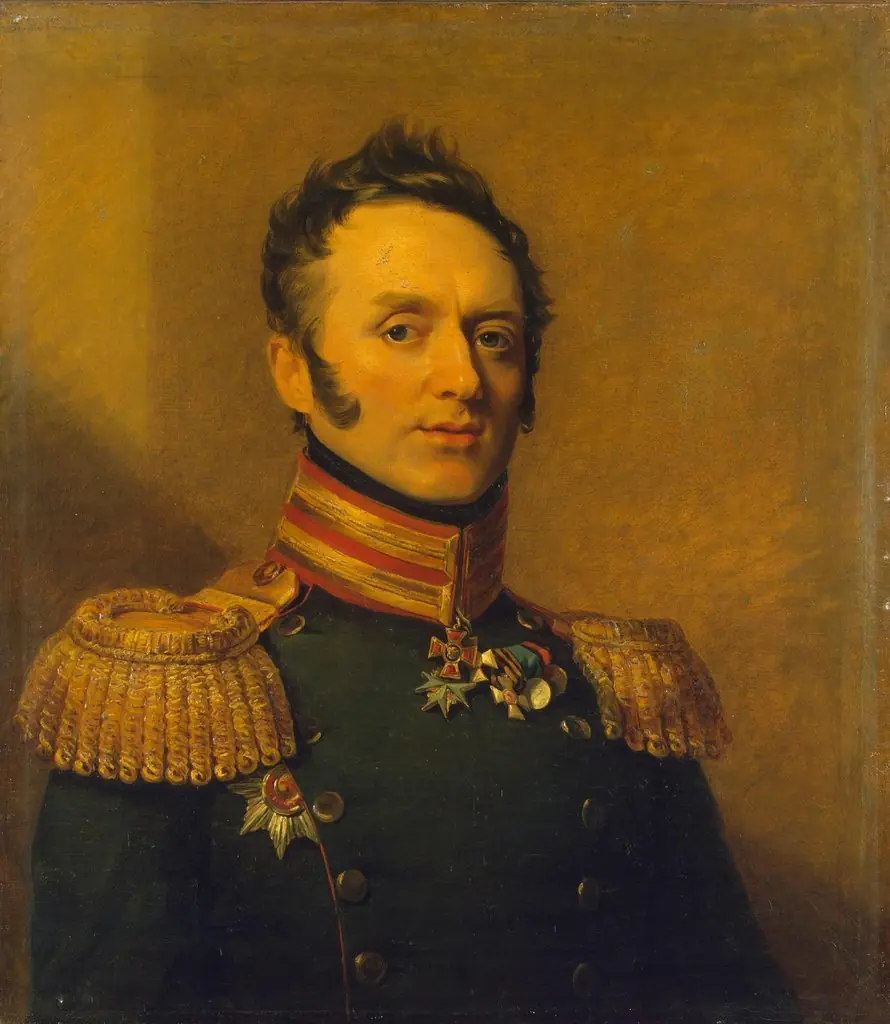
Portrait of Lieutenant V.A. Bibikov of the Corps of Engineers
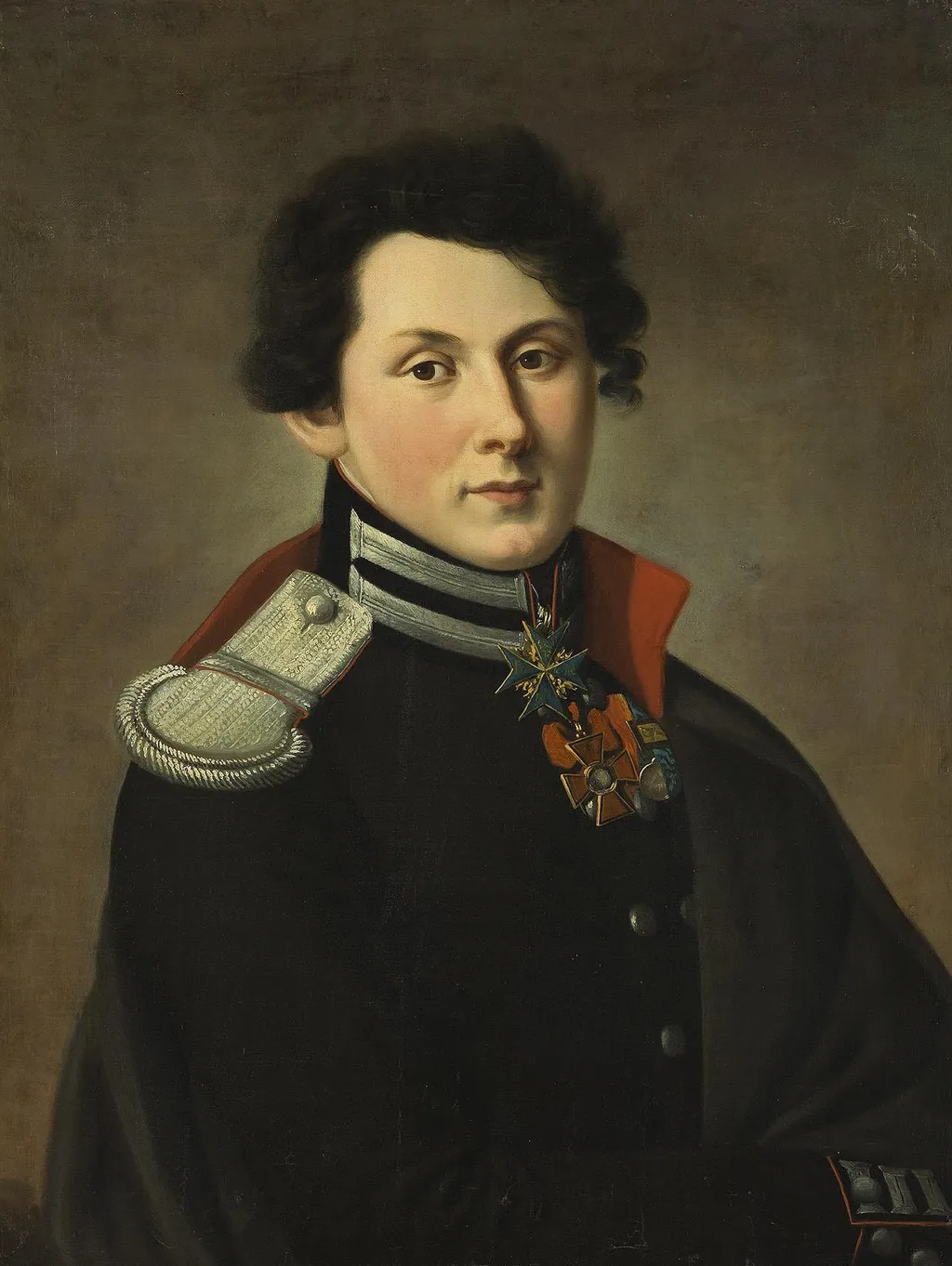
Portrait of Lieutenant V.A. Bibikov of the Corps of Engineers is an oil painting by Unknown. It dates from 1814 and is held in the collection of the Hermitage Museum. This oil painting presents a formal portrait of Lieutenant V.
About this work
Overview
This oil painting presents a formal portrait of Lieutenant V.A. Bibikov, an officer in the Corps of Engineers. Rendered with careful attention to detail, the work captures the subject in full military regalia, emphasizing rank and service. The composition is restrained, focusing on the figure against a neutral brown backdrop, reinforcing a tone of solemnity and professional bearing.
Subject & Meaning
His uniform, marked by medals and a red collar, signals distinction and achievement within the military hierarchy.
Lieutenant Bibikov is depicted with a composed, direct gaze, conveying authority and quiet resolve. His uniform, marked by medals and a red collar, signals distinction and achievement within the military hierarchy. The absence of symbolic props or landscape elements narrows the focus to his identity as a disciplined officer, suggesting a portrait intended to honor duty rather than personal narrative.
Technique & Style
The artist employs chiaroscuro to model the face and uniform, creating subtle transitions between light and shadow that lend volume and realism. Brushwork is precise, particularly in the rendering of metallic accents and fabric textures. The muted background enhances the figure’s presence, while the controlled palette—dominated by darks and silver highlights—reinforces the portrait’s formal character.
History & Provenance
The painting’s origins are tied to the Russian Imperial military establishment, likely commissioned to commemorate Bibikov’s service. While specific details of its early ownership are undocumented, its style and subject align with mid-19th-century military portraiture practices in Russia. It has remained within institutional or private collections, preserving its historical integrity.
Context
Created during a period when military elites were frequently portrayed to affirm state authority, this work reflects broader trends in Russian portraiture of the era. Such images served both personal and institutional purposes—honoring individuals while reinforcing the prestige of the armed forces. The restrained aesthetic contrasts with more ornate Western European equivalents, reflecting Russian imperial values of understated dignity.
Legacy
The portrait endures as a representative example of military portraiture in 19th-century Russia. It contributes to the visual record of the Corps of Engineers and offers insight into how rank and service were visually codified. Though not widely exhibited, it remains a valuable artifact for understanding the intersection of identity, duty, and artistic representation in imperial Russia.
Artist & collection

 Domestic Scene
 Giacomo and Cardinal Marco, investing Andrea, Abbot of San Zeno, with his Benefice
 The Nymph of Fontainebleau
 Portrait of a Woman
 Madonna and Child with Saints in the Enclosed Garden
 Venus and Minerva
 Family Group of Four on Sofa
 Wall painting from Room H of the Villa of P. Fannius Synistor at Boscoreale
 Portrait of Nikolai D. Myakinin (1787-1814)
 Portrait of Count Nikolai Samoilov
 Portrait of Moisey I. Karpenko (1775-1854)
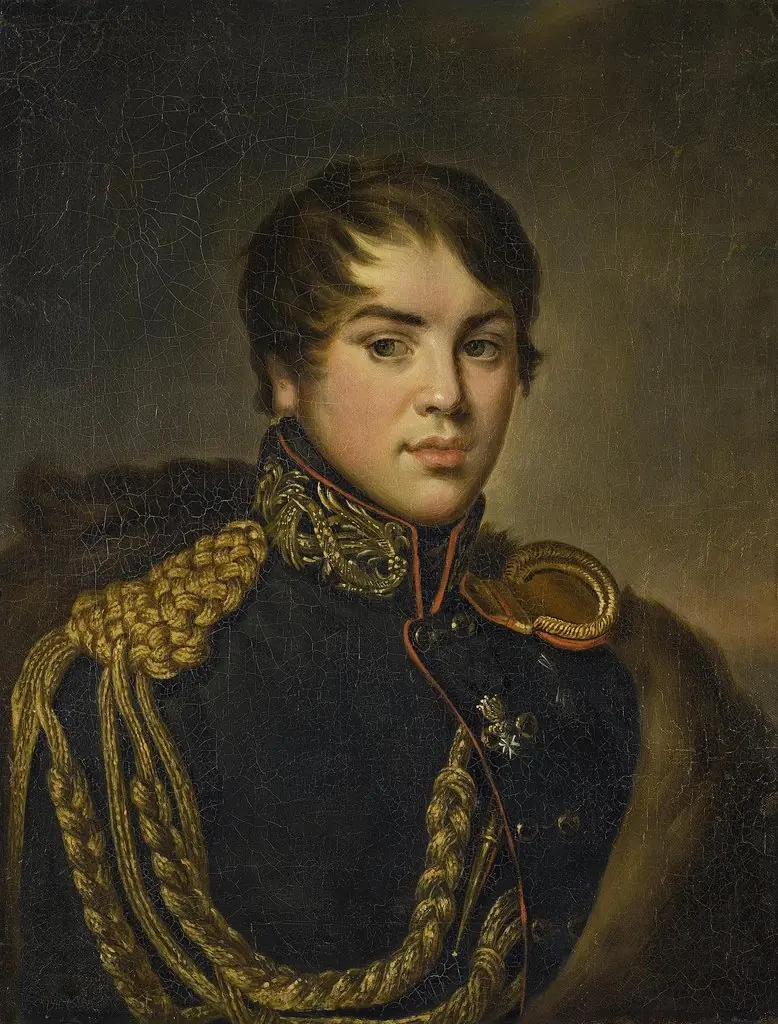 Vladimir Stepanovich Apraksin
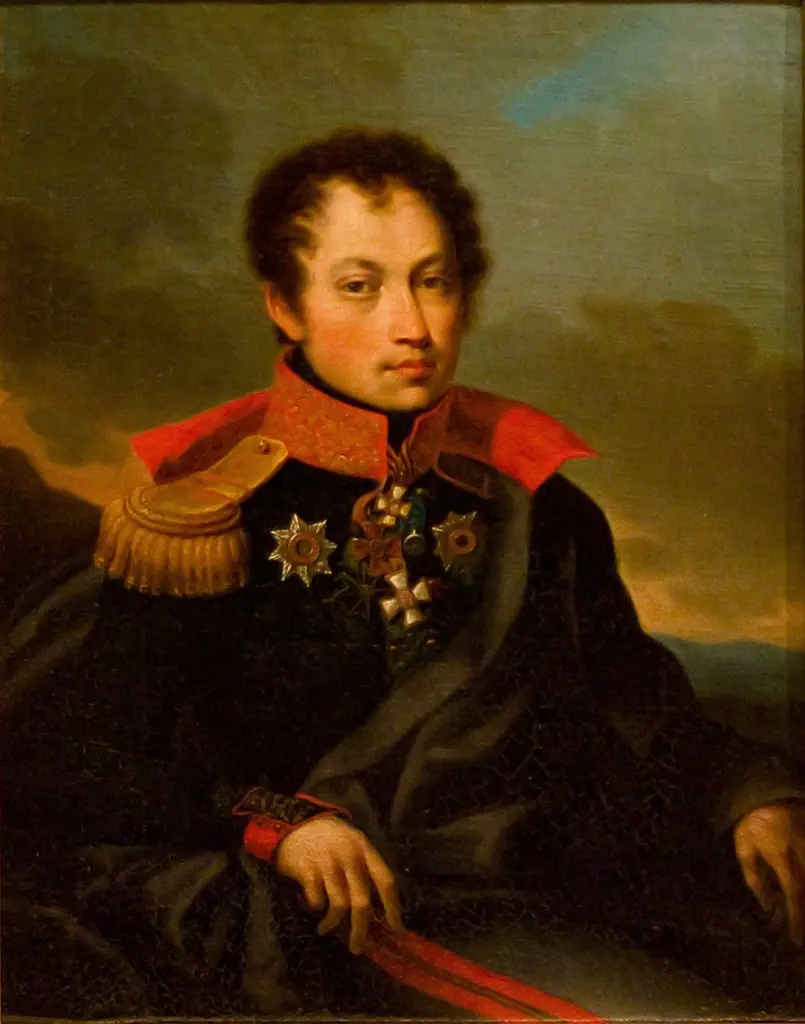 Portrait of Baron G.V. Rosen
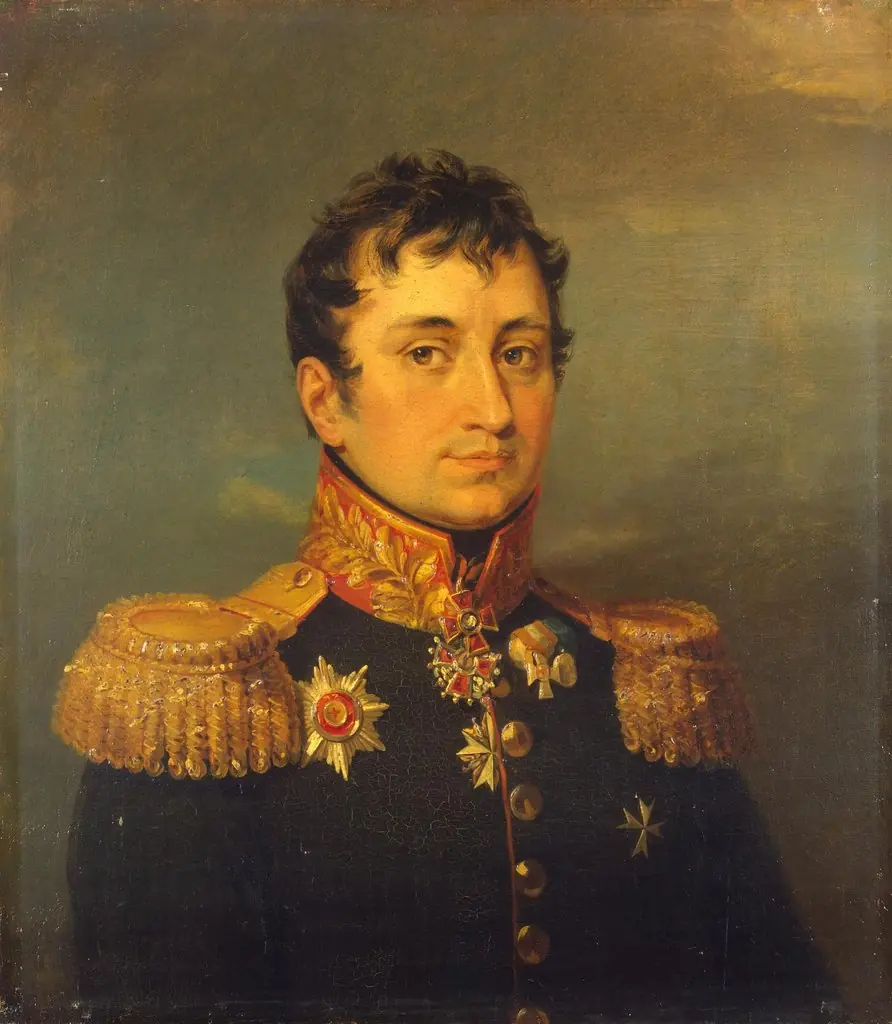 Portrait of Pavel A. Filisov (1769-1821)
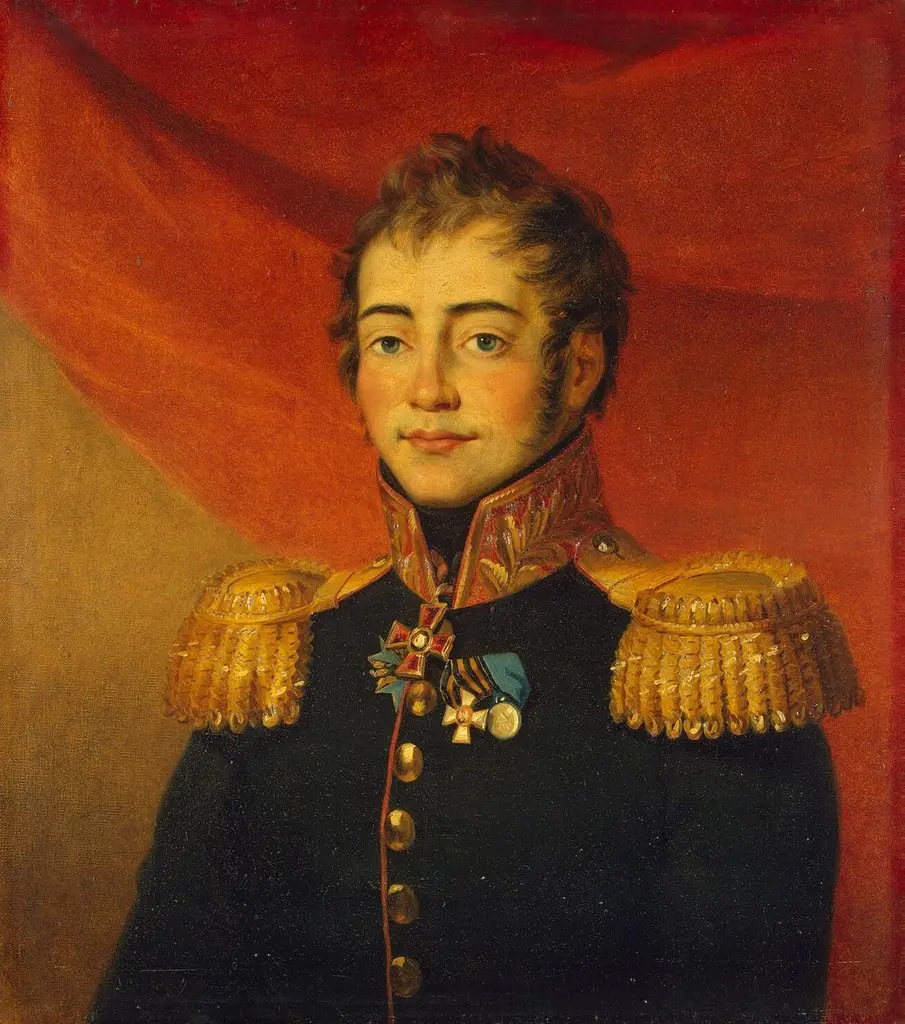 Portrait of Dmitry P. Lyapunov (1775-1821)
 Portrait of Fyodor V. Driesen (1781-1851)
 Portrait of Grigory V. Rosen (1782-1841) (1st)
 Portrait of Alexey S. Kologrivov (1776-1818)
 Portrait of Dmitry P. Rezvy (1762-1823)
 Portrait of Ivan F. Udom (1769-1821) (1st)