Artwork
The Last Supper
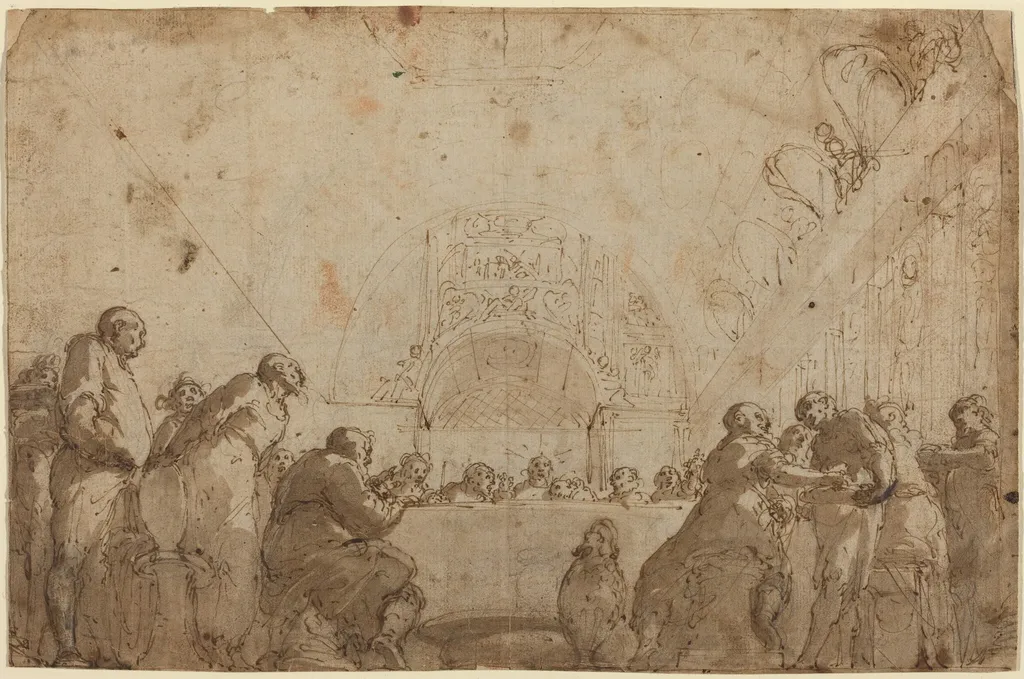
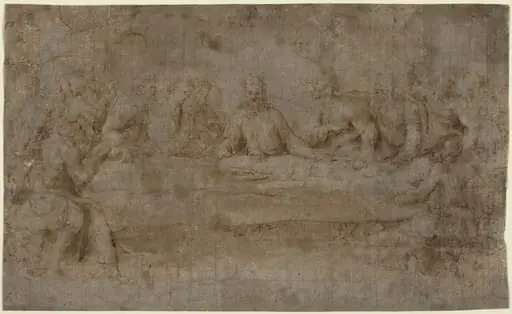
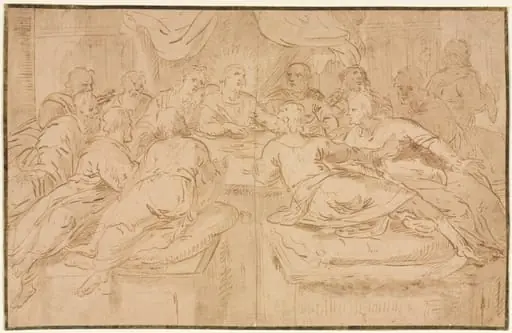
The Last Supper is an ink drawing by the Baroque artist Giulio Benso. It dates from 1634 and is held in the collection of the National Gallery of Art.
About this work
Overview
Executed in pen and brown ink with wash, it is a preparatory study that captures the emotional intensity of the scene.
Created in 1634, this drawing by Giulio Benso depicts the moment of Christ’s announcement at the Last Supper. Executed in pen and brown ink with wash, it is a preparatory study that captures the emotional intensity of the scene. The work reflects Benso’s engagement with contemporary religious narratives and his interest in dynamic composition, typical of early Baroque draftsmanship in northern Italy.
Subject & Meaning
The scene portrays Christ at the far end of a table, addressing his disciples, who react with varied expressions of shock, disbelief, and inquiry. A figure holds a child, suggesting familial presence within the sacred moment. The composition emphasizes human response to divine revelation, aligning with Counter-Reformation ideals that sought to deepen emotional engagement with biblical events through relatable human drama.
Technique & Style
Benso employed loose, rapid pen strokes and layered brown washes to suggest volume and motion. The shading is fluid, modeling forms without rigid outlines, while architectural elements like columns and a draped curtain frame the scene with theatrical depth. The technique conveys immediacy and emotional tension, characteristic of Baroque draftsmanship that prioritized expressive energy over polished finish.
History & Provenance
The drawing is documented as part of Benso’s known body of preparatory works from the 1630s, likely made for a larger altarpiece or fresco commission that was never completed. It remained in private collections in Piedmont until the 20th century, when it entered a public collection. Its survival as a standalone sheet highlights its value as an autonomous study rather than a mere sketch.
Context
Benso worked in the Piedmont region during a period when religious art was heavily influenced by the Counter-Reformation and the spread of Caravaggisti techniques. His use of chiaroscuro and dramatic grouping reflects broader trends in northern Italian art, where artists adapted the emotional realism of Rome to local devotional needs, often through intimate, rapidly executed drawings.
Legacy
Though Benso is not widely known today, this drawing exemplifies the vitality of regional Baroque draftsmanship. It contributes to understanding how artists outside major centers like Florence or Rome engaged with central religious themes through expressive, economical means. The work remains a testament to the role of preparatory studies in shaping devotional imagery of the era.
Artist & collection


 The Last Supper
 Christ among the Doctors
 Last Supper
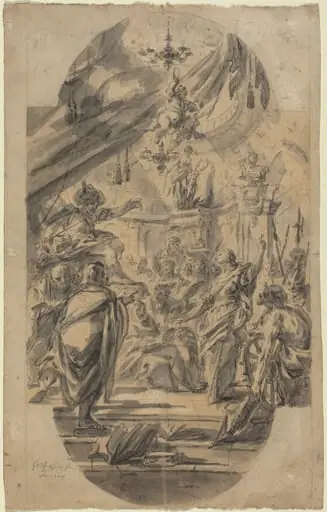 The Disputation of Saint Catherine of Alexandria
![Presentation of the Virgin in the Temple [verso], by Antonio Zanchi](https://artifactworldgallery.com/img/antonio-zanchi--presentation-of-the-virgin-in-the-temple-verso--450080eaf8685583-w320.webp) Presentation of the Virgin in the Temple [verso]
Presentation of the Virgin in the Temple [verso]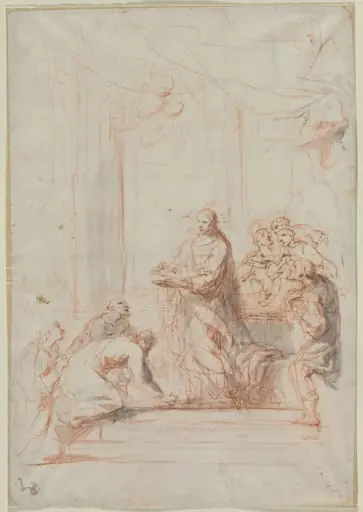 Christ Administering the Host
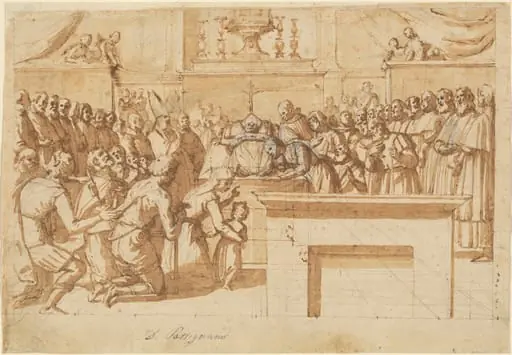 The Veneration of St. Atto’s Miraculously Preserved Body
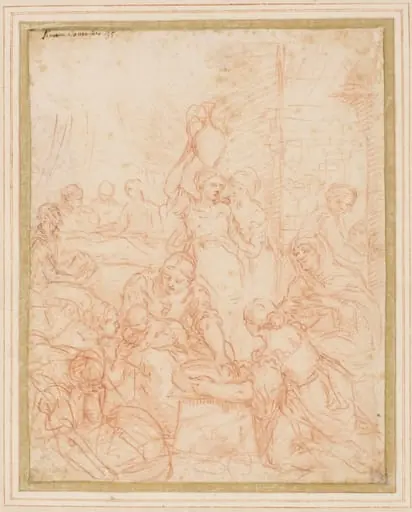 The Birth of the Virgin
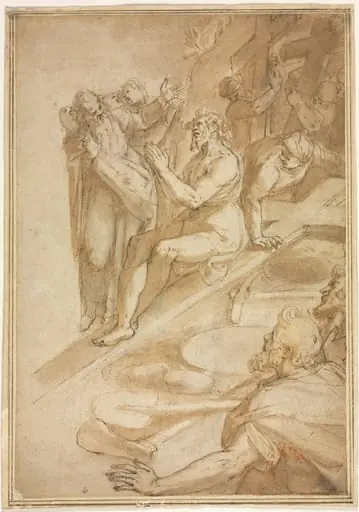 The Verification of the True Cross
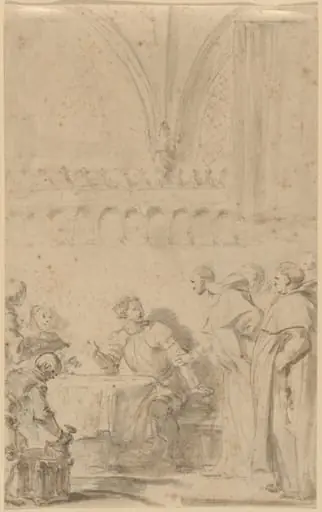 Rinaldo is Welcomed by the Monks
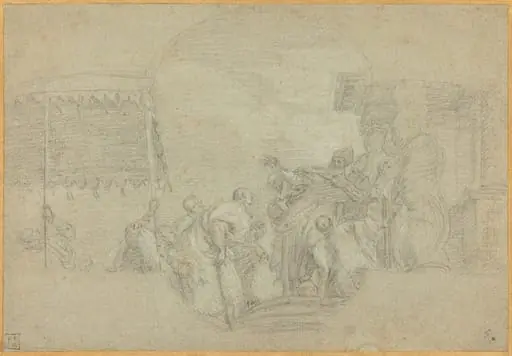 A Bishop Blessing a King
![The Adoration of the Magi [recto], by Donato Creti](https://artifactworldgallery.com/img/donato-creti--the-adoration-of-the-magi-recto--2cfd5d76b55e821e-w320.webp) The Adoration of the Magi [recto]
The Adoration of the Magi [recto]