Artwork
The Embarkation of Aeneas from the Ceraunian Headland
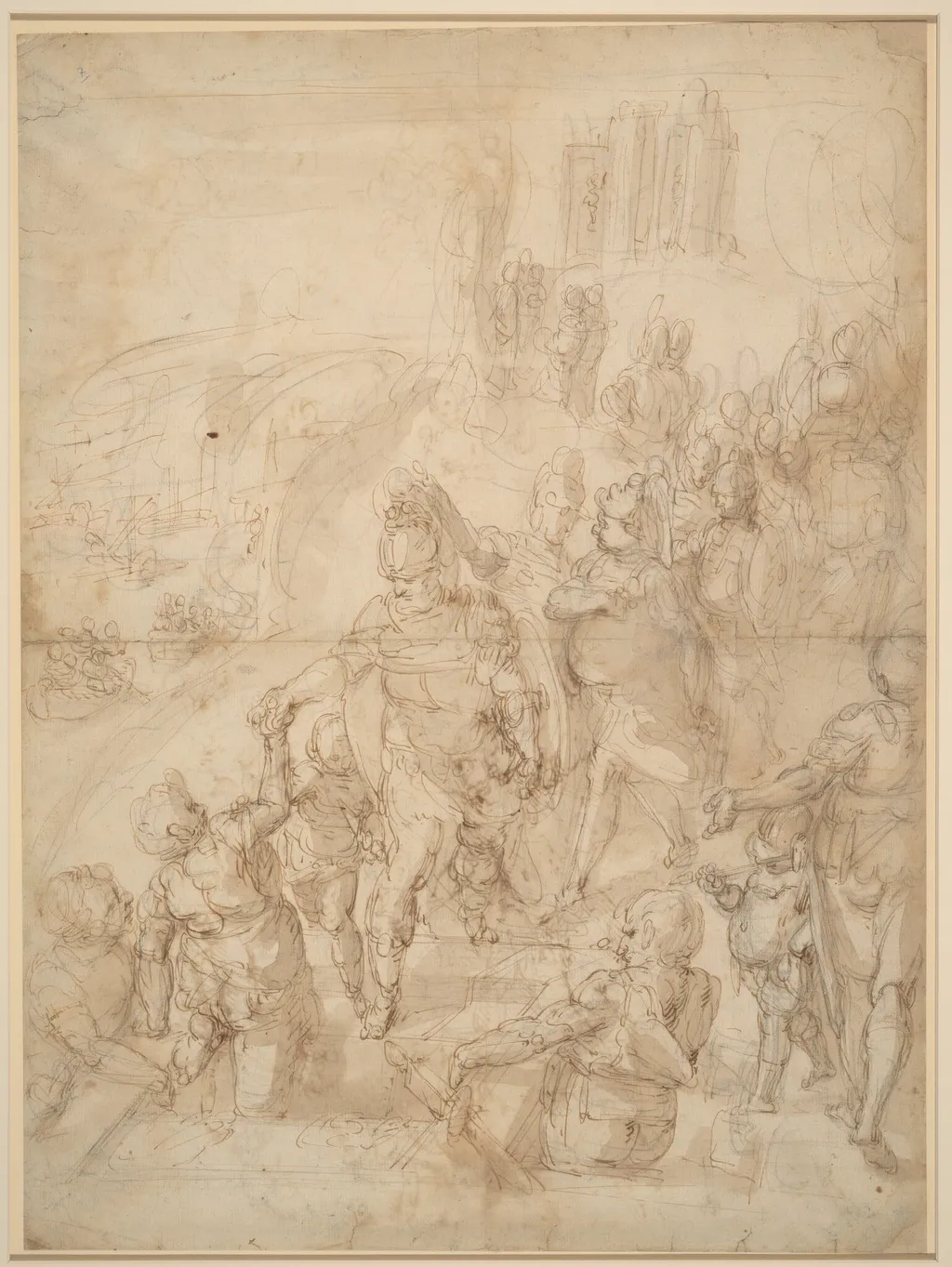
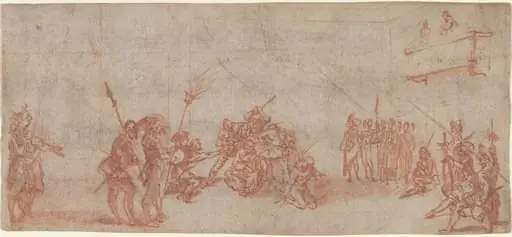
The Embarkation of Aeneas from the Ceraunian Headland is a chalk drawing by the Baroque artist Giulio Benso. It dates from 1644 and is held in the collection of the National Gallery of Art.
About this work
Overview
This drawing, executed in 1644, is attributed to Giulio Benso and depicts a narrative moment from classical mythology. Rendered in pen and brown ink with wash over black chalk, the composition captures a dynamic scene of departure. The medium’s fluidity allows for both precision and spontaneity, reflecting the artist’s engagement with the subject’s emotional and physical urgency.
Subject & Meaning
The composition conveys both the haste of the moment and the weight of exile, linking personal and mythological narratives.
The scene illustrates Aeneas’ departure from the Ceraunian Headland, a pivotal episode in Virgil’s *Aeneid*. Figures are arranged in various states of motion—some standing, others kneeling—while a central figure cradles a child, underscoring themes of displacement and familial duty. The composition conveys both the haste of the moment and the weight of exile, linking personal and mythological narratives.
Technique & Style
Benso employs loose, rapid strokes to suggest movement, with cross-hatching and layered washes building depth and volume. The interplay of black chalk underdrawing and brown ink creates tonal variation, enhancing the figures’ three-dimensionality. Shadows and textures emerge through dense, overlapping lines, while the aged paper’s warmth subtly influences the drawing’s overall atmosphere.
History & Provenance
Dated 1644, the drawing belongs to a period of sustained interest in classical themes among Genoese artists. Its provenance remains partially documented, though its survival suggests it may have been part of a larger study or preparatory work. The sheet’s condition reflects handling over centuries, with minor discoloration and wear consistent with its age.
Context
The work emerges from a cultural milieu where classical antiquity served as a moral and aesthetic foundation. Benso’s interpretation aligns with contemporary efforts to dramatize mythological episodes through expressive figuration. The drawing’s sketch-like quality may indicate its role in a larger creative process, possibly for a painting or fresco that has since been lost or unidentified.
Artist & collection


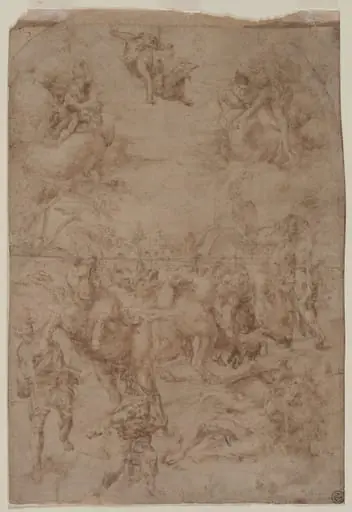 The Conversion of St. Paul
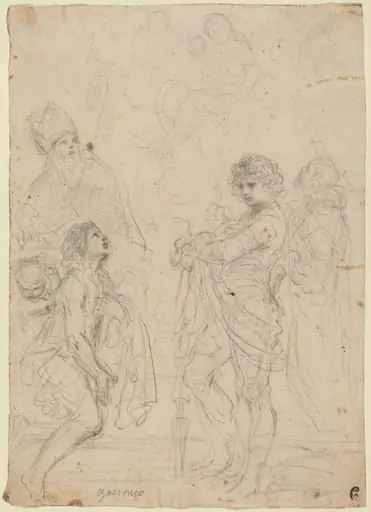 Madonna and Child with Saints Gimignano, John the Baptist, George and Peter Martyr
![Studies for Judith and Holofernes, David and Goliath, The Finding of Moses, and Others [recto], by Veronese](https://artifactworldgallery.com/img/veronese--studies-for-judith-and-holofernes-david-and-goliath-the-find--e7509a7c8dd48fbb-w320.webp) Studies for Judith and Holofernes, David and Goliath, The Finding of Moses, and Others [recto]
Studies for Judith and Holofernes, David and Goliath, The Finding of Moses, and Others [recto]![Jael and Cisera? [verso], by Parmigianino](https://artifactworldgallery.com/img/parmigianino--jael-and-cisera-verso--59c94a4b5c5290be-w320.webp) Jael and Cisera? [verso]
Jael and Cisera? [verso]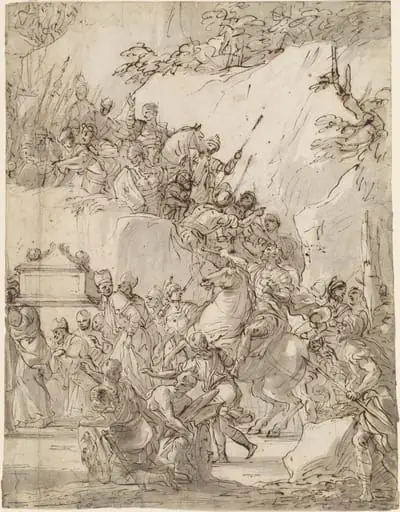 The Transport of the Ark of the Covenant
![Studies for the Rape of the Sabine Women [verso], by Pirro Ligorio](https://artifactworldgallery.com/img/pirro-ligorio--studies-for-the-rape-of-the-sabine-women-verso--b2205f5ea056eb54-w320.webp) Studies for the Rape of the Sabine Women [verso]
Studies for the Rape of the Sabine Women [verso]![The Adoration of the Magi [recto], by Donato Creti](https://artifactworldgallery.com/img/donato-creti--the-adoration-of-the-magi-recto--2cfd5d76b55e821e-w320.webp) The Adoration of the Magi [recto]
The Adoration of the Magi [recto]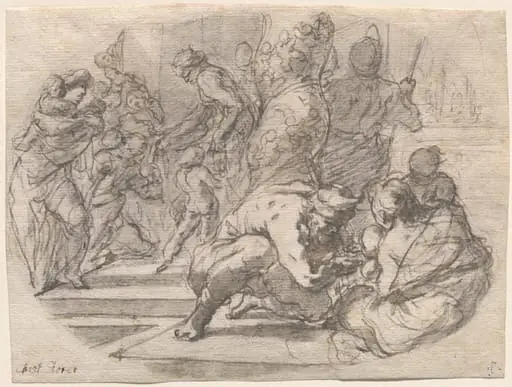 The Generosity of Empress Pulcheria
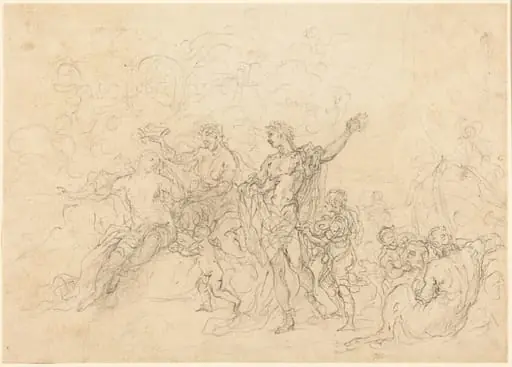 The Marriage of Bacchus and Ariadne
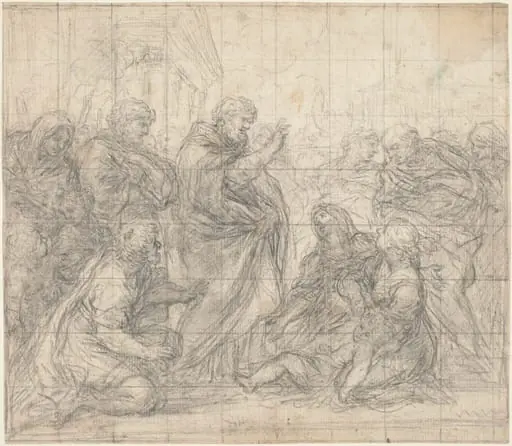 Saint Zenobius Resuscitating a Child
 Christ Crowned with Thorns