Artwork
Therese Klein von Traussenburg, soția maiorului von Kokh
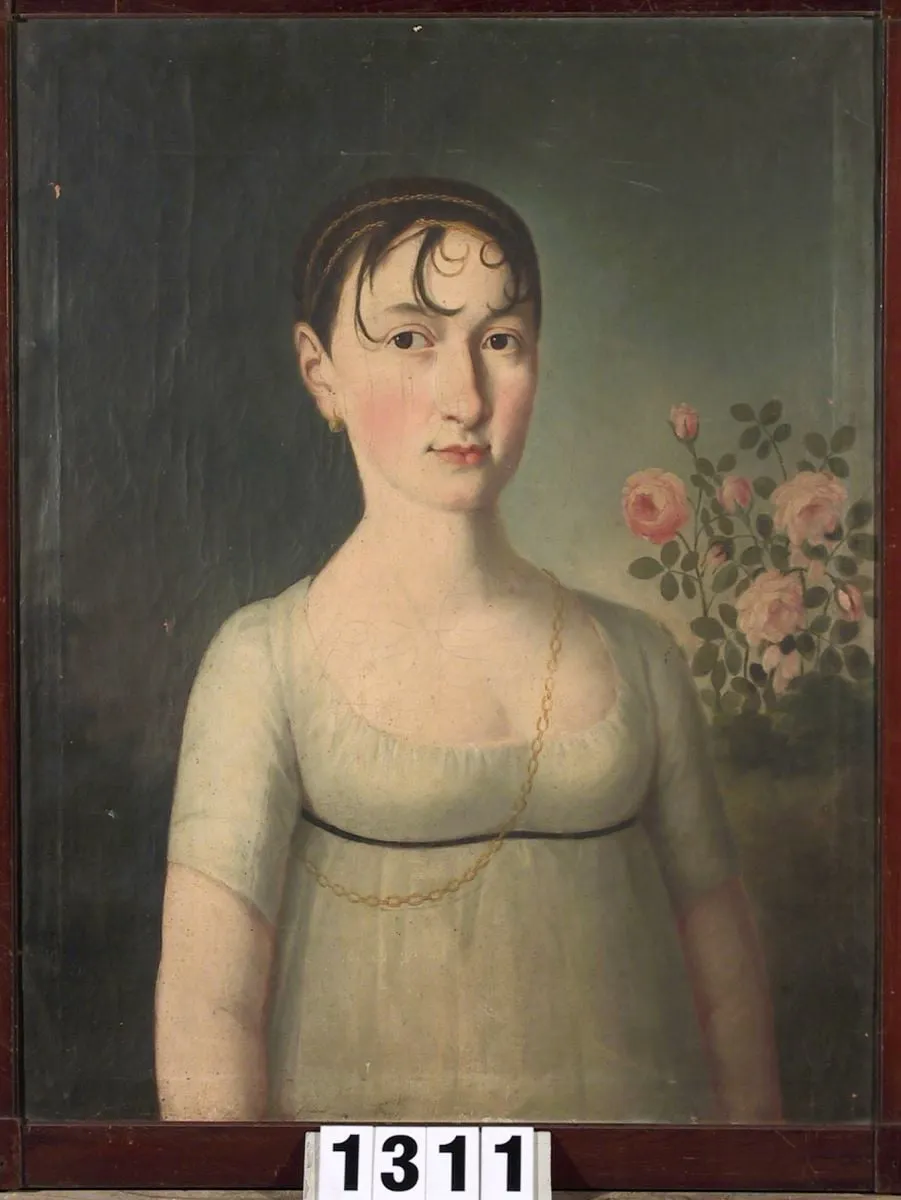
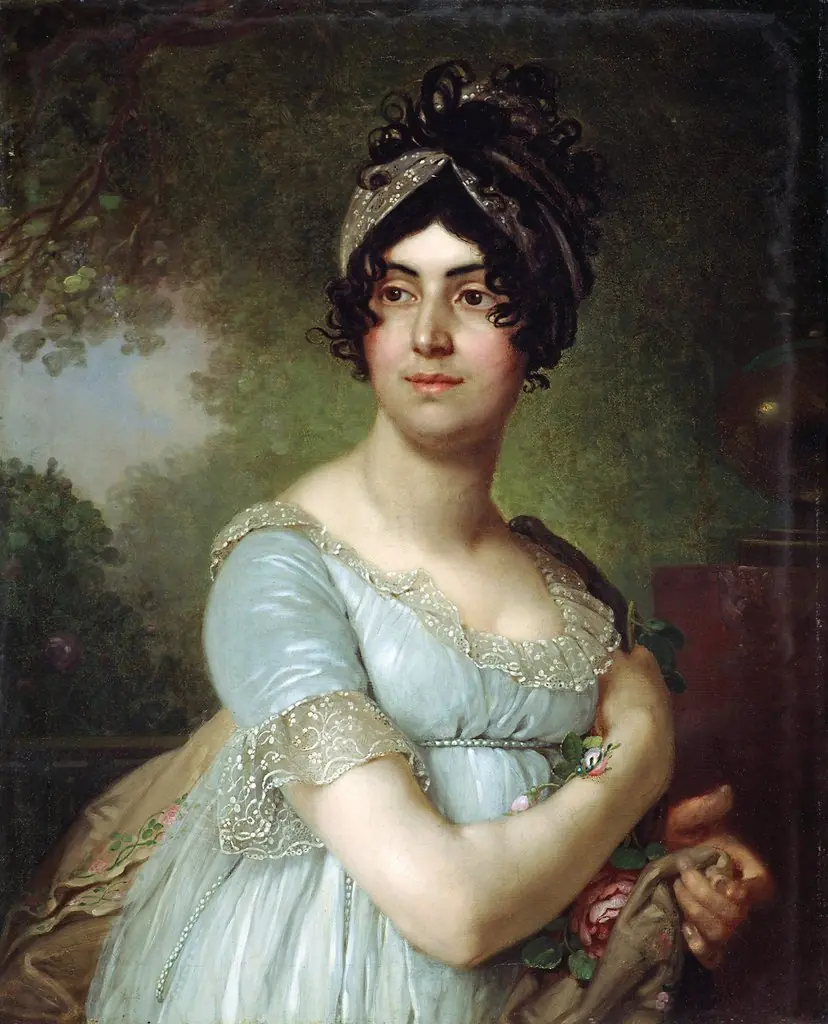
Therese Klein von Traussenburg, soția maiorului von Kokh is a print by Franz Anton Bergmann. It is held in the collection of the Brukenthal National Museum. This portrait depicts Therese Klein von Traussenburg, wife of Major von Kokh, rendered in a restrained palette dominated by muted tones.
About this work
Overview
This portrait depicts Therese Klein von Traussenburg, wife of Major von Kokh, rendered in a restrained palette dominated by muted tones. She stands against a flat green backdrop, her pale dress and minimal jewelry emphasizing simplicity. The only color contrast comes from a small bouquet of pink roses placed behind her, introducing subtle warmth without distraction.
Subject & Meaning
Therese is portrayed with composure and quiet dignity, her neutral expression conveying reserve rather than emotion. The inclusion of roses may reference femininity or domesticity, but their placement behind her suggests symbolic rather than personal significance. The absence of props or elaborate setting focuses attention on her presence alone.
Technique & Style
The artist employs chiaroscuro to model the figure with soft gradations of light and shadow, lending volume to the form without dramatic contrast. The smooth transitions between tones create a sense of quiet realism. The background is deliberately unadorned, reinforcing the portrait’s focus on the sitter’s stillness and containment.
History & Provenance
The painting’s origins trace to the late 18th or early 19th century, likely commissioned by the von Kokh family. Its survival suggests it remained within private collections, though no public records detail its early ownership or exhibition history. The work’s modest scale and intimate scale hint at domestic rather than public display.
Context
In the era of its creation, portraiture among the minor nobility often emphasized restraint and moral steadiness over opulence. Therese’s attire and setting align with ideals of quiet virtue, reflecting a shift away from aristocratic grandeur toward more personal, introspective representations common in Central European circles.
Legacy
The portrait endures as an example of understated civilian portraiture from a period when formal representation was increasingly shaped by individual character rather than social status. Its quiet composition and restrained palette resonate with later 19th-century tendencies toward psychological depth over ceremonial display.
Artist & collection
Artist
Franz Anton Bergmann painted small-scale portraits in oil and print during the late 1700s.

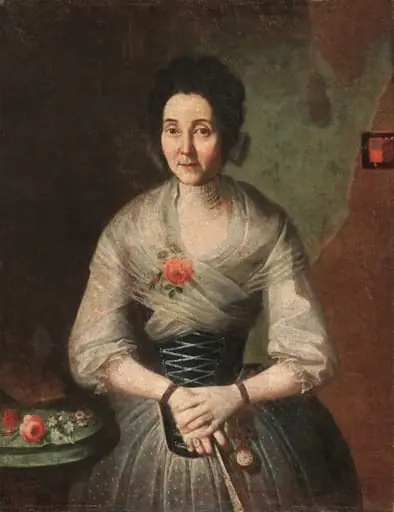
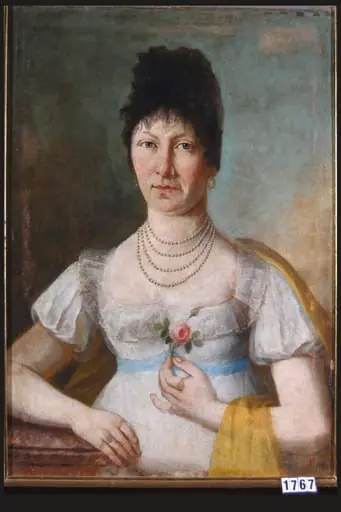
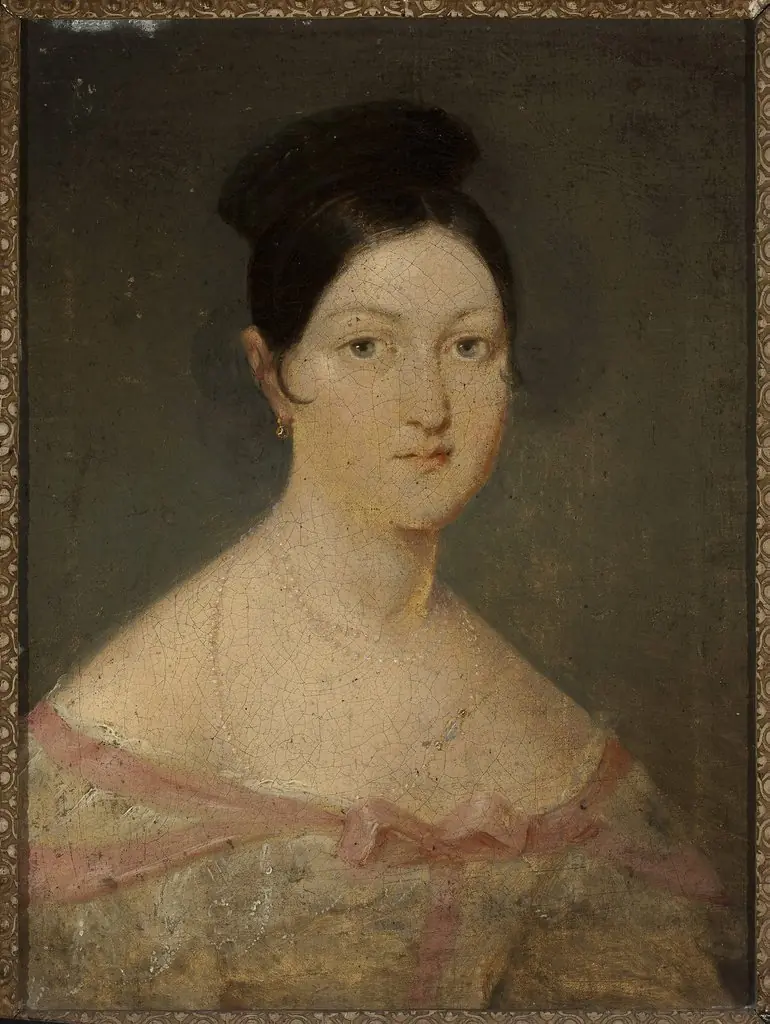 Portrait of a woman
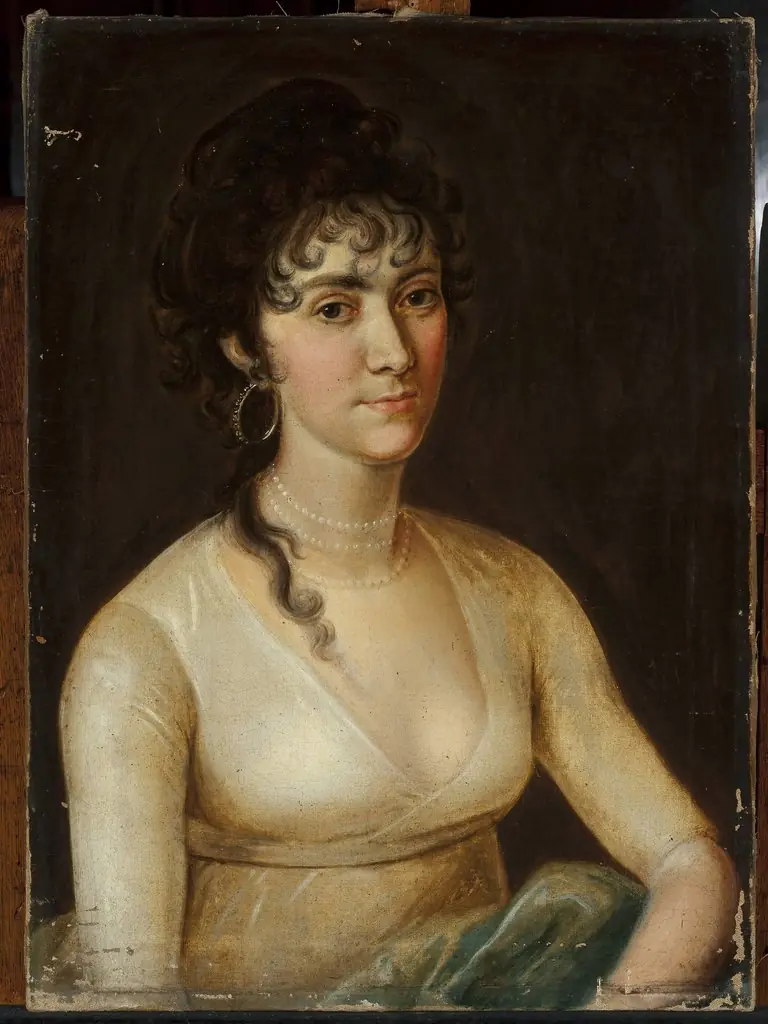 Portrait of Józefa Machan née Layer
 Portrait of Maria Żebrowska née Cieślik
 Portrait of a woman with a veil
 Mary Ann Hardy
 Mrs. Ebenezer Porter (Lucy "Patty" Pierce Merwin)
 Portrait de Claire Élisabeth de Vergennes, Comtesse de Rémusat
 Soția lui Simon Schreiber
 Unknown woman
 Friderike Phillipine Bruch
 Портрет Д.С. Яковлевой