Artwork
Christ in a Mandorla, with the instruments of the Passion, with St. Stephen and St. Lawrence below
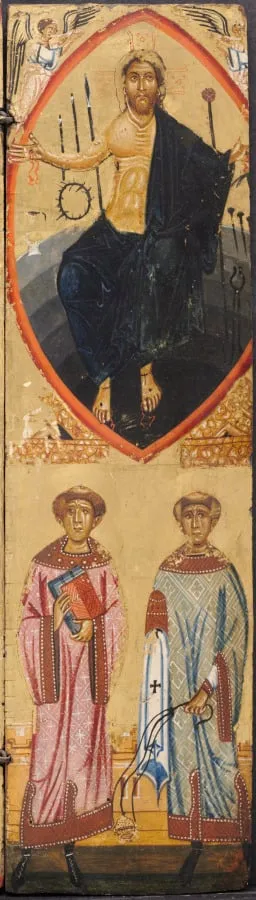
Christ in a Mandorla, with the instruments of the Passion, with St. Stephen and St. Lawrence below is an unspecified painting by the Byzantine icon painting artist Berlinghiero Berlinghieri. It dates from 1234 and is held in the collection of the Cleveland Museum of Art. The work is a compact, three‑panel altarpiece designed for a private devotional setting.
About this work
Overview
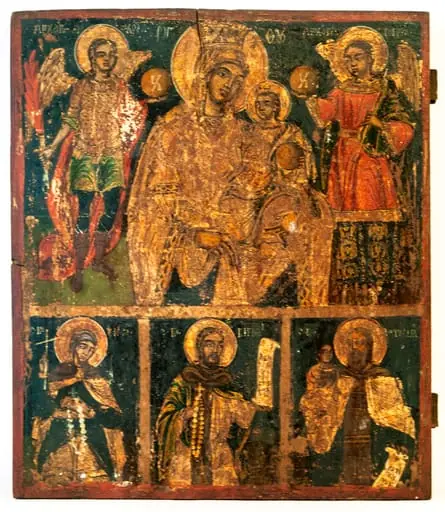
The work is a compact, three‑panel altarpiece designed for a private devotional setting. Its hinged construction allows the panels to be folded for transport, a practical feature for domestic chapels. Central to the composition is the Virgin and Child, surrounded by a group of saints arranged on either side of the piece.
Subject & Meaning
On the left panel, Saint Andrew is depicted on a cross, accompanied below by Saint Francis and Saint Paul. The right panel presents Christ within a mandorla—a luminous almond‑shaped aureole—holding the instruments of his Passion, with Saints Stephen and Lawrence positioned beneath him. The arrangement underscores themes of martyrdom and intercession.
Technique & Style
The figures are rendered with elongated, flowing lines that outline garments and hands, reflecting the influence of Byzantine visual language that spread from Constantinople to Italy during the medieval period. Gold leaf backgrounds and a flattened spatial treatment further emphasize this Eastern aesthetic.
History & Provenance
The altarpiece is attributed to Berlinghiero, one of the earliest Italian painters whose name is documented. Active in Lucca, the principal artistic hub of Tuscany before Siena and Florence rose to prominence, he directed a sizable workshop that included his sons, suggesting a collaborative production environment.
Context
Lucca’s artistic climate in the early thirteenth century favored the integration of Byzantine motifs with emerging local tastes. This piece exemplifies that synthesis, serving private worship while embodying the cross‑cultural exchange that characterized Italian painting of the era.
Artist & collection
Artist
Berlinghiero, also known as Berlinghiero Berlinghieri or Berlinghiero of Lucca (fl.

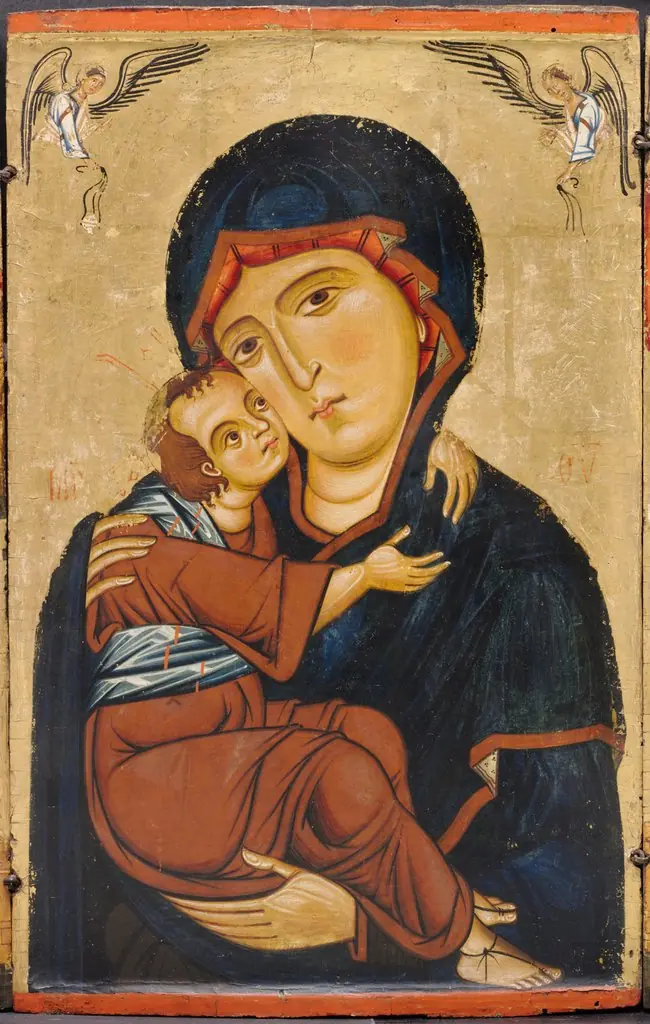 Virgin and Child with Saints
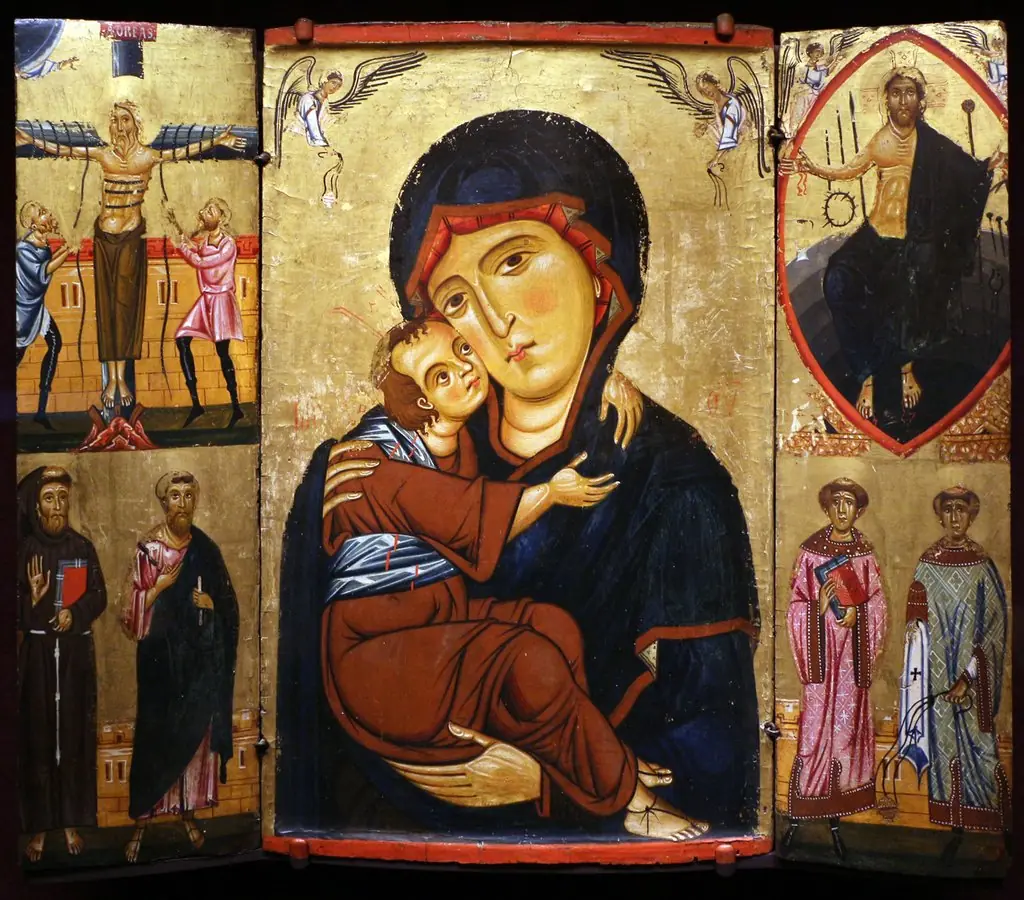 Madonna and Child with Saints
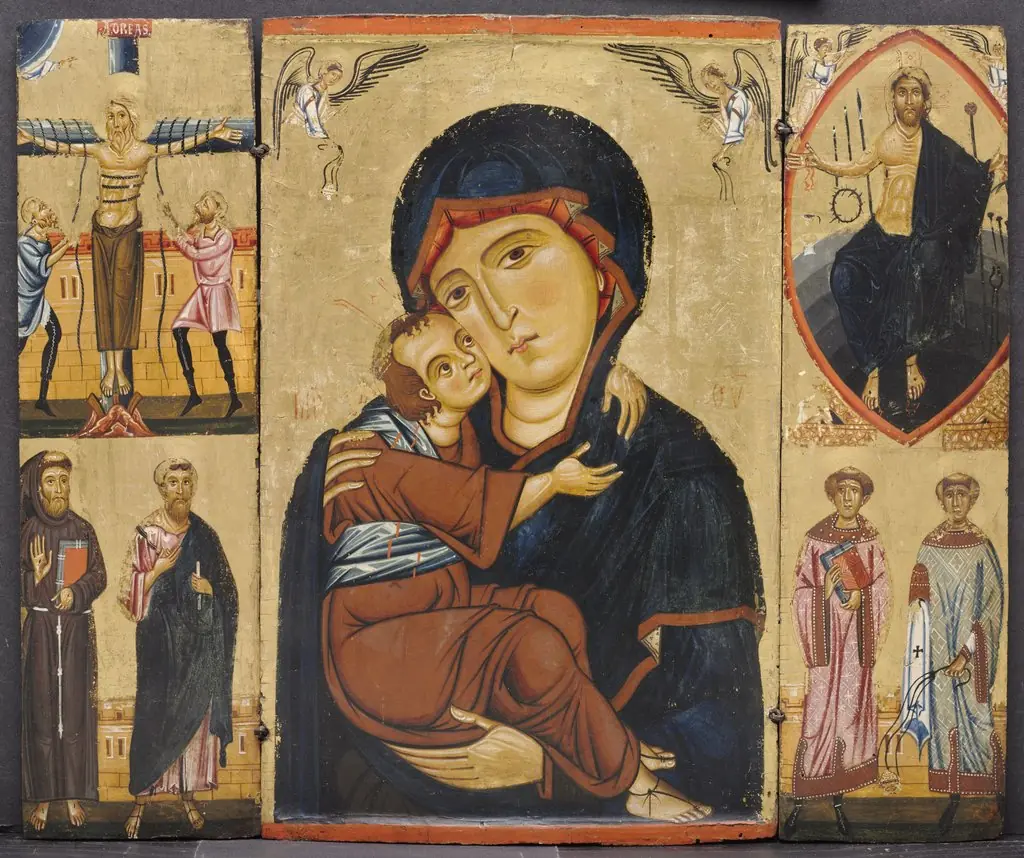 Virgin and Child with Saints
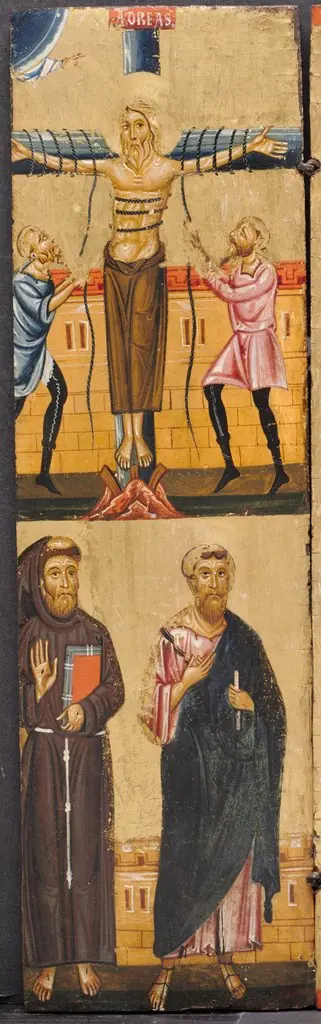 The Crucifixion of St. Andrew, with St. Francis and St. Paul below
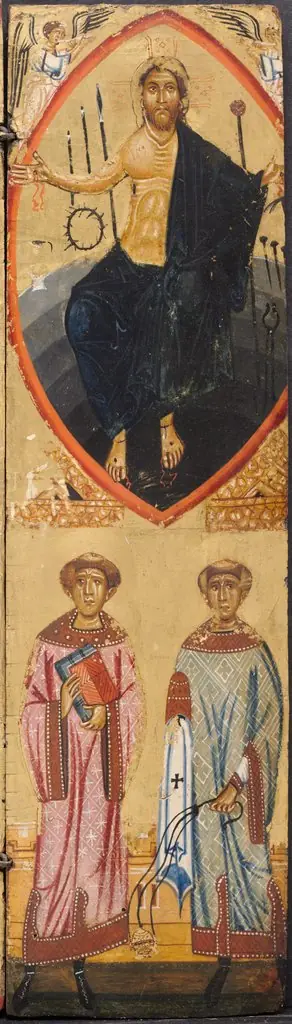 Christ in a Mandorla, with the instruments of the Passion, with St. Stephen and St. Lawrence below
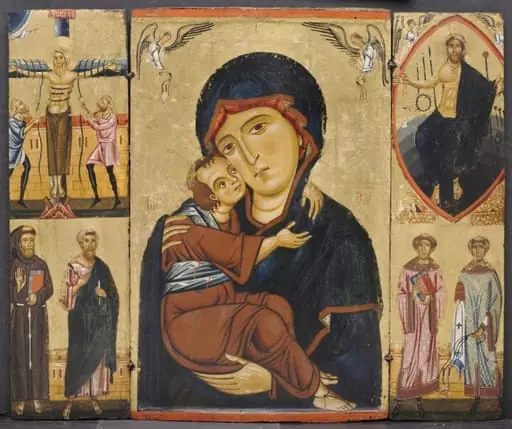 Virgin and Child with Saints
 The Crucifixion of St. Andrew, with St. Francis and St. Paul below
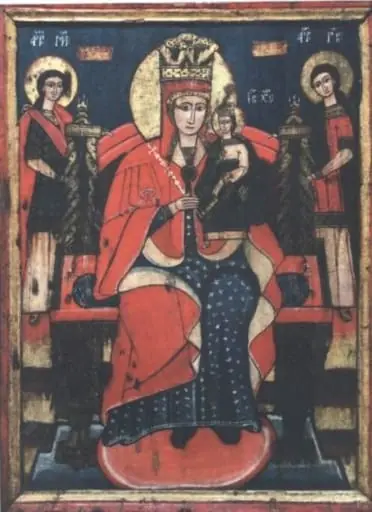 Maica Domnului împărătiță
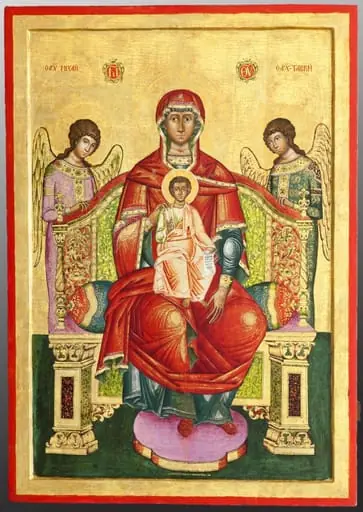 Maica Domnului cu Pruncul - Stăpâna Îngerilor
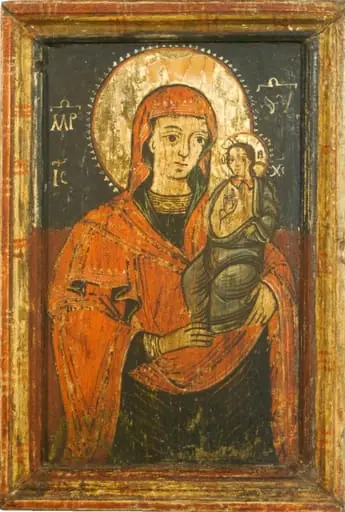 Maica Domnului cu Pruncul
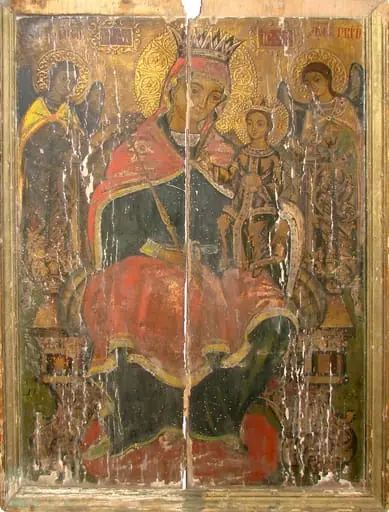 Maica Domnului cu Pruncul
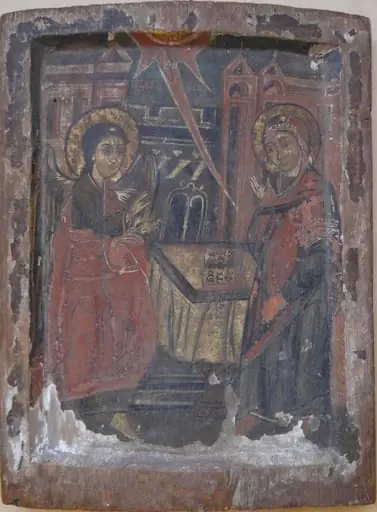 Buna Vestire
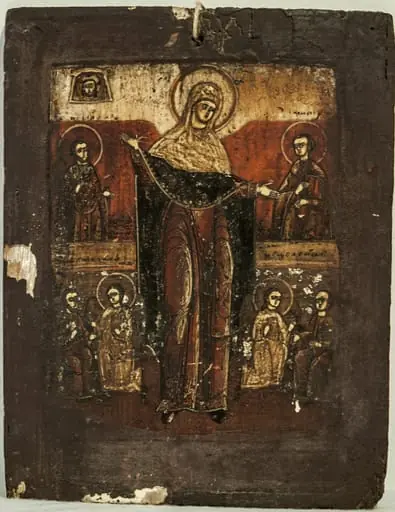 Central , Împărăteasa cerului, Preasfânta Fecioară Născătoare de Dumnezeu, în picioare, cu brațele desfăcute "acoperind pe popor", cu palmele spre privitor,flancată de sfinți. Dumnezeu Iisus Hristos este prezentat în unghiul din partea stângă pe Năframa Veronicăi sau sfântul Keramion, icoana nefăcută de mâna omului. În registrul de jos, arhangheli în fața unor sfinți.inscripțiile cu litere cursive, indescifrabile. Icoana a suferit intervenții, bordura roșiatică a fost acoperită cu o vopsea cafenie. Tema iconografică, se deduce dmai mult din atitudinea Fecioarei. Fond auriu(superior), brun roșcat median, brun închis inferior. Chenarul marginal - pictat mai recent, brun. Cromatica specifică, tonuri de pământ, roșu și brun, în combinație cu ocruri.
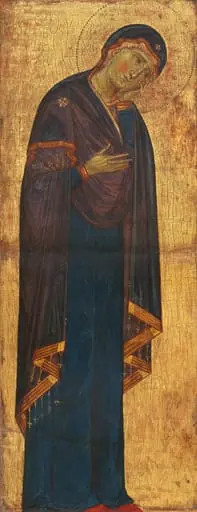 The Mourning Madonna
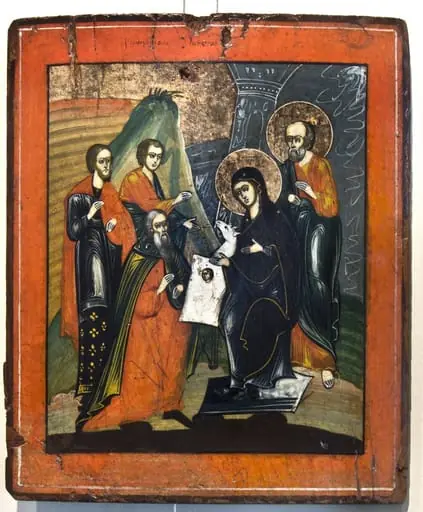 Închinarea Magilor
 Icoașat