Artwork
Maica Domnului împărătiță
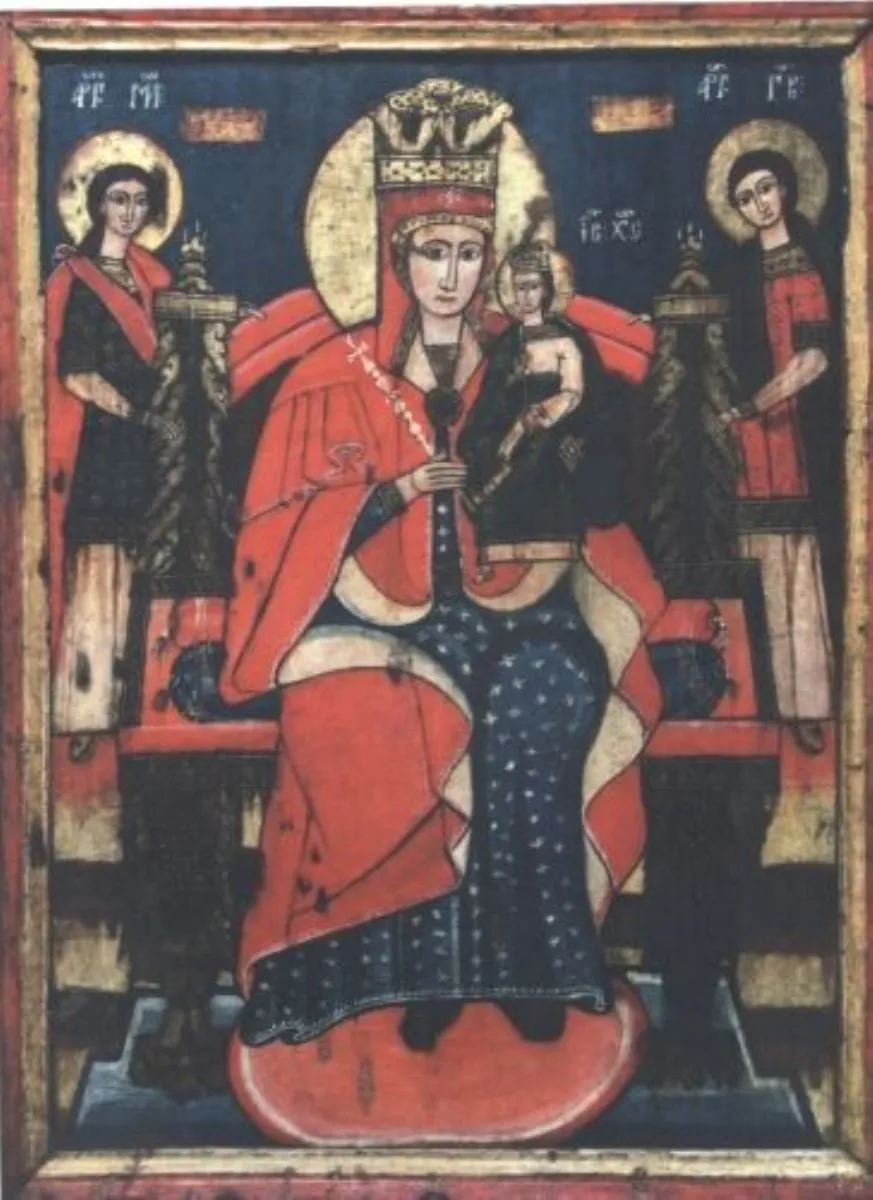
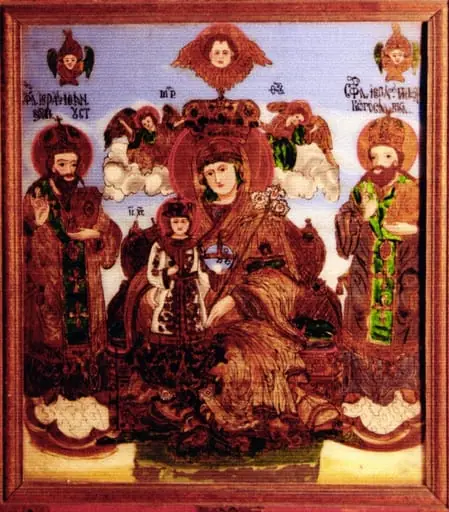
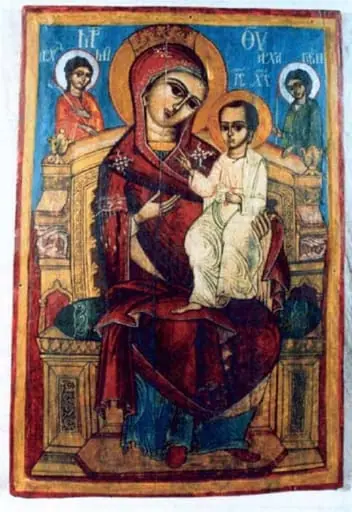
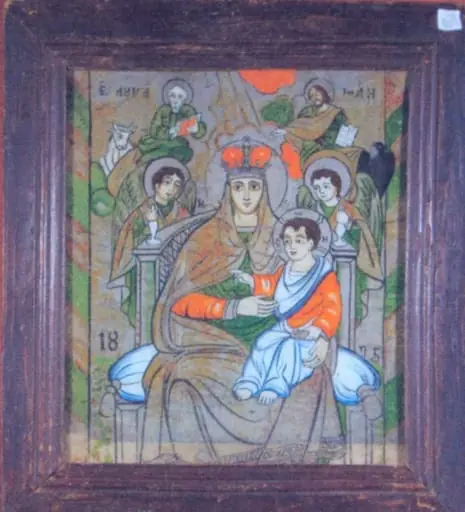
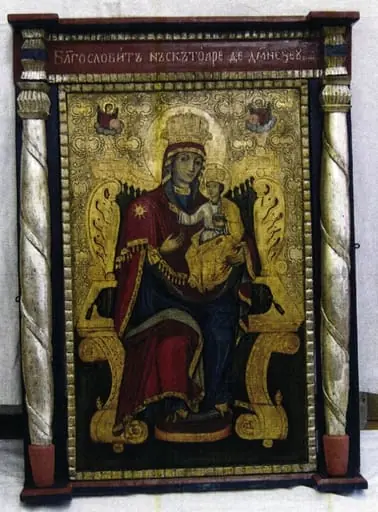
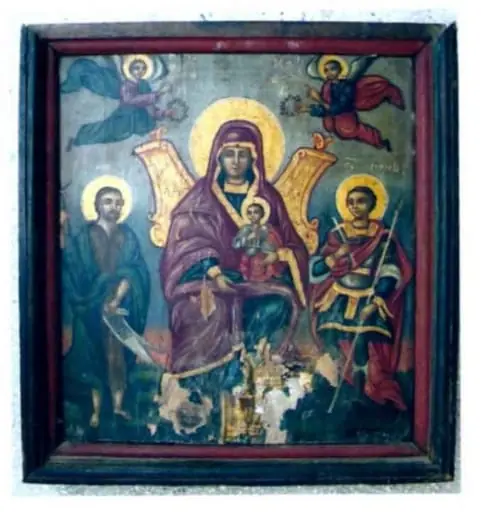
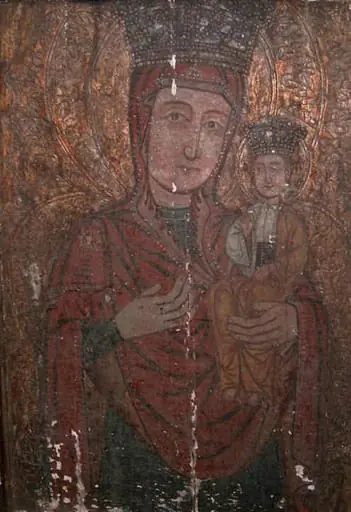
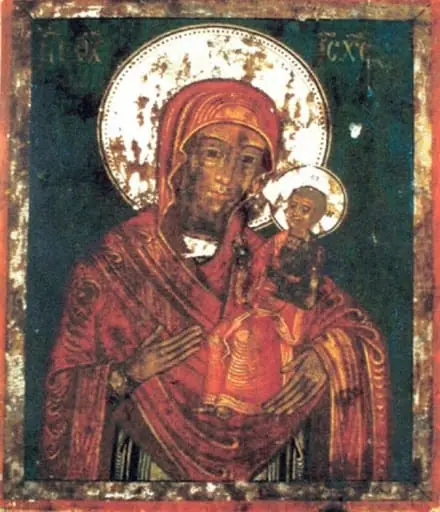
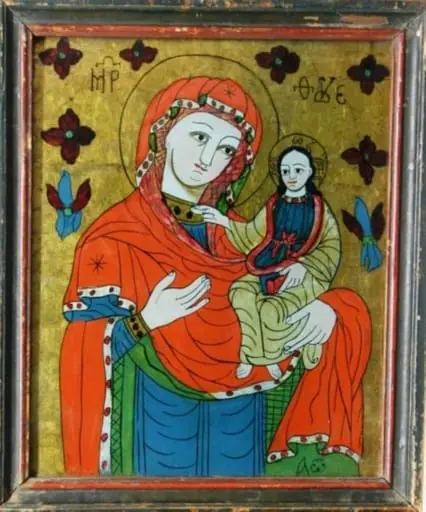
Maica Domnului împărătiță is a drawing by the Romanticist artist Unknown. It dates from 1825 and is held in the collection of the Romanian Peasant Museum. This religious icon depicts the Virgin Mary as the Empress of Heaven, seated centrally in regal attire.
About this work
Overview
The background is a deep blue field adorned with gold inscriptions and ornamental patterns, reinforcing the sacred and imperial nature of the scene.
This religious icon depicts the Virgin Mary as the Empress of Heaven, seated centrally in regal attire. She holds the Christ Child, who gazes directly outward. Flanking her are two angelic figures in crimson robes, crowned and haloed, each bearing a ceremonial staff. The background is a deep blue field adorned with gold inscriptions and ornamental patterns, reinforcing the sacred and imperial nature of the scene.
Subject & Meaning
The Virgin Mary is portrayed not merely as a mother but as the Theotokos, the God-bearer, elevated to celestial sovereignty. Her crown and imperial robes signify divine authority, while the child’s direct gaze connects the viewer to the divine presence. The attendant figures, likely archangels Michael and Gabriel, serve as guardians of the heavenly court, emphasizing her role as intercessor and queen of heaven.
Technique & Style
The painting employs traditional Byzantine iconography with flat, frontal composition and symbolic color use. Rich reds and golds denote divinity and royalty; the dark blue mantle with gold stars alludes to the heavens. Facial expressions are serene and stylized, avoiding naturalism in favor of spiritual stillness. Gold leaf highlights halos and inscriptions, enhancing luminosity and sacred presence.
History & Provenance
This image belongs to the Eastern Orthodox tradition of Marian veneration, likely produced in the Balkans or Anatolia during the late medieval or early modern period. Such icons were commissioned for churches or private devotion, often by monastic communities or noble patrons. Its preservation suggests continued liturgical use and reverence across generations.
Context
In Orthodox theology, Mary’s role as Empress reflects her unique position in salvation history—both human and exalted. This iconographic type, known as 'The Queen of Heaven,' emerged in Byzantium and spread across Orthodox regions. Unlike Western depictions, it avoids emotional drama, favoring hierarchical order and symbolic clarity to convey theological truths.
Legacy
The icon continues to be replicated in Orthodox churches and homes, maintaining its liturgical function and spiritual significance. Its visual language has influenced regional religious art for centuries, preserving Byzantine aesthetic principles even as political and cultural landscapes changed. It remains a touchstone for devotion and doctrinal identity within Eastern Christianity.
Artist & collection

 Domestic Scene
 Giacomo and Cardinal Marco, investing Andrea, Abbot of San Zeno, with his Benefice
 The Nymph of Fontainebleau
 Portrait of a Woman
 Madonna and Child with Saints in the Enclosed Garden
 Venus and Minerva
 Family Group of Four on Sofa
 Wall painting from Room H of the Villa of P. Fannius Synistor at Boscoreale