Artwork
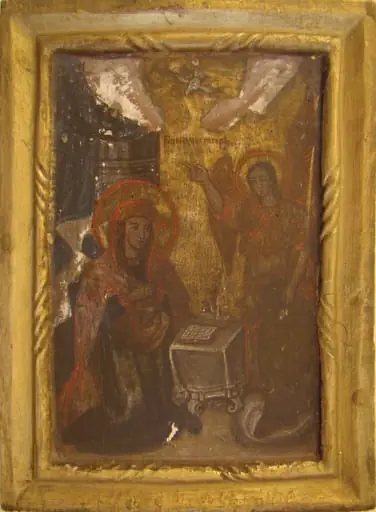
Buna Vestire
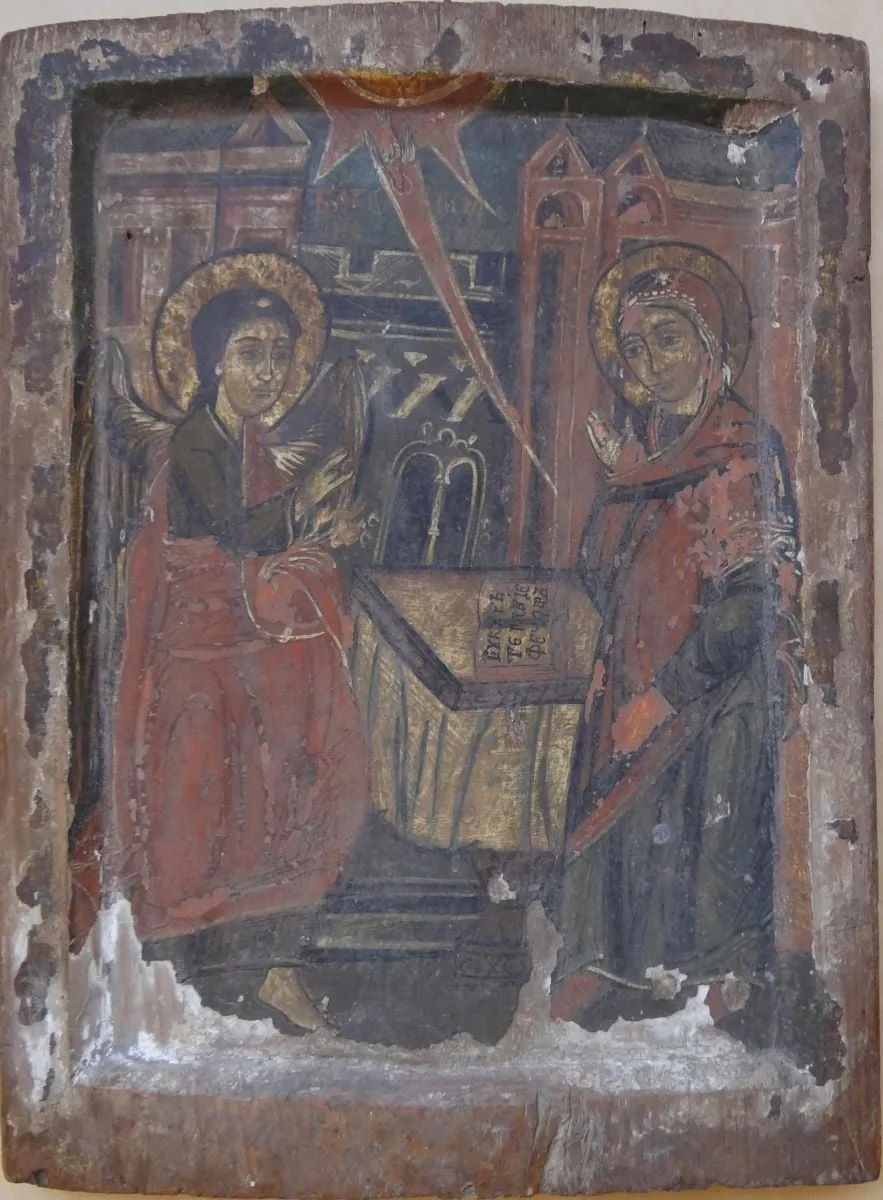
Buna Vestire is an unspecified painting by Gheorghe Tobias din Abrud. It is held in the collection of the Alba Iulia Orthodox Archdiocese. This panel painting depicts two solemn figures seated side by side on a raised dais, framed by a quiet rural landscape.
About this work
Overview
This panel painting depicts two solemn figures seated side by side on a raised dais, framed by a quiet rural landscape.
This panel painting depicts two solemn figures seated side by side on a raised dais, framed by a quiet rural landscape. Their halos and regal attire signal sacred status. The composition is symmetrical and static, emphasizing order and divine presence. The background features a modest town with a church, reinforcing the spiritual context. Colors are vivid but restrained, with gold detailing drawing attention to key symbolic objects.
Subject & Meaning
The left figure, clad in dark robes with a cross, likely represents Christ, while the right, in red and green with a closed book, may be the Virgin Mary. The book, inscribed in gold, suggests sacred text or divine law. Their calm, frontal postures convey authority and eternal presence. The pairing reflects a common devotional theme: the divine pair as mediators between heaven and earth, offering stability and grace to the faithful.
Technique & Style
The figures are rendered with flat, stylized forms and sharp outlines, typical of late medieval iconography. Colors are intense but not blended, creating a decorative, non-naturalistic effect. Gold leaf highlights halos and book lettering, emphasizing holiness. The lack of perspective and minimal depth reinforce the spiritual, otherworldly tone. Brushwork is precise, prioritizing symbolic clarity over realism.
History & Provenance
The work originates from a region where Byzantine and local traditions merged, likely produced in a monastic or workshop setting during the 14th or early 15th century. Its preservation suggests it was venerated in a church or private chapel. No documented ownership before modern times is recorded, but its style aligns with regional icons used in liturgical settings, indicating a devotional rather than decorative purpose.
Context
Created in a period when religious imagery served as a visual scripture for the illiterate, this panel would have been displayed in a sacred space for prayer and contemplation. The formal composition reflects established iconographic conventions, ensuring immediate recognition of holy figures. The inclusion of a church in the background ties the divine presence to the local community, reinforcing faith as both transcendent and immanent.
Legacy
This work exemplifies the enduring influence of Byzantine iconography in Eastern European religious art. Its adherence to traditional forms helped maintain doctrinal consistency across generations. Though later movements favored naturalism, such panels remained in use in rural churches well into the modern era, preserving a visual language of devotion that connected communities to a shared spiritual heritage.
Artist & collection
Artist
Gheorghe Tobias din Abrud was a Transylvanian monk who doodled saints in the margins of his prayer books.
 Buna Vestire
 Închinarea Magilor
 Botezul lui Iisus
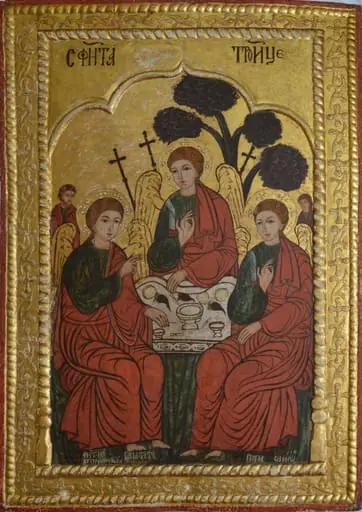
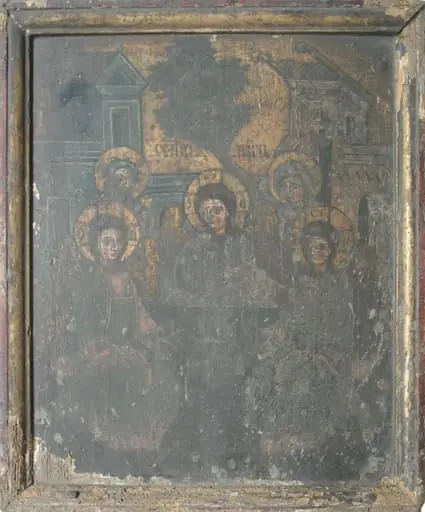 Cina de la Mamvri
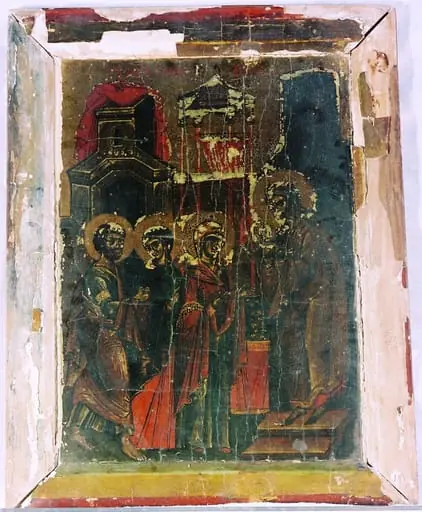 Prezentarea la templu
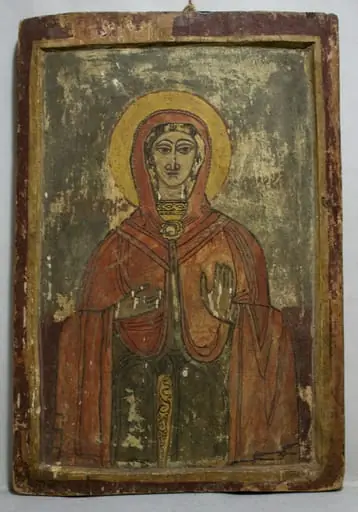 Sfânta Cuvioasă Paraschiva este redată 3/4, frontal, într.o manieră naivă, specific țărănească. Chip oval, trăsăturile feței accentuate, ochii conturați cu negru, privirea îndreptată lateral, scrâncenele mult arcuite, nările mari, gura mică. Mâna stângă o ține la piept, dreapta ridicată în semnde binecuvântare. Înveșmântată cu un maforion roșu pal, cu decorațiuni vagi, albe, stola verde cu galben, porțiune decorată cu motive fitomorfe.Nimb galben cu linia de contur albă. Fond grena în partea de jos, gri în cea superioară. Chenar dublu, galben + grena.
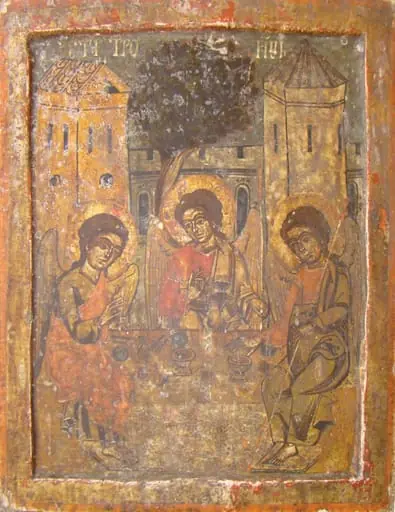 Cina de la Mamvri
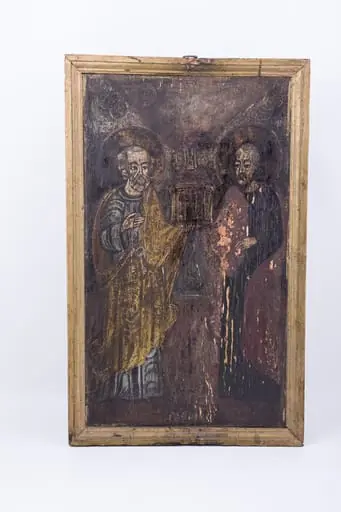 Icoana îi prezintă pe Sfinții Apostoli Petru și Pavel. Sfântul Petru, înveșmântat în verde și roșu, are în mâna dreaptă cheile Împărăției Cerești și în mâna stângă Sfânta Evanghelie. Apostolul Pavel, este înveșmântat în roșu și galben, are sabia și spada Cuvântului. Prezentarea celor doi apostoli este una simetrică și echilibrat-compozițională. Sfinții Apostoli susțin cu mâinile o Biserică, simbolul bisericii apostolice și sobornicești, un chivot sfințit. Chipurile sunt foarte expresive, cu trăsături fine. Cromatica este armonioasă: roșu vermillon, albastru bleu-ciel, brun, galben-ocru, alb, negru. Inscripția este indescifrabilă.