Artwork
Închinarea Magilor
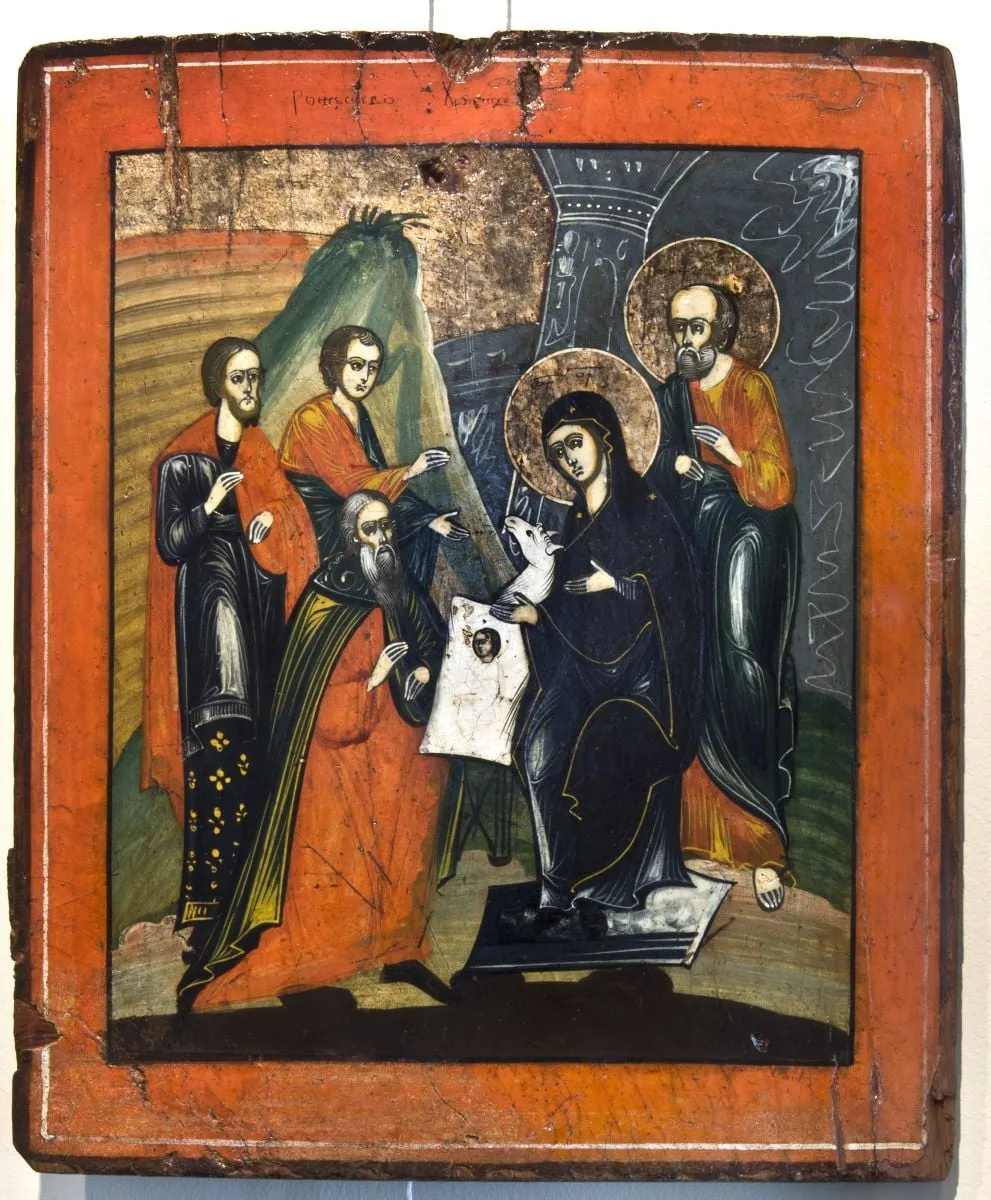
Închinarea Magilor is a drawing by Unknown. It dates from 1850 and is held in the collection of the National Museum of Art of Romania. This work depicts the Adoration of the Magi, rendered in a stylized, non-naturalistic manner typical of late medieval religious art.
About this work
Overview
This work depicts the Adoration of the Magi, rendered in a stylized, non-naturalistic manner typical of late medieval religious art.
This work depicts the Adoration of the Magi, rendered in a stylized, non-naturalistic manner typical of late medieval religious art. Five figures are arranged symmetrically within a shallow, gold-bordered space. The composition emphasizes symbolic presence over spatial depth, with figures rendered in flat planes of color and minimal modeling. The background is subdued, allowing the luminous robes and halos to dominate visually.
Subject & Meaning
The central figure is the Virgin Mary holding the infant Jesus, flanked by two figures with halos, likely angels or divine attendants. The two other figures, dressed in black and orange, represent the Magi offering gifts. Their postures and attire signify their status as foreign dignitaries paying homage. The halos and rich garments affirm the sacred nature of the event, reinforcing its theological significance as the revelation of Christ to the Gentiles.
Technique & Style
The figures are outlined in dark lines and filled with uniform, opaque colors, avoiding gradation or shadow. This flat, decorative approach reflects Byzantine and early Gothic traditions. Gold leaf halos and vivid robes contrast with the muted sky and distant architecture, enhancing spiritual focus. The wear along the edges suggests age and frequent handling, consistent with devotional use in a religious setting.
History & Provenance
Though exact origins are unrecorded, the style and materials point to a late medieval workshop, possibly in Central or Eastern Europe. The use of gold leaf and tempera paint aligns with ecclesiastical panel painting practices of the 14th or 15th century. Its preservation with visible edge wear indicates it was likely displayed in a chapel or private devotional space before entering a collection.
Context
This image belongs to a broader tradition of liturgical art designed to aid contemplation and instruction. In an era of low literacy, such scenes conveyed biblical narratives through symbolic form. The rigid composition and lack of perspective reflect a prioritization of spiritual truth over naturalistic representation, a common feature in pre-Renaissance religious imagery across Europe.
Legacy
The painting exemplifies the enduring influence of medieval iconography on later devotional art. Its stylistic choices—flatness, symbolic color, and hierarchical scale—were gradually replaced by Renaissance naturalism, yet continued to inspire regional traditions. Today, it serves as a tangible link to pre-modern modes of visual theology and the role of art in communal worship.
Artist & collection

 Domestic Scene
 Giacomo and Cardinal Marco, investing Andrea, Abbot of San Zeno, with his Benefice
 The Nymph of Fontainebleau
 Portrait of a Woman
 Madonna and Child with Saints in the Enclosed Garden
 Venus and Minerva
 Family Group of Four on Sofa
 Wall painting from Room H of the Villa of P. Fannius Synistor at Boscoreale
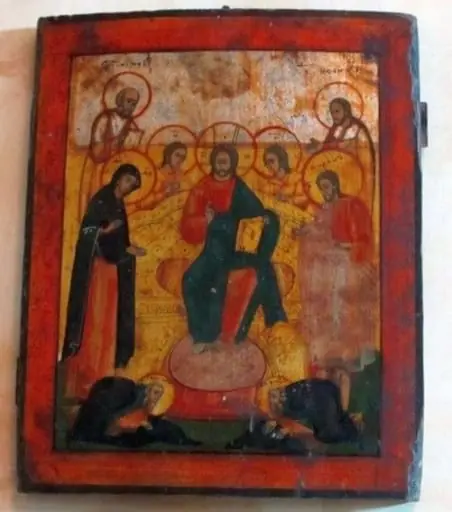 Marea Deisis
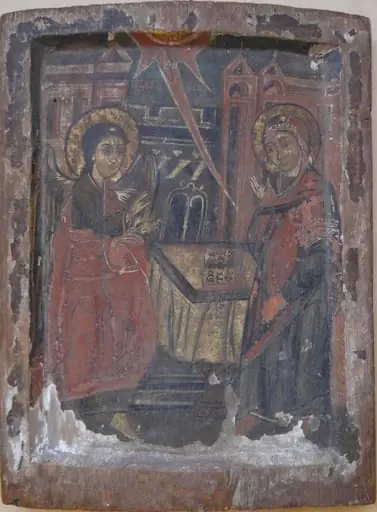 Buna Vestire
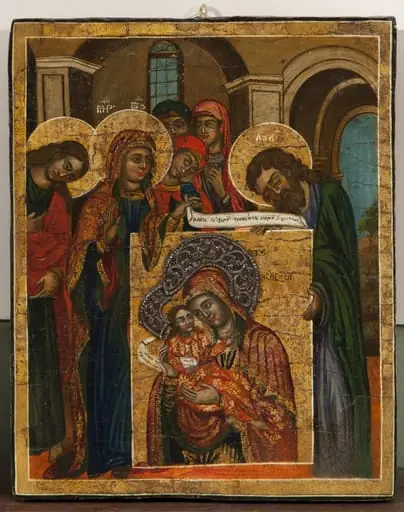 Prezentarea Sfintei Icoane
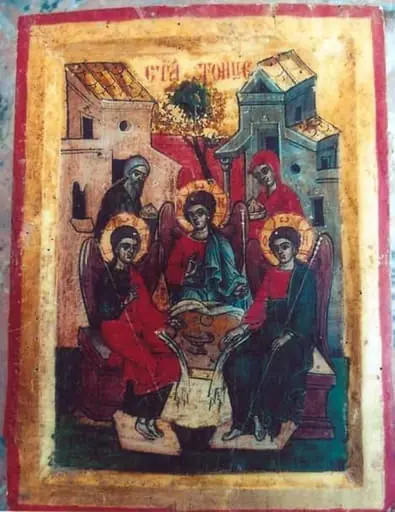 Sfânta Treime, patriarhul Avraam și Sara
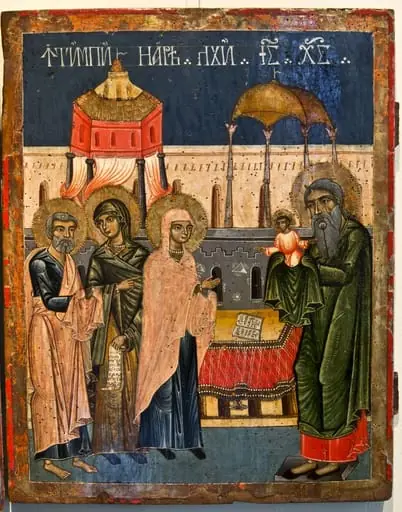 Întâmpinarea Domnului în biserică; Stretenia
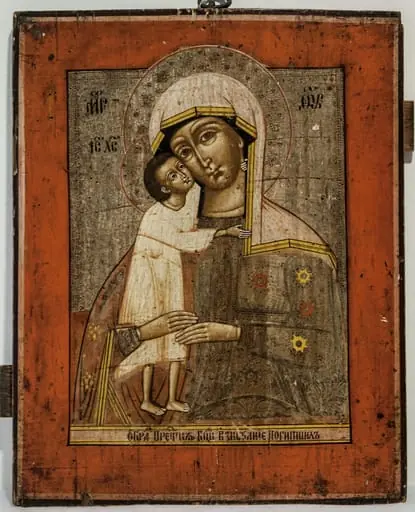 Maica Domnului, tipul Eleusa(dulcea sărutare, Mângâietoarea) îl ține strâns în brațe pe Iisus prunc, în picioare, cu obrazul lipit de cel al Maicii și o mână petrecută pe după gâtul ei. Iisus are nimbul cruciger, marcat cu motive florale punctate, Este înveșmântat într-o tunică 3/4 alb-gălbuie, care lasă să i se vadă picioarele. Maica poartă un maforion alb, bordat cu galben, partea din stânga a veșmântului din foiță metalică, decorată cu motive florale pictate cu roșu și galben, motive fitomorfe și geometrice incizate. În partea dreaptă veșmântul este roșu, decorat cu motive florale de culoare galbenă, foița fiind prezentă doar la mânecă. Nimbul decorat cu motive florale punctate în stratul de foiță metalică, Figurile modelate din culoare (alb, ocru) cu accente grafice fine, albe, sunt specifice icoanei rusești. Cromatica: alb, galben, roșu, auriu, brun, negru, foiță metalică, chenar roșu deschis, mărginit de două linii în nuanțe de roșu deschis și brun.Chenarul interior dublat de două șiruri de cercuri ștanțate în foiță. Inscripția dispusă pe o bandă dreptunghiulară în partea de jops a icoanei : Icoana Preacuratei Fecioare Prevăzând Jertfa (lui Iisus).
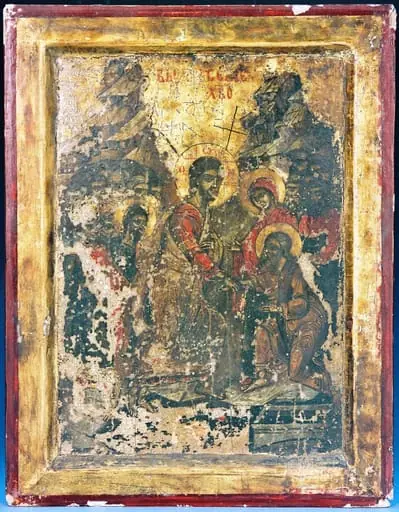 INVIEREA
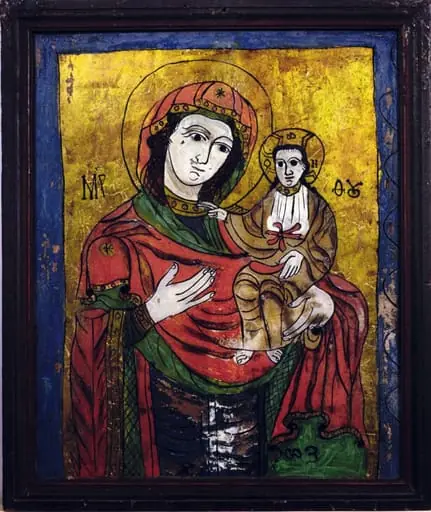 Maica Domnului cu Pruncul
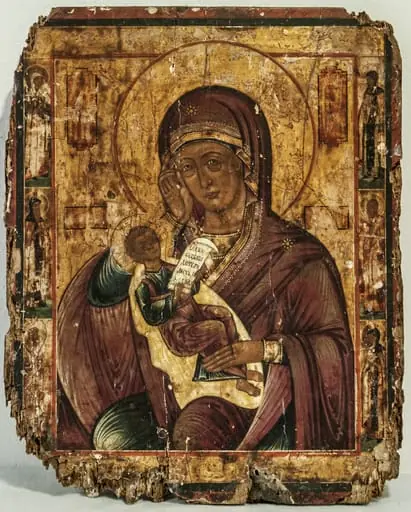 Icoana „Potolește întristările noastre” o înfățișează pe Maica Domnului ținând mâna stângă sub cap, care este ușor înclinat. Aceasta sugerează că Născătoarea de Dumnezeu ascultă lacrimile și rugăciunile tuturor credincioșilor care apelează la ea, în nevoile, necazurile și întristările lor. Cu mâna dreaptă, Fecioara Maria ține Pruncul Iisus. Mântuitorul ține în mâinile Sale un sul desfăcut, pe care sunt înscrise următoarele cuvinte: „Judecați cu dreptate, arătând milă unii față de alții, nu jigniți văduvele și orfanii și nu țineți răutate în inima voastră față de fratele vostru”.Maica este pictată pe fondul foiței aurite, cu o expresie blândă. Înveșmântată cu maforion grena, cu borduri aurite , dublate de o dantelărie fină, albă, pe umeri și frunte stelele întreitei feciorii. Stola verde cu galon lat aurit, la gât și mâneci. Pruncul , culcat în brațele Maicii pe o pânză albă, are o expresie tristă. Picioarele desculțe. Nimb cruciger, cu însemnele consacrate. Nimbul Fecioarei, trasat cu roșu, depășește bordura lată, aurită. Lateral, pe chenar, câte trei sfinți, în picioare. Se poate descifra doar inscripția de pe aureola sfântului Zosim și a sfintei Xenia(stânga). Inscripțiile referitoare la Iisus și Maica Domnului sunt casetate pe fondul aurit. Linia desenului foarte fină, drapajul veșmintelor bogat, cu unele accente de repictare(tușele de alb). Icoana prezintă degradări ale stratului pictural(eroziuni, clacuri, desprinderi, lacune, vernis îmbătrânit) și ale suportului(atac xilofag mai vechi care a fragilizat lemnul)
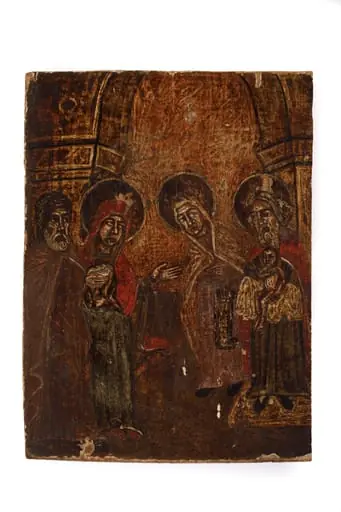 Icoană pictată pe lemn înfățișând scena Întâmpinării Domnului. Sunt reprezentați: Sf. Iosif, Fecioara Maria, Prorocița Ana și Bătrânul Simion, care îl ține pe pruncul Iisus în brațe, pe un scutec, într-un templu, în fața unei arcade. Compoziția este echilibrată prin gruparea personajelor și prin încercarea de simetrie.
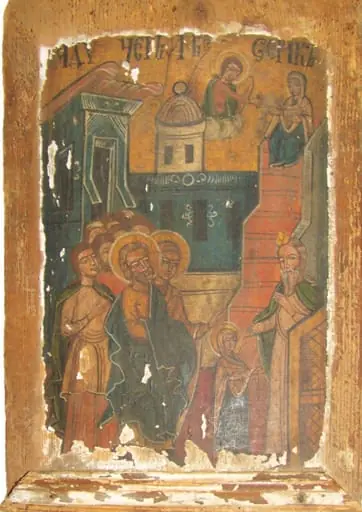 Intrarea în biserică a Maicii Domnului
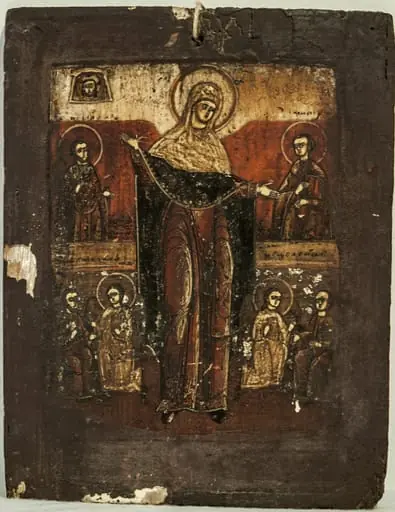 Central , Împărăteasa cerului, Preasfânta Fecioară Născătoare de Dumnezeu, în picioare, cu brațele desfăcute "acoperind pe popor", cu palmele spre privitor,flancată de sfinți. Dumnezeu Iisus Hristos este prezentat în unghiul din partea stângă pe Năframa Veronicăi sau sfântul Keramion, icoana nefăcută de mâna omului. În registrul de jos, arhangheli în fața unor sfinți.inscripțiile cu litere cursive, indescifrabile. Icoana a suferit intervenții, bordura roșiatică a fost acoperită cu o vopsea cafenie. Tema iconografică, se deduce dmai mult din atitudinea Fecioarei. Fond auriu(superior), brun roșcat median, brun închis inferior. Chenarul marginal - pictat mai recent, brun. Cromatica specifică, tonuri de pământ, roșu și brun, în combinație cu ocruri.