Artwork
Knitting Girl on a Dune
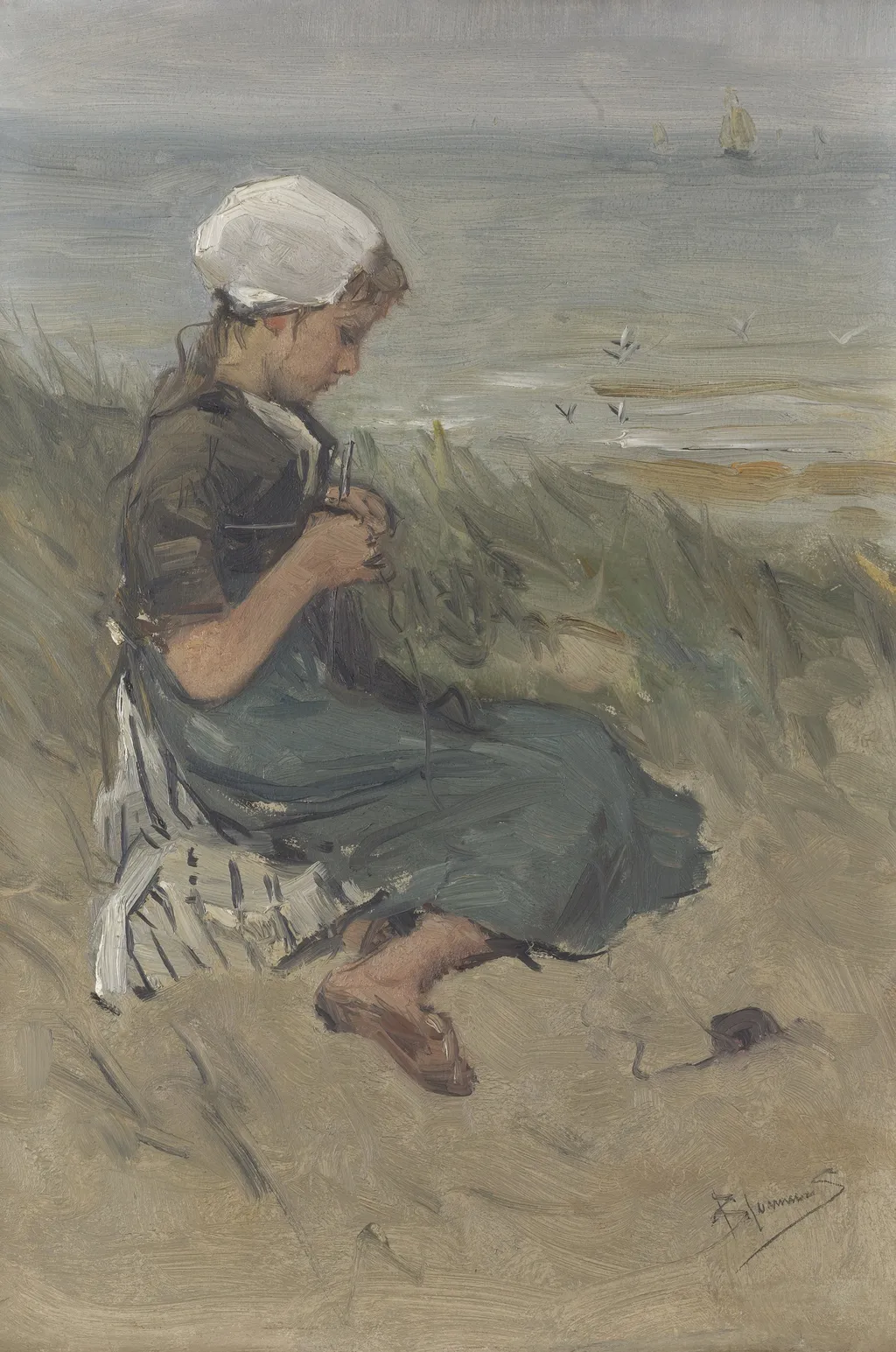
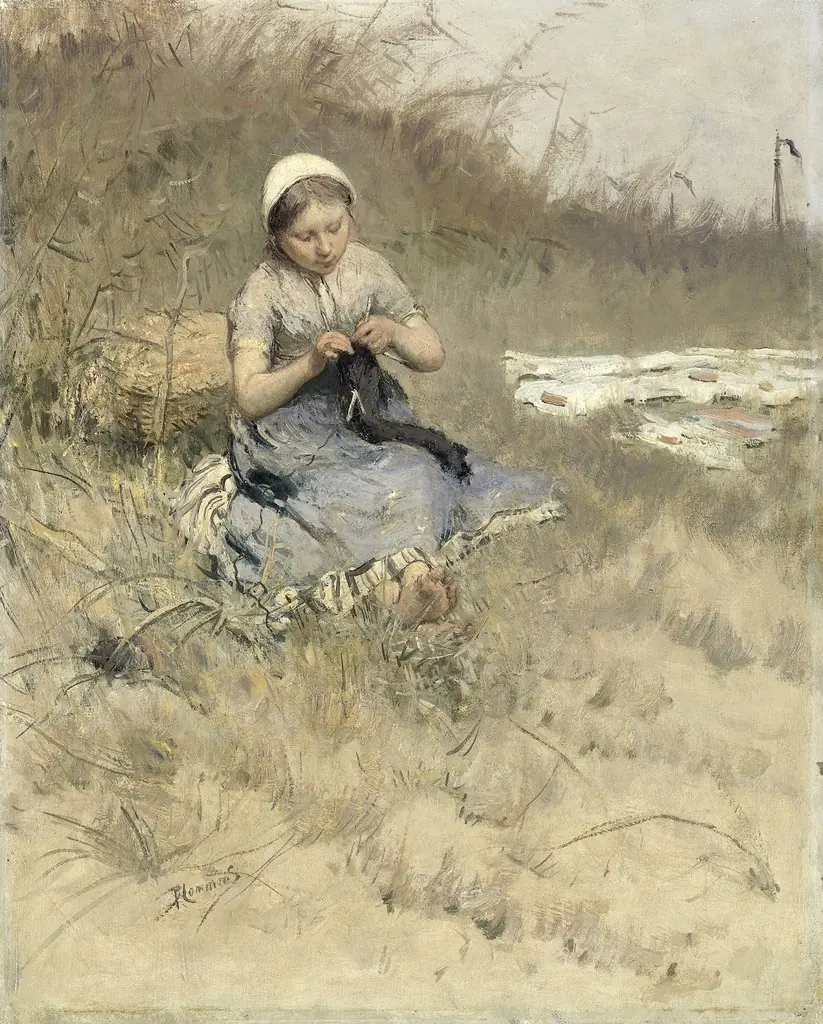
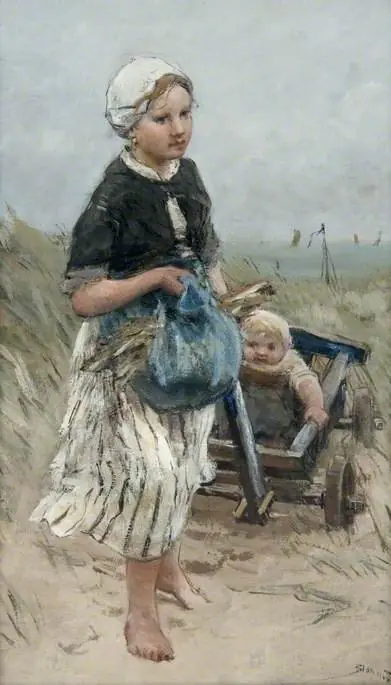
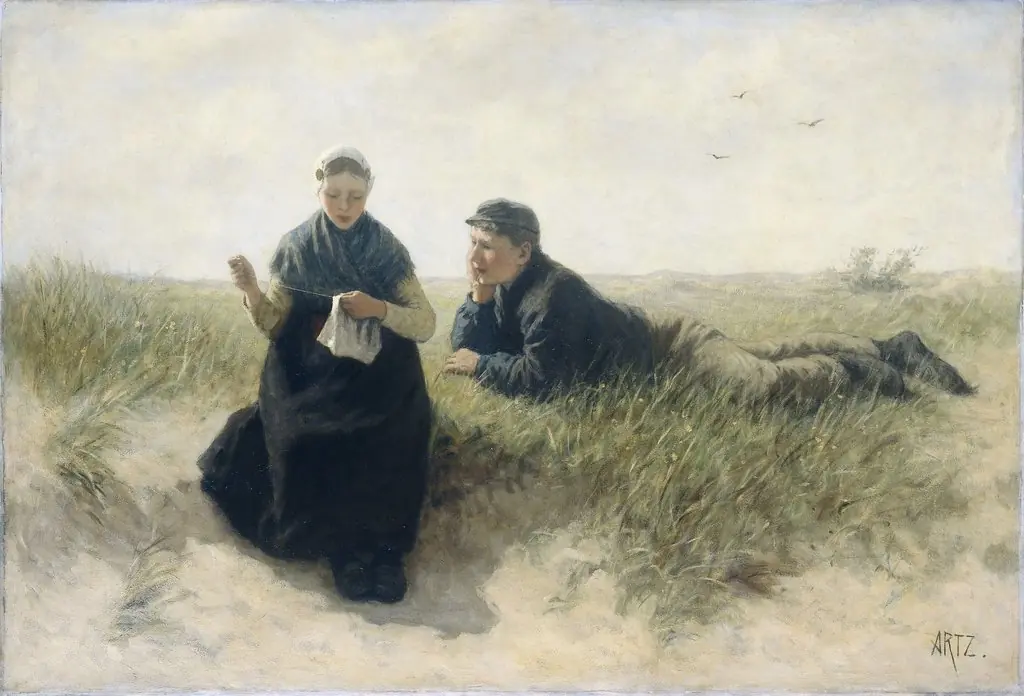
Knitting Girl on a Dune is an oil painting by the Impressionist artist Bernard Blommers. It dates from 1893 and is held in the collection of the Rijksmuseum.
About this work
Overview
Knitting Girl on a Dune is an 1893 oil painting by Bernard Blommers, a Dutch artist linked to the Hague School. The work embodies Impressionist tendencies through its loose brushwork and capture of everyday life set against a natural backdrop.
Subject & Meaning
The painting depicts a serene, everyday scene of a girl engaged in knitting, seated on a grassy dune. Her concentration on the task contrasts with the serene, distant maritime landscape, suggesting a quiet, introspective moment.
Technique & Style
Blommers employed thick, visible brushstrokes, characteristic of Impressionist spontaneity, particularly evident in the girl’s skirt and the textured grass. The use of impasto adds depth, while selective lighting highlights the subject’s face and hands, leaving the surroundings in softer shadow.
History & Provenance
Created in 1893, the painting reflects Blommers’ later style, which shifted towards looser brushwork after initial training at the Hague Akademie and early influences from Jozef Israëls. It is currently part of the Rijksmuseum’s collection.
Context
As part of the Hague School, Blommers contributed to a movement emphasizing everyday Dutch life and landscapes. This work blends genre painting with Impressionist techniques, situating it within the broader European shift towards capturing modern, mundane subjects.
Own this work as a print
Artist & collection
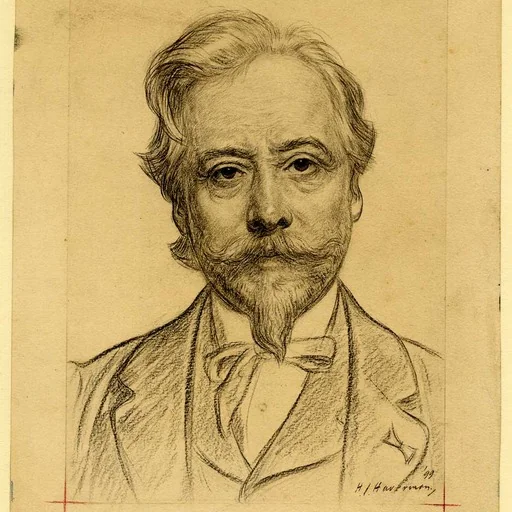
Artist
Bernardus Johannes (Bernard) Blommers (30 January 1845 in The Hague – 12 December 1914 in The Hague) was a Dutch etcher and painter of the Hague School.