Artwork
Madonna and Child
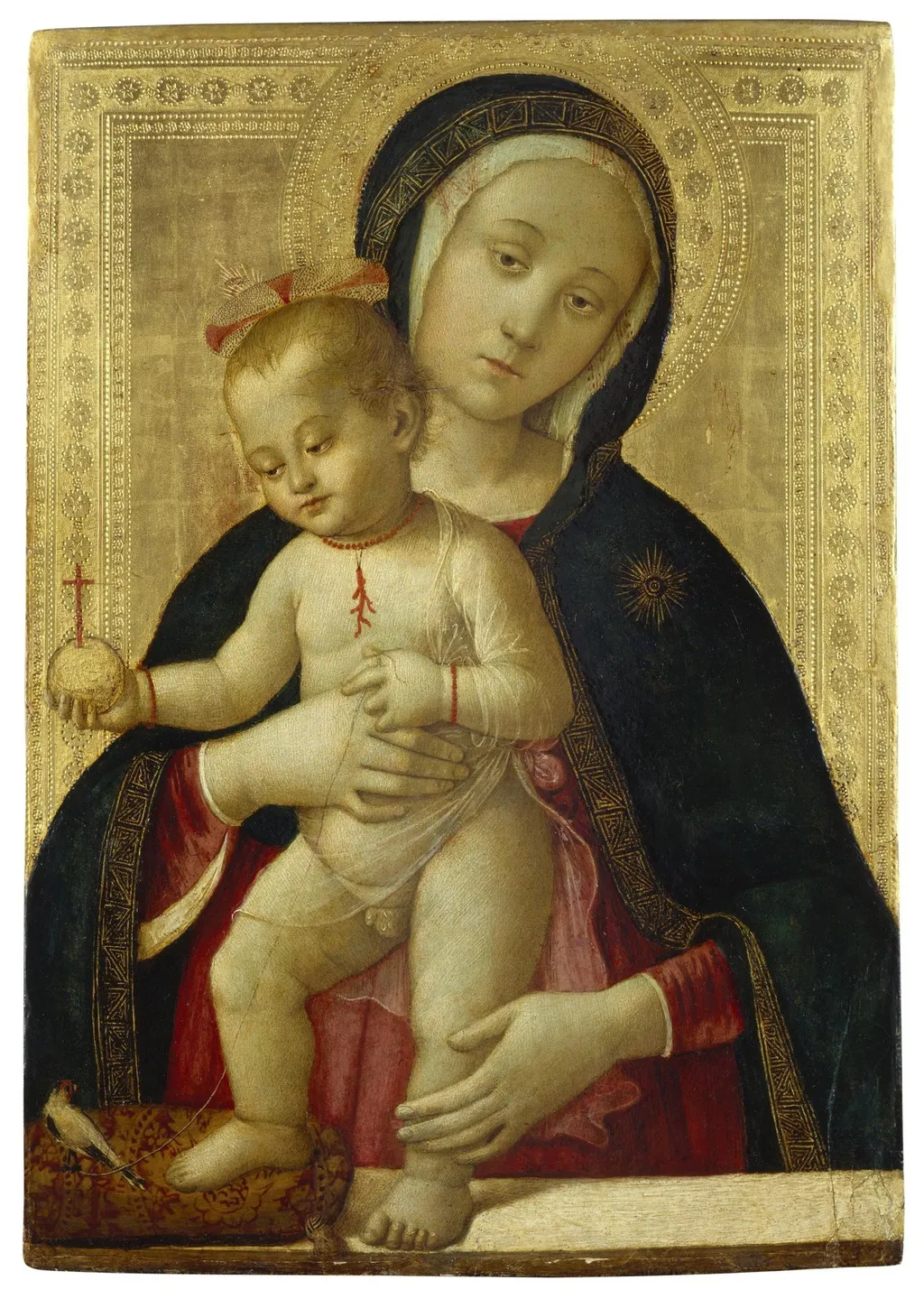
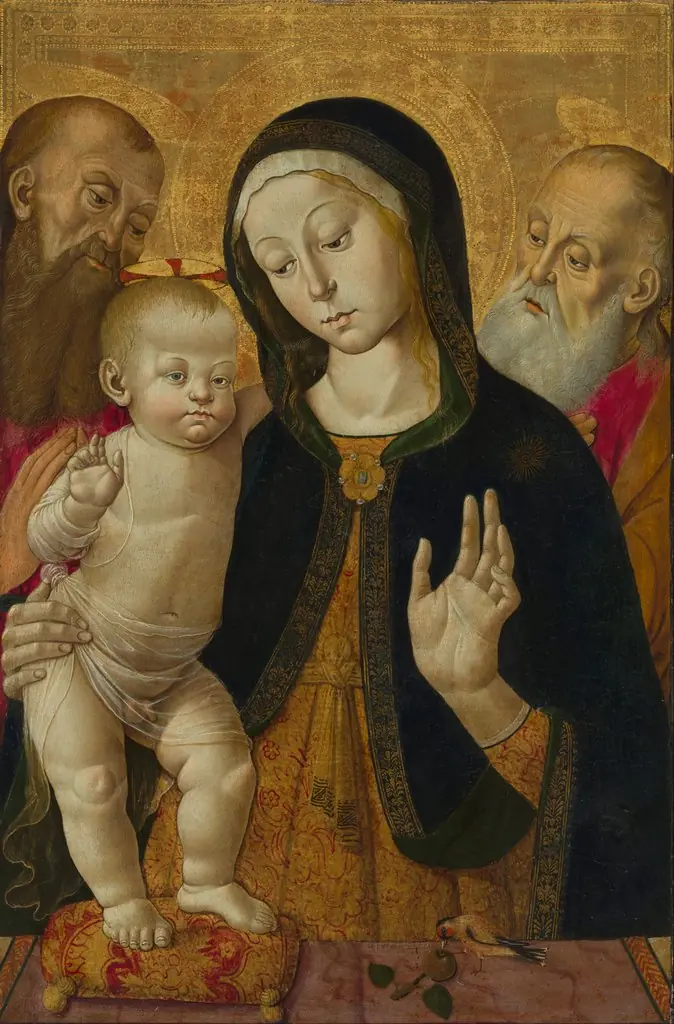
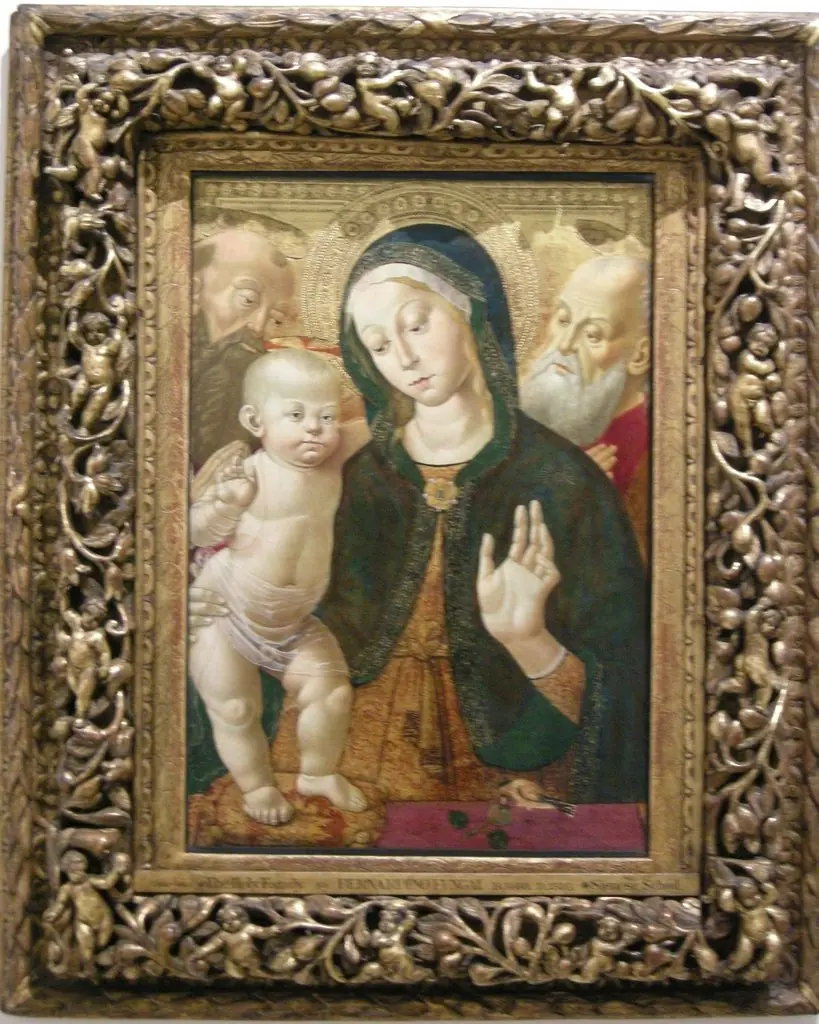
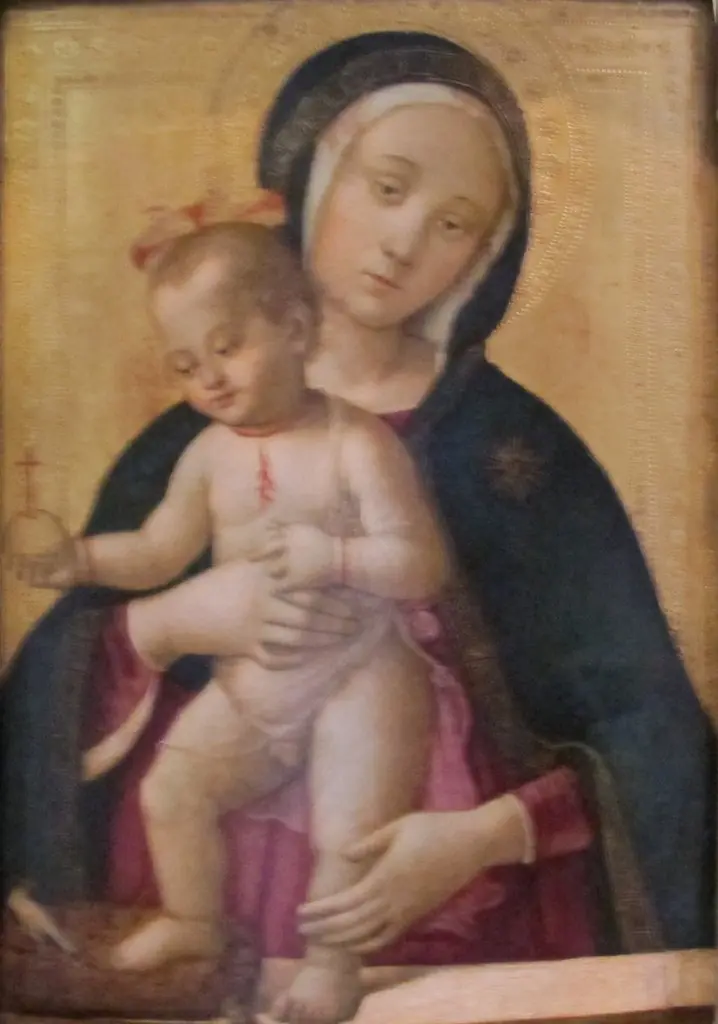
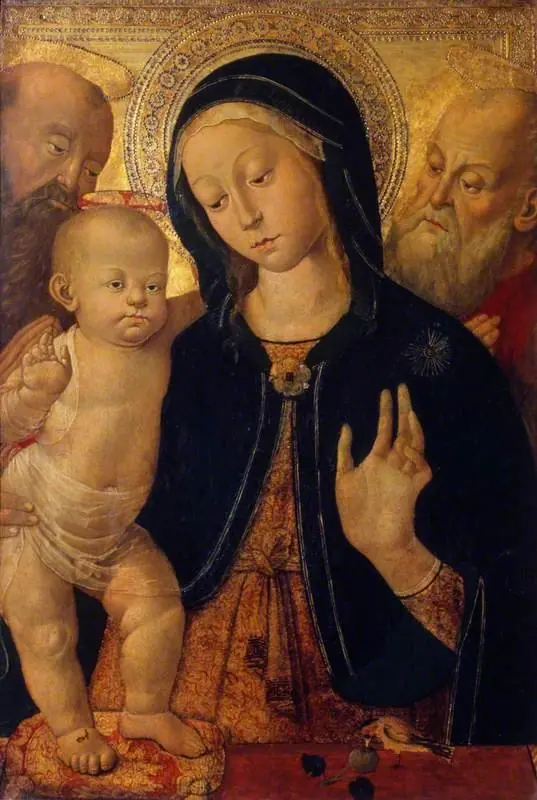
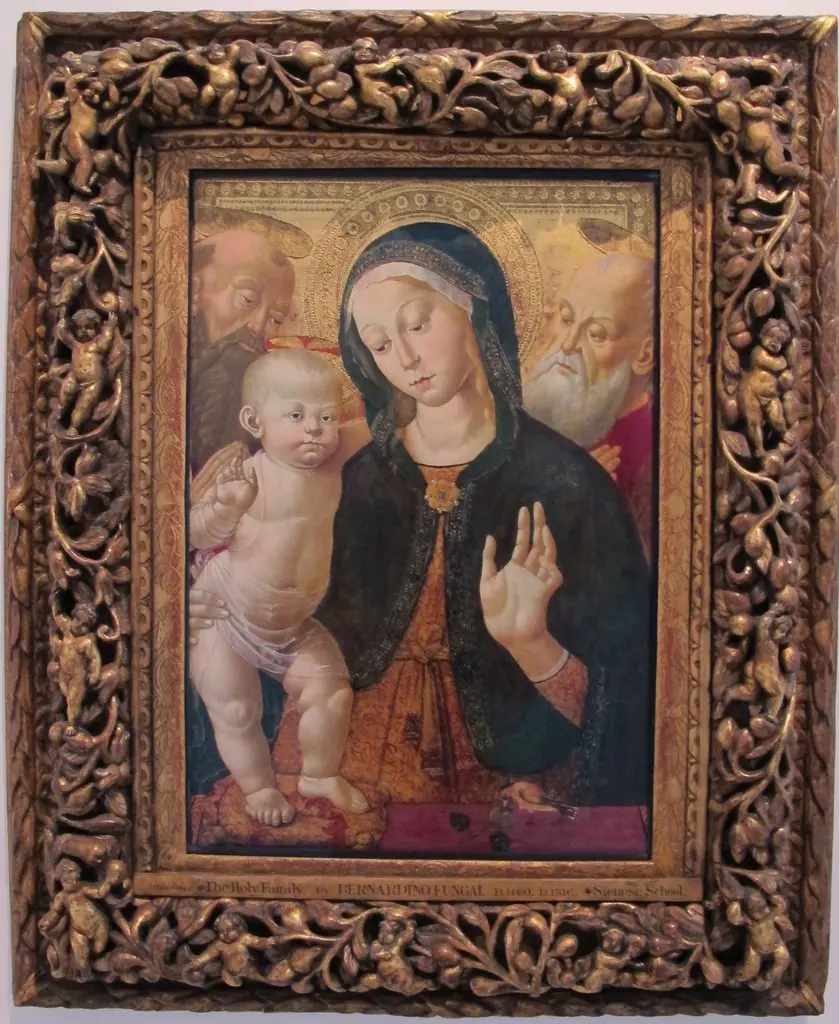
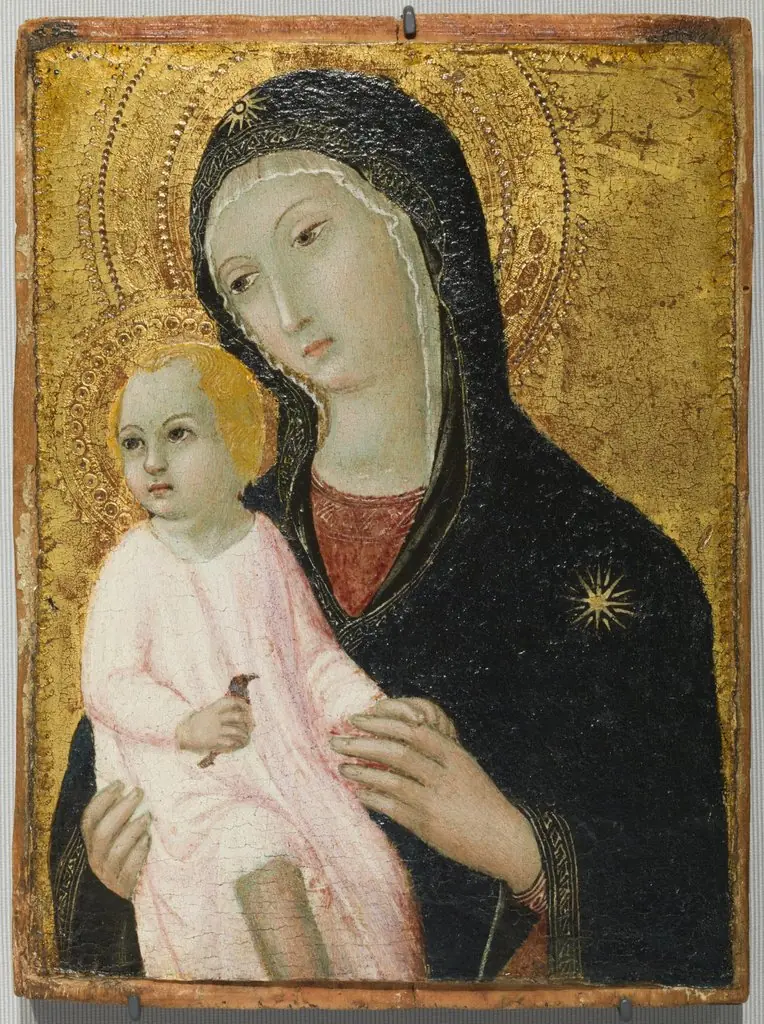
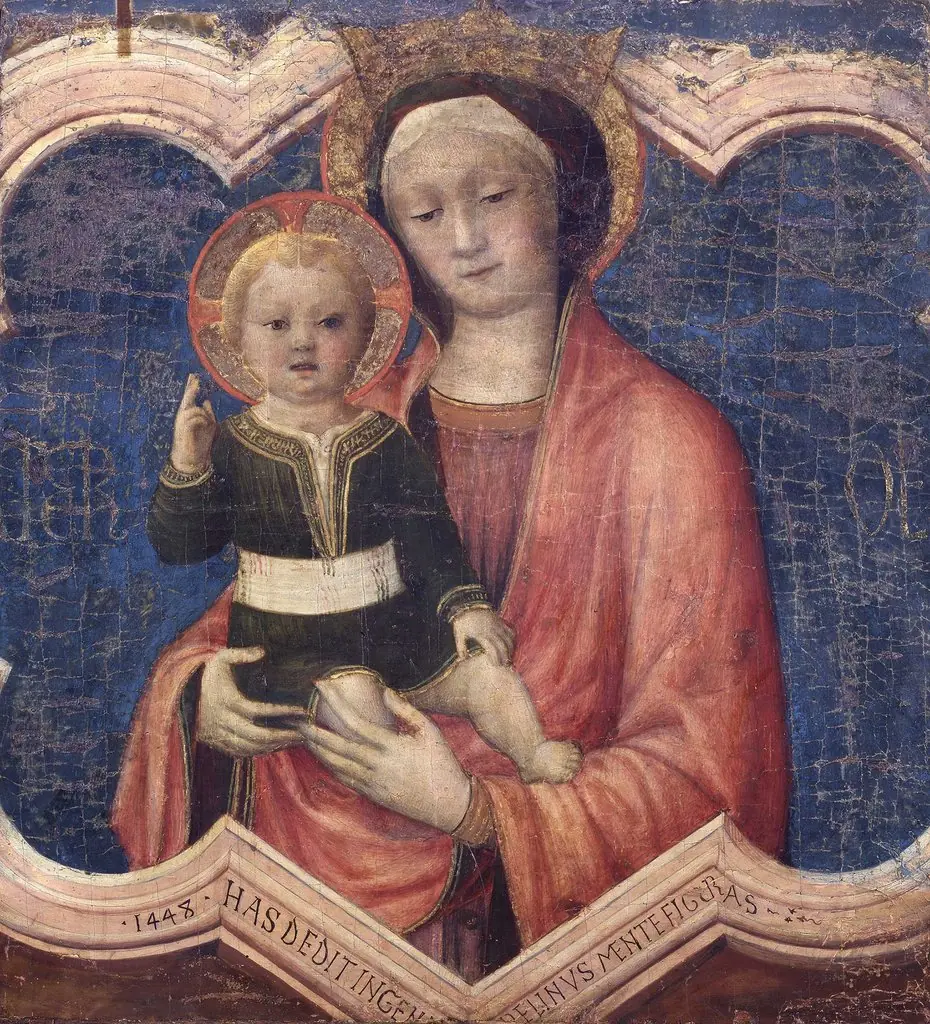
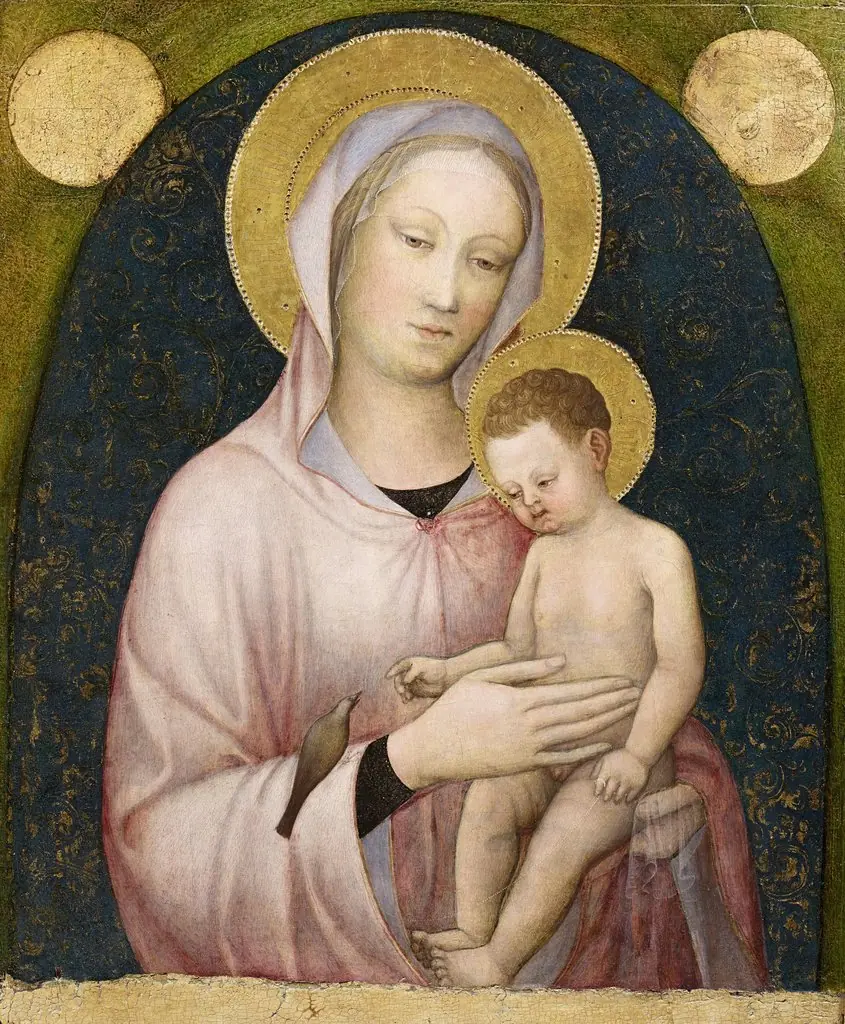
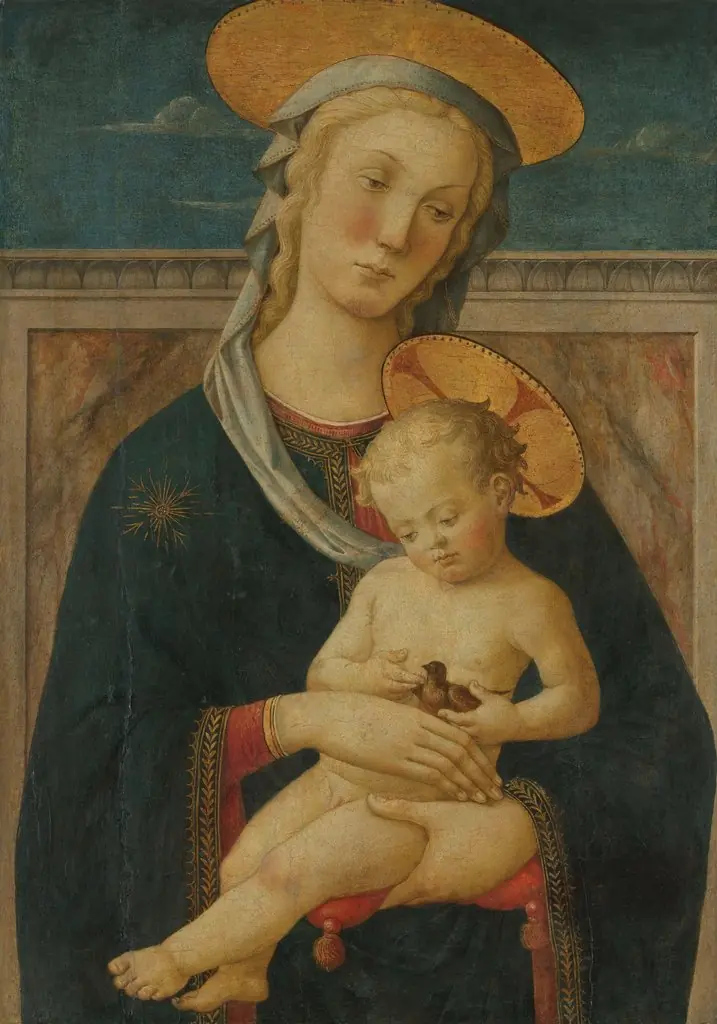
Madonna and Child is a tempera painting by the Mannerist artist Bernardino Fungai. It is held in the collection of the Hermitage Museum.
About this work
Overview
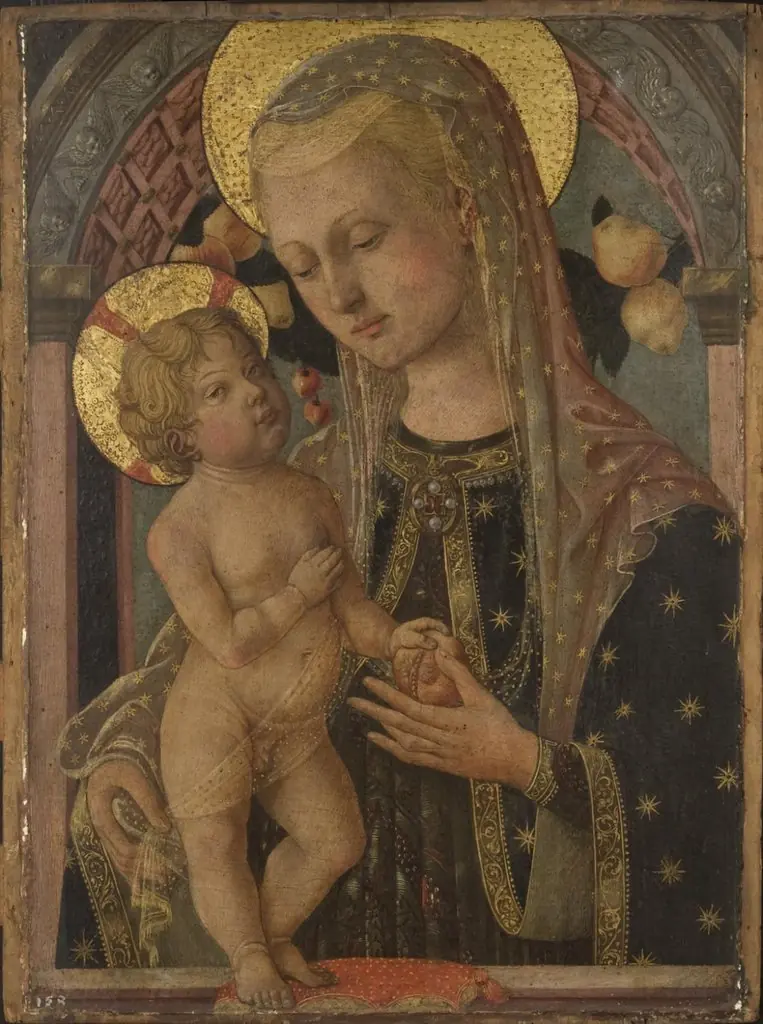
Madonna and Child, a tempera painting from circa 1550, is attributed to Bernardino Fungai, a painter linked to the Sienese school. The work exemplifies the Mannerist movement, blending late Gothic and early Renaissance elements with a distinct archaic tone.
Subject & Meaning
The painting depicts the Virgin Mary and the Christ Child in a devout context. Symbolic details include the Christ Child's cross-topped staff, bundle of sticks (possibly alluding to his future role), and a miniature crown of thorns, foreshadowing his fate. These elements imbue the scene with deeper theological significance.
Technique & Style
Executed in tempera, the painting showcases Fungai's transitional style, marked by the retention of Gothic simplicity alongside emerging Renaissance influences. Notable visual elements include the golden background (signifying sanctity), Mary's dark blue robe with red lining, and the gold-patterned headpiece, all characteristic of the period's aesthetic.
History & Provenance
Madonna and Child is part of the State Hermitage Museum's collection, though the painting's history prior to its acquisition is not detailed here.
Context
The use of gold leaf for the background was a traditional method to convey holiness in religious art of the time. The medium, tempera (often made with egg yolks), was also common in early Renaissance painting.
Artist & collection
Artist
Bernardino Fungai (1460 – c. 1516) was an Italian painter whose work marks the transition from late Gothic painting to the early Renaissance in the Sienese school. He maintained a fairly archaic style in his works,…

![Madonna and Child, with the Blessing Christ [middle panel], by Pietro Lorenzetti](https://artifactworldgallery.com/img/pietro-lorenzetti--madonna-and-child-with-the-blessing-christ-middle-panel--02357aa6ff04175b-w320.webp)