Artwork
Madonna and Child
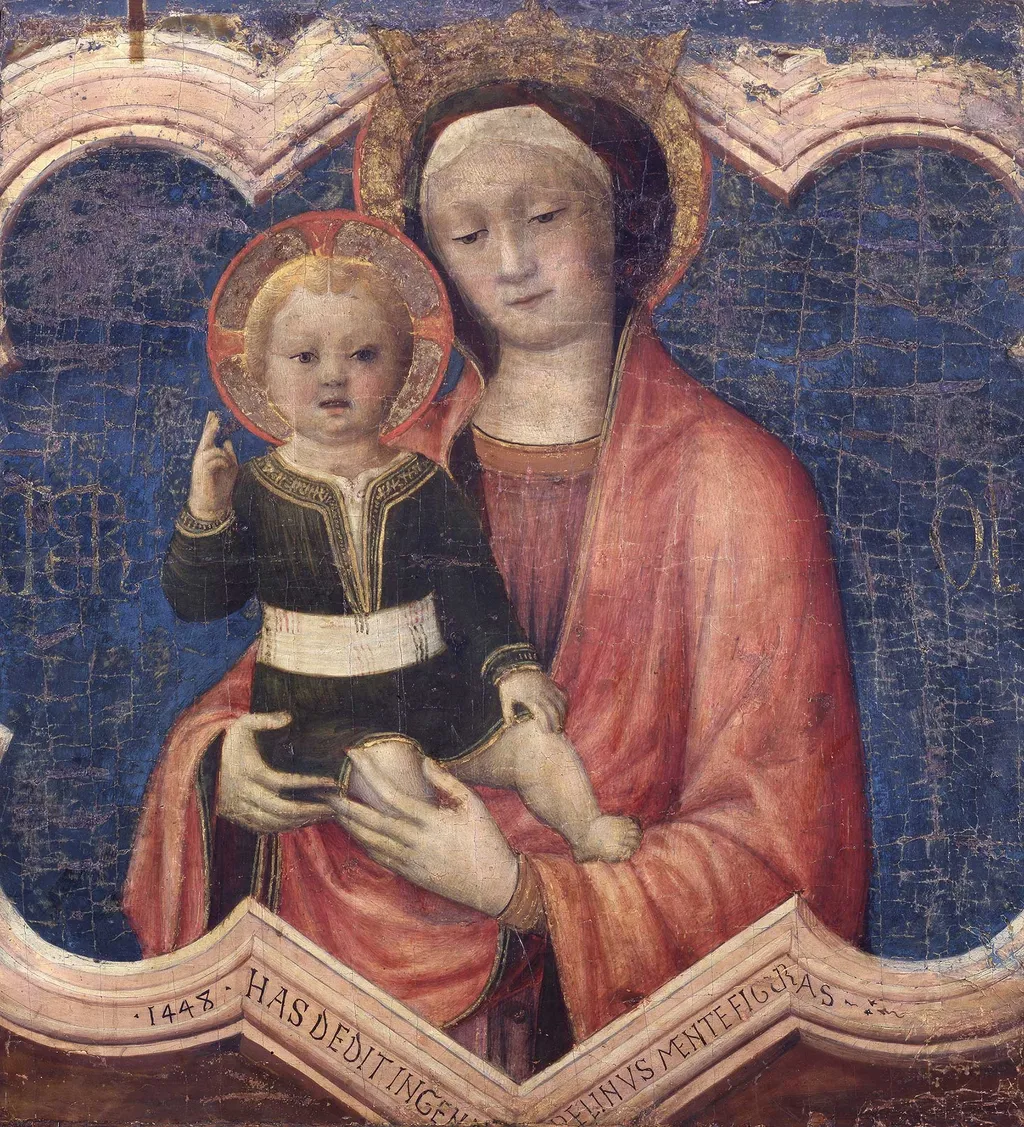
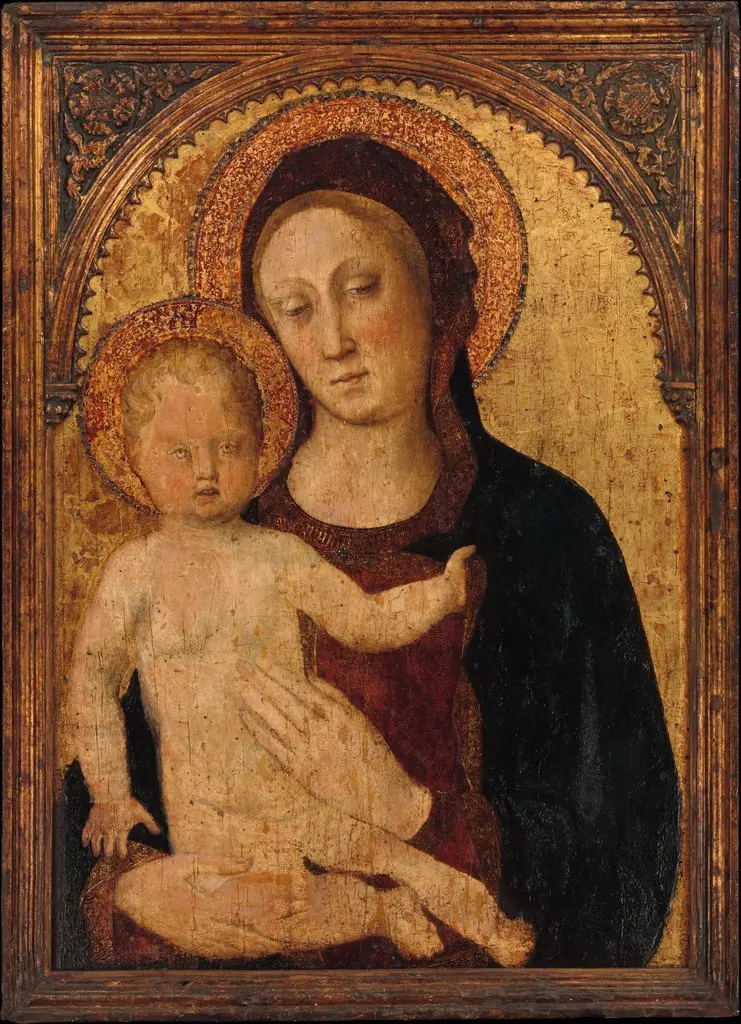
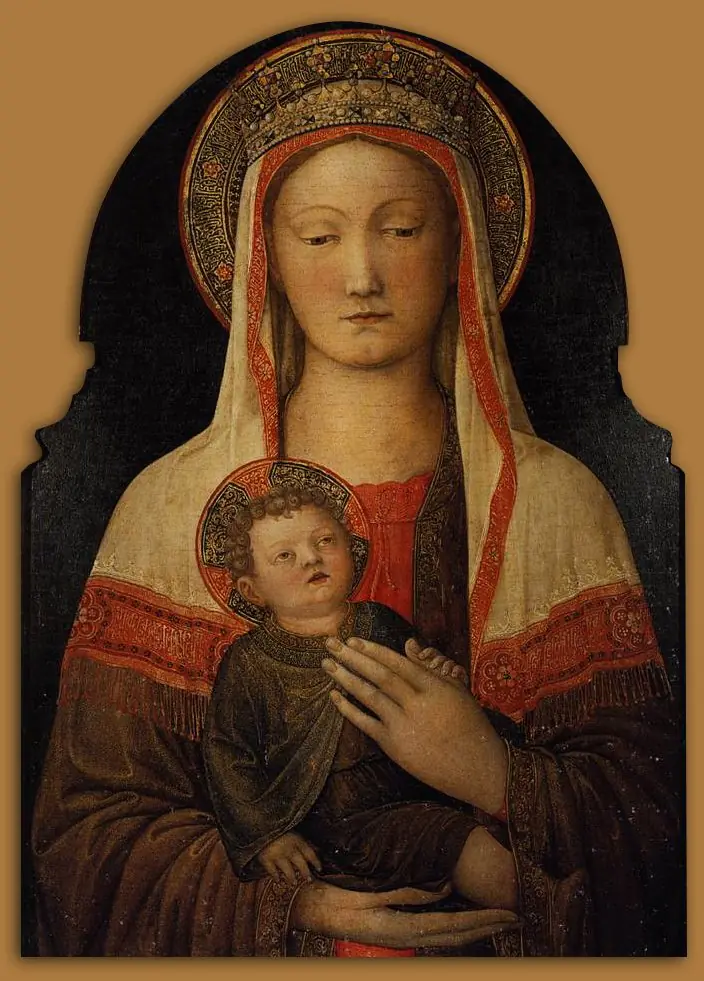
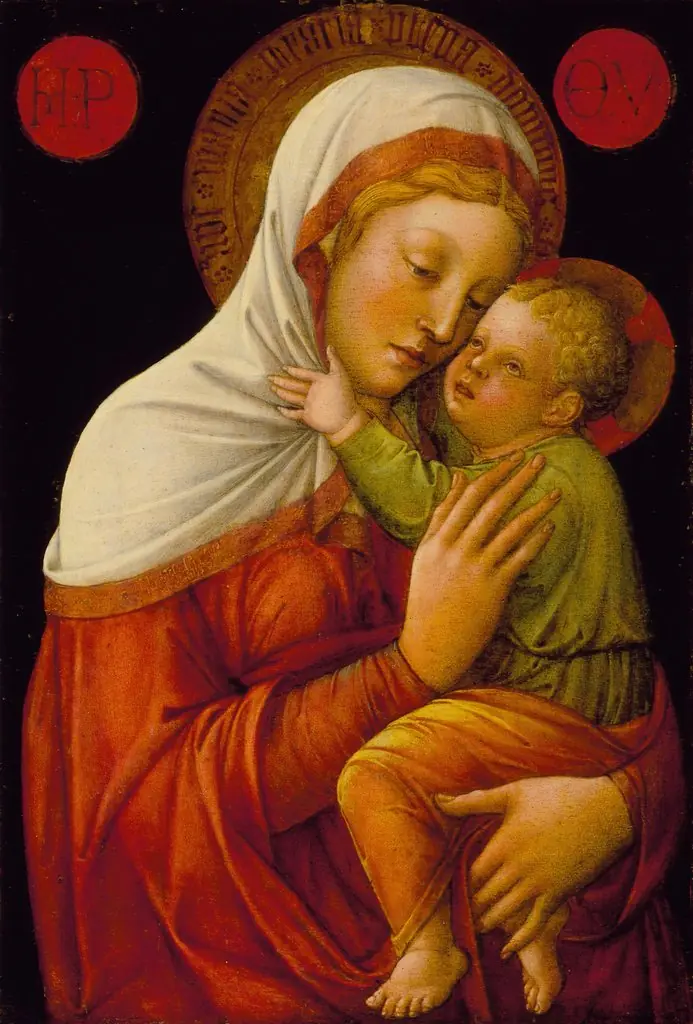
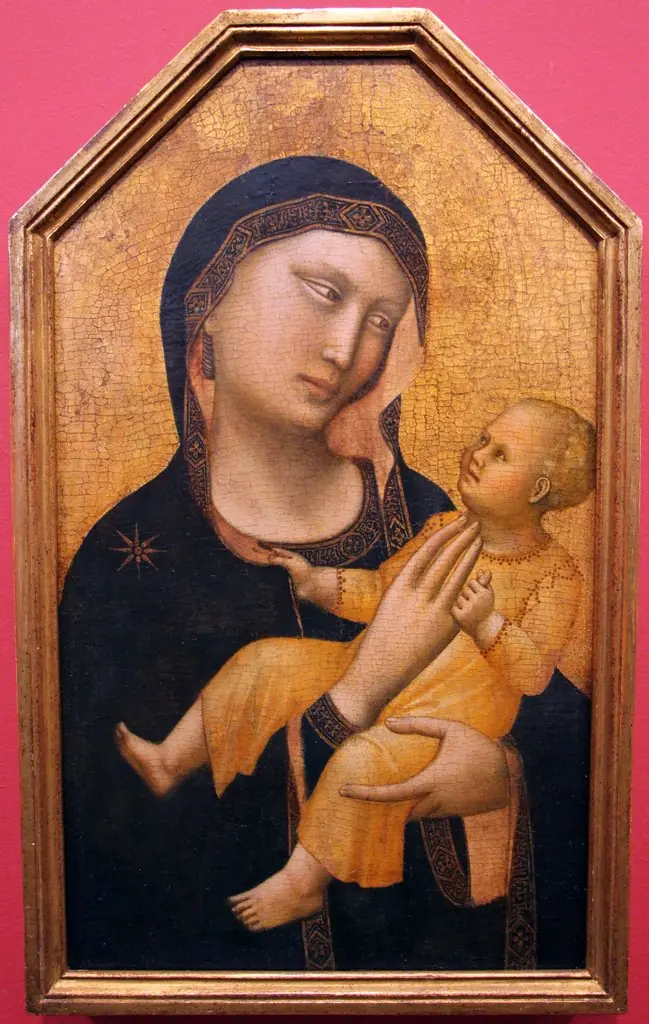
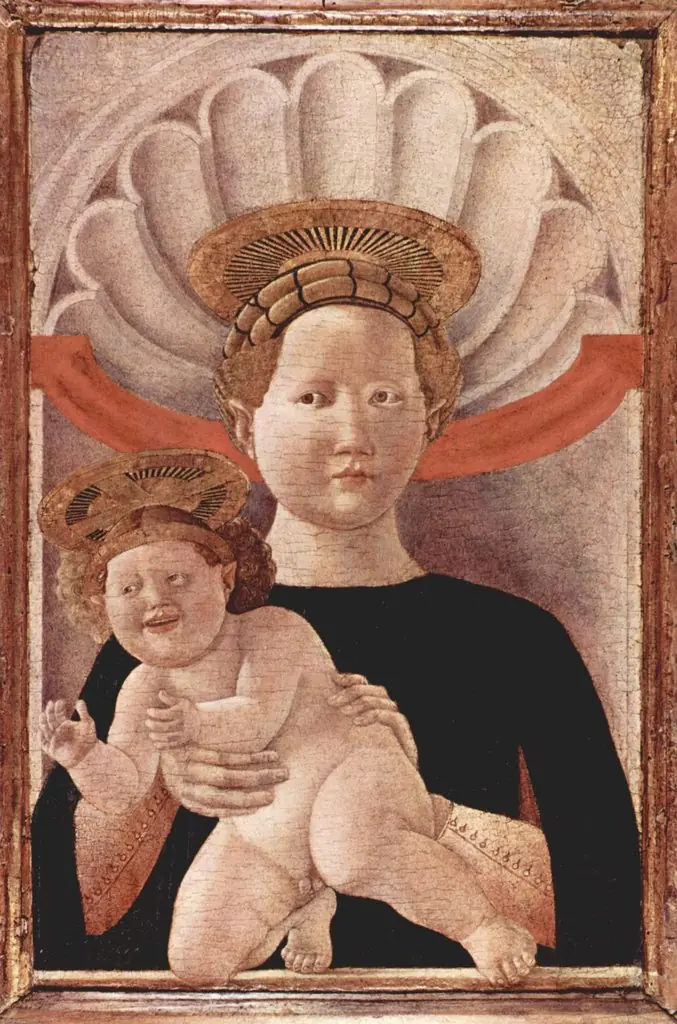
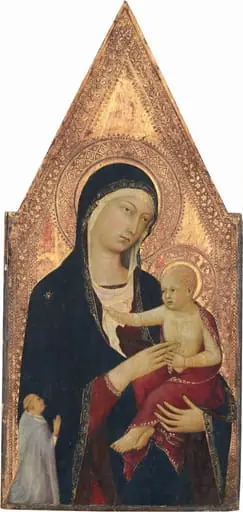
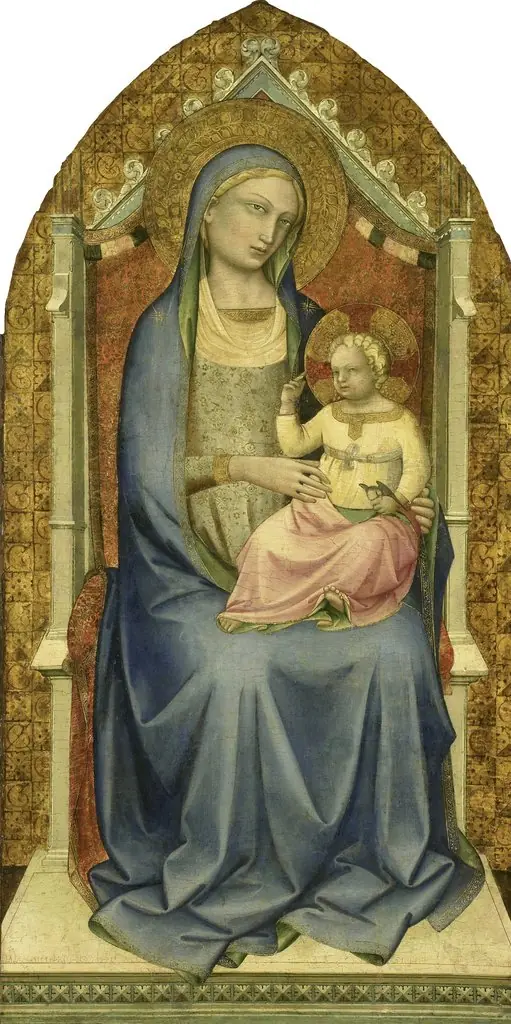
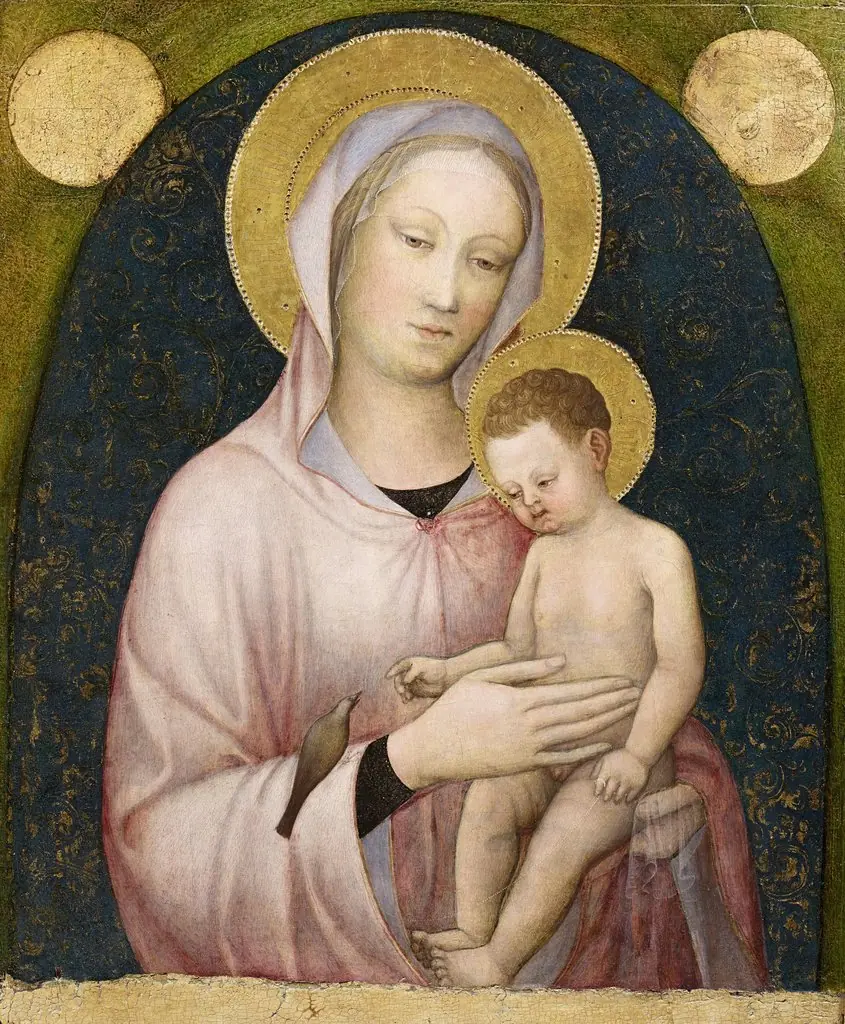
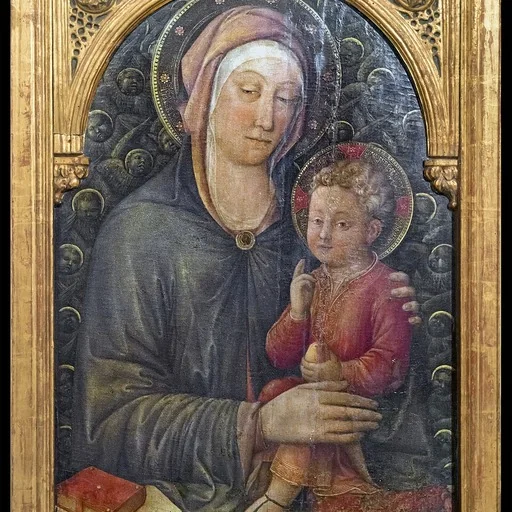
Madonna and Child is a tempera painting by the Early Renaissance artist Jacopo Bellini. It dates from 1448 and is held in the collection of the Pinacoteca di Brera.
About this work
Overview
Painted in 1448 by Jacopo Bellini, this tempera on panel work portrays the Virgin Mary with the infant Jesus. It resides in the Pinacoteca di Brera in Milan, among the earliest examples of Renaissance devotional imagery from northern Italy. The composition reflects Bellini’s role in transitioning Venetian art toward spatial coherence while retaining traditional iconography.
Subject & Meaning
The Virgin Mary, depicted with serene composure, holds the Christ Child, who gazes directly at the viewer—an intentional gesture inviting contemplation and spiritual connection. Both figures are crowned with halos, signifying divinity. The red robe of Mary and the child’s contrasting black garment with white belt reinforce symbolic contrasts of earthly and sacred realms, common in late medieval devotional imagery.
Technique & Style
Bellini employed tempera, a medium favored for its luminous detail and durability. The background features a dark blue field pierced by a white archway, suggesting architectural depth. While the forms retain a certain flatness typical of earlier traditions, subtle use of linear perspective in the arch and spatial arrangement reveals Bellini’s engagement with emerging Renaissance principles.
History & Provenance
The painting has remained in institutional care since at least the early modern period, eventually entering the Pinacoteca di Brera’s collection. Its surface shows signs of age, including craquelure consistent with centuries of environmental exposure and handling. No documented alterations or major restorations are recorded, preserving its original material character.
Context
Created during a period of artistic transition in northern Italy, the work reflects Venice’s unique blend of Byzantine ornamentation and emerging humanist ideals. Bellini’s synthesis of decorative richness with nascent perspective techniques distinguished his approach from contemporaries in Florence, positioning him as a bridge between medieval conventions and Renaissance innovation.
Legacy
Jacopo Bellini’s influence extended through his family: his sons Gentile and Giovanni, and son-in-law Andrea Mantegna, each advanced Venetian painting in distinct directions. This early work exemplifies the foundational role he played in shaping a regional style that prioritized color, light, and spatial harmony—principles later refined by his descendants and peers.
Artist & collection
Artist
Jacopo Bellini (c. 1400 – c. 1470) was one of the founders of the Renaissance style of painting in Venice and northern Italy. His sons Gentile and Giovanni Bellini, and his son-in-law Andrea Mantegna, were also famous…