Artwork
Lobkowitzplatz in Vienna
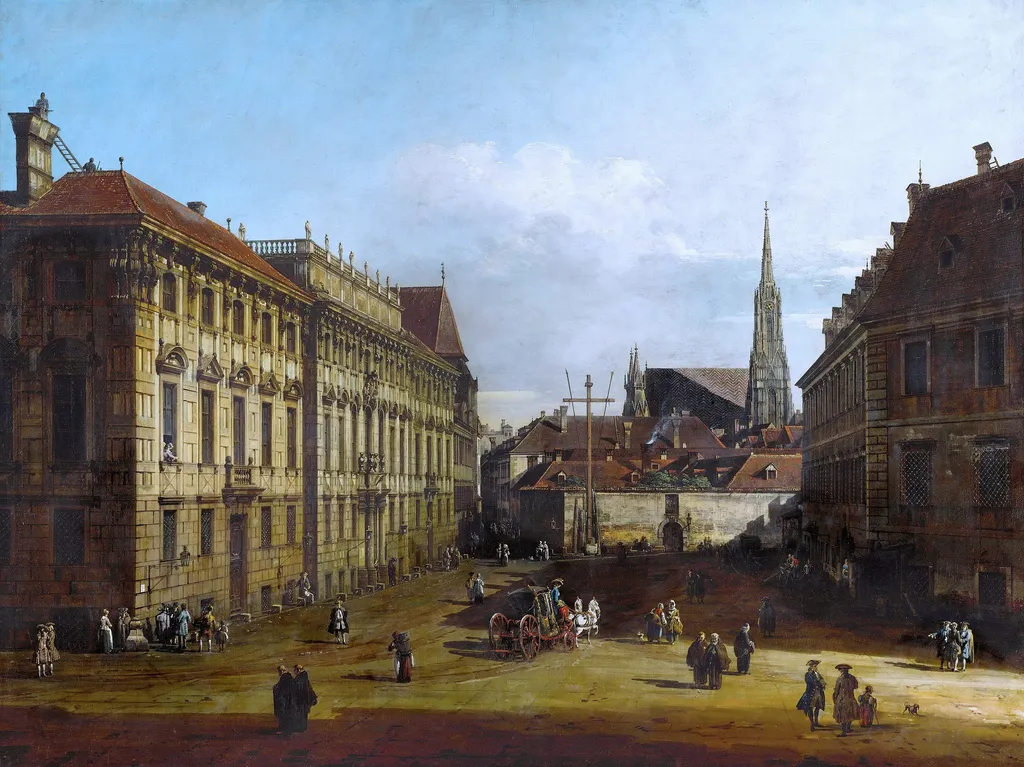
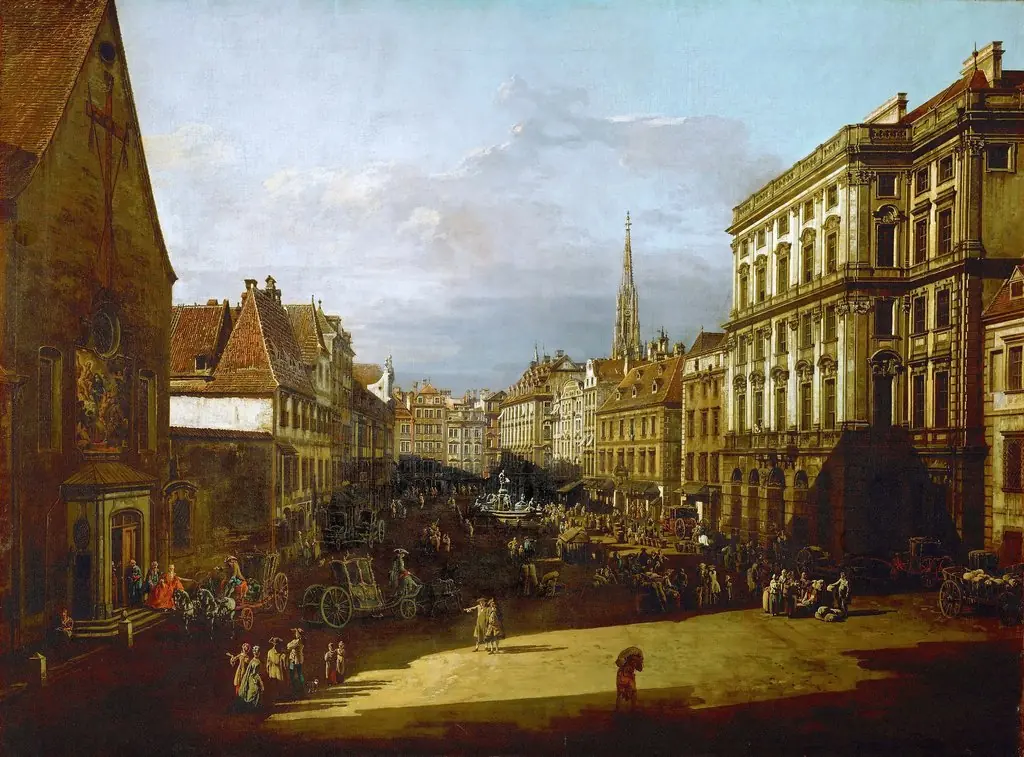
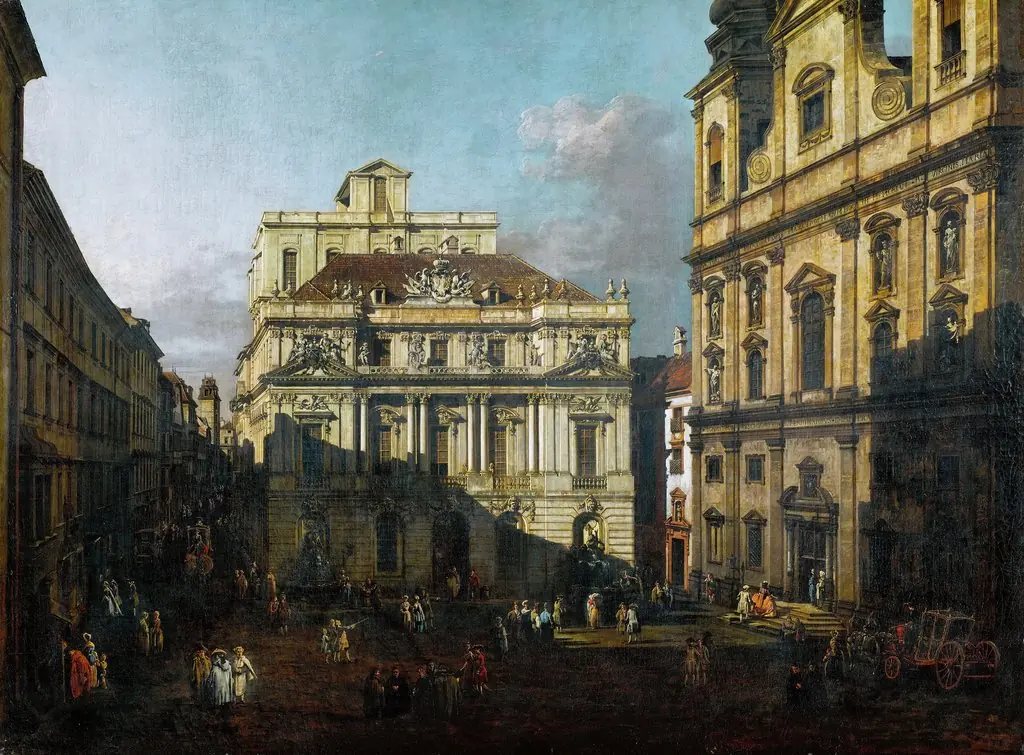
Lobkowitzplatz in Vienna is an oil painting by the Rococo painting artist Bernardo Bellotto. It dates from 1759 and is held in the collection of the Kunsthistorisches Museum.
About this work
The painting also shows how the light falls on the buildings and the people, which makes it feel like you're really there.
You're looking at a painting of Lobkowitzplatz in Vienna. It's an oil painting from 1759, and it shows a city square with old buildings and people walking around. The buildings are tall and have lots of windows, and there's a big church in the background.
The artist, Bernardo Bellotto, painted this scene in a very detailed way. You can see the texture of the buildings and the clothes people are wearing. The painting also shows how the light falls on the buildings and the people, which makes it feel like you're really there.
If you want to learn more about the artist who painted this, check out Bernardo Bellotto.
Overview
Painted in 1759, Lobkowitzplatz in Vienna is an oil-on-canvas work by Bernardo Bellotto, capturing a precise view of a public square in the Austrian capital. The painting belongs to the collection of the Kunsthistorisches Museum in Vienna, where it remains on display. Bellotto, known for his topographical precision, rendered the scene with careful attention to architectural detail and atmospheric conditions, reflecting his role as a documenter of urban spaces.
Subject & Meaning
The painting depicts Lobkowitzplatz, a modest urban square framed by tall, uniformly structured buildings with numerous windows and modest ornamentation. In the distance, a prominent church tower anchors the composition. Figures scattered across the square—pedestrians, horse-drawn carts, and individuals at rest—suggest daily life without dramatization. The scene conveys neither grandeur nor narrative, but rather a quiet, observational record of Viennese civic space.
Technique & Style
Bellotto employed fine brushwork to render the textures of stone facades, tiled roofs, and fabric garments with subtle variation. Light falls naturally across the scene, casting soft shadows that define volume and depth. The palette is restrained, dominated by earth tones and muted grays, enhancing realism. His method aligns with the veduta tradition, prioritizing accuracy over embellishment, and uses linear perspective to guide the viewer’s eye into the depth of the square.
History & Provenance
Commissioned during Bellotto’s tenure in Vienna, the painting was likely created for a patron interested in urban documentation. It entered the Habsburg collections in the 18th century and was later transferred to the Kunsthistorisches Museum upon its founding in 1891. Its continuous presence in imperial holdings underscores its value as a historical record rather than a decorative piece.
Context
In the mid-18th century, Vienna was undergoing gradual urban expansion under Maria Theresa. Bellotto’s views of the city, including this one, contributed to a growing interest in recording architectural change. Unlike idealized landscapes, his works served as visual archives, reflecting the city’s evolving topography and the rise of civic identity through precise depiction.
Legacy
Bellotto’s Lobkowitzplatz exemplifies the veduta’s role in preserving urban form before industrial transformation. Though not widely exhibited outside Austria, it remains a key reference for historians studying 18th-century Viennese architecture and street life. Its influence endures in the tradition of topographical painting, valued for its fidelity rather than its aesthetic innovation.
Own this work as a print
Artist & collection
Artist
Bernardo Bellotto, was an Italian urban landscape painter or vedutista, and printmaker in etching famous for his vedute of European cities – Dresden, Vienna, Turin, and Warsaw.