Artwork
Stable boy leading a horse
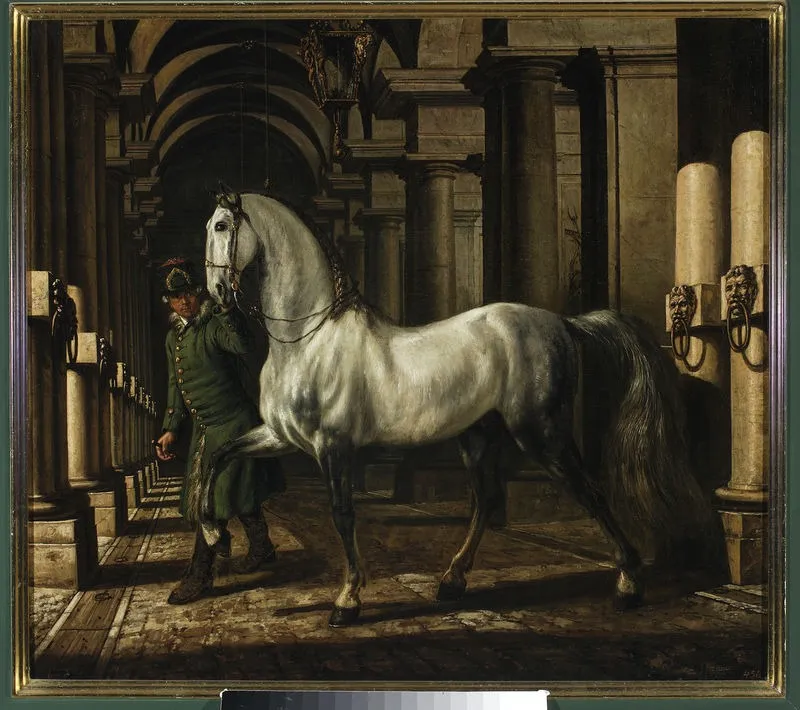
Stable boy leading a horse is an oil painting by the Rococo painting artist Bernardo Bellotto. It dates from 1773 and is held in the collection of the National Museum in Warsaw.
About this work
Overview
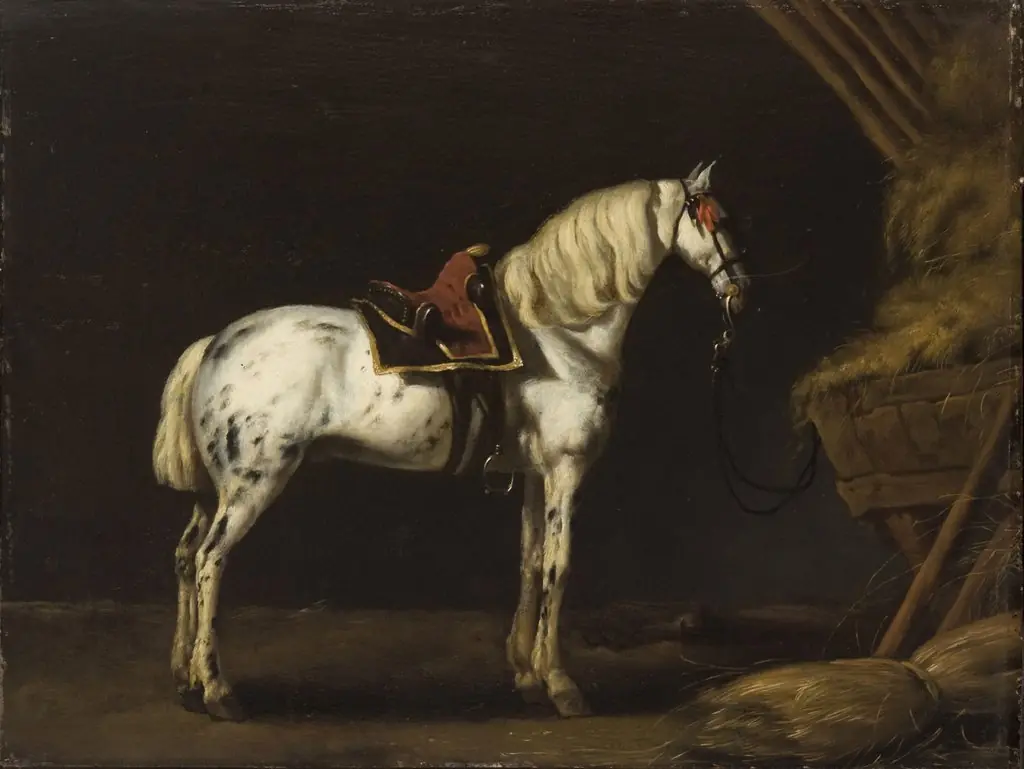
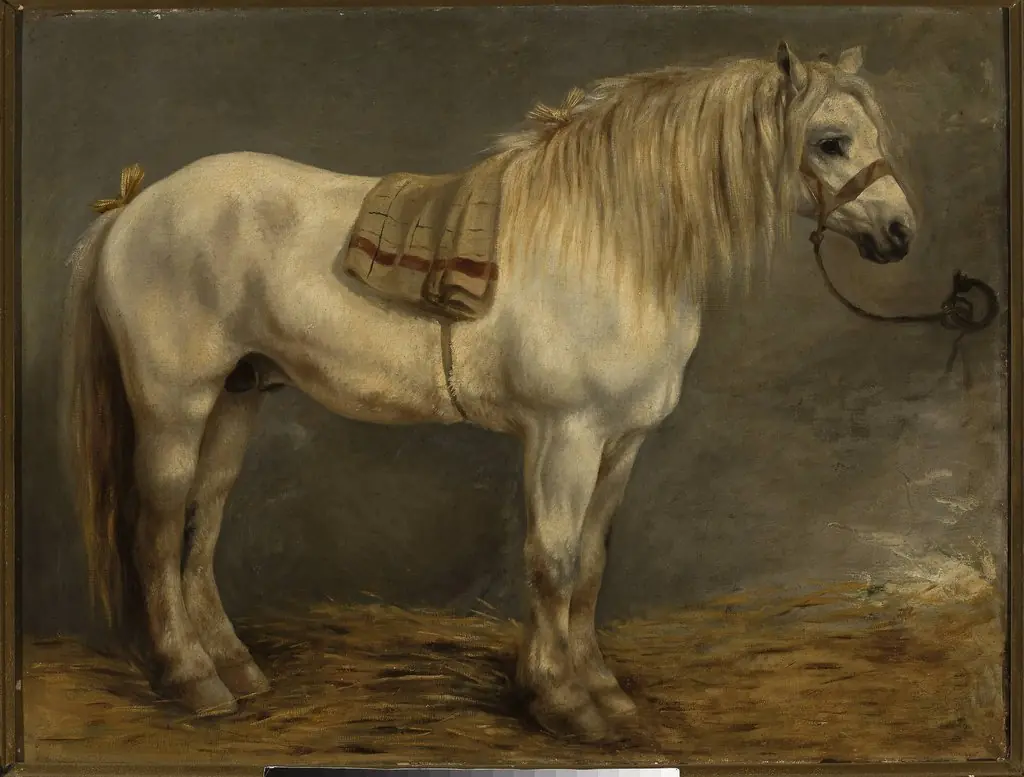
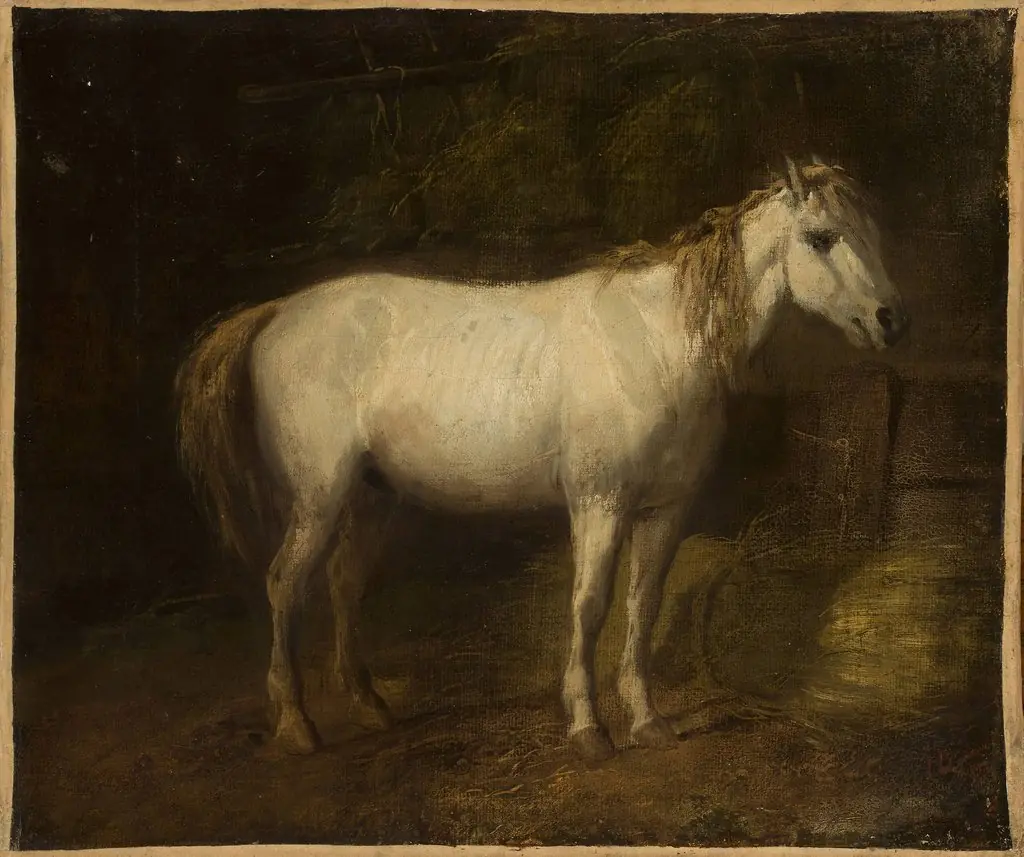
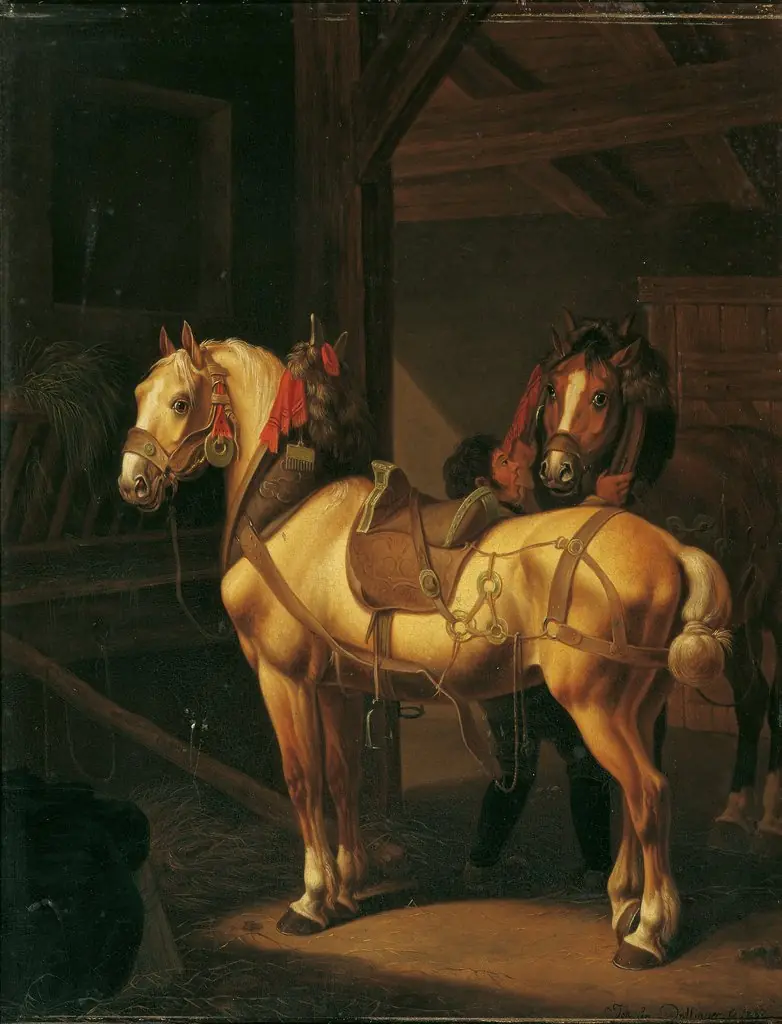
Painted in 1773 by Bernardo Bellotto, this oil work depicts a stable boy guiding a white horse through an architectural interior.
Painted in 1773 by Bernardo Bellotto, this oil work depicts a stable boy guiding a white horse through an architectural interior. The scene is contained within a dimly lit space defined by stone columns and arches. The painting is part of the collection at the National Museum in Warsaw, where it has remained since its creation. Bellotto’s attention to spatial detail and atmospheric lighting distinguishes this work from his more familiar urban vedute.
Subject & Meaning
The painting captures a quiet, uneventful moment in daily stable life. The boy, dressed in green, leads the horse with a gentle grip on the reins, while the animal turns its head toward him, suggesting a bond of mutual awareness. Neither figure engages with the viewer; their focus remains inward, evoking a sense of solitude and routine. The absence of narrative drama invites contemplation of labor and quiet companionship between human and animal.
Technique & Style
Bellotto employs chiaroscuro to model form and define space, using strong contrasts between shadow and light. The illumination enters from the left, catching the horse’s flank and the boy’s coat while leaving corners of the archway in deep tone. Brushwork is precise yet restrained, with textures rendered subtly—stone surfaces, woolen fabric, and the horse’s coat all distinguished through tonal variation rather than detail. The composition is tightly framed, enhancing the intimacy of the scene.
History & Provenance
Created during Bellotto’s time in Poland, where he served as court painter to King Stanisław August Poniatowski, the work likely originated in the royal stables or a related architectural setting. It entered the National Museum in Warsaw’s collection in the 19th century and has remained there since. Unlike Bellotto’s grand cityscapes, this intimate interior was not widely reproduced, contributing to its relative obscurity outside Poland.
Context
In the late 18th century, Bellotto was primarily known for his topographical views of European cities. This painting stands apart as a rare domestic interior, reflecting a broader interest in everyday life among some Enlightenment-era artists. Its setting—likely a royal stable—hints at the intersection of aristocratic life and its supporting labor, a theme rarely explored with such restraint in Bellotto’s oeuvre.
Legacy
Though less celebrated than Bellotto’s urban panoramas, this work demonstrates his versatility and sensitivity to light and quiet human activity. It remains a significant example of how a master of perspective could turn his skill toward intimate, non-monumental subjects. Its preservation in Warsaw underscores its role in documenting the material culture of Polish court life during the late Enlightenment.
Artist & collection
Artist
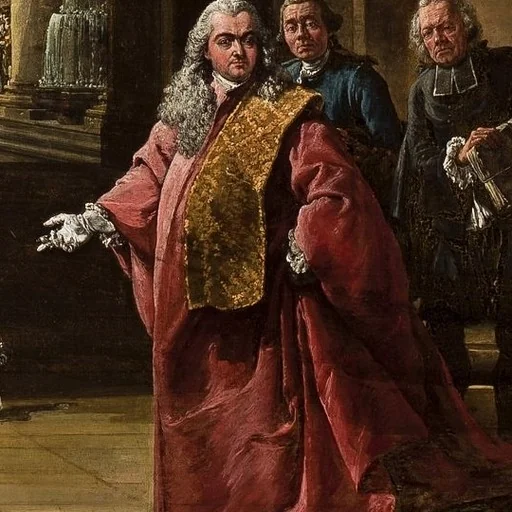
Bernardo Bellotto, was an Italian urban landscape painter or vedutista, and printmaker in etching famous for his vedute of European cities – Dresden, Vienna, Turin, and Warsaw.